If you look up at the Prague skyline, you literally cannot miss St. Vitus Cathedral. It is the biggest, grandest, and most important church in the entire country—and trust me, it will absolutely take your breath away.
St Vitus Cathedral is both a working Roman Catholic cathedral and a national monument. Czech kings and queens were crowned here, rulers and patron saints were buried here, and the Crown Chamber safeguards the Czech Crown Jewels.
Imagine starting a home renovation project and your great-great-great-great-grandchildren are the ones who finally finish it. That is basically what happened here! The cathedral took nearly 600 years to build. Talk about a delay.
The cathedral is sometimes described as a UNESCO attraction in its own right. More precisely, it forms part of the Historic Centre of Prague, the UNESCO World Heritage Site that includes Prague Castle.
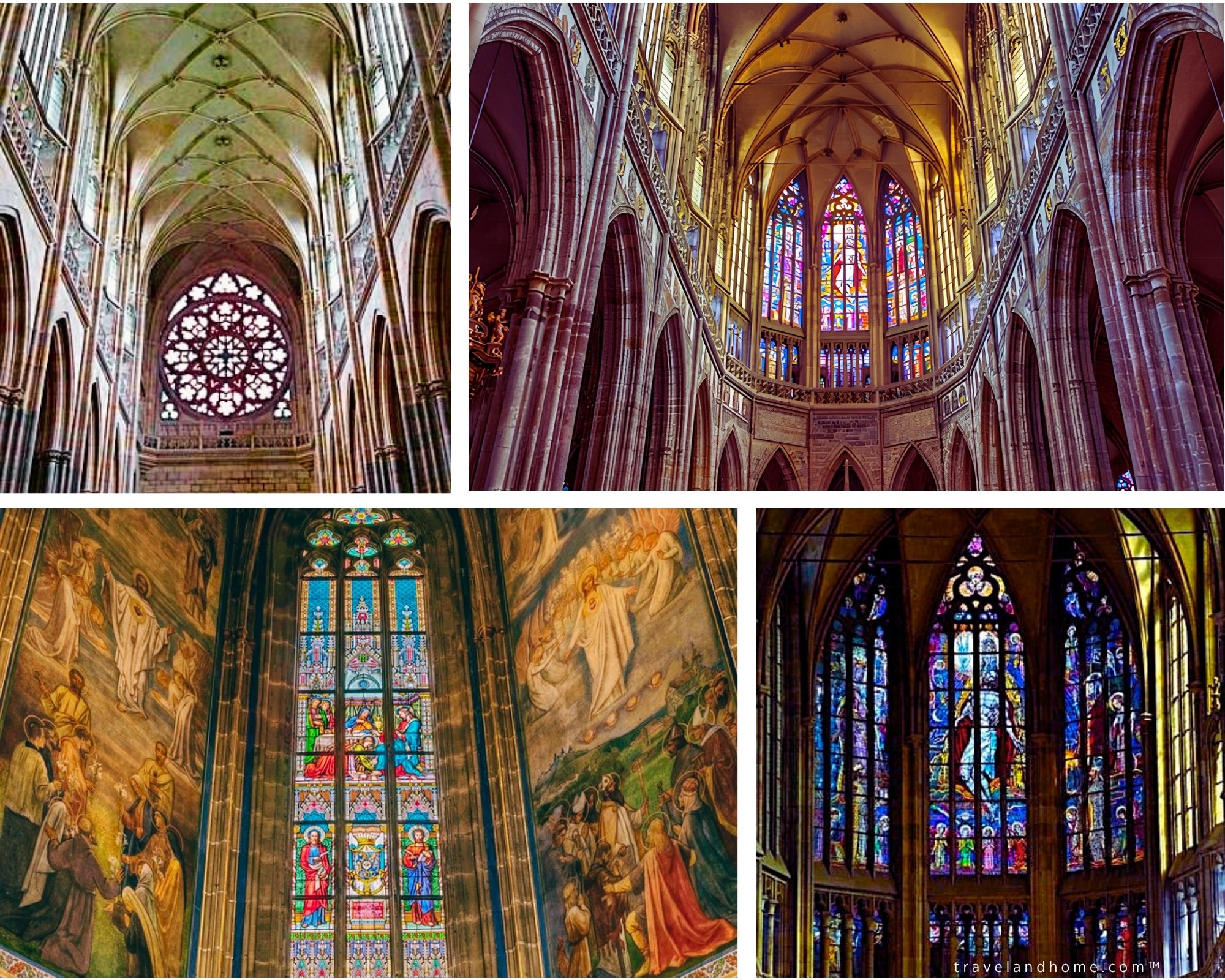
The St Wenceslas Chapel is the spiritual heart of the cathedral. It contains the tomb of St Wenceslas, patron saint of the Czech lands, and its walls are decorated with gilding, paintings and more than a thousand polished semi-precious stones.
A small locked doorway in the chapel leads toward the Crown Chamber. The Czech Crown Jewels are kept behind seven locks and are displayed only on rare ceremonial occasions. Visitors can admire the chapel from its entrance, but cannot normally walk through it.
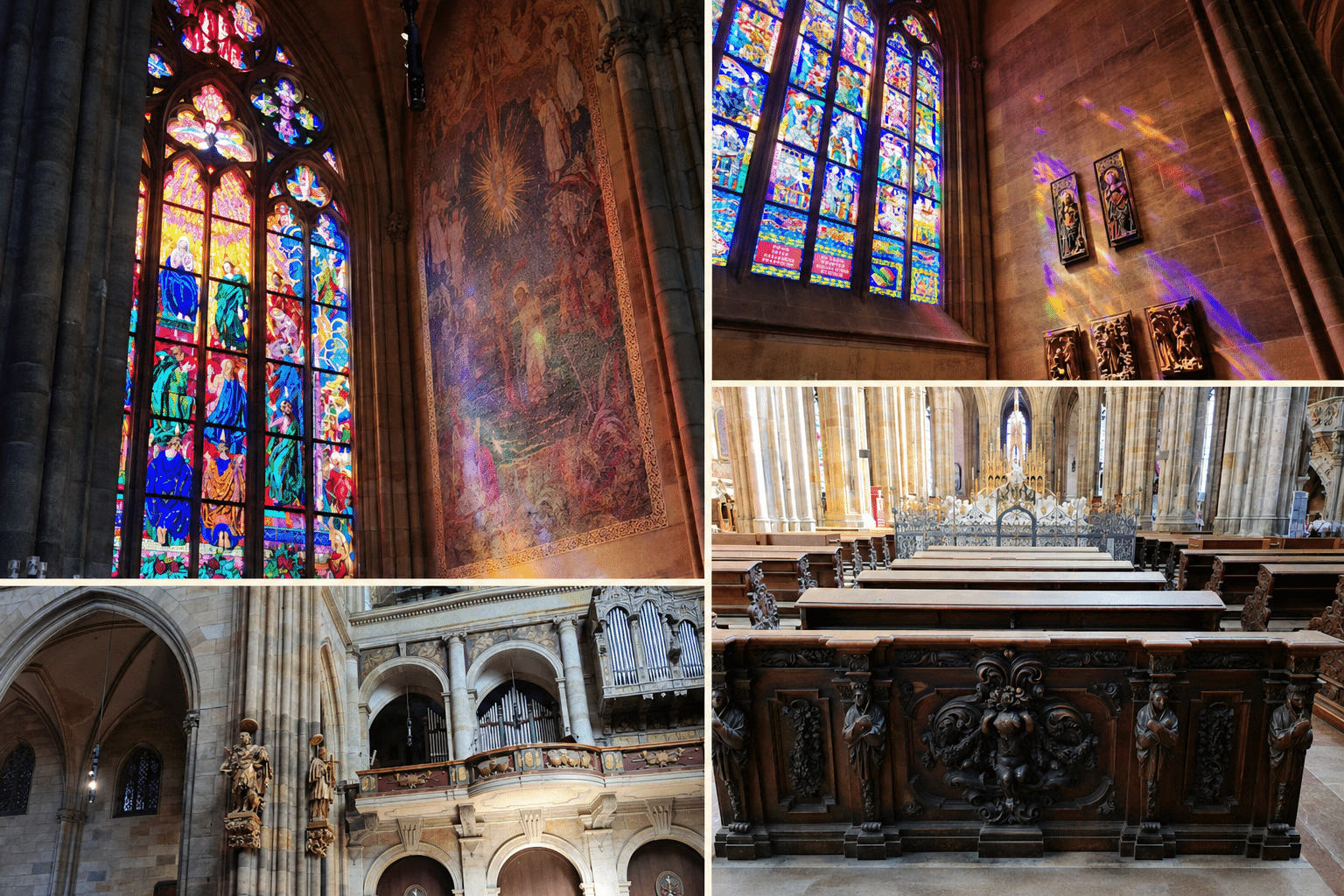
Many visitors look only at the cathedral’s enormous western rose window, but the colorful window designed by Czech Art Nouveau artist Alfons Mucha is equally memorable. Created in the early 1930s, it depicts Saints Cyril and Methodius and scenes from Slavic Christian history.
Look for it on the north side of the nave. Morning light often brings out its jewel-like colors beautifully.
Turn back toward the western entrance after walking into the nave. High above the doors is the vast rose window designed by František Kysela. Its imagery follows the biblical story of Creation.
This is one of those cathedral details that is easy to miss simply because most people continue looking toward the altar.
Before or after entering, walk around the cathedral’s south side to see the Golden Gate. Above it is a 14th-century mosaic of the Last Judgement, commissioned during the reign of Charles IV. The glittering surface is especially striking when it catches the afternoon light.
The south portal once served as the ceremonial entrance used for coronations.
Beneath the cathedral is the Royal Crypt, the burial place of important Bohemian rulers. Among those interred here are Charles IV, his son Wenceslas IV and other members of the royal dynasties that shaped Czech history.
Access depends on the current visitor route, so confirm what is open when buying your Prague Castle ticket.
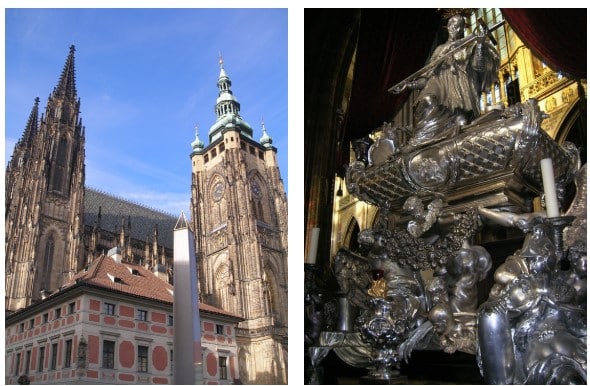
One of the most dazzling monuments inside the cathedral is the elaborate silver tomb of St John of Nepomuk. The Czech saint is traditionally associated with the protection of bridges and with keeping the seal of confession.
For a magnificent view across Prague Castle, the Vltava and the red rooftops of the city, climb the Great South Tower. The tower rises to about 96 meters, and the route involves 287 steps with no lift.
It also houses the enormous Zikmund bell, the largest church bell in the Czech Republic. The narrow staircase and physical climb will not suit every visitor, but the panorama is a splendid reward on a clear day.
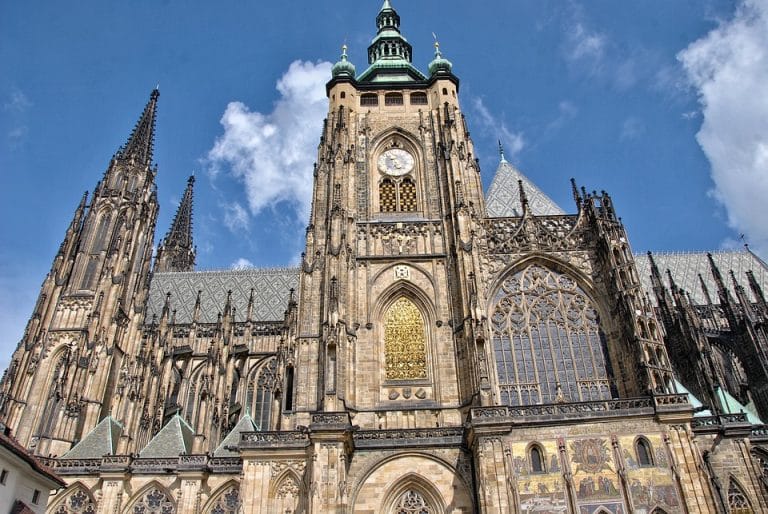
Here is the tricky part about tickets: walking around the outside is totally free. But if you want to step inside and see that gorgeous stained glass, you need to buy the Main Circuit ticket. Oh, and if you want to climb the tower? That requires a separate ticket, so keep your wallet handy!
Attending a church service is free, but that entrance is intended for worship rather than sightseeing.
>> Travel tip: If you love strolling on your own but would have appreciated a bit of guidance, this ticket is for you. “The line to get into Prague Castle, particularly St. Vitus Cathedral, can be daunting and long. But this skip-the-line admission lets you breeze right past other tourists and head straight into the castle complex. Begin with a 20-minute introductory presentation so you know what you’re about to visit, then set off to explore at your own pace.”
Travel Tip: Avoid standing in line to buy tickets. Instead, buy a Prague Castle Skip-the-Line Ticket with an audioguide well before your visit. Explore iconic landmarks like St. Vitus Cathedral, the Old Royal Palace, St. George’s Basilica, and Golden Lane with an audioguide.
Opening hours vary by season, and Sunday tourist entry usually begins later because the cathedral is an active place of worship. Access may also be delayed or restricted for Masses, religious ceremonies and special events.
Arrive close to opening time on a weekday if you want a quieter experience. Late morning and early afternoon tend to be busiest, especially in summer and during school holidays.
Morning is lovely for seeing the colors of the Mucha window. Afternoon light can illuminate the western rose window and the Golden Gate mosaic. If you plan to climb the tower, clear weather matters more than the exact time of day.
Allow at least half a day for the wider Prague Castle complex. Security checks and queues can add time, even with tickets booked in advance.
St Vitus Cathedral is inside Prague Castle, not beside a road with its own drop-off entrance.
The easiest public-transport route is usually:
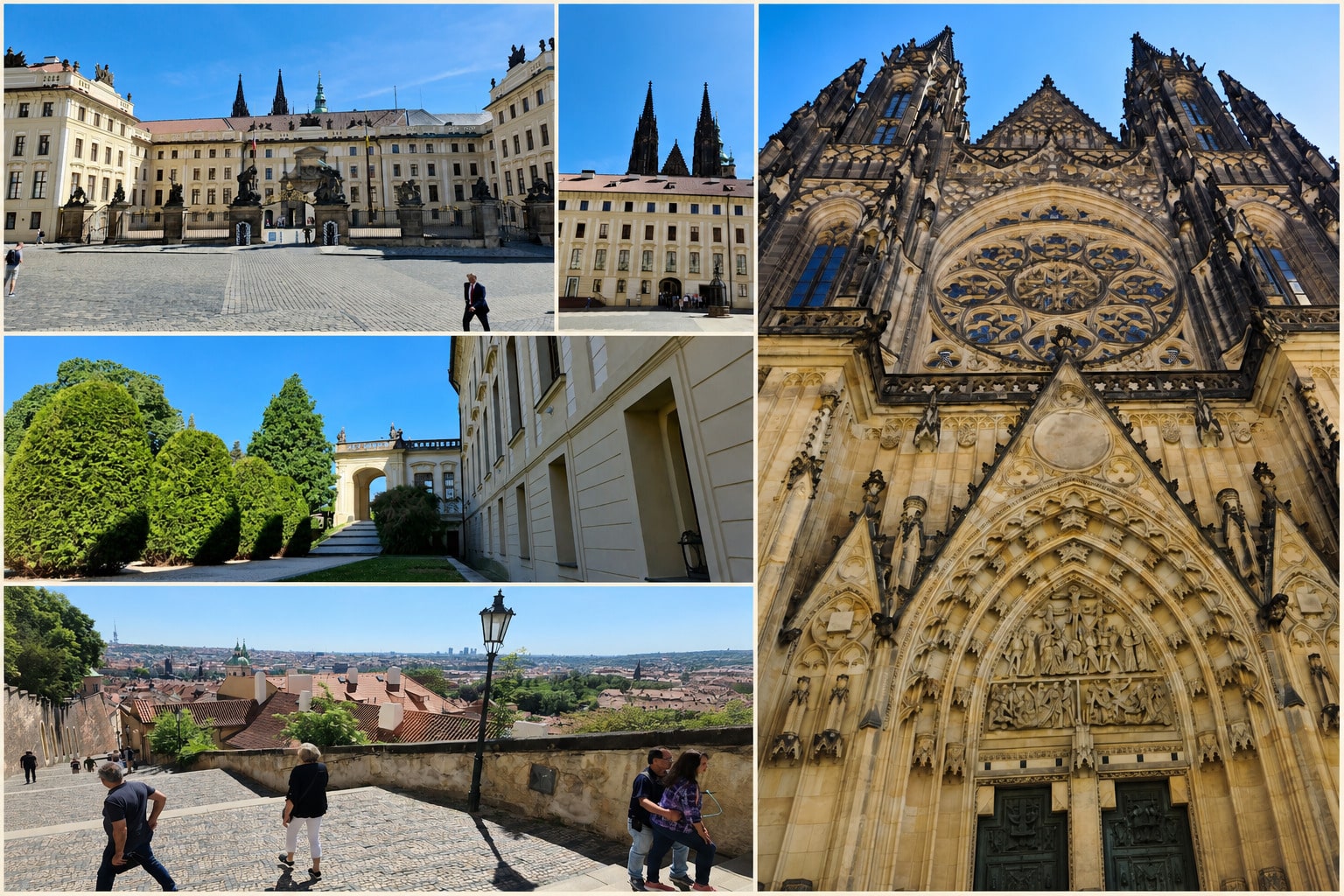
For a more scenic approach, take the metro to Malostranská and walk uphill through the gardens or historic streets. You can also climb the Old Castle Stairs, although the incline may be tiring.
When I visited, I took the stairs from Malá Strana. I counted about 207 steps, give or take a few instances where I stopped to gasp for air. If you aren’t looking for a surprise leg workout before your vacation lunch, just hop on Tram 22 or 23 instead!
The site’s sacred history began long before the present cathedral. Prince Wenceslas founded a Romanesque rotunda here in the 10th century. It was later replaced by a larger basilica.
In 1344, after Prague became an archbishopric, Charles IV began an ambitious Gothic cathedral. The first architect was Matthias of Arras; after his death, the young Peter Parler continued the work and gave the building many of its most inventive Gothic features.
Construction was interrupted during the Hussite Wars and remained incomplete for centuries. A major effort to finish the cathedral began in the 19th century, and the completed building was consecrated in 1929—almost six centuries after work began.
Today, medieval chapels stand alongside later stained glass and decoration. That long, layered history is part of what makes the cathedral so compelling.
Oh, absolutely. Prague is absolutely packed with gorgeous churches, but this one is the ultimate showstopper. It is massive, beautiful, and practically oozes history. Honestly, things like the stunning St. Wenceslas Chapel and the epic city views from the tower are worth the trip all by themselves. But do yourself a massive favor: don’t just dash through the main hallway like you’re playing a game of tourist tag! Stop and look back at the giant circular rose window. Hunt down the colorful Mucha glass. Take a breather by the chapels. It’s these little moments that turn a quick “I was here” photo-op into a memory you’ll actually talk about later.
If you want to stay very close to St. Vitus Cathedral without needing to walk far, the best options are boutique hotels and residences located right inside or just below Prague Castle in the Malá Strana district. These accommodations are within a few minutes’ walk of the cathedral, making them ideal if mobility is a concern.
MOOo by the Castle – A luxury apartment-style stay 400 metres from the castle, with excellent accessibility and modern amenities.
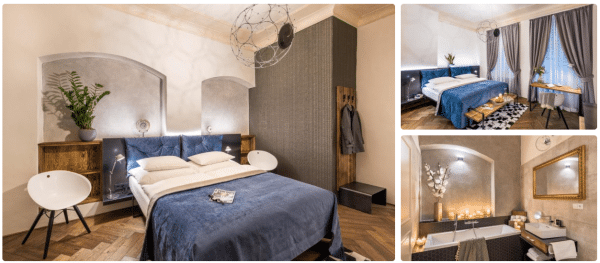
Alchymist Grand Hotel and Spa – Boutique luxury with castle views, offering breakfast and elegant interiors. It’s about 100 metres from the cathedral.

Tourist access is normally included in a Prague Castle visitor circuit ticket, while the Great South Tower may require separate admission. Access arrangements can change, so check the current ticket information before visiting.
Allow 45–60 minutes for the cathedral interior. Add 30–45 minutes if you are climbing the Great South Tower, with extra time for queues.
If you want the best view in Prague, you have to earn it. The Great South Tower has 287 tight, spiral steps and zero elevators. Your calves will definitely be screaming at you, but the view of those red rooftops makes the burning totally worth it.
The St Wenceslas Chapel is the cathedral’s most important sacred space. The Alfons Mucha window, western rose window, Royal Crypt and silver tomb of St John of Nepomuk are also highlights.
Yes. It stands in the Third Courtyard at the heart of the Prague Castle complex.
It is part of the UNESCO-listed Historic Center of Prague rather than a separately listed World Heritage Site.
The cathedral holds the tombs of Czech patron saints and rulers, including St Wenceslas, St John of Nepomuk and Charles IV.
The Crown Jewels are stored in the cathedral but are not part of the normal visitor route. They are displayed publicly only on special occasions.
Sharing the places I’ve come to love. – Arina ♡
Ditch the tourist traps. Whether you are wandering through Prague’s fairytale quarters or exploring the scenic hills of the Czech and Slovak Republics, these lightweight guides are packed with easy maps and local shortcuts. Pick your guide and explore with confidence!
There’s so much more to Prague…