Some cookies are needed to make this site work. With your permission, we'd also like to use cookies to see how people use the site and to show relevant ads and travel deals. You can change your mind at any time using the "Cookie settings" button. Read more in our Policy.
Your browser is sending a "do not sell or share" signal, so advertising cookies are off by default.
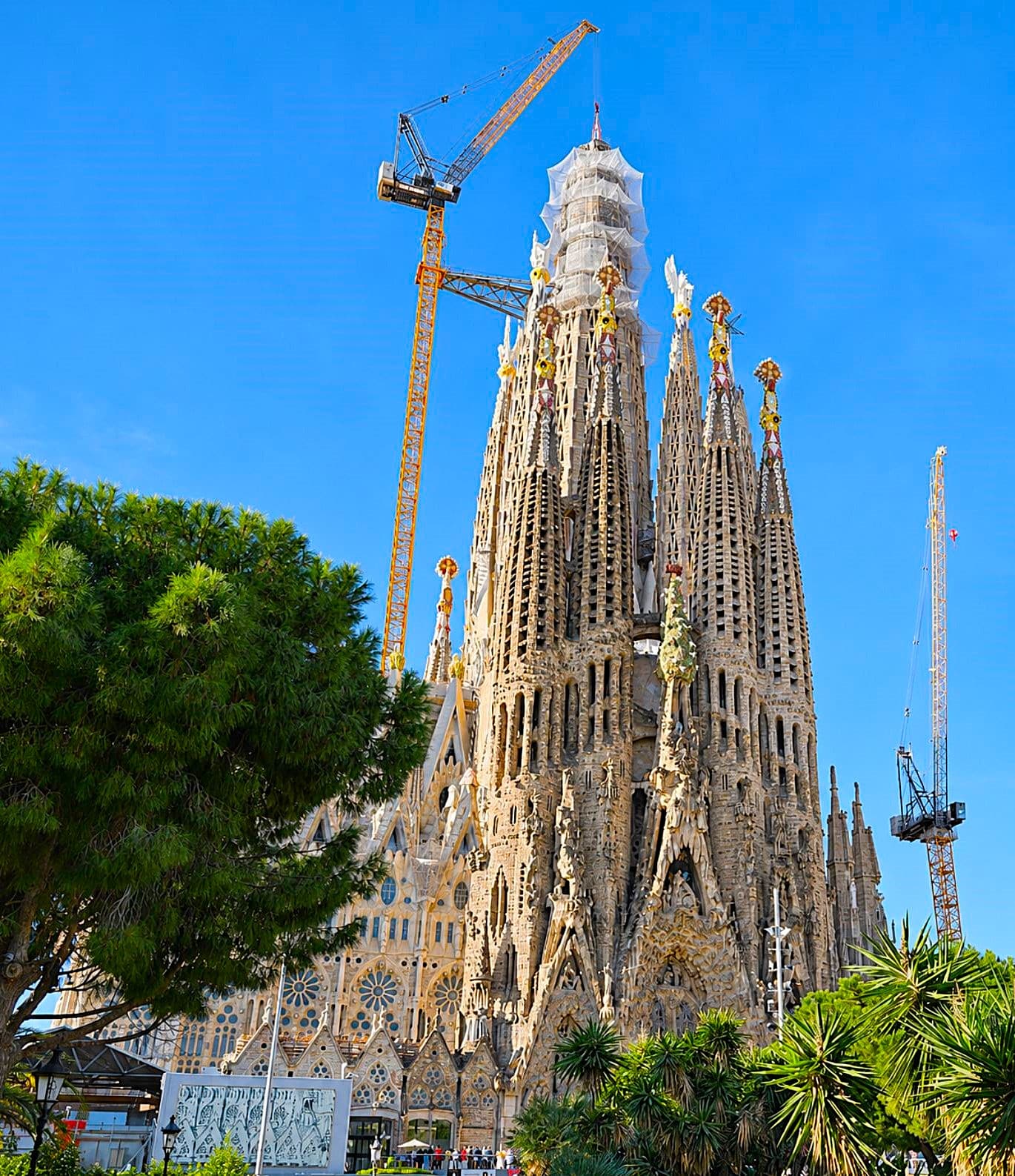
Barcelona’s Sagrada Família reached its full height of 172.5 meters (566 feet) on February 20, 2026, when a crane lifted the final piece of the cross onto the Tower of Jesus Christ into place. The basilica had already overtaken Germany’s Ulm Minster in October 2025. Reaching its full height in 2026 made the moment especially fitting. It was 100 years since Antoni Gaudí’s death.
You may still see cranes when you visit. Work continues on the Glory Façade, and the basilica has scheduled work inside the central tower for 2027 and 2028. The wide photo in this guide shows the Sagrada Família as it looked on an earlier visit, before the tower reached its full height.
Take metro L2 or L5 to Sagrada Família in Barcelona’s Eixample district. If you’ve booked a timed ticket, head for the Nativity Façade on Carrer de la Marina. The basilica’s postal address is on Carrer de Mallorca, so use Carrer de la Marina when you look up the general entrance. Book ahead and have the ID or passport that matches the name on your ticket handy.
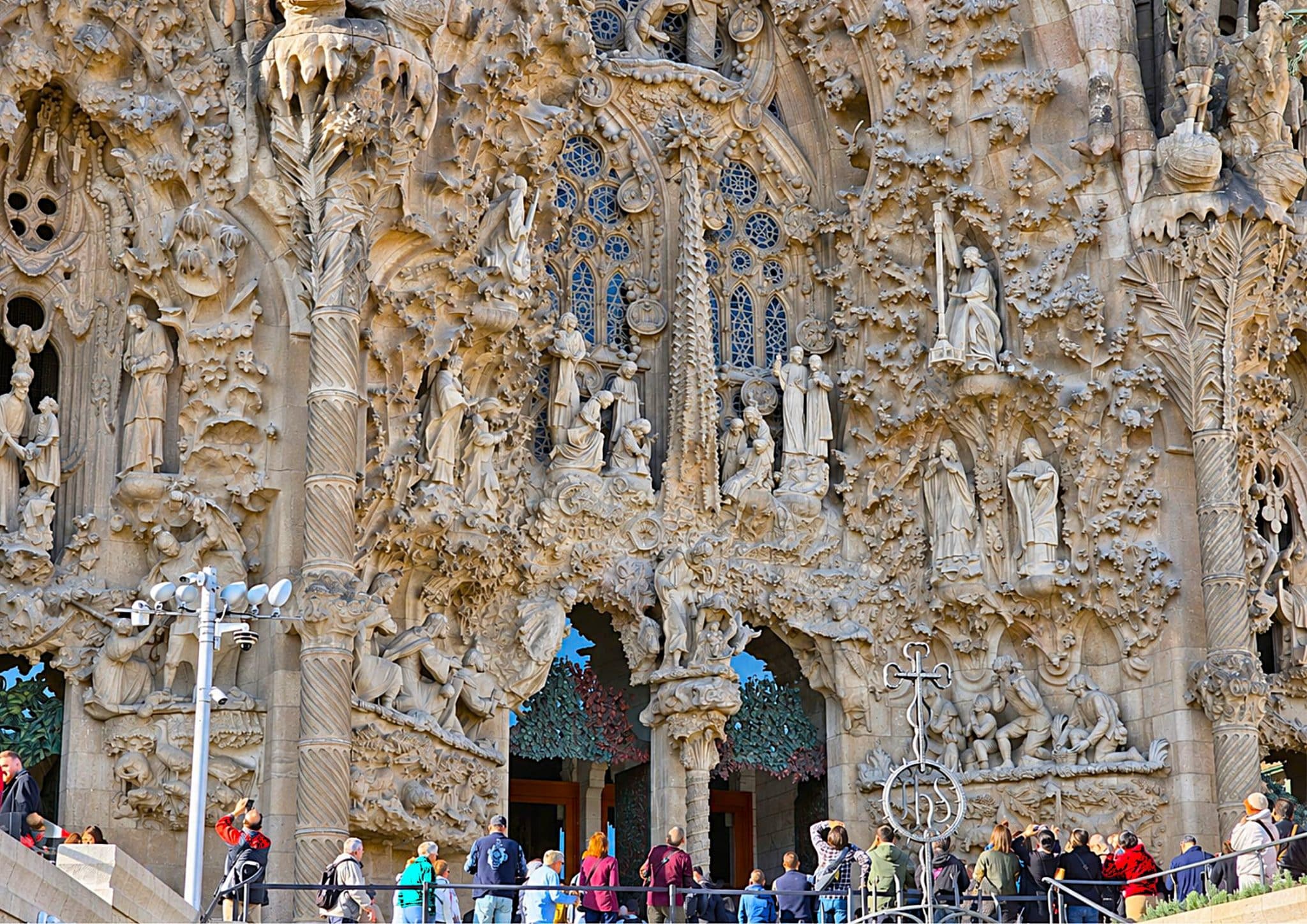
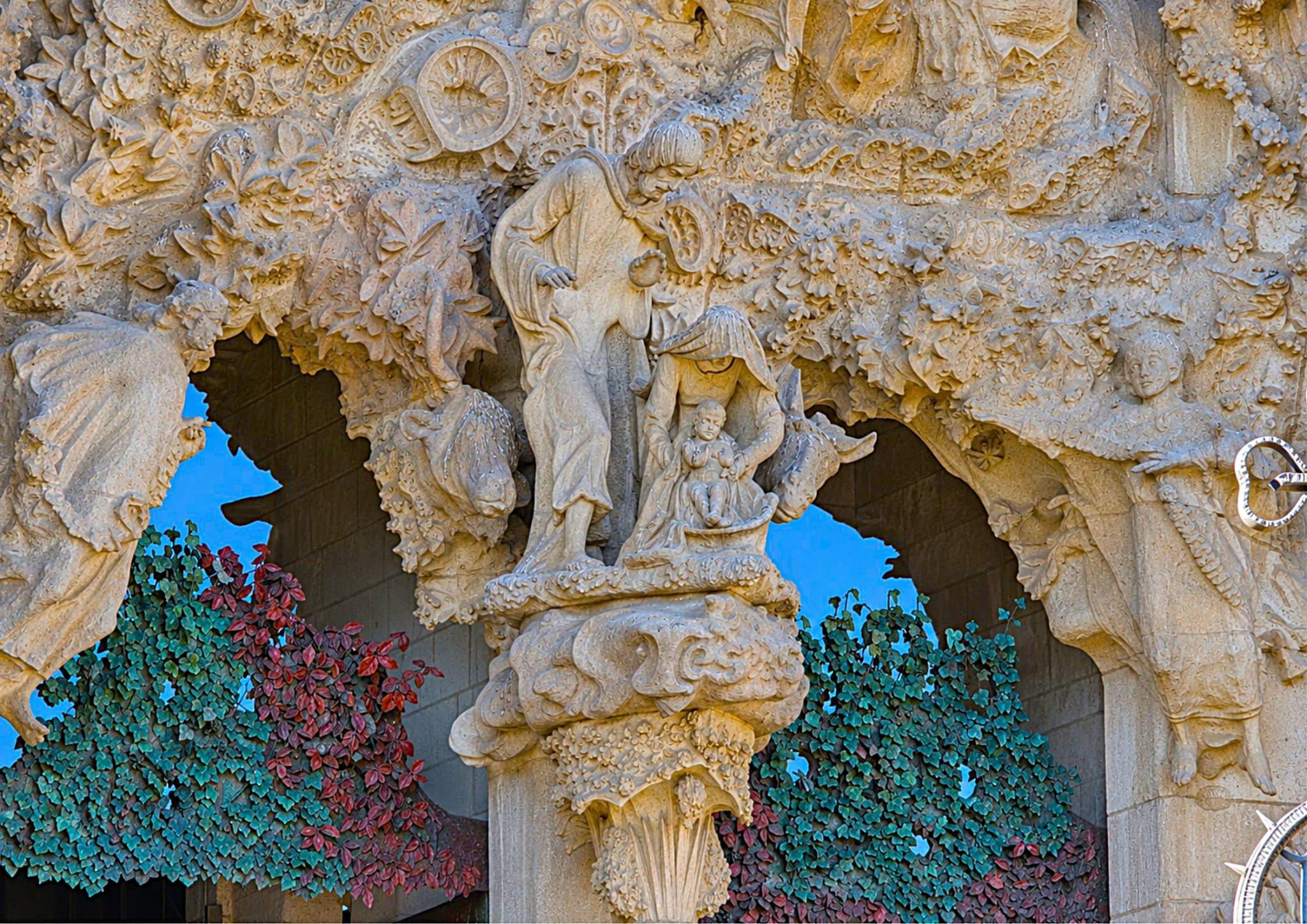
Start with the Nativity Façade. For a wider photo, cross Carrer de la Marina into Plaça de Gaudí and walk around to the far side of the pond. Then come back for a closer look at the doors. The blue-green leaves are bronze, and sculptor Etsuro Sotoo tucked little creatures among the ivy and flowers. See if you can spot a ladybug. It’s easy to walk right past it when you’re busy looking up.
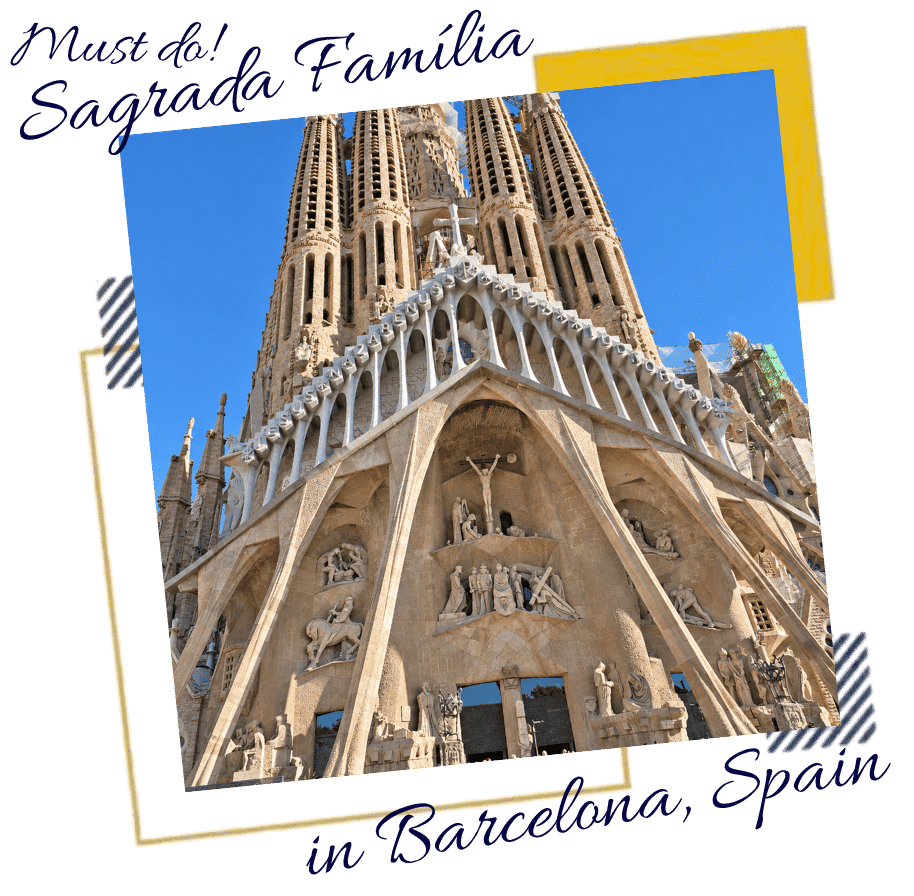
Then walk around to the Passion Façade. Follow Carrer de Provença around the back of the basilica to Carrer de Sardenya. Here, the stone columns lean in above the entrance. Look up between them to find the crucifixion scene. For a wider view, step back into Plaça de la Sagrada Família. If you’re meeting someone, send them the square’s name. There’s a square on each side, and it’s easy to end up waiting across the block from each other.
If you’re choosing a time for outdoor photos, try the Nativity side in the morning and the Passion side later in the day. The two façades face in different directions, so a photo that’s in shadow when you arrive may look quite different a few hours later.
When you step into the nave, look straight up. The stone columns split into branches near the ceiling, like trees spreading out overhead. You can see it in the top-right photo. Then look back down at the windows. Some glow blue and green, while others light up in yellow, orange, and red.
A small tip for your visit. Pause somewhere out of the way and look at the stone around the windows, too. The color spills beyond the glass onto the columns and walls. Then turn around and look back the way you came. The same stretch of the nave can feel quite different from the other direction.
Construction began in 1882 under architect Francisco de Paula del Villar. Gaudí took over in 1883 and reshaped the project. He lived to see one bell tower finished, the one dedicated to Saint Barnabas on the Nativity Façade.
In 1936, during the Spanish Civil War, vandals burned plans and photographs and smashed plaster models from Gaudí’s workshop. Later teams pieced together what they could from surviving material, published plans, and photographs. Those fragments and Gaudí’s design principles guided the architects who carried on his work.
If you’d like a personal phone photo inside, ask staff what they allow that day and keep your flash off. The basilica’s published rules restrict photo and video equipment inside and prohibit tripods on the grounds unless you have press accreditation. For photography or filming on the grounds for commercial, advertising, or publication purposes, get written permission from the Foundation in advance.
Covering your shoulders and knees is the easiest way to dress for your visit. The official minimum for pants and skirts is mid-thigh. Wear shoes and skip swimwear and see-through clothing. Take your hat off in the nave and museum, unless you wear it for religious, health, or belief-related reasons. Staff can refuse entry if your outfit doesn’t meet the dress code, so don’t count on a refund if you’re turned away. A light layer is handy if you’re sightseeing in a sleeveless top.
If you have time for one more stop, follow Avinguda Gaudí to Sant Pau Recinte Modernista. The avenue runs diagonally from the basilica toward the former hospital complex. It’s an easy pairing if you want to see more of Barcelona’s architecture on the same outing.
The world’s tallest church is an easy stop to put on your Barcelona list. But if you can give it a little breathing room in your day, do. The longer you look, the more you find.
>> Planning the rest of your trip? Our Barcelona travel guide has more ideas for what to see and do while you’re in the city.
Explore the world. Bring its beauty home. – Arina ♡