Skiathos is intimate, sea salt and pine‑scented (you’ll remember its scent forever), and effortlessly cinematic. It’s the island where you can wander from a lively old town to a secluded cove in the same afternoon. Skiathos Town is charming without being overwhelming — waterfront tavernas, tiny alleys, and that classic Greek island glow at night.
This Skiathos Travel Guide gathers the island’s best beaches, food spots, viewpoints, and experiences into one easy, inspiring place. Whether you’re planning your first visit or returning for more of that Aegean magic, this guide helps you discover what to see, where to go, and how to make the most of your time on this gorgeous island.
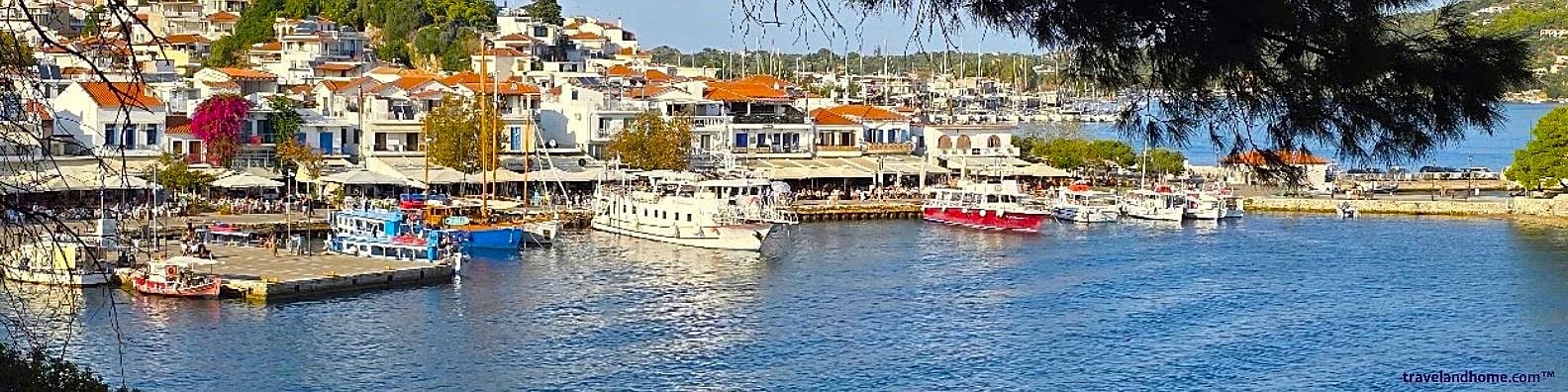
Skiathos Airport may be small, but its setting makes flying here quite memorable. The runway stretches across a narrow part of the island, with the sea close to both ends. It is also only about 1,628 metres long, which means pilots work with less runway than they would at many larger airports.
That does not make Skiathos unsafe. However, weather and runway conditions can affect operations more quickly here.
For arriving aircraft, rain can reduce braking performance on the runway. Pilots therefore calculate whether they have enough distance to land and stop safely. Wind, visibility, aircraft weight and runway condition all matter too. If conditions fall outside the required limits, the crew may go around, wait for improvement or divert elsewhere.
Departures face similar calculations. Aircraft need enough runway not only to take off, but also to stop safely if the pilots have to reject the takeoff.
I experienced this first-hand when leaving Skiathos for Budapest.
We had already boarded and were ready to depart. However, the captain announced that we could not take off because the conditions were “a 3 and not a 5.”
He did not explain the scale, so I would not pretend to know exactly what those numbers represented. What mattered was clear: the conditions did not give the crew the safety margin they needed for departure.
So we waited.
Rain was moving across Skiathos that morning, and we watched the forecast for a possible break. Eventually, conditions improved enough for our flight to leave.
It was a useful reminder that a weather delay at Skiathos does not automatically mean a cancellation. Sometimes the crew simply needs to wait for the runway and weather conditions to improve.
Then, once we were finally airborne, I took this photograph.
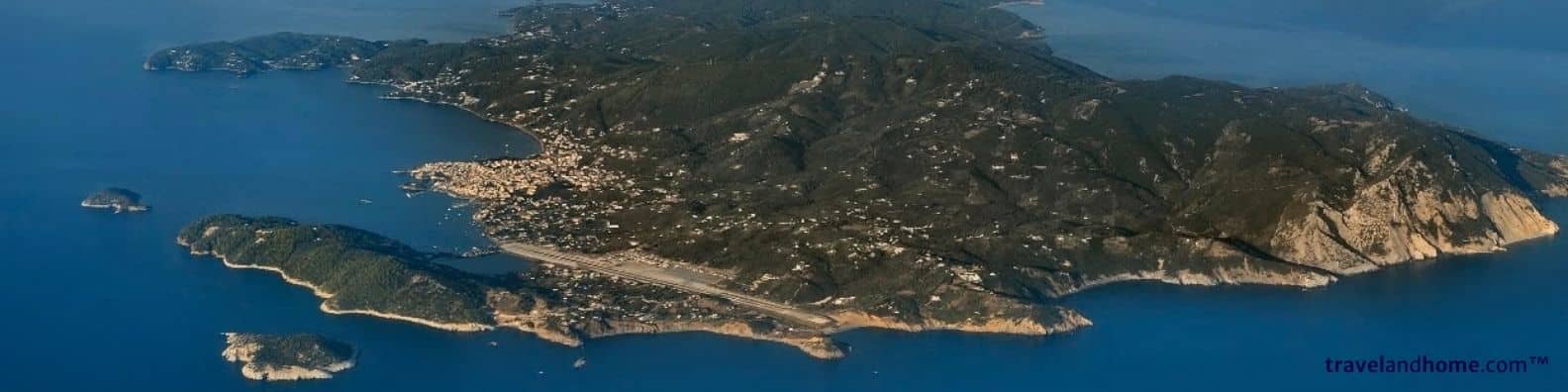
Looking down, I could suddenly see the whole picture. Skiathos Airport sits on a remarkably narrow strip of land, with the runway reaching almost from one coastline to the other.
That perspective helped me understand why conditions matter so much here.
If you are arriving during poor weather, your flight may still land normally. However, if the runway, wind or visibility falls outside the required limits, the pilots may delay the approach, go around or divert.
Likewise, if you are departing, a spell of heavy rain or poor runway conditions may delay takeoff until the crew can safely complete its performance calculations.
So, if the weather looks unsettled on your travel day, give yourself a little flexibility, especially if you have tight onward connections.
And if you have a window seat, look down after takeoff or as you approach the island. The airport’s setting is one of those Skiathos details that makes far more sense when you see it from above.
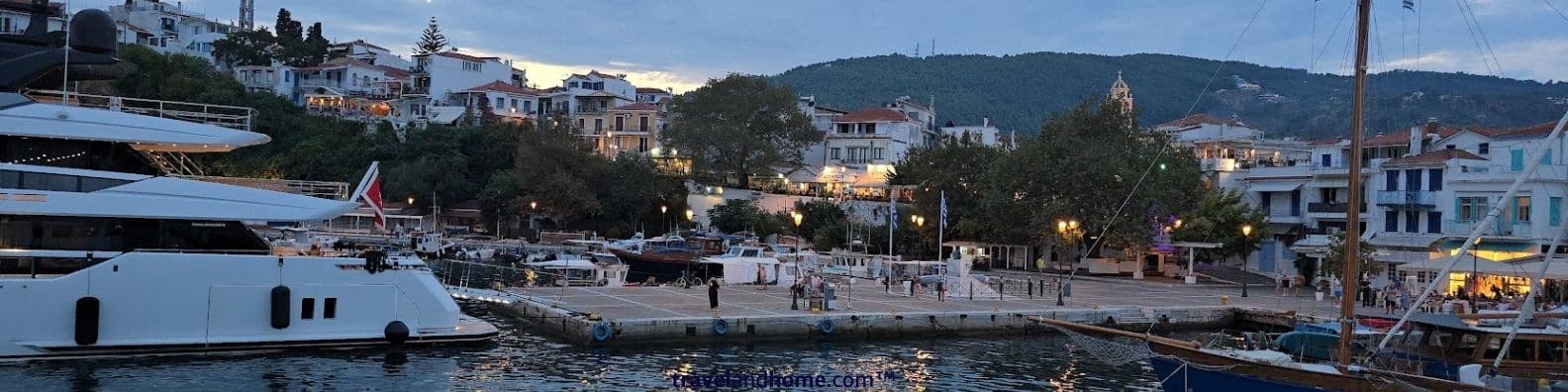
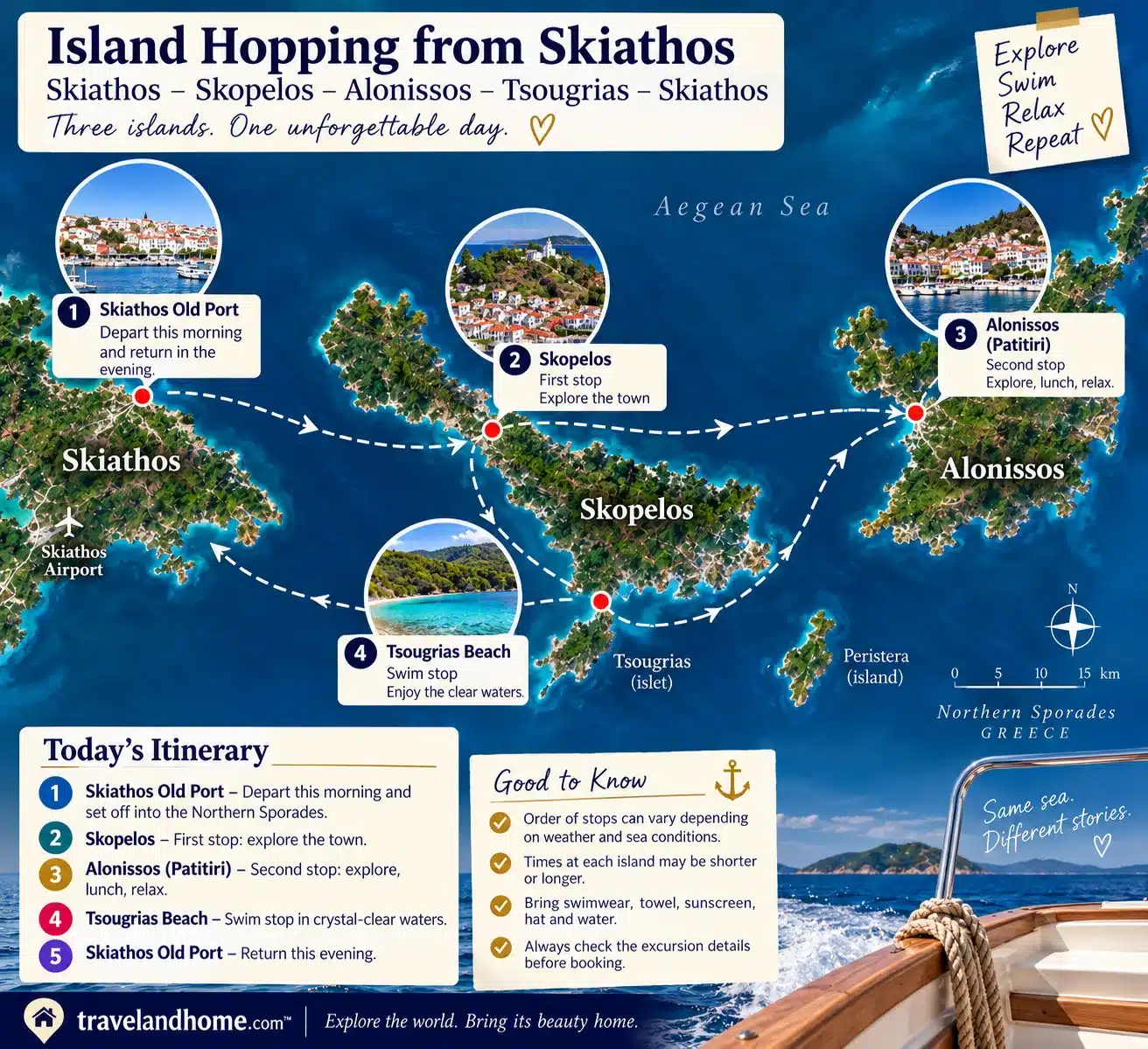
>> Planning a day on the water? → See our best 1-day island and boat trips from Skiathos
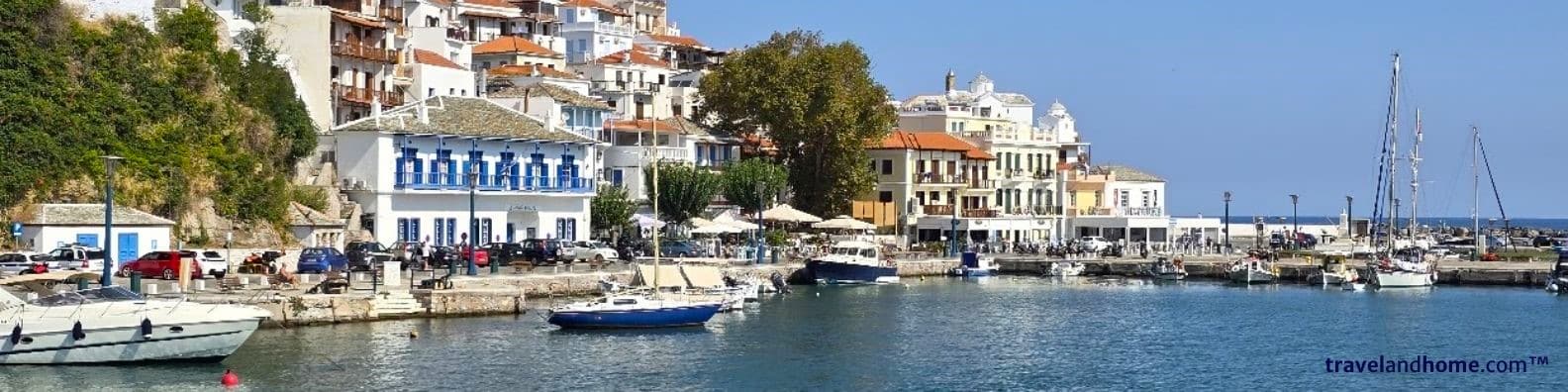
Wander the cobbled lanes upward, and you’ll eventually reach the hilltop kástro, the old Venetian fortress. The views from up there are absolutely worth the climb — the whole harbor, the tiled rooftops, and the Aegean stretching out in every direction.
Down by the water, the fishing harbor is always buzzing with life. Boats come and go, locals chat along the quay, and the whole area has that lively, everyday rhythm that makes Skopelos feel so authentic. It’s also where you’ll find some of the best fish restaurants on the island, perfect for a long, lazy lunch or a sunset dinner by the sea.
The Bourtzi Peninsula and the Papadiamantis House-Museum are among the noteworthy sights in the town. The island isn’t just about beaches — it’s also the birthplace of one of Greece’s most beloved writers, Alexandros Papadiamántis (1851–1911). His stories, written in the old formal language of Katharevousa, unfold against the backdrop of the island itself, capturing its rhythms, characters, and quiet mysteries. Two of his most celebrated works — The Murderess and the serialized Merchants of the Nations — are still widely read today. Papadiamántis spent most of his life on Skiathos and eventually died here, living simply and almost reclusively. His restored home is now a small museum, offering a gentle, atmospheric glimpse into the island’s literary soul. The restored house‑museum sits just off Papadiamantis Street, down a small side alley in the heart of the town.
The bronze statue of Alexandros Papadiamantis stands on the waterfront, near the old port of Skiathos Town. It’s one of the most photographed spots along the harbor.
The Bourtzi café is a dreamy little spot on the Bourtzi peninsula where you sit under tall pine trees with the sea wrapped around you on both sides while boats glide in and out of the harbor. They have this slow, elegant, slightly nostalgic vibe — a mix of sea breeze, dappled sunlight, and that soft pine scent that makes mornings feel almost cinematic. People come here not just for a drink but for the ritual of easing into the day: long breakfasts, journaling, watching the island wake up, or enjoying a quiet sunset cocktail with gentle music in the background. It’s simple, beautiful, and very Skiathos in the best possible way.
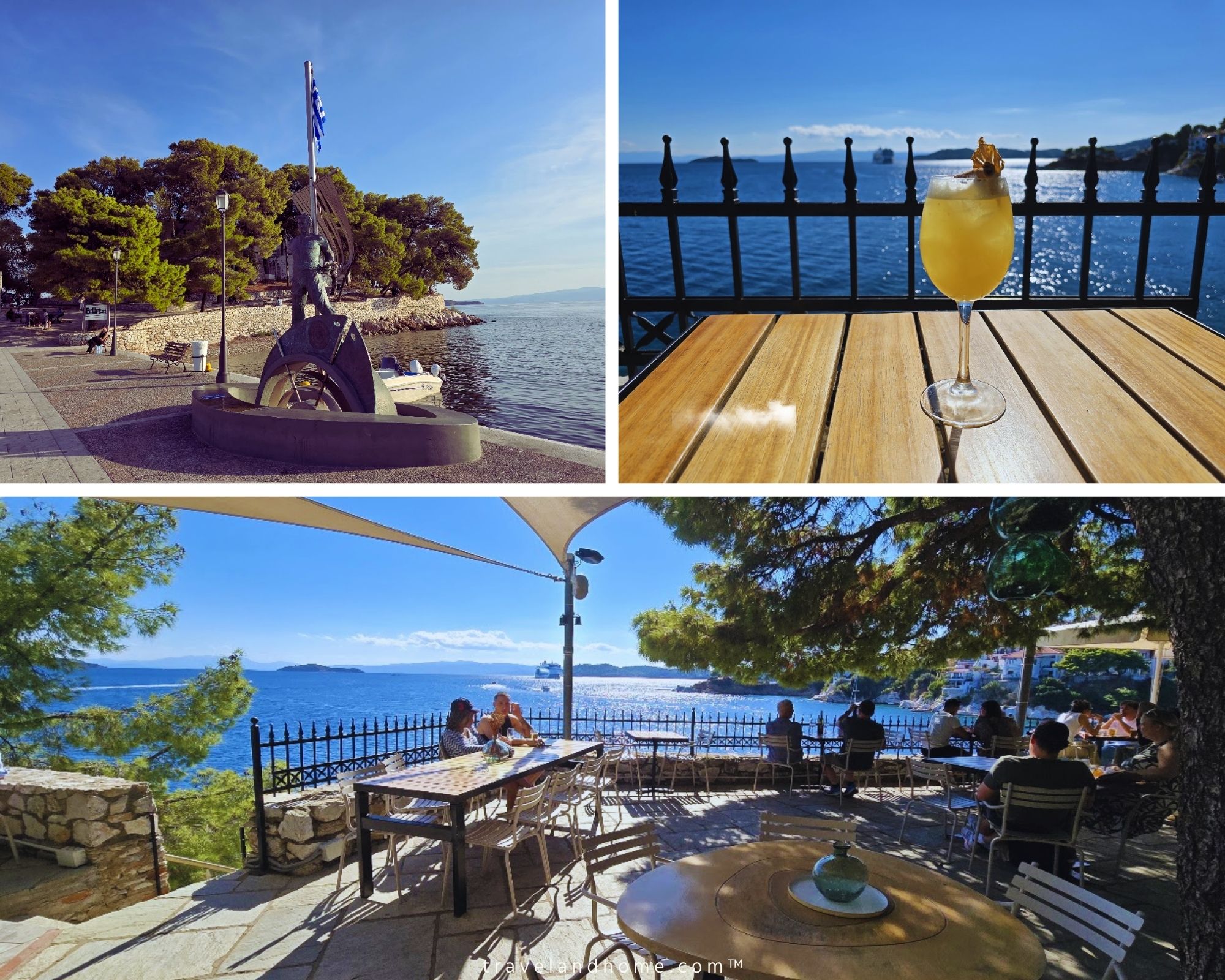
Photo Spots You’ll Love: The old port at blue hour, the arch at Lalaria, pine trees leaning over the water at Koukounaries, and the stone paths of Kastro.
The island is a popular tourist destination thanks to the more than 60 sandy beaches along its 44 km (30 miles) of coastline.
Elia Beach is a “real gem”. This beach is a favorite for its beauty and relaxing atmosphere.
Tsougrias Beach, often called the best beach on the island, is loved for its breathtaking scenery and tranquil vibe.
Mandraki Beach is the beach to go to if you prefer a more natural and less touristy spot. It’s praised for its untouched beauty and peacefulness.
Mikros Aselinos Beach is a “little gem” and is perfect for those seeking a quieter experience. It’s also fantastic for snorkeling and has an authentic beach bar.
Megalos Aselinos Beach is known for its soft sand, clear water, and laid-back feel. This beach is easy to reach by car and offers a more secluded experience.
But Lalaria comes with a catch — there is no road to it.
The beach sits on the wild northern coast of Skiathos and can only be reached by boat. That isolation is part of what makes it so extraordinary. There are no rows of hotels behind you, no beach road and none of the easy accessibility you’ll find along Skiathos’ southern coast.
And then there is Tripia Petra, the naturally sculpted rock arch standing in the sea at the end of the beach. Together with the white cliffs and turquoise Aegean, it creates one of those views that instantly says Skiathos.

Here’s something I wish I’d known before booking my own boat trip: make sure you know which Lalaria the excursion is taking you to.
When most of us picture Lalaria Beach, we mean the famous beach on the northeastern coast of Skiathos — the one beneath enormous white cliffs, covered in smooth pale pebbles, with the unmistakable Trypia Petra rock arch at one end. This Lalaria can only be reached by sea, and boats can visit only when conditions along the exposed northern coast allow it.
However, there is also a beach called Lalaria on Tsougrias Island, the little island just offshore from Skiathos.
I got caught by this myself.
I booked a boat excursion believing I was going to the famous Lalaria with the rock arch. Instead, our Lalaria was the beach on Tsougrias Island. It was still lovely — and exploring Tsougrias and its tiny chapel became an experience I enjoyed — but it wasn’t the Lalaria I thought I had booked.
So don’t rely on the words “Lalaria Beach” alone when choosing an excursion. Look carefully at the itinerary or ask the operator one very specific question:
“Is this the Lalaria Beach with the Trypia Petra rock arch on northern Skiathos?”
If that’s the beach you have your heart set on seeing, that simple question can prevent a disappointing misunderstanding.
There’s another complication. The famous Lalaria faces the north Aegean, so excursions depend heavily on wind and sea conditions. Even when you have booked the correct Lalaria, boats may need to change their route if the northern coast becomes too rough.
>> TravelandHome tip: Don’t choose an excursion simply because Lalaria appears in the description. Confirm that it includes Trypia Petra, the famous rock arch, and check the cancellation or itinerary-change policy before paying.
South Coast: Koliós, Troúlos, Tsougria (islet), Koukounaries (southwest)
West Coast: Banana, Agia Eleni, Mandraki, Elia
North Coast: Mikros & Megalos Aselinos, Lalaria
>> Travel Tip: Wheelchair-accessible beaches include Agia Eleni, Agia Paraskevi (Platanias), Koukounaries, and Vromolimnos Beach.
>> TravelandHome tip: Don’t take a pebble home as a souvenir. Lalaria’s smooth white stones are part of the protected landscape and visitors are asked to leave them where they belong. Take the photograph instead — and bring Skiathos home another way.
Skiathos saves some of its prettiest scenery for the end of the day. For the strongest sunset photographs, look toward the island’s western and northwestern side, where you’ll find more open views toward the setting sun. If you’re staying around the south coast, it’s worth making a special late-afternoon trip rather than assuming the beach outside your hotel will give you the best sunset.
On Skiathos’s southwestern side, Agia Eleni has the orientation you want for that wonderful combination of sand, sea and sinking sun. The pines along the shore can also be used to frame photographs rather than simply shooting an empty horizon. Current local guidance suggests Bus Stop 25 followed by roughly a 20-minute walk.
Climb through the lanes to Agios Nikolaos and the clock tower for a completely different sunset photograph: red-tiled rooftops, the harbor, Bourtzi and the sea beyond. Late-afternoon light illuminates the town beautifully, and the viewpoint is only around a ten-minute climb from the waterfront.
You don’t have to organize an expedition every evening. Walk onto the pine-covered Bourtzi peninsula between the old and new ports and photograph the boats, water and town as the light softens. Stay a little after sunset, too — the transition into blue hour, when the harbor lights begin appearing, may produce an even prettier photograph than the sunset itself.
This is where history and landscape come together: old stone ruins, rugged cliffs and open Aegean views. But I would add an important warning to the guide. Kastro involves uneven terrain, so don’t plan on hiking an unfamiliar trail back in darkness merely to capture the last streak of color. Treat it as a late-afternoon sightseeing trip with golden-hour photography rather than casually staying until well after sunset.
If you’d rather photograph nature than people photographing nature, the west-facing beaches around Mandraki are worth considering. They require more effort to reach than the town viewpoints, but that is part of their appeal.
One of the surprises of my island-hopping day was the sunset at Tsougrias.
Our final stop was on this little island before returning to Skiathos Old Port, and as the day began to fade, the light over the Aegean became absolutely beautiful. I hadn’t booked this excursion for the sunset, which somehow made it even more special.
Looking back, I’m particularly grateful that I saw it.
I had also booked a dedicated sunset cruise later in my stay. I boarded that boat fully intending to go, but sometimes travel — especially solo travel — doesn’t unfold quite as planned. I ended up getting off before the cruise properly began.
So, in the end, the sunset I hadn’t planned became the sunset I got to keep.
For me, that is one of the lovely things about Skiathos. You can carefully plan your itinerary, yet some of the moments you remember most happen somewhere else entirely.
>> My TravelandHome tip: Don’t assume you need a dedicated sunset cruise to experience a beautiful Skiathos sunset. If an island-hopping excursion returns later in the day, keep your camera close. The journey back across the Sporades can be every bit as memorable as the destinations themselves.
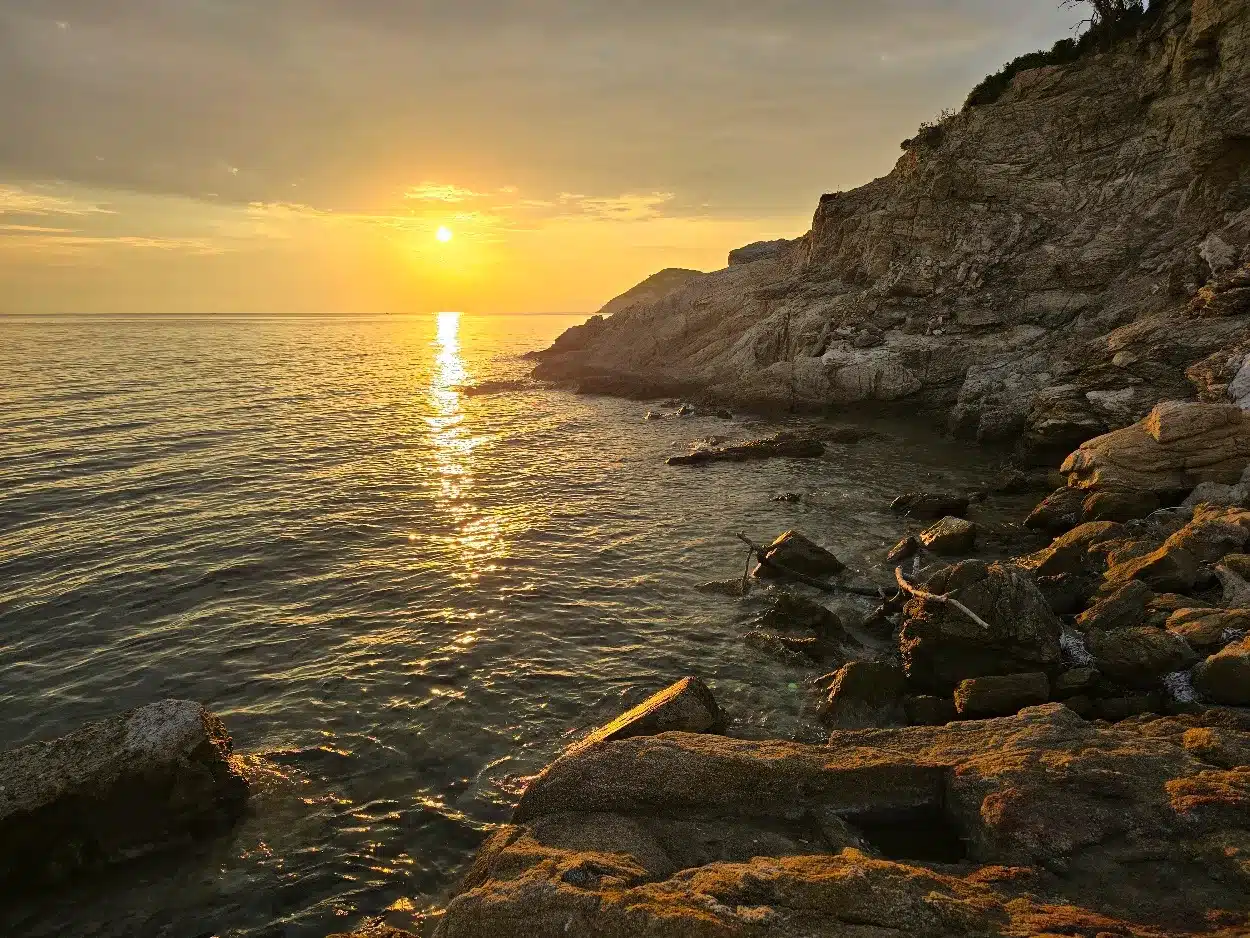
A personal note: There was much more behind my decision to leave that sunset cruise. I wrote about that experience in Getting Off the Boat on my personal blog, Journeying With Wisdom.
>> A little photography tip: Don’t arrive at sunset. Arrive 30–45 minutes beforehand. You’ll get golden-hour light on the landscape first, followed by sunset and then the softer colors afterward.
The 2008 hit film Mamma Mia! was adored by millions worldwide. Starring Meryl Streep and Pierce Brosnan, it was based on
the music of Swedish pop group ABBA. To give the impression that the film was set on the mythical island of Kalokairi, many scenes from the well-known film were filmed on the Greek islands of Skópelos (Want to extend your holiday? Add it as a day trip!) and Skiathos. Mamma Mia! was the most popular of all the movies filmed on the island. The thrillers Act of Piracy (1988) and The Telemachy (2012) rounded out the top three most popular movies filmed on this gorgeous island.
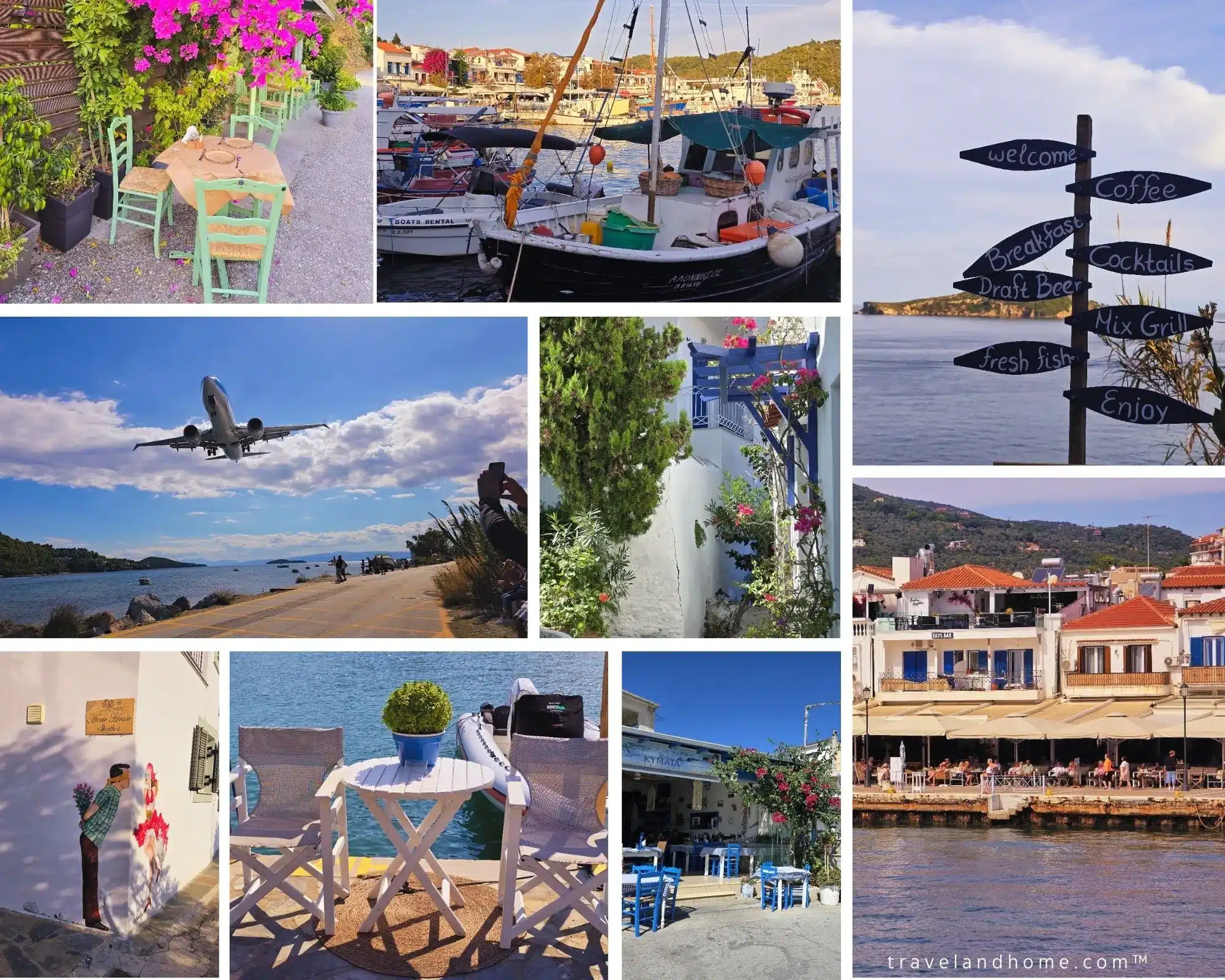
I suggest you pack comfortable walking shoes because there is no room for counting calories on THIS holiday! Work off the calories by taking a stroll to seaside restaurants for fresh fish. Combine the fish with a simple, perfect Greek salad that somehow tastes better here than anywhere else.
Skiathos enjoys a classic Mediterranean climate, with warm summers, mild winters, and plenty of sunshine — making it a dreamy destination for beach lovers, hikers, and island explorers alike. Based on the weather data from 2012–2021, here’s a practical breakdown to help you choose the best time to visit:
>> Travel Tip: September evenings are perfect for wandering — bring a light wrap.
Here is the slightly unglamorous answer: sometimes the best thing to do is nothing at all.
I discovered this during a properly wet day in Skiathos. While staying at Skiathos Blu, I chatted with several other guests about our plans. We all reached much the same conclusion. When the rain really settles in, Skiathos is not necessarily an island where you need to force yourself out sightseeing.
Read a book. Catch up on your messages. Scroll through your photos. Spend some time on your laptop. Have a long coffee or lunch. In other words, give yourself permission to have a slow day indoors.
One couple staying at the hotel decided to rent a car so they could make something of the rainy weather. It sounded sensible at first. However, they returned about an hour later after driving only around 6 km. The weather had taken the pleasure out of exploring, and they ended up spending the rest of the day indoors anyway.
Unfortunately, they had still paid for a full day’s car rental.
That experience changed my advice about rainy days in Skiathos. Don’t automatically rent a car simply because the beach or boat trip is off the agenda. If several hours of steady rain are forecast, check the conditions first and decide if there is somewhere you genuinely want to visit.
Skiathos is compact, and so much of its appeal lies outdoors: beaches, viewpoints, boat trips, woodland, little coves and wandering through town. On a genuinely miserable weather day, sometimes the best use of your holiday budget is not spending it trying to outrun the rain.
>> TravelandHome Tip: If rain is expected, wait before booking a last-minute rental car. A short shower may pass quickly. However, if the island has settled into several hours of steady rain, a lazy indoor day may prove far more enjoyable — and considerably cheaper.
Yes, but only for a few months of the year.
Usually, from June to September, there are direct seasonal flights from many European cities; for example, flights from Budapest (BUD) to Skiathos (JSI).
Off‑season, you must fly via Athens (ATH) and connect with Sky Express or Olympic/Aegean. Flight expenses are usually higher during the off-season due to the added connecting flight.
Book your flight tickets directly to Skiathos Alexandros Papadiamantis Airport (IATA: JSI, ICAO: LGSK).
The airport sits on the island’s northeast side, built between a lagoon and the Lazareta peninsula.
The airport sits on the island’s northeast side, squeezed between a lagoon, the sea, and the Lazareta peninsula. That unusual location leaves little room for a runway — and creates one of Greece’s most memorable arrivals. As your plane descends toward Skiathos, the Aegean seems incredibly close below before the aircraft sweeps low over the shoreline and road and touches down on the island’s short 1,628-meter runway. If you have a window seat, this is one landing you’ll want to be awake for.
>> TravelandHome Tip: Choose a window seat if you can. The exact view varies with the runway in use, wind and approach direction, so I don’t promise the famous ultra-low road approach. But the airport’s position between land and water makes even the alternative approach rather special.
A Slow‑Travel Haven Above Tzaneria Beach
Skiathos Blu is one of those places that quietly elevates your whole Skiathos experience — the kind of stay that shifts the rhythm of your holiday in the best possible way. It’s perfect if you love a natural, peaceful setting but still want to be close to everything. Families settle in easily because the atmosphere is calm and spacious, couples love the views from the main hotel building and the easy beach access, and anyone who prefers bungalows will feel instantly at home. And if you want to explore without the stress of driving, you’re right on the main bus line but blissfully removed from the busy town center.
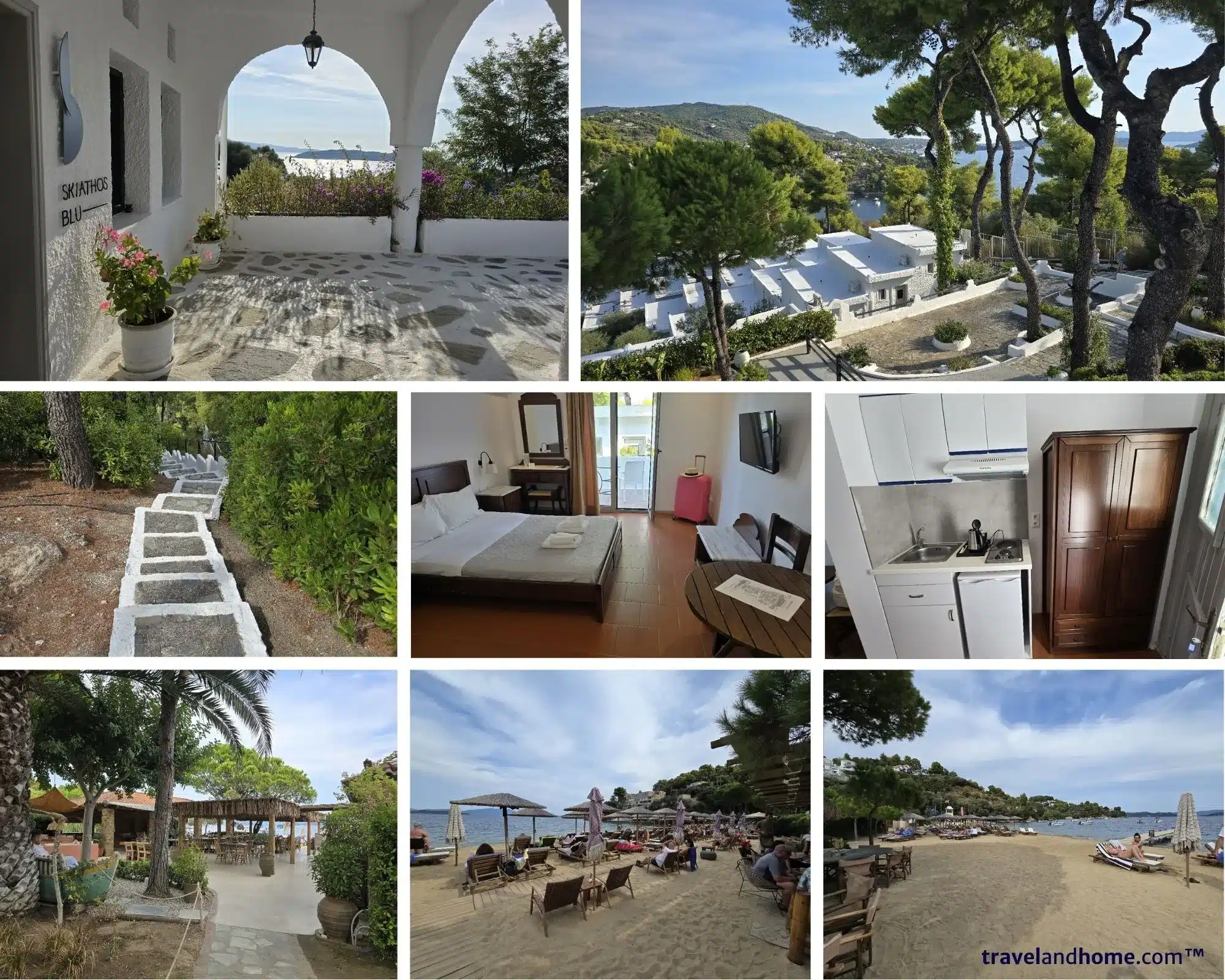
One of the biggest perks is how affordable it becomes outside peak season. September in particular feels like you’ve won the timing lottery — warm seas, golden light, quieter beaches, and prices that suddenly make a longer stay feel very doable.
What really makes Skiathos Blu special is the way it changes the vibe of your trip. Staying here means less commuting and more living — more swims before breakfast, more slow mornings with cicadas humming in the pines, more of that “I could stay here forever” feeling. Tzaneria is one of the best‑located pockets on the island for a relaxed, beach‑first holiday. The sea is usually calm and clear, perfect for those gentle morning dips, and the whole area has this soft, pine‑scented stillness that makes you exhale the moment you arrive. It’s the ideal base if you like mixing lazy beach hours with little adventures.
The location couldn’t be easier. If you want the quickest walk to the beach, hop off the bus at Stop 12 — you’re practically on the sand at Tzaneria. If you prefer entering from the top of the resort, closer to reception and the higher rooms, Stop 13 is your friend. Both are on the main Skiathos Town → Koukounaries line, so getting around is effortless. And you’re only minutes from Vromolimnos, another gorgeous soft‑sand beach that’s perfect for a change of scenery.
You certainly don’t need to rent a car for your entire stay in Skiathos. The island’s main bus route makes it easy to reach Skiathos Town and many of the popular south-coast beaches, so I happily used public transport for much of my trip.
However, I changed my mind about going completely car-free.
As a solo visitor, I rented a small automatic car for one day, and it turned out to be one of my best decisions. Suddenly, I wasn’t limited to the coastal bus route or someone else’s timetable. I could head inland, stop when something caught my eye, and explore a quieter side of Skiathos.
The highlight was Evangelistria Monastery, around 5 km from Skiathos Town. This is not simply a pretty monastery hidden among the hills. According to the Municipality of Skiathos, it was here in 1807 that the first Greek flag with a white cross on a sky-blue background was designed, made, blessed and raised. Skiathos
That visit alone made the day’s car rental worthwhile for me.
Driving also gives you far more freedom to reach the island’s interior and northern areas. Skiathos has walking routes connecting the monastery with other parts of the north, while places such as Kastro are also much easier to approach independently with your own transport.
My answer now is: not necessarily for your whole holiday.
If you’re mainly planning beaches, Skiathos Town, restaurants and boat trips, the bus, taxis and boats can cover most of what you need.
However, if you want to see the inland villages, monasteries, quieter landscapes and parts of northern Skiathos, consider renting a car for one day. For me, that was the sweet spot: I avoided paying for a car I didn’t need every day, but I still had the freedom to explore beyond the coastal route.
>> TravelandHome Tip: Choose your rental day according to the weather. A car can be wonderful for exploring inland Skiathos on a decent day. However, don’t automatically rent one simply because it is raining. I met a couple who did exactly that during heavy rain; they drove only about 6 km before returning to the hotel, yet still paid for the full day’s rental.
You have three practical options:
>> Travel Tip: Greek taxi drivers must legally accept card payments. The official Greek tax authority (AADE) introduced specific taxi signage stating in both Greek and English that the driver must issue a receipt and “accept payment by card.” It also explicitly says the passenger is not required to pay in cash.
Bring a little taste of Skiathos home with you. Once you’re back, make Greek favorites like moussaka or souvlaki and relive those sunny island days around your own table. Your friends will love you for it.
For something wonderfully simple, make Greek baked feta. Place a block of feta in a small baking dish with cherry tomatoes, sliced red onion, a drizzle of olive oil, oregano, and a few olives. Bake at 200°C (400°F) for about 20 minutes, until the tomatoes soften and the feta turns warm and creamy. Serve it straight from the oven with crusty bread for dipping.
Add a chilled drink, put a bowl of olives on the table, and you’ve brought a tiny piece of that Greek-island feeling home with you.
>> Don’t miss our Greece Travel Guide for more destinations, stories, and travel tips. →
Whether you’re going for exquisite sunsets to explore or just lazing on the beach, Skiathos is a bucket list holiday destination without any doubt. Chat with your friends and plan your great escape to Skiathos. You’ll be forever happy for doing so.
Planning a Skiathos holiday or just daydreaming about those pine‑framed beaches? Drop a comment and tell us what kind of trip you’re craving — lazy beach days, island‑hopping, hidden coves, or a bit of everything.
Yes. Skiathos is an excellent Greek island for visitors who want beautiful sandy beaches, a lively but attractive town, traditional Greek food, boat trips, and relatively easy transportation without needing a rental car. The island is compact, so you can base yourself in one place and explore rather than changing hotels.
It works particularly well for a one-week holiday. Skiathos Town provides restaurants, shopping and nightlife, while the south coast has many of the island’s most accessible beaches. Boats open up the more rugged northern coastline and nearby Sporades islands such as Skopelos and Alonissos.
Skiathos is therefore a good choice for couples, solo visitors, families and first-time Greek island visitors who want plenty to do without the distances involved on larger islands such as Crete or Corfu.
Skiathos is generally the better choice if your priorities are beaches, a compact island, boat trips and getting around easily without a car. Corfu is better if you want more historical sightseeing, a larger island to explore, Venetian architecture and a wider choice of towns and villages.
Corfu is considerably larger, so a car can be useful for exploring beyond the main resort areas. Skiathos is much easier to understand geographically: Skiathos Town anchors the eastern side, while a frequent coastal bus route connects many of the popular beaches and accommodation areas along the south coast.
Neither is objectively better. For a relaxed one-week beach-and-exploration holiday, I would choose Skiathos. For a longer road-trip-style Greek island holiday with more cultural sightseeing, Corfu has the advantage.
September is arguably the best all-round month to visit Skiathos, particularly the first three weeks. The intense heat and crowds of July and August begin to ease, while the Aegean Sea remains warm from the summer and most seasonal restaurants, boat excursions and tourist services are still operating.
June is another excellent choice, especially if you prefer long sunny days and slightly fresher landscapes. July and August offer the hottest, busiest summer experience, while May and October can suit sightseeing but bring less predictable beach weather and fewer seasonal services.
For a combination of warm weather, swimming, sightseeing and fewer peak-season crowds, aim for June or September.
Skiathos is not one of Greece’s cheapest islands, but it does not have to be an expensive destination. Accommodation prices rise substantially during July and August, while June and September usually offer better value.
Your daily spending depends heavily on where you eat and how many organized excursions you take. Local buses are inexpensive compared with relying on taxis, and traditional tavernas away from the most fashionable beachfront locations generally offer better value. Boat trips, beach loungers, cocktails and frequent restaurant meals can increase the cost quickly.
A budget-conscious visitor can therefore keep costs reasonable by travelling outside peak season, using the bus, choosing locally run accommodation and mixing restaurant meals with simpler breakfasts and lunches.
Yes, Skiathos is a well-established tourist island, particularly from June through September, but tourism is concentrated in certain places. Skiathos Town, Koukounaries and the popular south-coast beaches can become busy during peak summer, especially in July and August.
However, Skiathos is not one continuous resort. Move away from the busiest beaches or visit in June or September and the atmosphere changes considerably. Forested areas, walking trails, monasteries, quieter beaches and the rugged northern coastline provide a very different side of the island.
So, Skiathos is popular rather than completely overdeveloped. Choosing when you visit and where you stay makes a significant difference.
Yes. Skiathos is particularly well known for sandy beaches, and the island has dozens of beaches and coves despite its relatively small size.
Koukounaries is the best-known, with fine sand backed by pine forest. Troulos, Agia Paraskevi and Vromolimnos are other popular sandy options along the accessible southern coastline.
Lalaria is the important exception. Its extraordinary white shoreline is made up of smooth pale pebbles rather than sand. It lies on the rugged northern coast and is normally reached by boat when sea conditions allow.
Skiathos manages to fit a remarkable number of beaches, restaurants, boat trips and holiday experiences onto a relatively small Greek island. Its pine-covered landscape and clear Aegean water provide the scenery, while Skiathos Town adds a lively waterfront, traditional streets, restaurants and nightlife.
Accessibility is another major advantage. Skiathos has its own international airport, and the main coastal bus makes many beaches accessible without hiring a car.
The wider Sporades location adds another dimension. Visitors can take boat excursions around Skiathos or across to Skopelos and Alonissos, while the area’s association with the movie Mamma Mia! has introduced the islands to an even larger international audience.
There is no single set of three Greek islands that is best for everyone because the islands offer very different experiences. However, for three contrasting introductions to Greece, Crete, Naxos and Skiathos make an excellent combination.
Crete is best for variety, history, landscapes, food and longer trips. Naxos combines traditional villages, excellent beaches and Cycladic character without relying entirely on the glamour associated with Santorini or Mykonos. Skiathos stands out for its beaches, compact size, pine-covered scenery and ease of exploring without a car.
The better question is therefore which Greek island best suits your kind of holiday? Beach lovers, history enthusiasts, hikers, food lovers and nightlife seekers will often choose very different islands.
Skiathos is generally considered a safe destination for visitors, including solo visitors. However, “Is it safe now?” is a time-sensitive question, so no evergreen travel guide should give an unconditional answer for a future trip.
Before traveling, check current advice from your government’s foreign-travel service and local weather warnings. During summer, wildfire risk, extreme heat, strong winds and rough seas can temporarily affect parts of the Greek islands even when everyday conditions are otherwise normal.
For boat excursions in particular, weather and sea conditions matter. A tour being altered or canceled because of wind should be regarded as a safety decision rather than simply an inconvenience.
For most first-time visitors, Skiathos Town is the nicest area for atmosphere and convenience, particularly if restaurants, evening walks, shopping and easy access to boat excursions matter to you. You get maximum convenience without needing to hire a car.
For a quieter beach holiday, the southern coastal strip around Kanapitsa, Tzaneria, Agia Paraskevi and Troulos provides a good balance between attractive surroundings and access to the bus route. Koukounaries is an excellent choice if being near one of Skiathos’s most famous beaches matters more than being close to town.
There is therefore no single nicest part: Skiathos Town wins for atmosphere; the south coast for relaxed beach stays; and Koukounaries for a beach-focused holiday.
Skiathos shares many of the dishes associated with the wider Sporades and Greek cuisine, with fresh fish, seafood, olive oil, vegetables, local cheeses, and traditional pies featuring prominently.
One local specialty worth looking for is Skiathos cheese pie, while seafood dishes and fish feature naturally in island tavernas. You’ll also encounter familiar Greek favorites such as grilled meat, souvlaki, moussaka, Greek salad, tzatziki and dishes built around seasonal vegetables.
Rather than searching only for a single “famous” Skiathos dish, make food part of the experience: eat seafood beside the water, try local pies, order dishes you don’t recognize at a family-run taverna, and finish with a traditional Greek dessert.
July in Skiathos is hot, dry and very sunny, but the island’s coastal setting and Aegean breezes can make conditions feel more comfortable than equally hot inland destinations.
Daytime temperatures commonly reach the upper 20s °C and can climb into the low 30s °C, with hotter spells possible. The strongest sun occurs around the middle of the day, so sightseeing is more comfortable in the morning or later afternoon.
If you dislike heat or want to do considerable walking and sightseeing, June or September is a better choice than July. If your priority is a classic hot Greek beach holiday, July is firmly within the prime season.
Skiathos is generally a low-risk holiday destination, and normal precautions are usually sufficient. Keep valuables secure in busy areas, use licensed transport, take care on unfamiliar roads and don’t leave belongings unattended on beaches.
Some of the more realistic risks have little to do with crime. Summer heat and sun exposure can be intense; roads can be narrow; some accommodation is built on steep hillsides; and boat journeys can be affected by strong winds and rough seas.
Solo visitors should use the same sensible precautions they would elsewhere in Greece, but there is no reason to regard Skiathos as inherently unsuitable for a solo holiday.
As a practical planning estimate, allow approximately *€15–€25 per person for a casual taverna meal, excluding substantial amounts of alcohol. A simple gyro, souvlaki, or light lunch can cost less, while seafood, prime waterfront locations, multiple courses, and drinks can push dinner well beyond *€30–€40 per person.
* Prices were updated as of September 2026
Prices vary by location and season, so treat these figures as budgeting ranges rather than fixed menu prices. Restaurants directly on popular beaches and around prime waterfront locations can charge more than simple neighborhood tavernas.
For better value, look beyond the most obvious tourist-facing restaurants and check menus before sitting down. Greek tavernas also work well for sharing several dishes, which can be both more economical and a more enjoyable way to sample local food.
Affiliated Links
Easy Ways To Plan Your Trip With Confidence ♡゙
A few trusted resources to help you organise the practical side of your journey.