The Alps are full of famous names — Zermatt, Chamonix, St. Moritz — but some of the most rewarding villages are the smaller, quieter ones that don’t make every list. These five Alpine towns, spread across Switzerland and Austria, each offer something the bigger resorts don’t: fewer crowds, lower prices, and a slower pace that lets the scenery actually sink in.
1. Wengen, Switzerland
Wengen sits on a sunny shelf above the Lauterbrunnen valley, and it’s completely car-free — the only way in is by train or cable car, which keeps the village quiet even in high season. It’s part of the Jungfrau region, so the views stretch straight to the Eiger, Mönch, and Jungfrau peaks. Come winter, it’s a serious ski destination with access to the wider Jungfrau ski area; come summer, it’s one of the best bases in Switzerland for valley walks and cable-car rides up to viewpoints that rival anywhere in the Alps.
Best for: car-free calm, big mountain views without the big-resort price tag.
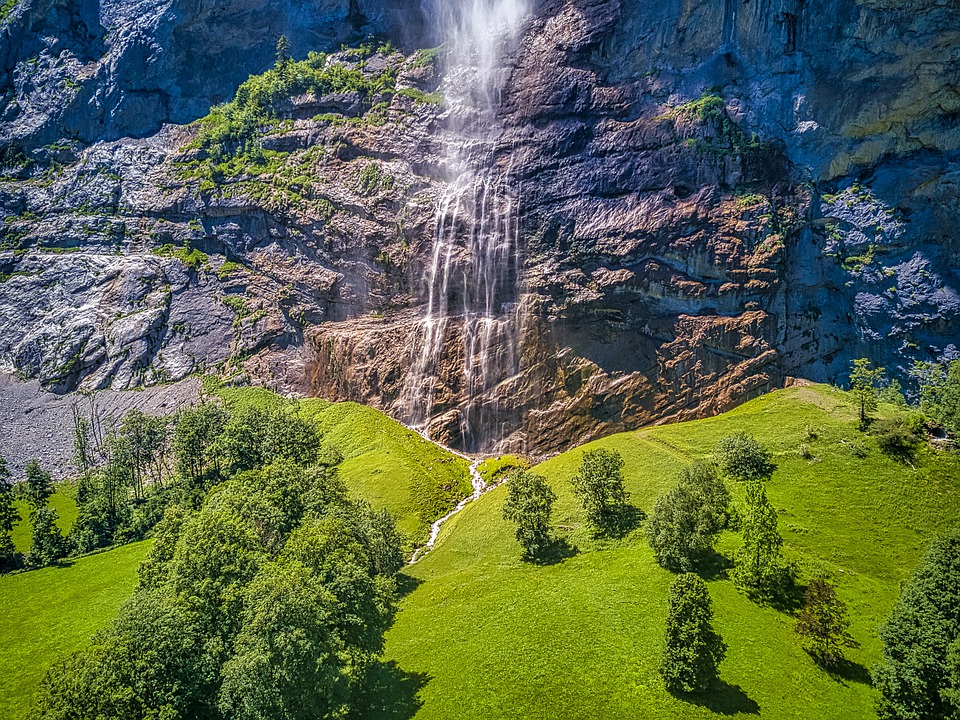
Lauterbrunnen is the valley Wengen sits above, and it’s worth a stop in its own right — it’s famous for its sheer cliff walls lined with waterfalls, the most well-known being Staubbach Falls, which drops almost straight down into the valley floor. It’s also the gateway to Trümmelbach Falls, a set of glacier-fed waterfalls carved inside the mountain itself. If you’ve seen photos of a impossibly green Swiss valley with waterfalls pouring off the cliffs, there’s a good chance it was Lauterbrunnen.
Best for: waterfall chasing, dramatic valley scenery, day trips into the wider Jungfrau region.
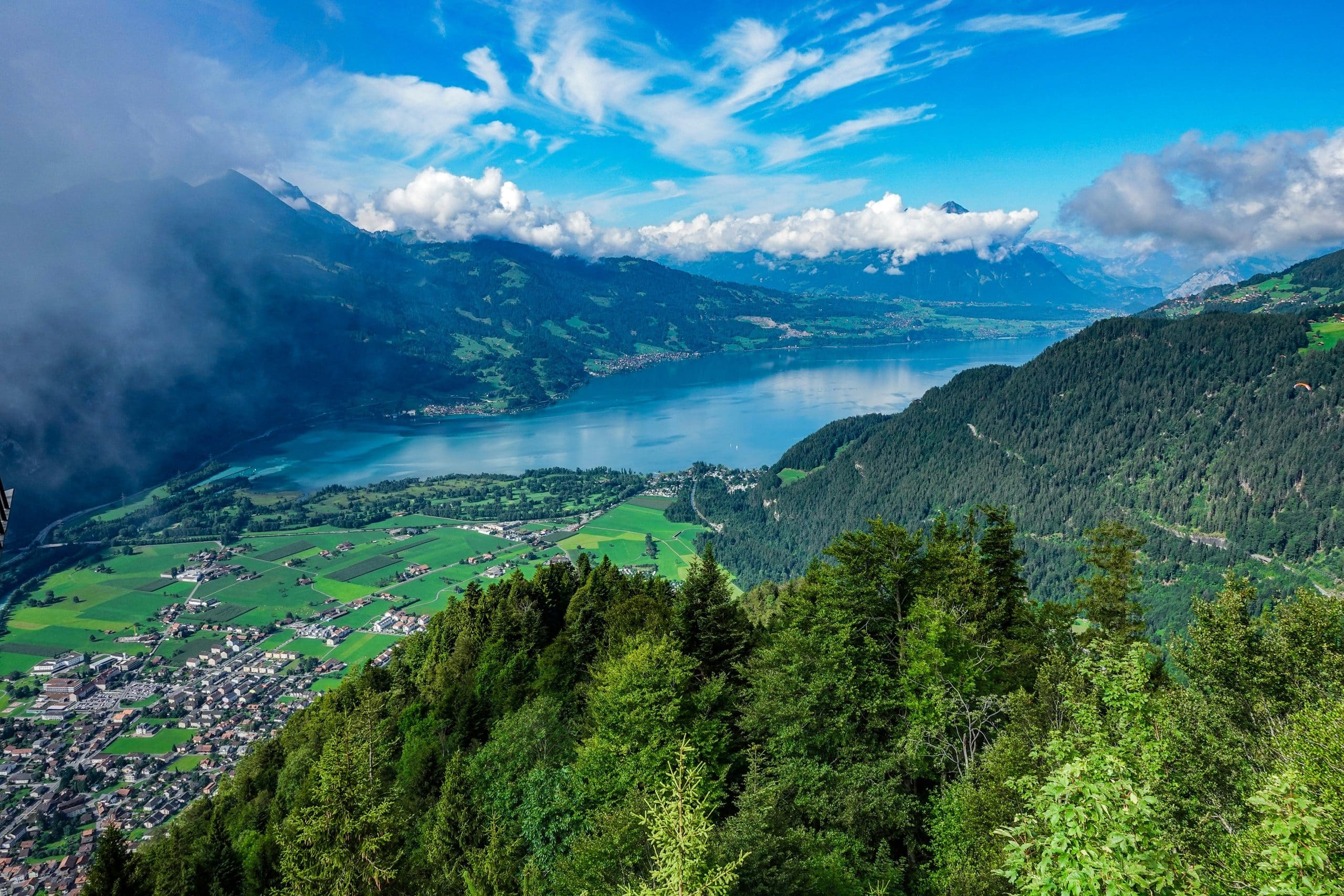
Interlaken sits between two turquoise lakes — Thun and Brienz — and has built its reputation as the adventure-sports capital of the Bernese Oberland: paragliding, canyoning, skydiving, and via ferrata routes all launch from here. It’s more built-up than Wengen or Lauterbrunnen, with a proper town center, more accommodation options, and easy rail connections to the rest of the region, which makes it a practical base if you want a mix of adrenaline and comfort.
Best for: adventure activities, a central base for exploring the wider region.
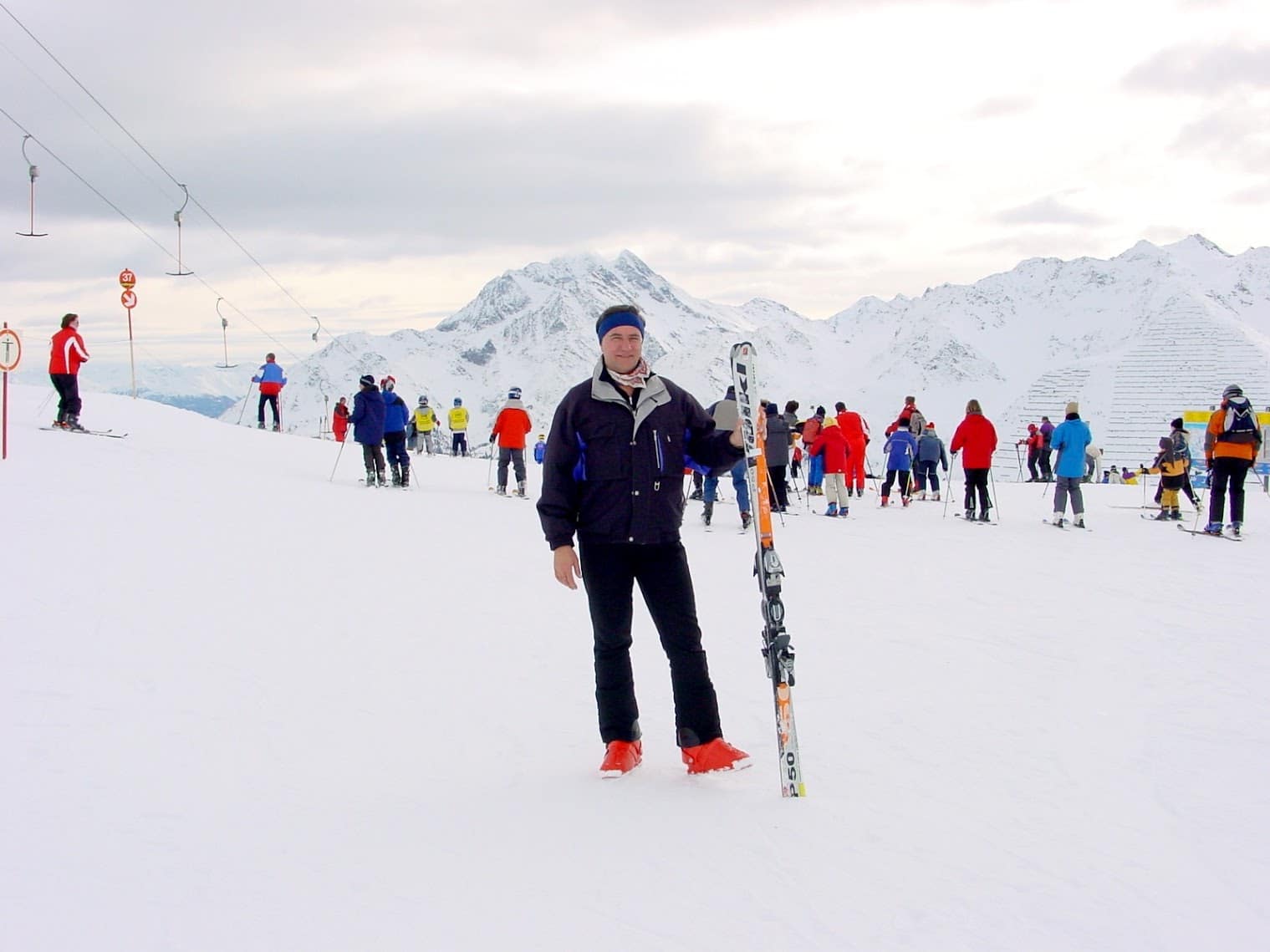
St. Anton is one of Austria’s best-known ski towns, sitting in the Arlberg region, which links together one of the largest interconnected ski areas in Austria. It has a reputation for challenging terrain and a genuinely lively après-ski scene, but it’s just as worthwhile outside ski season, when the surrounding trails open up for hiking with far fewer visitors.
Best for: serious skiers, lively nightlife, and (in summer) quieter high-altitude hiking.
Above: St. Anton is where I learned to ski for the very first time, wobbling down the slopes while my husband — already an old hand at it — skied circles around me.
5. Mayrhofen, Austria
Mayrhofen sits at the head of the Zillertal valley and has a strong reputation both as a ski resort and as a summer hiking base, with cable cars giving quick access to high-altitude trails and viewpoints without an all-day climb. It has a bit more of a lived-in, local feel than some of the more polished resort towns nearby.
Best for: a genuine local feel, good value, strong summer hiking options.
Bottom line: If you only have time for one or two of these, pair Wengen with Lauterbrunnen for the classic postcard Alps experience, or head to St. Anton or Mayrhofen if skiing (or quiet summer hiking) is the priority.
Bring Home A Taste of The Alpine Towns
Tartiflette
Alpine dishes are rich, hearty comfort foods made to beat the cold mountain weather. Famous classics include melted cheese dishes like tartiflette. Tartiflette is a rich oven bake made from sliced potatoes, smoked bacon, onions, white wine, and a whole Reblochon cheese melted on top.