
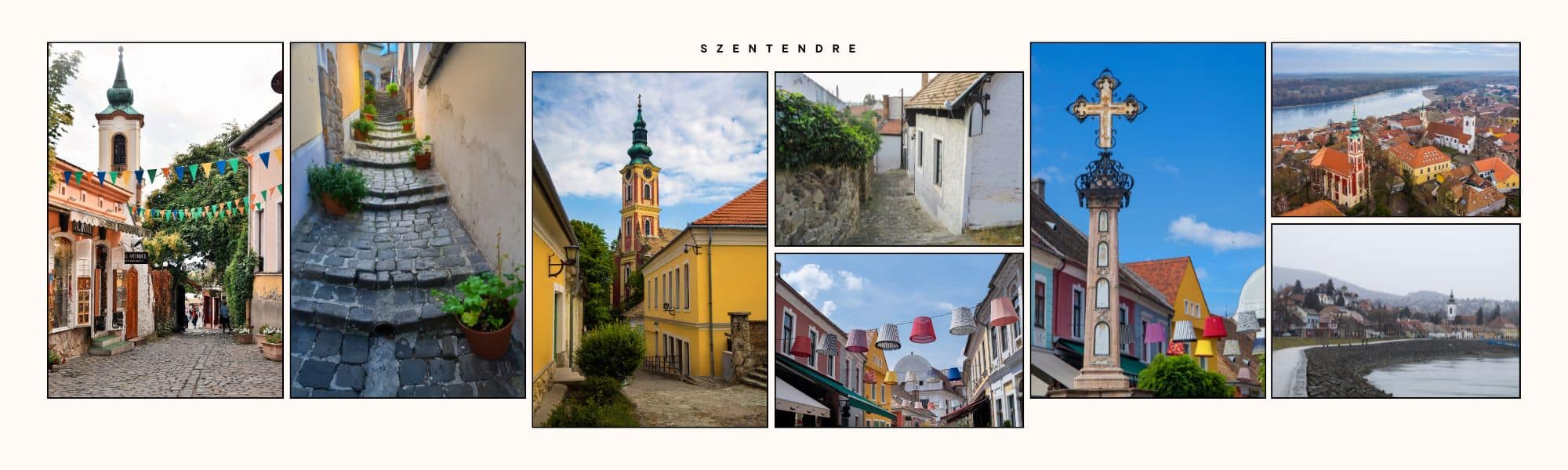
Szentendre is famous for its beautiful streets, colourful houses and charming little shops, but there is another side to the town worth discovering. The seven historic churches of Szentendre tell the story of the different communities that settled here, particularly the Serbian Orthodox population that helped shape the town.
The 7 historic churches of Szentendre are scattered throughout town, making them an interesting addition to a walking tour. Some are tucked away in narrow streets, while others stand proudly above the town. Even if you’re not particularly interested in church architecture, you’ll find that visiting them adds another dimension to your day in Szentendre.
Exploring these seven sacred sites is more than an architectural stroll; it is a journey through the living heritage that makes Szentendre one of Hungary’s most memorable destinations.
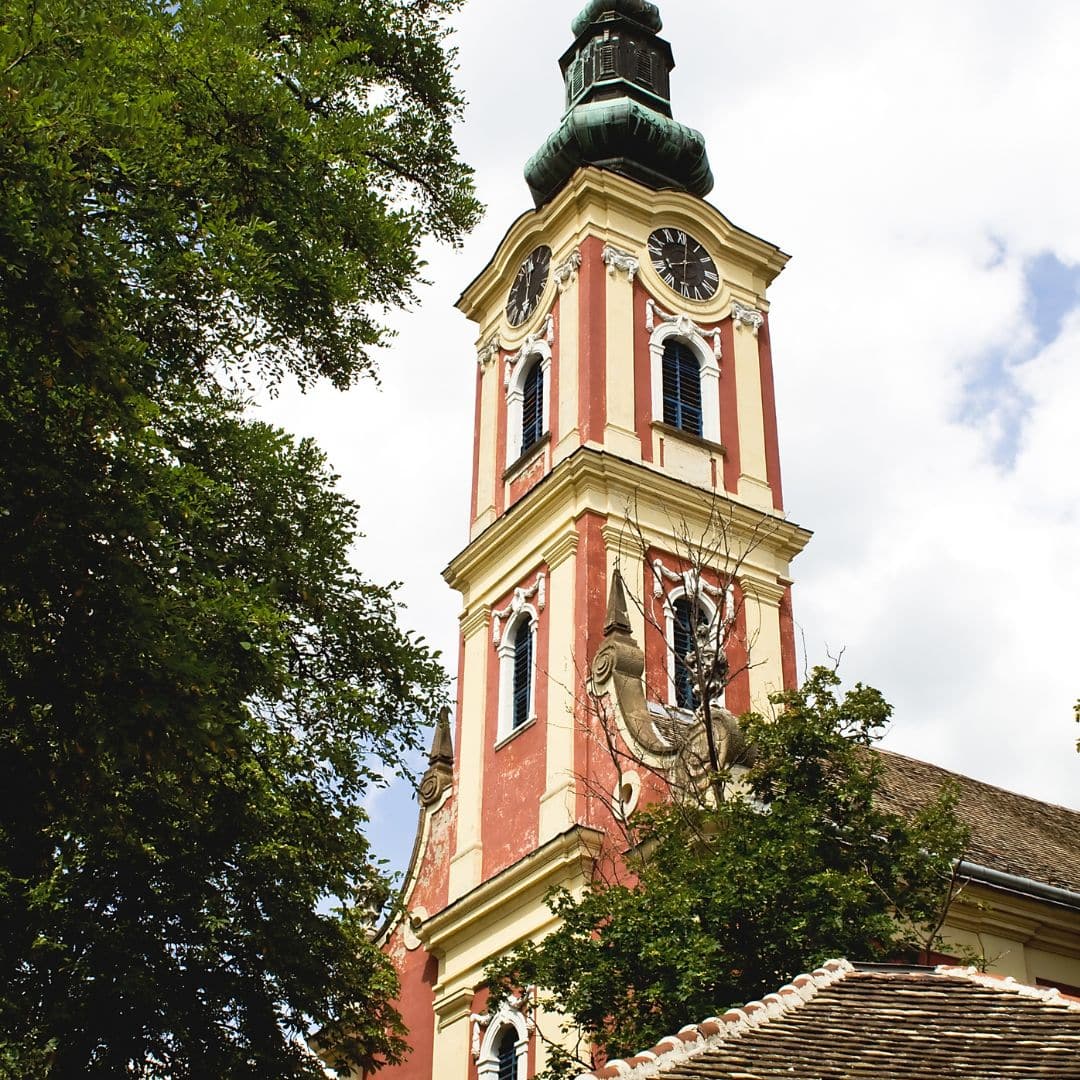
Denomination: Serbian Orthodox
Address: Pátriárka u. 5, 2000 Szentendre, Hungary
Overview: The central cathedral of the Serbian Orthodox Eparchy of Buda in Hungary, renowned for its tall bell tower and ornate interior art collection.
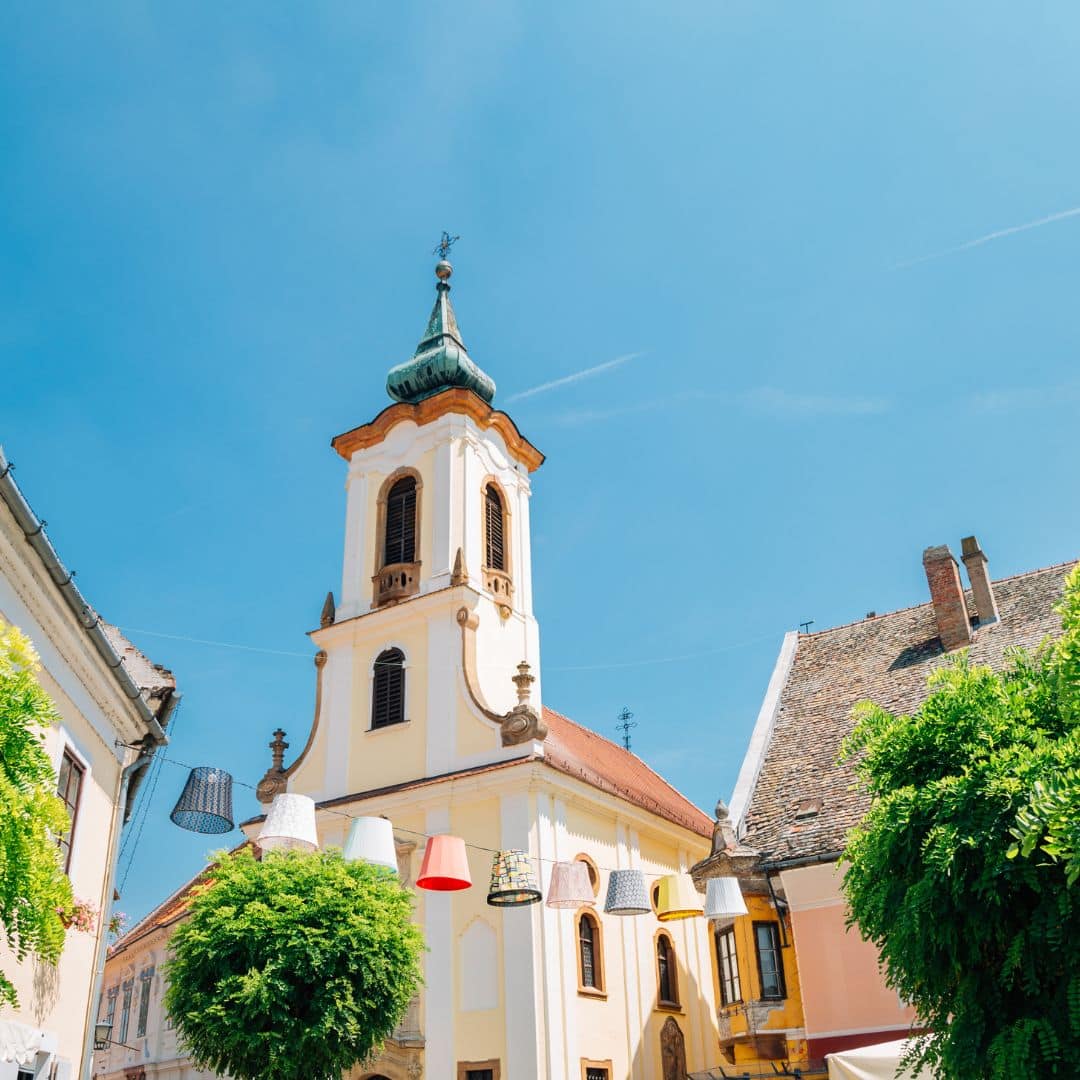
Denomination: Serbian Orthodox
Address: Fő tér 5, 2000 Szentendre, Hungary
Overview: Located directly on the main square (Fő tér), this Rococo-Baroque church is one of the town’s most recognized landmarks.
Denomination: Roman Catholic (originally Serbian Orthodox)
Address: Kucsera Ferenc u. 2, 2000 Szentendre, Hungary
Overview: Built in the 18th century by Orthodox refugees who fled Chiprovtsi (Bulgaria), this landmark was later handed over to the Roman Catholic parish, blending Orthodox architectural layout with Catholic traditions.
Denomination: Calvinist / Reformed
Address: Rákóczi Ferenc u. 14, 2000 Szentendre, Hungary
Overview: Originally constructed as an Orthodox church by refugees from Opovo, it was acquired and renovated by the local Reformed parish in the 20th century.
Denomination: Serbian Orthodox
Address: Kossuth Lajos u. 1, 2000 Szentendre, Hungary
Overview: Located near the Bükkös stream, this church features a beautiful iconostasis created by artists from Moldavia.
Denomination: Serbian Orthodox
Address: Bogdányi út 42, 2000 Szentendre, Hungary
Overview: Situated at the northern end of Bogdányi Street in the former tanners’ quarter, open to visitors during major feast days.
Denomination: Roman Catholic (originally Serbian Orthodox)
Address: Szentendrei u. 1, 2000 Szentendre, Hungary
Overview: Located in the quiet northern suburb of Izbég, this late-18th-century church was originally built by Serbian Orthodox settlers. In the mid-20th century, it was acquired by the Roman Catholic Church and rededicated to Saint Andrew.
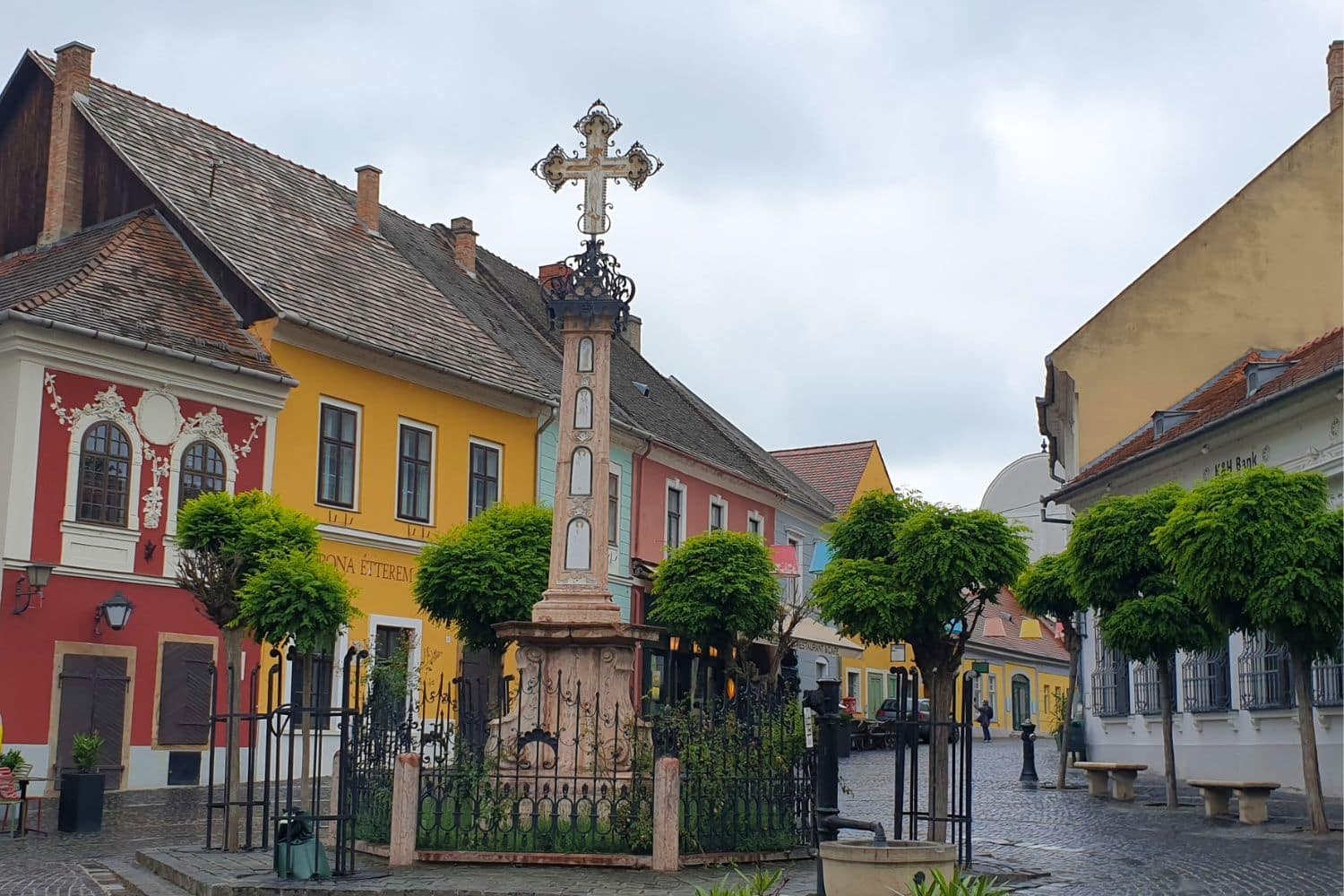
The 7 historic churches of Szentendre are spread across the charming old town. You can visit them on foot, combining the churches with a leisurely walk through the narrow streets, little squares and colourful lanes.
I suggest starting at the Belgrade Cathedral, then exploring the old town before heading towards the churches on the outskirts of the historic centre.
The first six churches can be explored on foot as part of a leisurely walk through Szentendre’s old town. The seventh, St Andrew’s Church in Izbég, is farther out, so allow extra time to reach it.
If you are starting at the Lázár cár tér / Danube-side parking area, I would do them in this order:
Start: Lázár cár tér
Walk inland from the Danube towards Pátriárka utca. This is a good first church because it brings you immediately into the Serbian side of Szentendre.
Continue towards Fő tér, Szentendre’s main square. The Blagovestenska Church is right beside the square, so this is an easy second stop.
From Fő tér, walk south towards Kucsera Ferenc utca. This is the large church originally built by Serbian refugees from Chiprovats.
Continue south/east towards Rákóczi Ferenc utca. This church was originally built by refugees from Opovo and later became the Reformed/Calvinist church.
From the Calvinist Church, continue towards the Bükkös stream and Kossuth Lajos utca.
This is the church built by settlers from Požarevac. The present stone church dates from the 18th century.
Now turn north and follow Bogdányi utca. This takes you through another pleasant part of Szentendre, away from the busiest part of Fő tér.
Important to know: this church is currently only open to visitors on specific days, according to the official tourism site. So on most visits you will be seeing only the exterior.
This is the one that changes the nature of the walk.
St Andrew’s is in Izbég, north-west of the historic centre. It was originally built as a Serbian Orthodox church in 1738 and is now Catholic.
Its location is approximately 47.6767, 19.0618.

A realistic breakdown:
So in total I would allow half a day for the complete seven-church route. The first six churches can be combined with a leisurely walk through the old town, while St Andrew’s Church in Izbég is farther away and requires extra time.
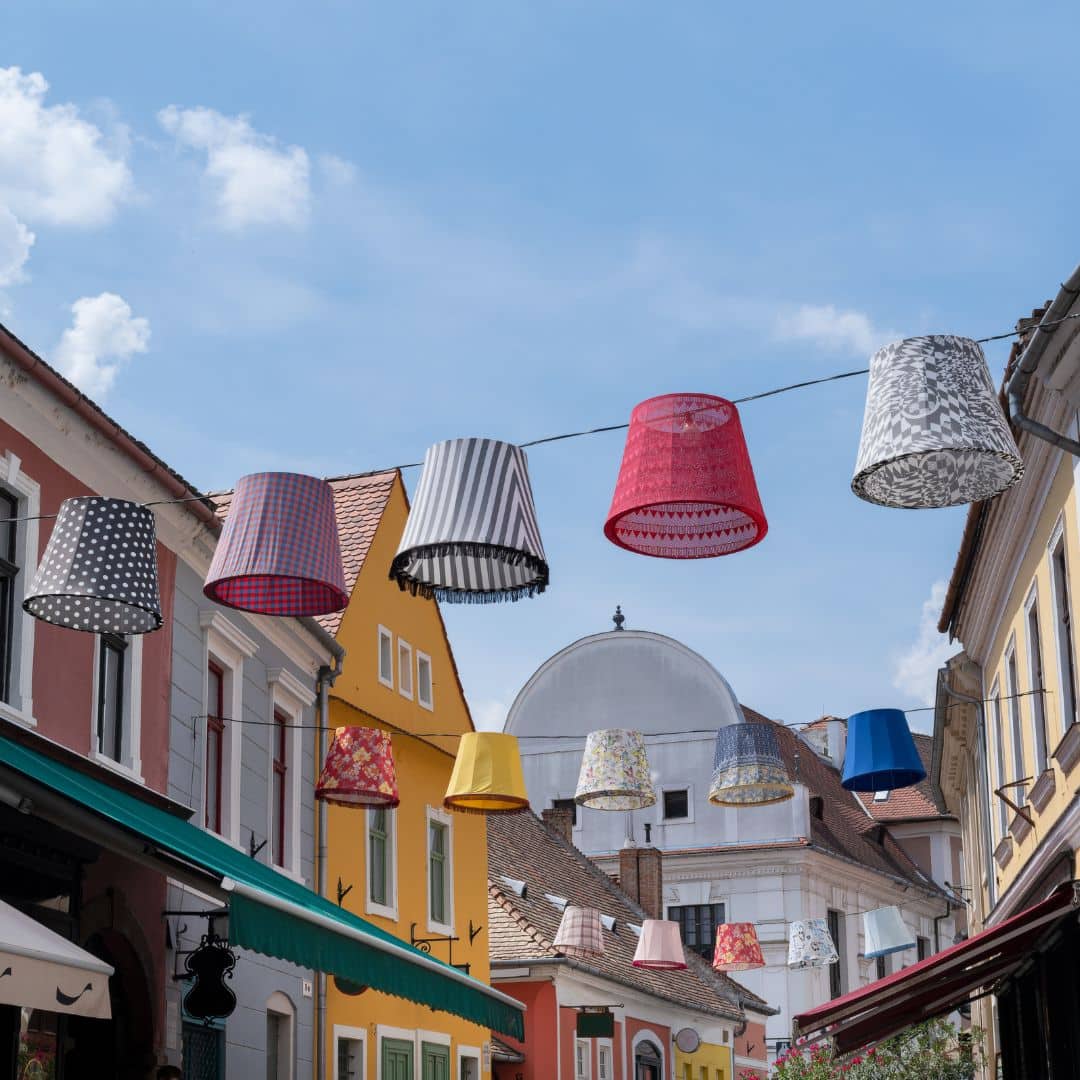
Watch our video of Szentendre with its umbrella street and Christmas shop >>>
1. Don’t expect to go inside every church.
This is probably the most important thing to tell visitors. Opening arrangements vary considerably. For example, Preobrazsenszka Church is normally open only once a year, on 19 August, while Blagovestenska Church is open daily from April through September and charges an entrance fee.
2. Take a map.
The Szentendre tourism office provides a free English/Hungarian town map and a dedicated English/Hungarian church brochure. That’s particularly useful because St Andrew’s in Izbég is away from the central group. (This becomes part of your travel souvenirs.)
3. Plan around church opening times.
If seeing the interiors is important to you, check each church individually before setting off.
TRAVEL TIP: Don’t make the churches the whole point of the outing. Stop for coffee, browse the little ceramic and souvenir shops, wander through the lanes and have a look at Fő tér along the way.
Seven churches, eight beginnings: Szentendre once had eight historic churches, built by the different communities who settled here. Seven have survived, and several still carry names that reveal where those communities came from.
The 7 Historic Churches of Szentendre serve as timeless monuments to resilience, community, and cultural harmony, ensuring that the spirit of the past continues to illuminate the present. As you wander through the winding alleys and open squares, these sacred landmarks invite you to step out of the rush of modern travel and into a story carved in stone, painted on icon screens, and preserved across centuries.