
Caminito Street is a treasure trove of history, art, and cultural significance, making it a must-visit spot in Buenos Aires. I loved every second in this vibrant tapestry of colors.
It’s an “open-air” Street Museum and a traditional alley located in La Boca. This Buenos Aires neighborhood is famous for its colorful houses, its tango, and its soccer team.
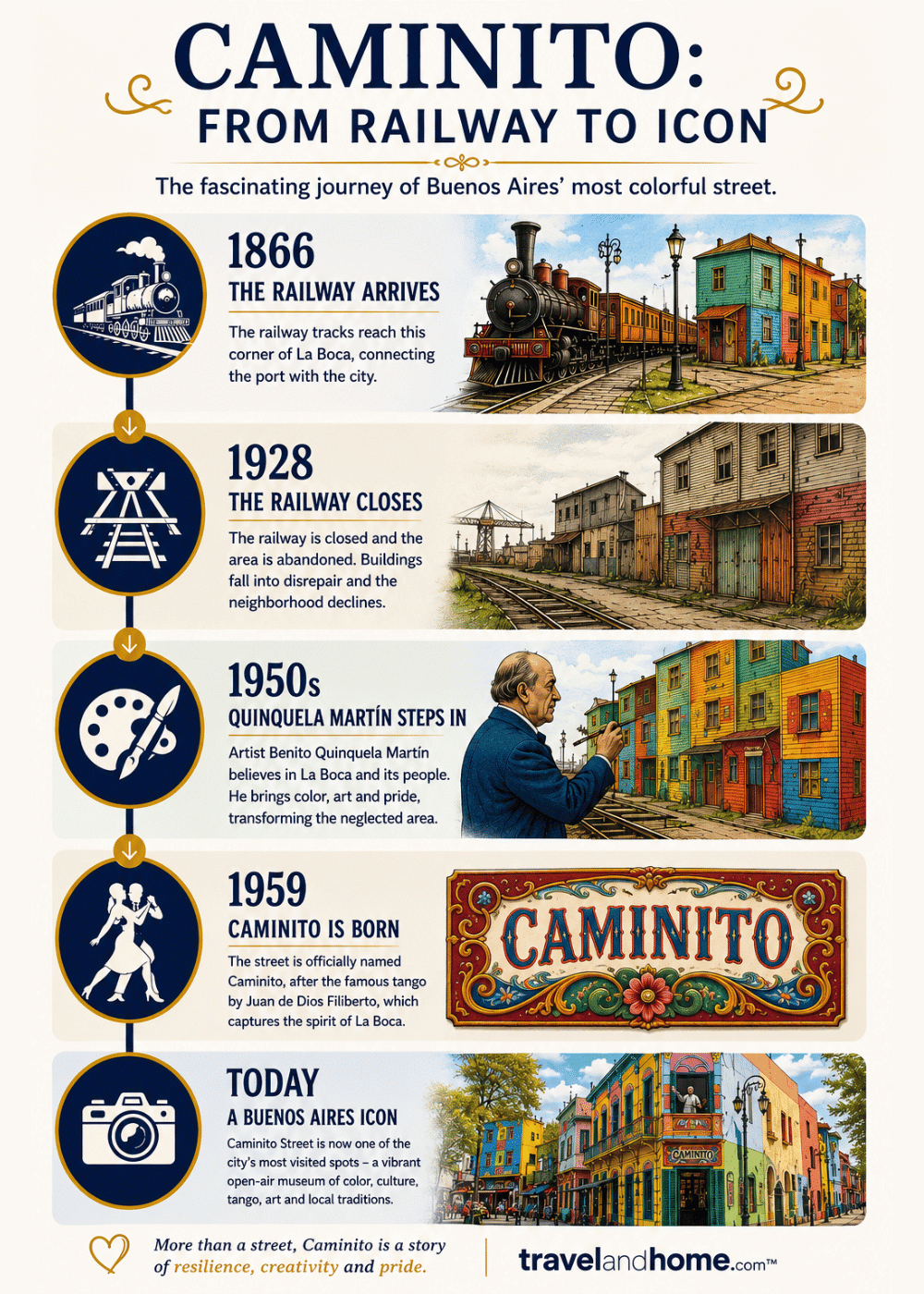
Caminito” (Spanish for “little walkway” or “little path”) was named after a 1926 tango song composed by Juan de Dios Filiberto, which tells of a love lost.
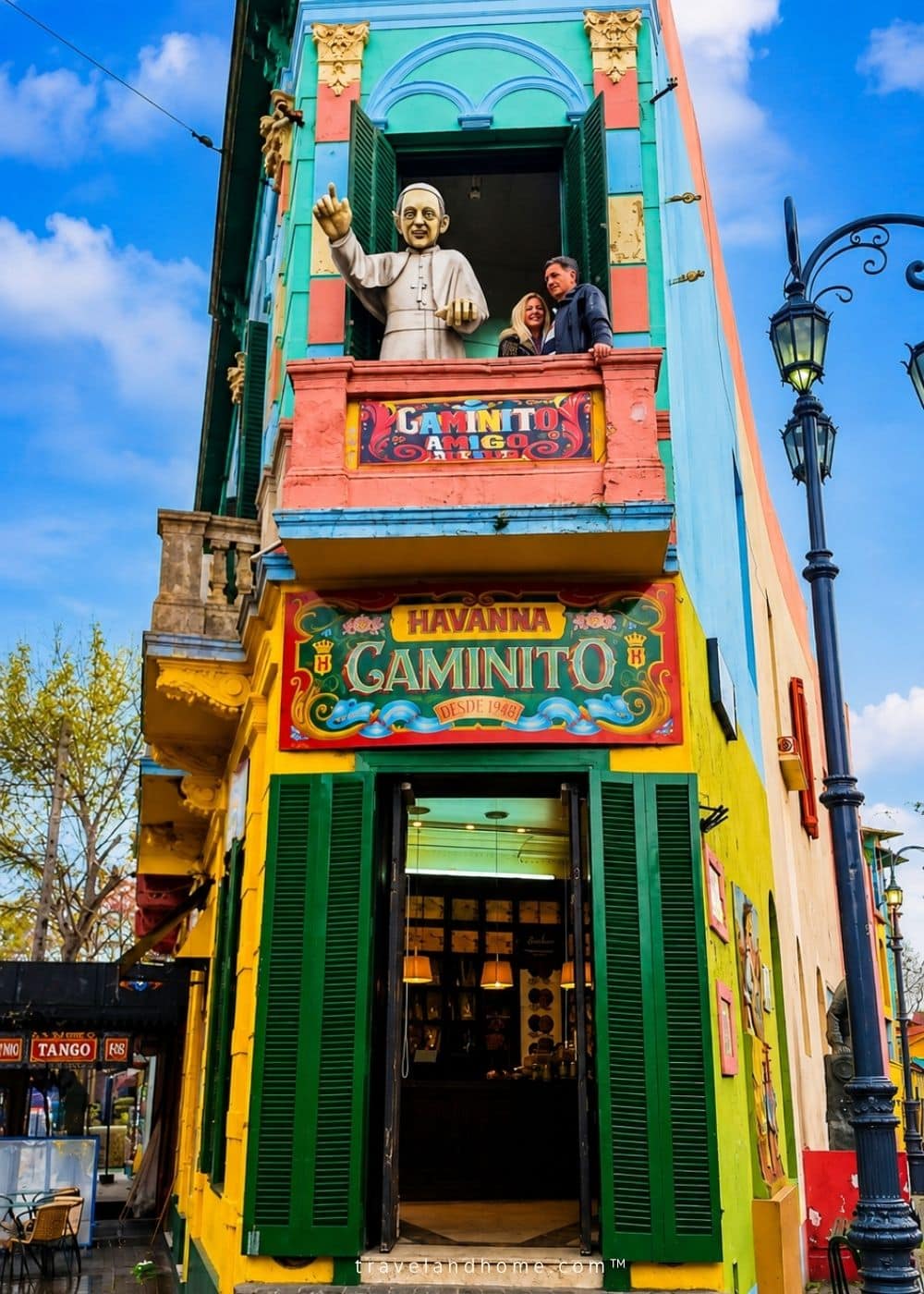
The tango was “Caminito.” And there is a wonderful little twist to the story that is worth telling you about.
The famous tango “Caminito” was written in 1926, with music by Juan de Dios Filiberto and lyrics by Gabino Coria Peñaloza. Years later, Benito Quinquela Martín helped rescue the abandoned railway alley in La Boca and pushed for it to be named Caminito after the tango. The Museo Benito Quinquela Martín records that the passage was officially inaugurated under that name in 1959.
But here’s the delicious travel-story detail:
The tango and the street actually inspired each other.
Filiberto’s music was inspired by this very little pathway in La Boca. He remembered walking past it on his way to work and a young woman who appeared at a window there.
However, Coria Peñaloza’s lyrics weren’t about Buenos Aires at all. They came from memories of a lost love and another little path near Olta, La Rioja, where he had met his sweetheart.
And so the circle was closed: La Boca path → inspired Filiberto’s melody → became the tango “Caminito” → the tango later inspired Quinquela Martín to name the restored La Boca passage “Caminito.”
Then the transformation began when the artists used leftover paint from the nearby shipyards to splash color onto the buildings. These structures, initially abandoned, became canvases for their creativity. The result? Today’s kaleidoscope of hues lining the cobblestone streets, each building telling a story through its vibrant façade.
Caminito isn’t just about colors; it’s a microcosm of Argentine culture. Tango, the passionate dance synonymous with Argentina, was born in these streets. As you stroll along, you might catch impromptu tango performances. The rhythmic beats, the intricate footwork—there’s an electric energy that fills the air.
Spanish is the primary spoken language in Argentina. Many people in tourist areas and certain industries speak English, especially in hotels, restaurants, and shops; overall, English proficiency can vary outside those areas. It’s always a good idea to have some basic Spanish phrases handy, just in case!
Like, in Spanish, you would say “¿Hablas inglés?” ( pronounced: AH-blahs een-GLEHS?) to ask someone if they speak English.
Planning more Spanish-speaking adventures? Save our free pocket guide to 50 essential Spanish travel words and phrases, complete with easy pronunciations and English translations. It’s a handy little cheat sheet for trips to Barcelona, Madrid, Zacatecas, and destinations across the Spanish-speaking world.
The street itself, just 100 meters long, is packed with visual delights. You’ll see artists selling handcrafted goods, paintings, and souvenirs that showcase local craftsmanship. Art galleries dot the area, displaying work by emerging and established Argentine artists and offering a glimpse into the contemporary art scene.
Beyond Caminito, La Boca pulses with life. The neighborhood, historically inhabited by Italian immigrants, boasts a unique blend of cultures. Wander through its streets to witness the fusion of Italian and Argentine influences, from the aroma of homemade pasta to the sounds of passionate debates over a game of football.
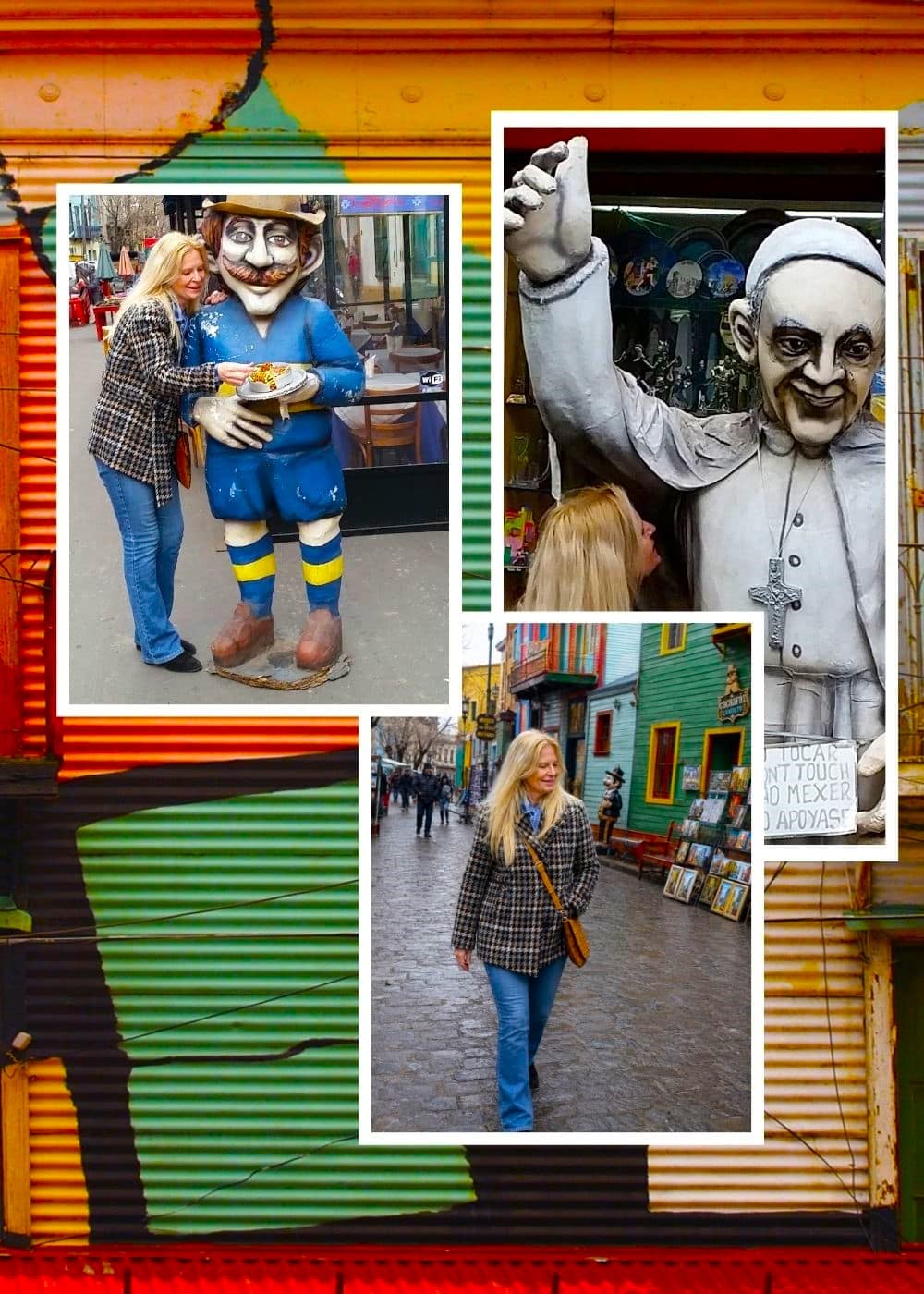
We stayed at the Cyan Recoleta Hotel, right across from Cementerio de la Recoleta, where Evita Perón’s grave is. This spot was perfect for us because it’s smack in the middle of all the sightseeing action, with plenty of restaurants and buzzing nightlife. Great call on the location!
Vrbo has over 2 million vacation homes for less than the cost of traditional hotel accommodation.
Know before you go to Caminito Street In Argentina, they use the Peso as their currency, which is symbolized by the dollar sign ($). Spanish is the main language, but I had no problem speaking English and being understood. They drive on the right side of the road. As for visas, citizens of many countries, like South Africa, get a sweet deal—a 90-day free pass to explore all the wonders Argentina has to offer!
Yes. As Simon Cowell from America’s Got Talent loves saying: “I didn’t like it… I loved it.” Or, “That was one of the best/most surprising things I’ve ever seen.” I loved the colorful streets, the free tango shows, and the local art alley (Feria de Artistas Plásticos de Caminito) beyond the main corner.
Two to three hours here is plenty of time to enjoy free shows, have a bite to eat, meander the colorful streets, and explore the souvenir shops. It can be very crowded midday, but if you go early in the morning, you may find that one to two hours is enough to see it all.
Yes — especially if tango is high on your wish list. August is winter in Caminito, Buenos Aires, so you can generally expect fewer leisure crowds than during the warmer peak periods. Daytime temperatures often hover around 15°C (59°F), although mornings and evenings can feel considerably cooler.
Better still, August is traditionally an important month on the Buenos Aires tango calendar because of the Tango BA Festival y Mundial, the city’s major tango festival and world championship.
Head for the pedestrian streets around Caminito in La Boca. Dancers often perform outside restaurants and cafés, particularly when outdoor tables are busy.
You can simply walk around and stop when you find a performance you like. There’s no need to reserve anything if you’re watching from the street.
Aim for approximately 11:30 AM to 3:30 PM.
This coincides with the busy daytime and lunch period, when restaurants have outdoor tables and performers have a larger audience.
If tango is one of your main reasons for visiting La Boca, I would aim for around noon to 2:30 PM rather than arriving very early in the morning or late in the afternoon.
Yes, you can watch from the street without buying a ticket. However, these performers earn money from tips.
If you stop and watch an entire dance or several songs, leaving a small tip is a considerate gesture. You aren’t paying an admission fee; you’re supporting the artists whose performance you’ve enjoyed.
Assume that a tip will be expected.
A dancer may invite you onto the performance area, place a tango-style hat or other prop on you, and pose with you for a photograph. It can make a fun Buenos Aires souvenir, but don’t mistake the invitation for a completely free photo opportunity.
If you don’t want to participate, a friendly “No, gracias” is perfectly fine.
No. If your goal is simply to see tango performed in Buenos Aires, Caminito can give you a taste of it without a reservation.
However, a professional theatre-style tango show offers something quite different. Likewise, visiting a genuine milonga gives you another side of tango culture altogether. Think of Caminito as an easy introduction rather than a replacement for every tango experience in the city.
Travel and Home Tips: Don’t stray from the main tourist path; the surrounding La Boca neighborhood is historically sketchy because of pickpocketing and other theft. And if you eat at a restaurant that offers a tango show with your meal, know the average food prices will be slightly higher.
Caminito was only one colorful chapter of our Argentina adventure. From the tango spirit and painted streets of Buenos Aires, our journey took us much farther south — to the snow-covered mountains of Bariloche for a skiing adventure in Patagonia. It was an entirely different side of Argentina, and one I’ll never forget. If the mountains are calling you too, continue the journey with our Bariloche ski adventure and discover what it’s like to swap the streets of Buenos Aires for the slopes of Patagonia.
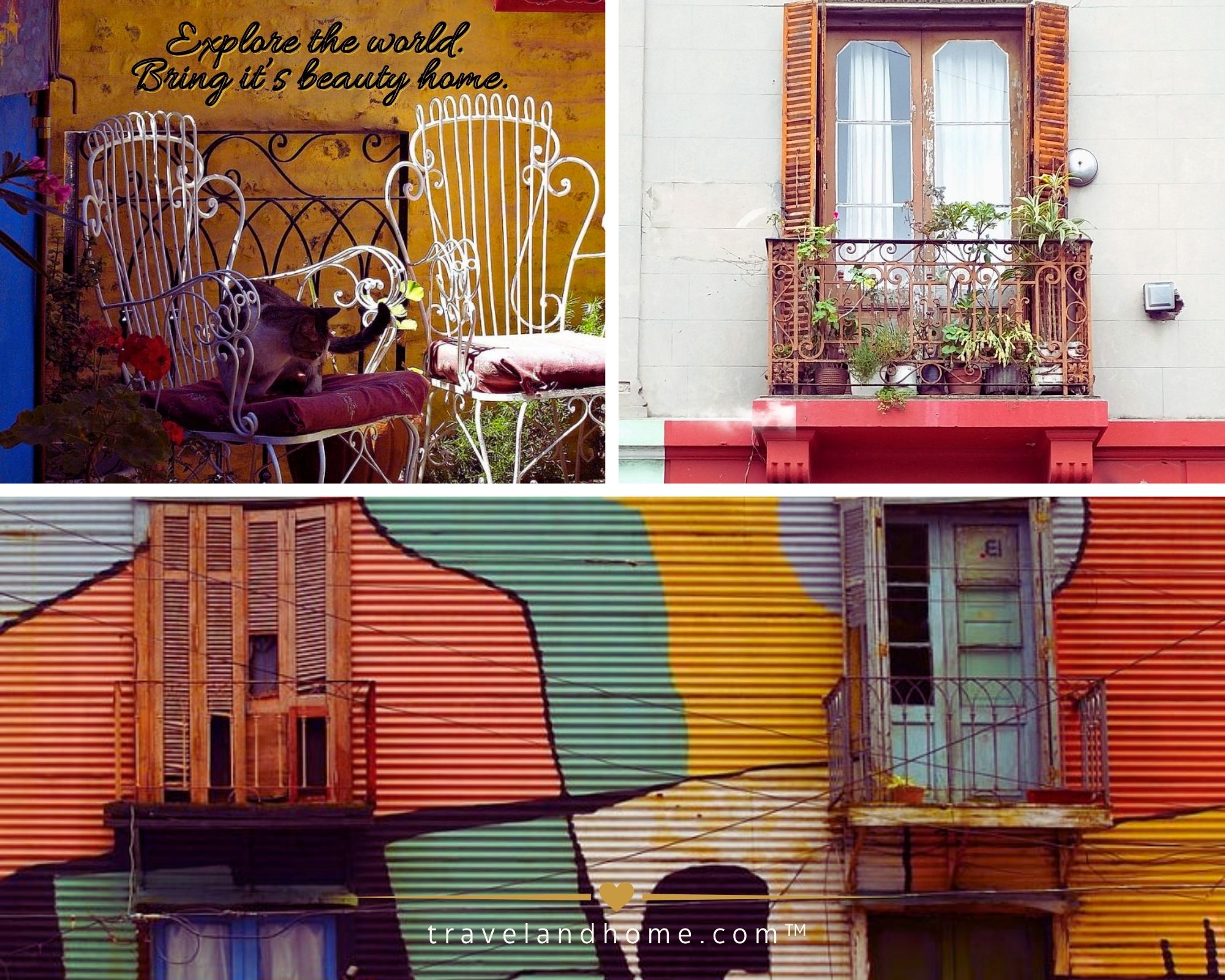
Caminito is a perfect example of how low-budget housing materials can be transformed into artistic architecture. So much so that people travel from afar to set foot in the jaw-dropping street museum. For instance, corrugated metal sheets have never looked so beautiful. Coming from a country with an overdose of informal settlements, it was an absolute eye-opener how beautiful the housing looked, even though it’s not made of marble, stone, or brick, but low-budget building materials. In true Caminito style, the material is painted in the brightest, happiest colors. Being surrounded by such joyful colors, there is no time for depressing thoughts!
Plants can transform a simple, cold, old staircase. By using plants to style the staircase, you add warmth and bring it to life.
Create a “hot spot” in your very own backyard. With a picture framed and fitted on the wall, two chairs, and a small table, you have your very own street café, Caminito-Style! And what’s more, you can give it any theme you want. Add a cushion on each chair for added luxury and a sense of homeyness, and you’ve instantly created and perfected your garden’s “hot spot”.
Container gardening… Not surprisingly, this concept pops up in many travel trips. In Caminito’s street museum, pot plants from small to large dollied up the balconies.
Sharing the places I’ve come to love. – Arina ♡