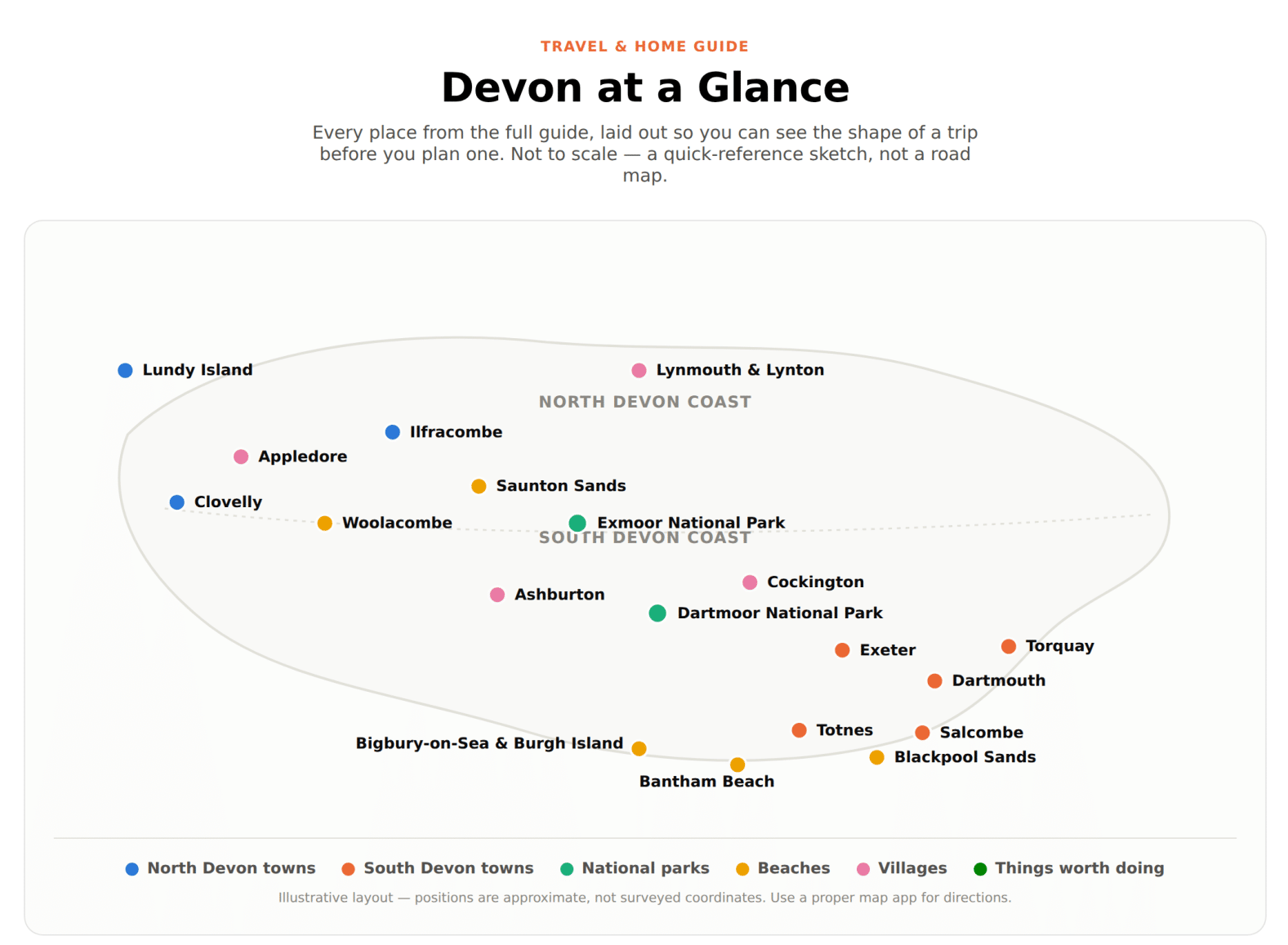
Things to Do in Devon: 19 Places I Actually Recommend
I got lost in Devon on my first trip. Genuinely lost — no signal, a single-track lane, and a tractor blocking the only way forward for ten minutes. I’d do it again tomorrow.
Devon is two coastlines stitched together by moorland, and most visitors only ever see one side of it. That’s the first mistake I want to help you avoid. Here’s everything I’d actually tell a friend before they go — the good, the overrated, and the stuff nobody puts in the brochure.
Skip the North vs. South Debate — Do Both
Devon splits into two very different coasts, and picking just one is the most common regret I hear from people who’ve been.
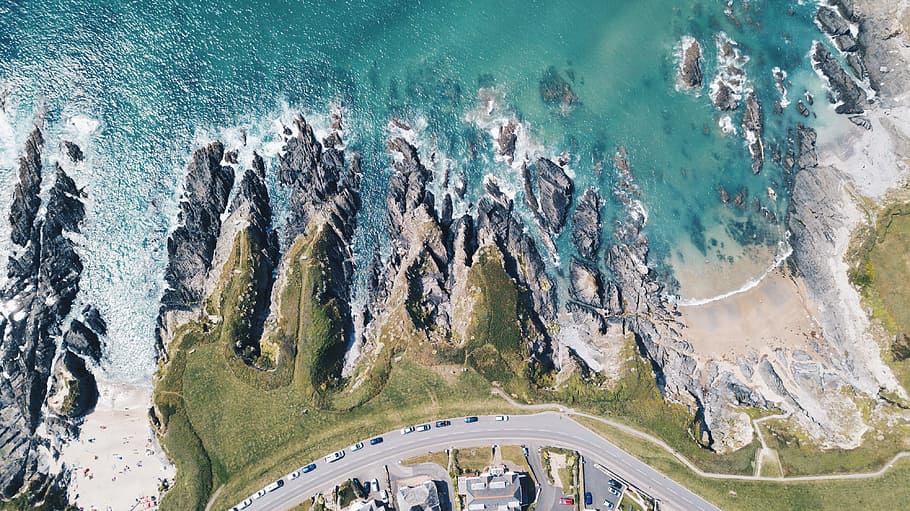
The north is wild. Cliffs, big surf, wind that’ll mess up your hair in five seconds flat. The south is softer — sheltered coves, palm trees in some spots, water that’s actually warm enough to swim in without yelping.
If you only have three days, base yourself in the south and day-trip north once. If you have a week, split it evenly. Either way, you’ll want a car — Devon’s train network doesn’t reach half of what’s worth seeing
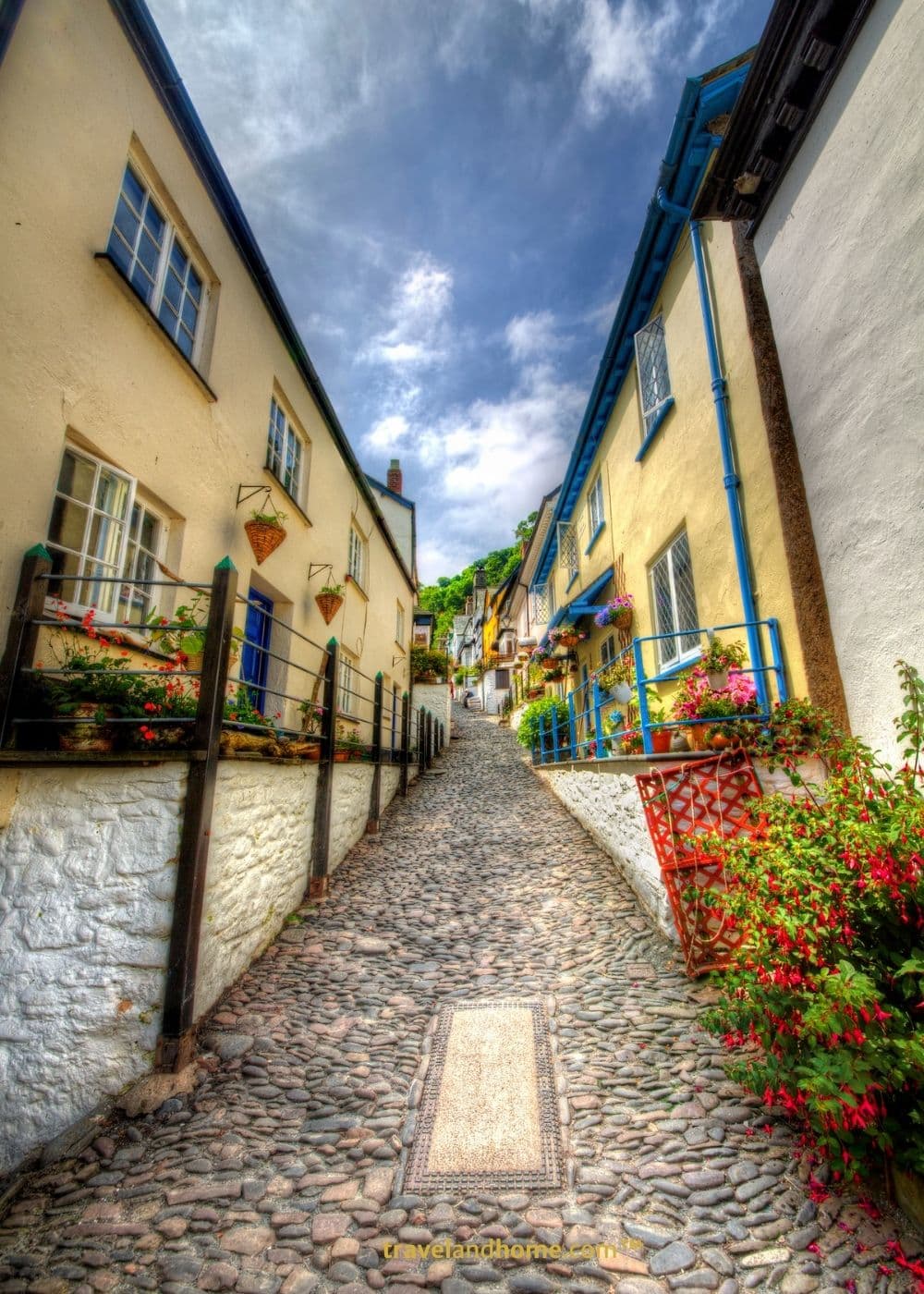
Clovelly, a fishing village in Devon
North Devon: Where the Coast Gets Loud
You can’t drive intoClovelly. That’s not a typo — cars are banned, and the only way down the cobbled hill to the harbor is on foot or, if you time it right, by donkey. The walk down is easy. The walk back up, after a cream tea and a pasty, is where you’ll regret every life choice that led to skipping the gym. There’s a private entrance fee to get in (it funds the upkeep of the whole village, which is privately owned), and I think it’s worth it — but go early. By 11am, the lane is shoulder to shoulder with visitors.
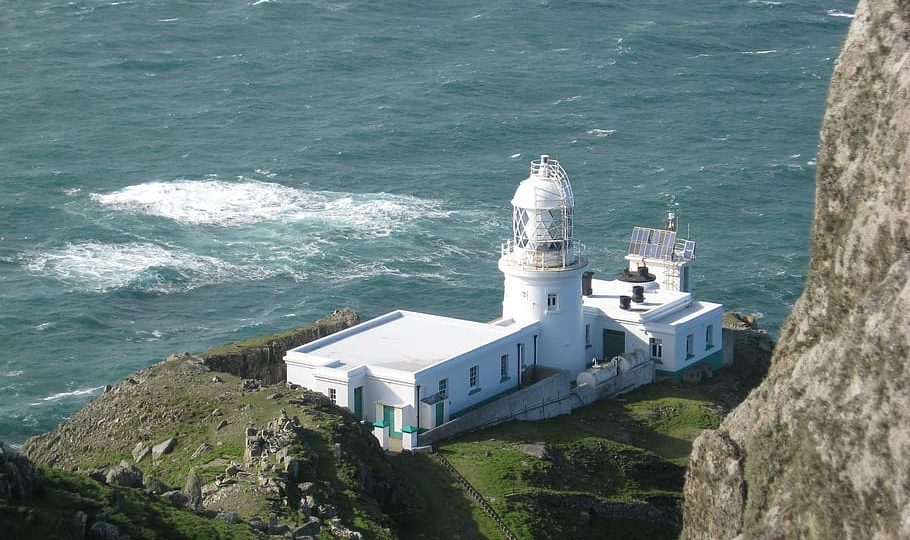
Lundy Island is a 12-mile boat ride from the mainland ending up on an island with more puffins than people. I went in May specifically for puffin season, and it delivered — squat little birds everywhere, seals lounging on the rocks, barely another soul on the trails.
Fair warning: the crossing can get rough, and the boat doesn’t run daily outside summer. Check the MS Oldenburg schedule before you build your whole day around it.
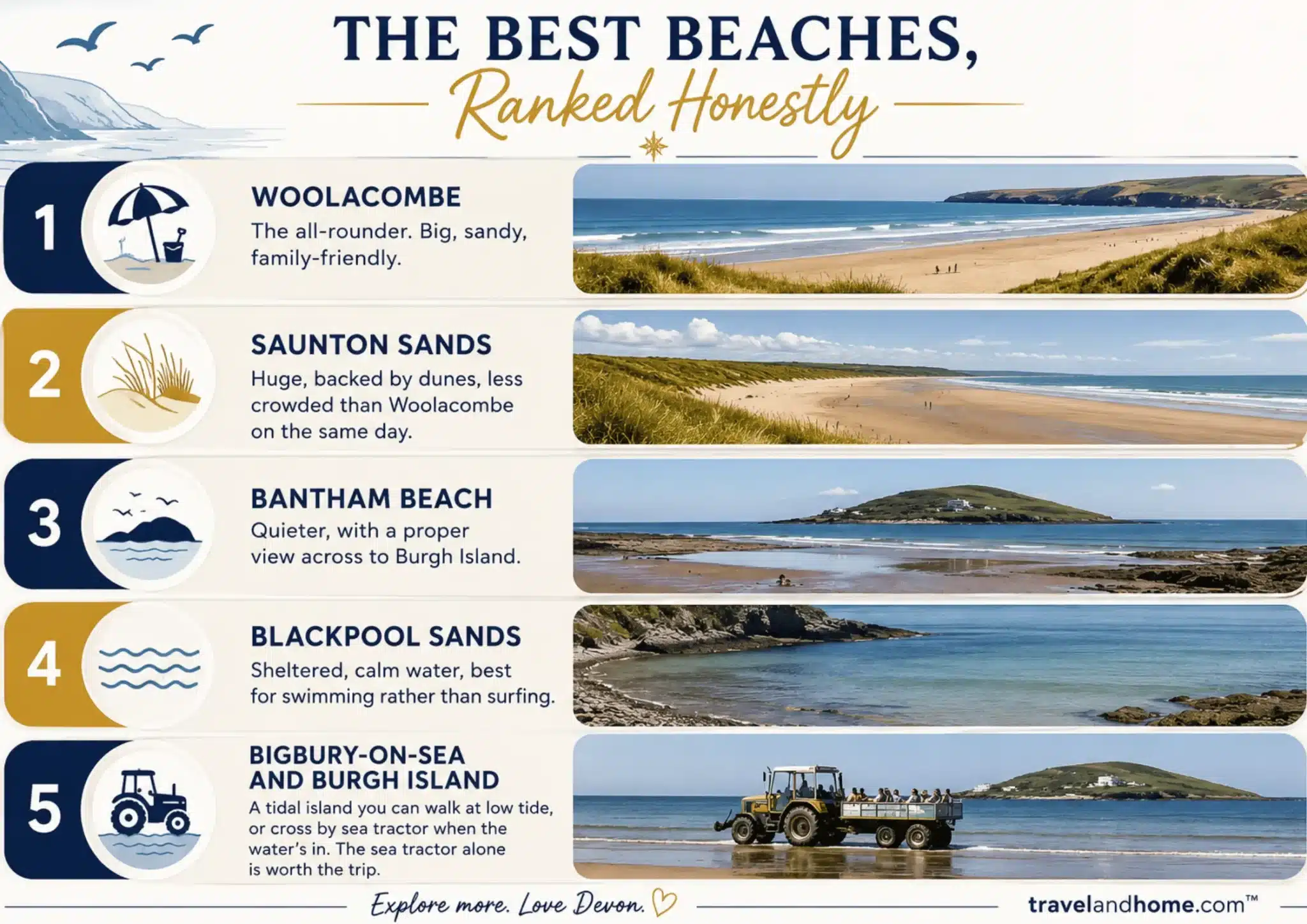
Woolacombe is three miles of proper golden sand, and it’s the beach I’d send a family to without hesitation. Wide enough that you’ll never feel packed in, gentle enough for kids, with waves that are just right for a first surf lesson.
Parking fills up by mid-morning in July and August. Arrive before 10am in peak season or you’ll be circling for a spot longer than you spent on the sand.
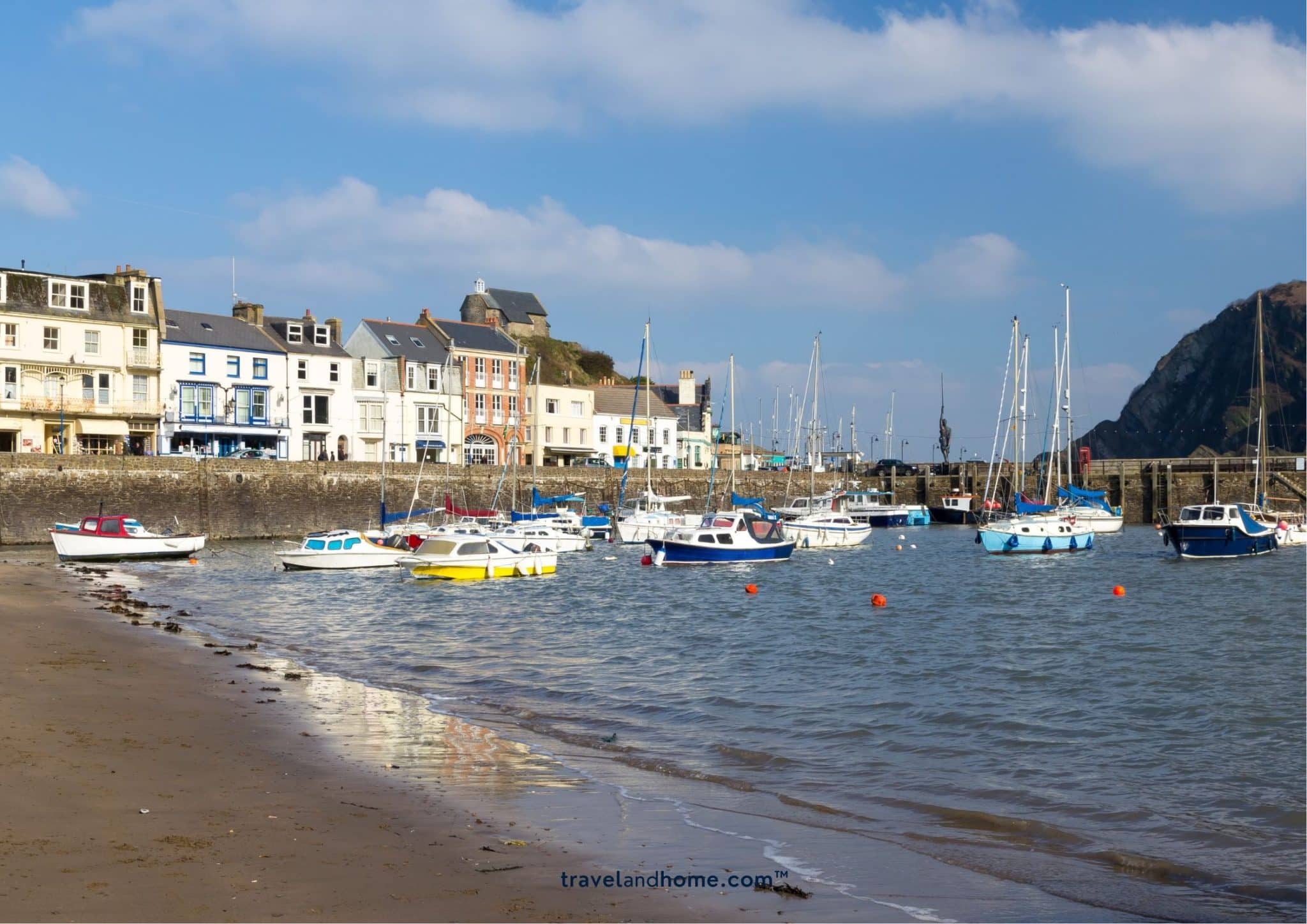
Ilfracombe doesn’t try to be pretty in the traditional sense, and I respect that. It’s a working Victorian harbor town, slightly rough around the edges, with Damien Hirst’s enormous bronze statue Verity — a pregnant woman holding a sword, half her body flayed to show muscle and bone — standing guard over the harbor mouth. Love it or hate it, you won’t forget it.
Exmoor National Park is where the moor meets the sea, and on a clear night it’s one of the darkest places in the country — officially a Dark Sky Reserve. I laid on the bonnet of my car at 11pm and saw the Milky Way properly for the first time in years.
Ilfracombe harbor with Verity statue
Lundy Island
Woolacombe beach
South Devon: Softer Coves, Better Weather Odds
Dartmouth is a proper working harbor town, not a museum piece — fishing boats share the water with yachts, and the streets smell like salt and fried fish more often than perfume and gift shops.
Salcombe is where Devon gets expensive. Boutique shops, a harbor full of yachts, water so turquoise it looks photoshopped even in real life. It’s genuinely lovely — I’m not going to pretend otherwise — but it’s also the most tourist-priced town on this list. A coffee here costs what you’d pay for a full cream tea in Dartmouth.
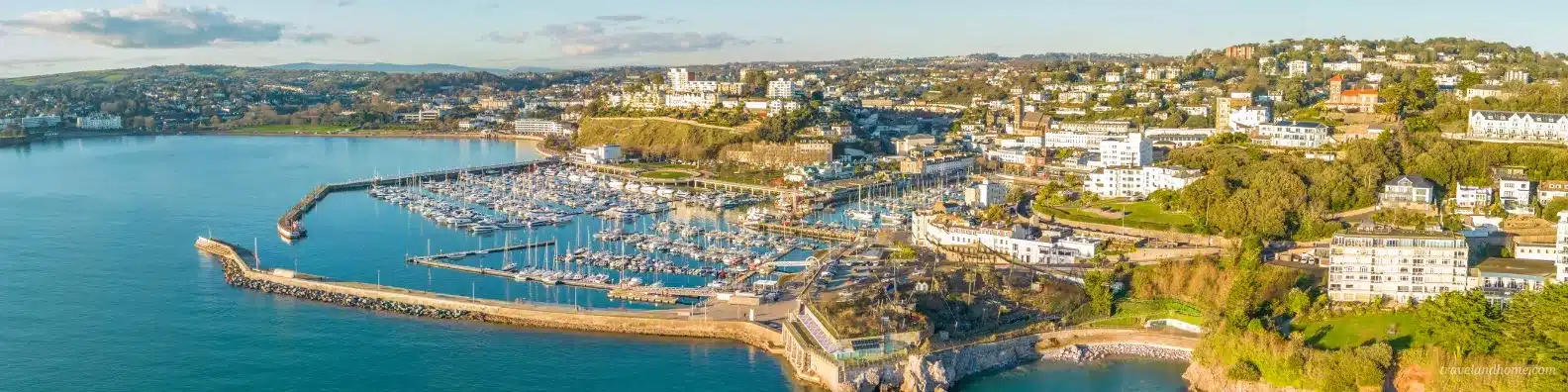
Torquay and the English Riviera Palm trees in England feel wrong until you’re standing under one in Torquay, drink in hand, pretending you’re somewhere warmer. It leans a little more “big resort town” than the rest of Devon, which some people love and others find a bit much after the quieter villages.
Totnes is the town for people who roll their eyes at chain stores. Independent bookshops, weird little cafes, a genuinely different energy from the rest of the county. If you want a slower afternoon with good coffee and better people-watching, this is it.
Exeter is Devon’s proper city — Roman walls, a working cathedral, riverside paths for an evening walk. It’s also your most realistic base if you’re relying on trains, since it’s the best-connected town in the county.
Torquay, Devon
The National Parks: Where the Postcards Come From
Dartmoor National Park is granite, wide-open moorland, wild ponies that will absolutely try to steal your sandwich, and ancient stone circles that predate anything else you’ll see on this trip. Bring proper boots — the ground is boggier than it looks, and I learned that the hard way in trainers that were ruined by lunchtime. There is no entrance fee or ticket required to enter Dartmoor National Park. Visiting the open moorland, walking the trails, and exploring the national park is completely free for everyone.
I’ve already told you about the stars of Exmoor National Park. By day, Exmoor is dramatic cliffs dropping straight into the sea, wooded valleys, and the Victorian cliff railway at Lynton & Lynmouth — a water-powered funicular that’s been hauling people up and down the cliff since 1890. Ride it at least once; it’s slower and stranger than any modern cable car, in the best way.
Villages That Actually Earn the Hype
Clovelly and Dartmouth are already covered above, so here are four more worth the detour: Appledore, with pastel houses lining a working shipyard; Lynmouth and Lynton, twin villages connected by that cliff railway; Cockington, thatched cottages so uniform it looks staged (it isn’t); and Ashburton, a food-lover’s town on Dartmoor’s edge with better restaurants than a place this size has any right to.
Seven Things Worth Actually Doing
Surf at Croyde — beginner-friendly waves, plenty of lesson operators right on the sand
Ride the Lynton & Lynmouth cliff railway
Cross to Burgh Island by sea tractor
Walk a stretch of the South West Coast Path — you don’t need to do all 630 miles, even an hour gets you proper cliff views
Stargaze in Exmoor’s Dark Sky Reserve
Do a cream tea properly — see below, this is not optional
Take a wildlife boat trip — seals and, if you’re lucky, dolphins, off the north coast
A scenic coastal footpath along the South West Coast Path near Great Hangman, looking toward Little Hangman and Combe Martin Bay on the Exmoor coastline in Devon, England.
Food, Drink, and the Cream Tea Argument
Devon seafood is the real deal — crab, mussels, and lobster turn up on menus everywhere, usually caught that morning. Farm shops are worth a stop even if you’re not buying anything; the cheese alone is worth the detour.
Now, the cream tea. In Devon, it’s cream first, then jam — the opposite of Cornwall, and locals will absolutely correct you if you get it backwards. I’ve seen a mild argument break out over this at a tearoom in Dartmouth. Just go with it; it’s not a hill worth dying on, even if the locals think otherwise.
Rent a car. Public transport in rural Devon is patchy at best, and half the beaches and villages on this list aren’t reachable any other way.
Get travel insurance before you go, especially if you’re planning any of the boat trips or coastal walks — conditions can turn faster than the forecast suggests.
Pack layers. Devon’s weather changes its mind constantly — I’ve had rain, sun, and wind in the same afternoon, more than once.
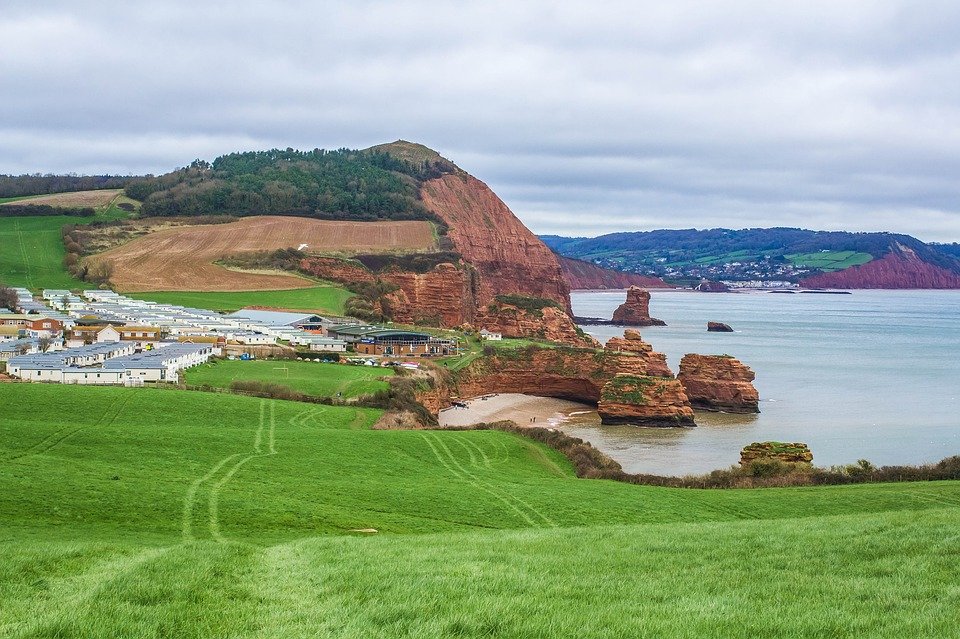
Above: Ladram Bay, a secluded bay and holiday park on the red sandstone coast of East Devon, England, situated between Budleigh Salterton and Sidmouth.
Above: Enjoy celebrity treatment with world-class service
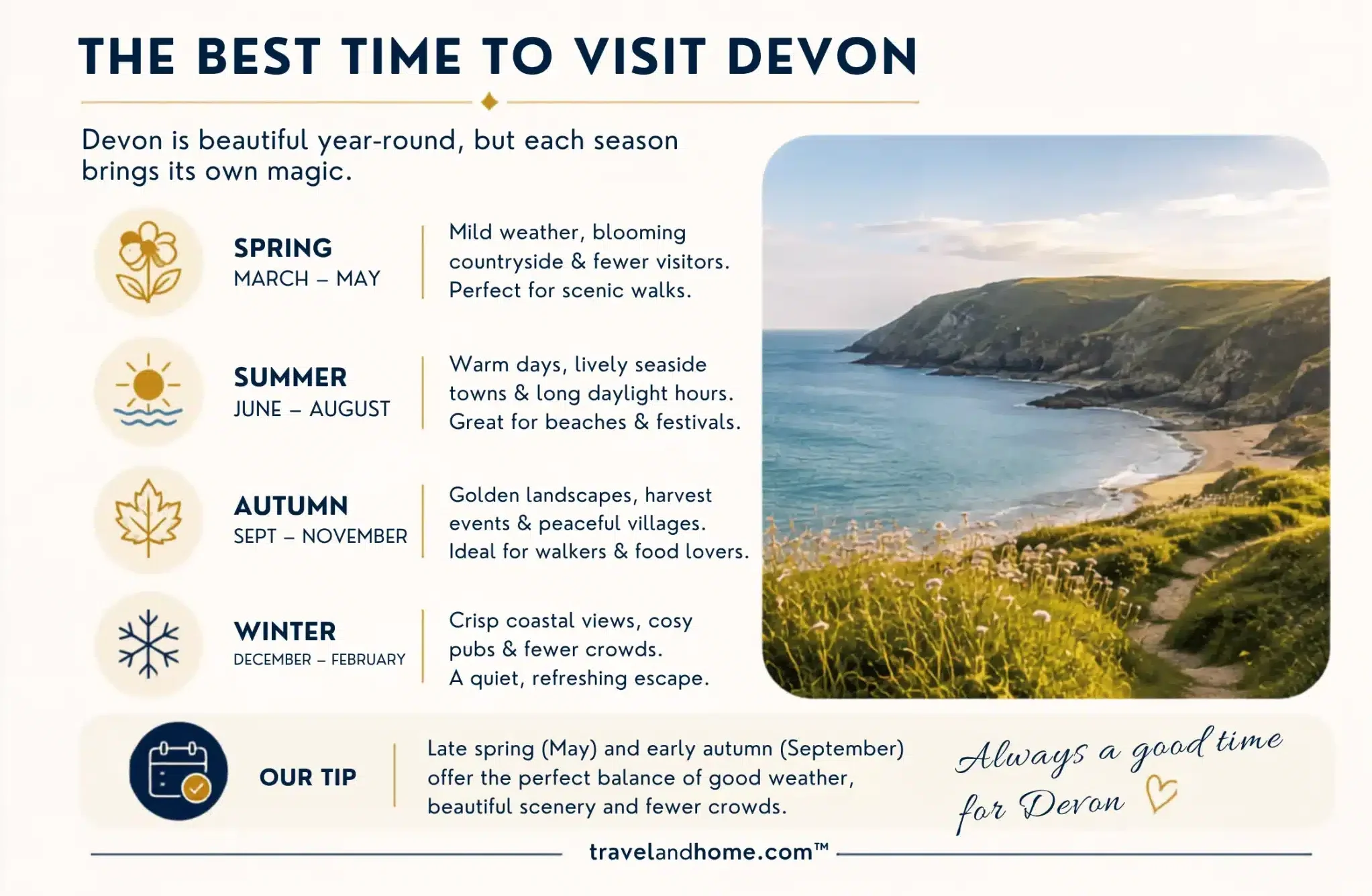
Go in shoulder season if you can. May, June, and September give you quieter beaches, easier parking, and roughly the same weather odds as peak summer.
Devon Questions, Answered Honestly
How many days do you need in Devon?
Three days gets you one coast, done properly — not rushed, not skimmed. Five to seven days gets you both, with a day spare for the weather to ruin your plans and force a backup. If you’ve only got a long weekend, pick south Devon: it’s more compact, the drives between towns are shorter, and you won’t spend half your trip in the car. I wouldn’t try to “do” all of Devon in under three days — you’ll end up with a list of places you drove past rather than actually visited.
Is Devon worth visiting?
Yes, but not for the same reason people visit Cornwall. Cornwall trades on being remote and dramatic; Devon is more livable — you get proper towns with proper food alongside the coastal scenery, and it’s an easier trip if you’re not up for hours of narrow lanes just to reach a beach. If what you want is wild, empty, end-of-the-world coastline and nothing else, Cornwall might edge it. If you want that plus a decent meal, a city with some history, and moorland you can actually drive across, Devon wins.
North Devon or South Devon — which is better?
Depends what you’re after, and I mean that literally rather than as a dodge. North Devon is for people who want surf, wind, and cliffs with some edge to them — Woolacombe and Croyde are proper surf beaches, not paddling spots. South Devon is for people who want calmer water, warmer afternoons, and towns like Salcombe and Dartmouth where you can sit outside with a drink and not get sandblasted. Families with young kids: south. Anyone who gets bored of flat water fast: north.
Best time of year to visit Devon?
Late May through June, or September, if you want the beaches without the crush. July and August are when every car park fills by 10am and Salcombe’s prices go up accordingly — I’ve been caught out by this more than once. The weather odds aren’t meaningfully worse in the shoulder months; Devon’s climate is mild but changeable regardless of season, so you’re gambling on rain either way. What changes is how many other people you’re gambling alongside.
Do you need a car to get around Devon?
Yes, close to non-negotiable if you want to see more than one town. Public transport covers Exeter and a handful of larger towns reasonably well, but Clovelly, Lundy’s boat departure point, most of the best beaches, and both national parks are essentially unreachable without one. The exception: if you’re happy staying entirely in Exeter and taking day trips by train to a couple of nearby towns, you can skip the rental. For anything resembling the itinerary in this guide, book a car.