Most beautiful gardens to visit in France — quiet corners filled with color, gentle scents, and picture-perfect paths…
France has some of the most spectacular gardens in Europe, from the formal avenues of Versailles to Monet’s water-lily garden at Giverny and the dramatic boxwood terraces of Marqueyssac in the Dordogne.
We have personally selected 10 French gardens that are genuinely worth putting on your travel itinerary.
Some are famous around the world, such as Monet’s Garden at Giverny and the Gardens of Versailles. Others, such as Marqueyssac in the Dordogne and the Villa Ephrussi de Rothschild on the French Riviera, offer spectacular settings that make the journey especially worthwhile.
Our selection includes gardens in Normandy, the Loire Valley, Paris, the Dordogne and the French Riviera, making this a useful list to keep in mind when planning a trip around France.
So, pack your camera, allow plenty of time for a leisurely stroll, and come with us to discover our Top 10 Most Beautiful Gardens in France for 2026.
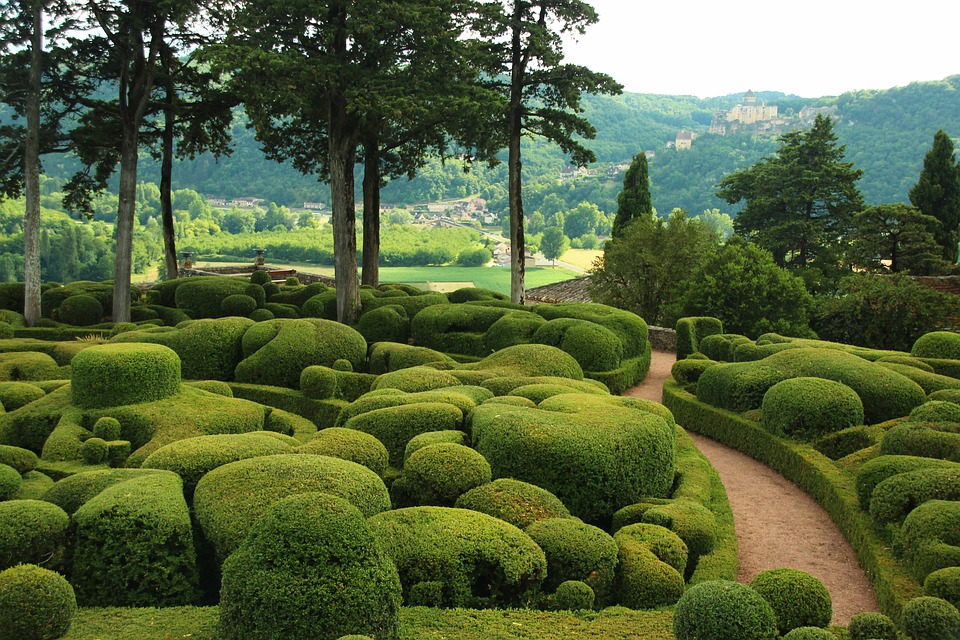
If you are looking for a French garden with a spectacular setting, the Jardins de Marqueyssac are hard to beat. Perched on a rocky spur high above the Dordogne Valley near Vézac, this 22-hectare garden combines winding pathways, beautifully shaped boxwood, stone features and some wonderful viewpoints.
The gardens have a long history, but much of the character you see today comes from Julien de Cerval, who inherited Marqueyssac in 1861. He spent the last 30 years of his life developing the grounds, planting tens of thousands of boxwoods and introducing features influenced by his love of Italian gardens.
After extensive restoration, Marqueyssac opened to the public in March 1997. Today it is one of the best-known gardens in the Périgord and a particularly rewarding stop if you are exploring the Dordogne by car.
Best for: spectacular views, photography, gentle walking and combining gardens with a Dordogne sightseeing trip.
Allow: About 1½ hours for the self-guided garden visit, although you can easily spend longer enjoying the viewpoints and surroundings.
Where: Vézac, Dordogne, southwestern France.
Good to know: The gardens are open every day of the year, although opening hours vary by season. Check the official website before visiting.
There is something wonderfully special about walking through a garden that Claude Monet himself tended and used as inspiration for his paintings. At Giverny in Normandy, you can see the flower gardens and water garden that were part of Monet’s life for more than 40 years.
Monet moved to Giverny in 1883 and gradually transformed the property into the garden he imagined.
Monet lived at Giverny until his death in 1926. After years of neglect, the gardens were restored from 1977 and opened to the public in 1980. Today, visitors can also explore Monet’s pink house, where the rooms have been restored to recreate the atmosphere of his home.
Best for: Monet fans, flower lovers, photography and anyone who enjoys seeing a garden that was created as part of an artist’s everyday life.
Allow: About 1½ to 2 hours for an unguided visit to the house and gardens.
Best time to visit: The gardens change with the seasons. Water lilies are an important summer feature, while the wider gardens offer different flowers from spring through autumn.
Where: Giverny, Normandy, about 75 kilometres from Paris.
Visitor information: Monet’s House and Gardens are open every day from 1 April to 1 November, 10:00 am to 6:00 pm, with last admission at 5:30 pm. Online booking is recommended, particularly at busy times. (Do check on their official website because this info might change.)
I have no words other than: Watch this video and you will know why you simply have to visit this garden. In my opinion it is most definitely one of the most beautiful gardens to visit in France.
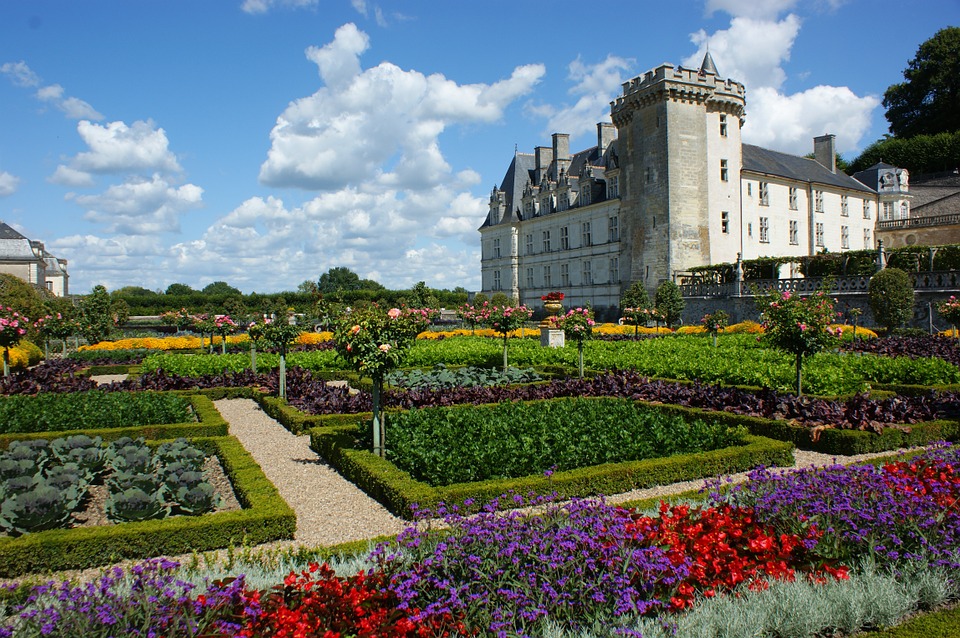
If you love beautifully ordered gardens, Château de Villandry is one of the most impressive places to visit in France. In the Loire Valley, the château is surrounded by six distinctive Renaissance-style gardens, including the famous ornamental vegetable garden, the Water Garden, the Sun Garden, the Herb Garden, the ornamental gardens and a maze.
The gardens you see today were largely recreated in the early 20th century by Joachim Carvallo, who bought the château in 1906 and devoted much of his life to restoring its gardens according to Renaissance-inspired plans. The château itself dates from the Renaissance and was completed around 1536 for Jean Le Breton, a minister of King Francis I.
From the upper terraces, you can look down over the carefully arranged gardens and see how the different sections fit together. This elevated view is one of the best ways to appreciate the extraordinary geometric design.
Villandry is also part of the Loire Valley between Sully-sur-Loire and Chalonnes, which has been listed as a UNESCO World Heritage Site since 2000. It makes an especially good stop on a Loire Valley château road trip, where you can combine the gardens with visits to some of the region’s other famous castles.
Best for: formal gardens, photography, garden lovers and a Loire Valley road trip.
Allow: At least 2 hours if you want to explore the gardens properly. Allow longer if you also want to visit the château.
Best time to visit: The gardens are beautiful throughout the growing season, but the appearance changes as the planting develops. The ornamental vegetable garden is replanted twice a year, giving it a noticeably different appearance at different times of the season.
Where: Villandry, about 15 kilometres west of Tours in the Loire Valley.
2026 visitor information: The gardens are open every day of the year except 25 December. In 2026, the château is open from 7 February to 11 November, and again from 28 November 2026 to 3 January 2027, except Christmas Day. Opening hours vary according to the season.
Few French gardens have such a beautiful setting as Château de Chenonceau.
The château stretches across the River Cher, while its gardens lie on either side of the entrance avenue, creating a remarkable combination of water, architecture and carefully designed planting.
There is much more to explore beyond these two famous gardens. The estate includes the Green Garden, created in 1825, a garden dedicated to landscape designer Russell Page, a flower garden covering more than a hectare, and a maze planted with 2,000 yew trees. The flower garden is arranged in twelve squares and provides flowers for the château’s floral arrangements.
Chenonceau is also an excellent choice for travellers exploring the Loire Valley by car. The château and its gardens are open throughout the year, and the standard 2026 admission includes the château and gardens.
Best for: château gardens, photography, formal French gardens and Loire Valley road trips.
Allow: At least 2–3 hours to see the château and gardens without rushing.
Where: Chenonceaux, Indre-et-Loire, in the Loire Valley.
2026 visitor information: Château de Chenonceau is open every day throughout the year. Opening hours vary by date, so check the official website before your visit. During busy periods, a timed entry may be required.
Just 50 kilometres southeast of Paris, Château de Vaux-le-Vicomte has one of the great formal gardens of France. Designed in the 17th century by André Le Nôtre, together with architect Louis Le Vau and painter Charles Le Brun, the estate became an important model for the grand French garden style that would later be developed on an even larger scale at Versailles.
The garden is built around a remarkable three-kilometre-long perspective, with terraces, clipped planting, lawns, fountains, statues and pools arranged to create carefully controlled views from the château. The garden covers 33 hectares, while the wider estate extends across approximately 500 hectares.
Water is one of the garden’s defining features. Fountains, pools and channels appear throughout the landscape, and the estate’s hydraulic system still operates using gravity, following the principles used when the garden was created. Look out too for the garden’s many sculptures: there are currently 63 sculptures dating from the 17th and 19th centuries.
Vaux-le-Vicomte is particularly interesting for visitors who want to understand how the classic French garden developed. The estate was created for Nicolas Fouquet, Louis XIV’s superintendent of finances, and Le Nôtre began working on the gardens in 1641. The château and garden were completed as a unified composition, bringing architecture and landscape together on an impressive scale.
Best for: formal French gardens, grand perspectives, fountains, photography and a memorable day trip from Paris.
Allow: At least 2–3 hours to explore the château and gardens. Allow extra time if you want to walk further into the park.
Where: Maincy, Seine-et-Marne, about 50 kilometres southeast of Paris.
2026 visitor information: The estate reopened on 14 March 2026 and is open daily from 10:00 am to 5:30 pm through 1 November, outside special event dates. The famous Candlelit Evenings take place on Saturdays from 16 May to 26 September 2026.
Like something out of a fairy tale.
If you enjoy gardens that surprise you, Domaine de Chaumont-sur-Loire is one of the most interesting garden visits in France. Rather than presenting one traditional garden, the estate combines a château, historic park, contemporary art and the famous International Garden Festival, where new garden designs are created each year.
There is plenty more to see beyond the festival gardens. The Domaine covers 32 hectares and includes the château, historic grounds, stables, contemporary art installations and other gardens. The château itself dates from the 15th and 16th centuries and stands above the Loire, while the park includes a landscape garden created in the 19th century.
For garden lovers, the great attraction is the sense of discovery. You are not simply walking through a beautifully planted historic garden; you are seeing new ideas in landscape design, with unusual materials, planting schemes and imaginative structures appearing throughout the festival grounds.
Best for: contemporary garden design, photography, creative ideas and visitors who enjoy seeing something different from traditional French formal gardens.
Allow: At least 3 hours for the International Garden Festival alone. Allow more time if you also want to visit the château, historic grounds, stables and art installations.
Where: Chaumont-sur-Loire, between Blois and Tours in the Loire Valley, about 185 kilometres from Paris.
2026 visitor information: The International Garden Festival runs from 22 April to 1 November 2026. The Domaine is open daily apart from 25 December and 1 January, with last entry one hour before closing.
Set out and explore the fountains and groves with their water features spouting to the rhythm of music. In my opinion truly a travel-must-see and one of the most beautiful gardens to visit in France.
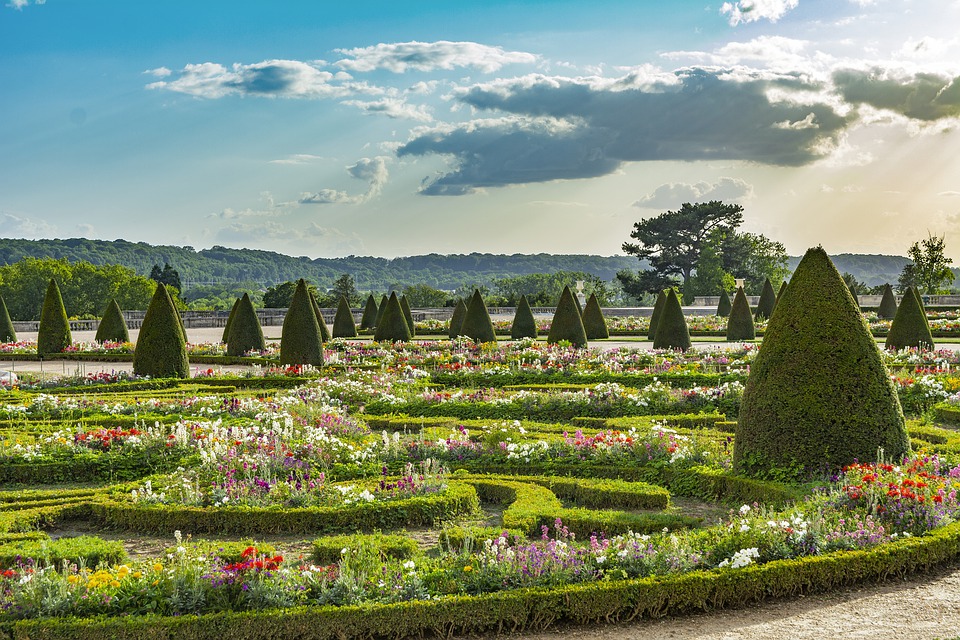
The Gardens of Versailles are probably the most famous formal gardens in France, and they deserve their place on this list for their extraordinary scale, symmetry and carefully planned views. Created for Louis XIV by André Le Nôtre, the gardens were designed as an extension of the palace, with long avenues, geometric parterres, fountains, sculptures and wooded groves arranged around a grand central perspective.
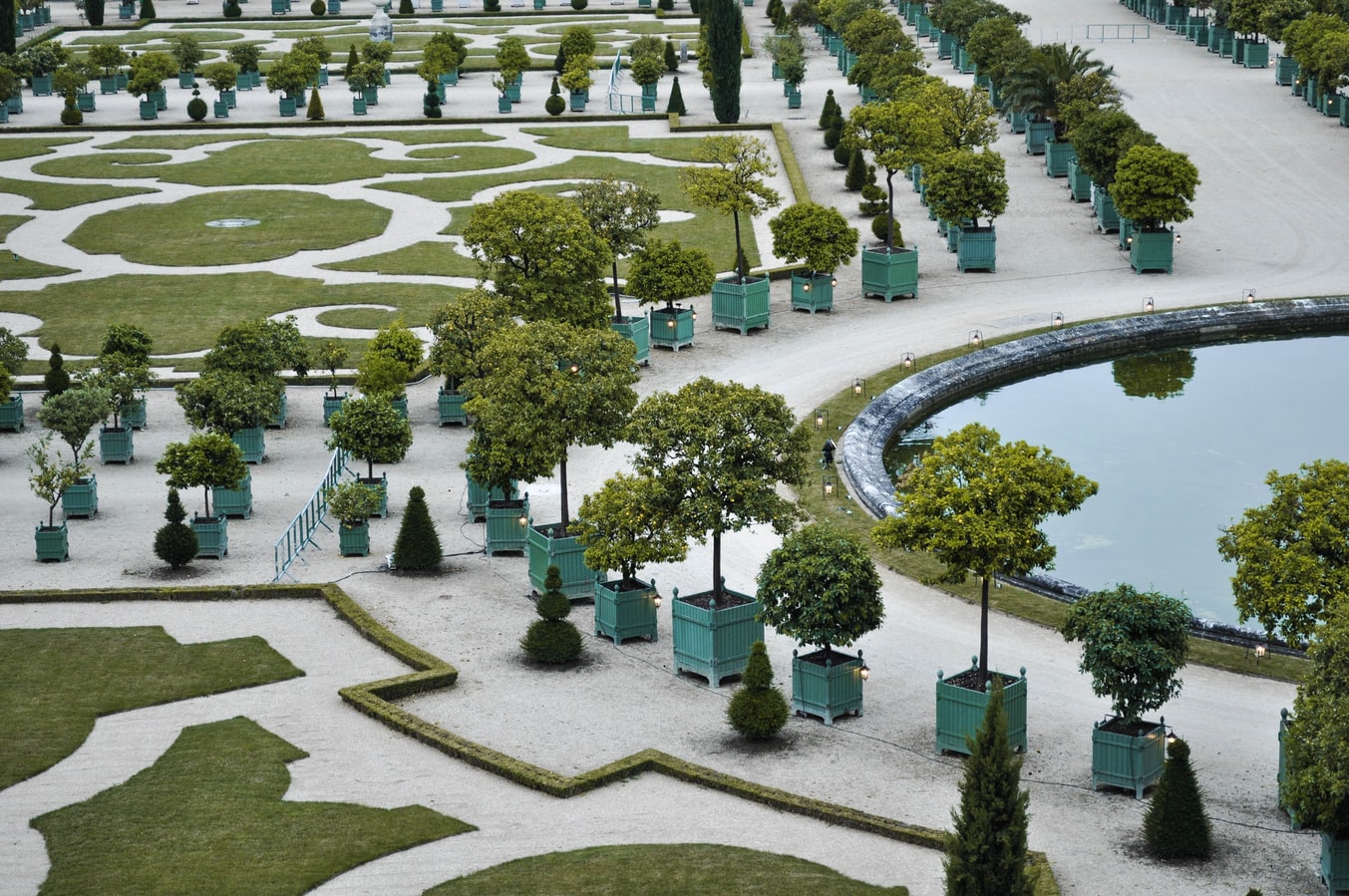
The gardens are much more than the lawns and fountains immediately in front of the palace. There are bosquets, or enclosed garden rooms, hidden among the trees, along with sculptures, fountains, ornamental pools and the impressive Orangery. The result is a garden that rewards walking and exploring rather than simply looking at it from the palace terrace.
Versailles is particularly spectacular during the Musical Fountains Show and Musical Gardens, when some of the fountains and groves are opened as part of the programme. In 2026, these events run from 1 April to 1 November, giving visitors an opportunity to experience the gardens with their fountains operating to music.
Best for: grand French formal gardens, fountains, photography, long walks and seeing the work of André Le Nôtre on its greatest scale.
Allow: At least 1½ hours for the gardens alone. Allow considerably longer if you plan to combine them with the palace, Trianon estate and wider park.
Where: Versailles, about 20 kilometres southwest of central Paris.
2026 visitor information: The gardens are open every day. From April to October, the gardens are scheduled to open from 7:00 am to 8:30 pm, although special-event days can have different closing arrangements. The gardens are free on ordinary days but admission is charged on Musical Fountains Show and Musical Gardens days.
Right in the heart of Paris, the Jardin du Luxembourg is a wonderful place to enjoy a garden without leaving the city. Covering about 23 hectares, it combines formal flowerbeds, tree-lined promenades, fountains, sculptures and open spaces around the Luxembourg Palace.
The garden was created in the early 17th century for Marie de Médicis, following her decision to build the Luxembourg Palace as a residence inspired by her Florentine upbringing. The garden has changed considerably over the centuries, but its Italian influence can still be seen in places such as the Médicis Fountain.
The Médicis Fountain is one of the garden’s most recognisable features. Marie de Médicis had the original Luxembourg Grotto built around 1630, inspired by the nymphaea and fountains of Italian gardens. The fountain was later moved about 30 metres during Haussmann’s transformation of Paris in the 19th century and was given its present setting, including a long basin and additional sculpture.
There is plenty to discover as you walk. The garden contains 102 statues, many dating from the 19th century, as well as the Orangerie, an apiary, a bandstand and the large central pond. You will also see Parisians enjoying the garden’s many traditional activities, making this feel like a living part of the city rather than a formal attraction created only for visitors.
One of the best things about the Luxembourg Garden is its location. After exploring the Latin Quarter, Saint-Germain-des-Prés or the Left Bank, you can easily add a walk through the garden to your Paris sightseeing day. Entry to the garden is free.
Best for: a relaxing Paris walk, photography, fountains, sculptures, flowerbeds and experiencing one of the city’s favorite green spaces.
Allow: About 1–2 hours for a leisurely visit.
Where: 6th arrondissement of Paris, around the Luxembourg Palace.
2026 visitor information: The garden is open every day, with opening and closing times changing throughout the year according to sunrise and sunset. In summer, it can remain open until around 9:30 pm; in winter, closing times are considerably earlier. Check the official schedule for your date.
High above the Mediterranean in the hilltop village of Èze, the Jardin Exotique d’Èze is a garden with a spectacular natural setting. It occupies the site of a former medieval fortress, 429 metres above the Mediterranean Sea, with sweeping views along the French Riviera towards the Esterel Mountains and the Gulf of Saint-Tropez.
The garden is quite different from the formal French gardens on our list. Its southern side is filled with succulents and xerophytic plants from dry regions around the world, including plants from North America, Mexico and southern Africa. The sunnier position above the sea suits these drought-tolerant plants particularly well.

On the northern side, the atmosphere changes completely. This area is shadier and more humid, with Mediterranean plants as well as species such as tree ferns, agapanthus and hostas. Natural caves and a small cascade add another dimension to the garden, creating a cooler, greener contrast to the sunny southern slope.
As you walk through the garden, the plants are only part of the experience. Paths lead between the botanical collections and viewpoints, while sculptures by artist Jean-Philippe Richard are placed around the garden. The combination of unusual plants, stone pathways and the Mediterranean far below makes this one of the most distinctive garden visits on the French Riviera.
The garden has also been awarded the French “Jardin Remarquable” label, recognising its importance as a garden of note.
Best for: Mediterranean views, succulents and cacti, photography, botanical interest and combining a garden visit with a trip to Èze village.
Allow: About 1–1½ hours for a leisurely visit, with extra time if you want to stop frequently for the views.
Where: Èze, Alpes-Maritimes, on the French Riviera between Nice and Monaco.
2026 visitor information: The garden is open every day. From April through June and in October it is open from 9:00 am to 6:30 pm; from July through September, from 9:00 am to 7:30 pm. From January through March and November through December, hours are 9:00 am to 4:30 pm. The current adult admission is €10, with children under 12 admitted free.
Website for more info: https://tripadvisor.tpx.lu/5fT82LKz
Address: 1 Av. Ephrussi de Rothschild, 06230 Saint-Jean-Cap-Ferrat, France
Imagine wandering through a beautiful French garden with the blue Mediterranean stretching out on both sides. That is the setting at Villa Ephrussi de Rothschild, on the peninsula of Saint-Jean-Cap-Ferrat between Nice and Monaco.
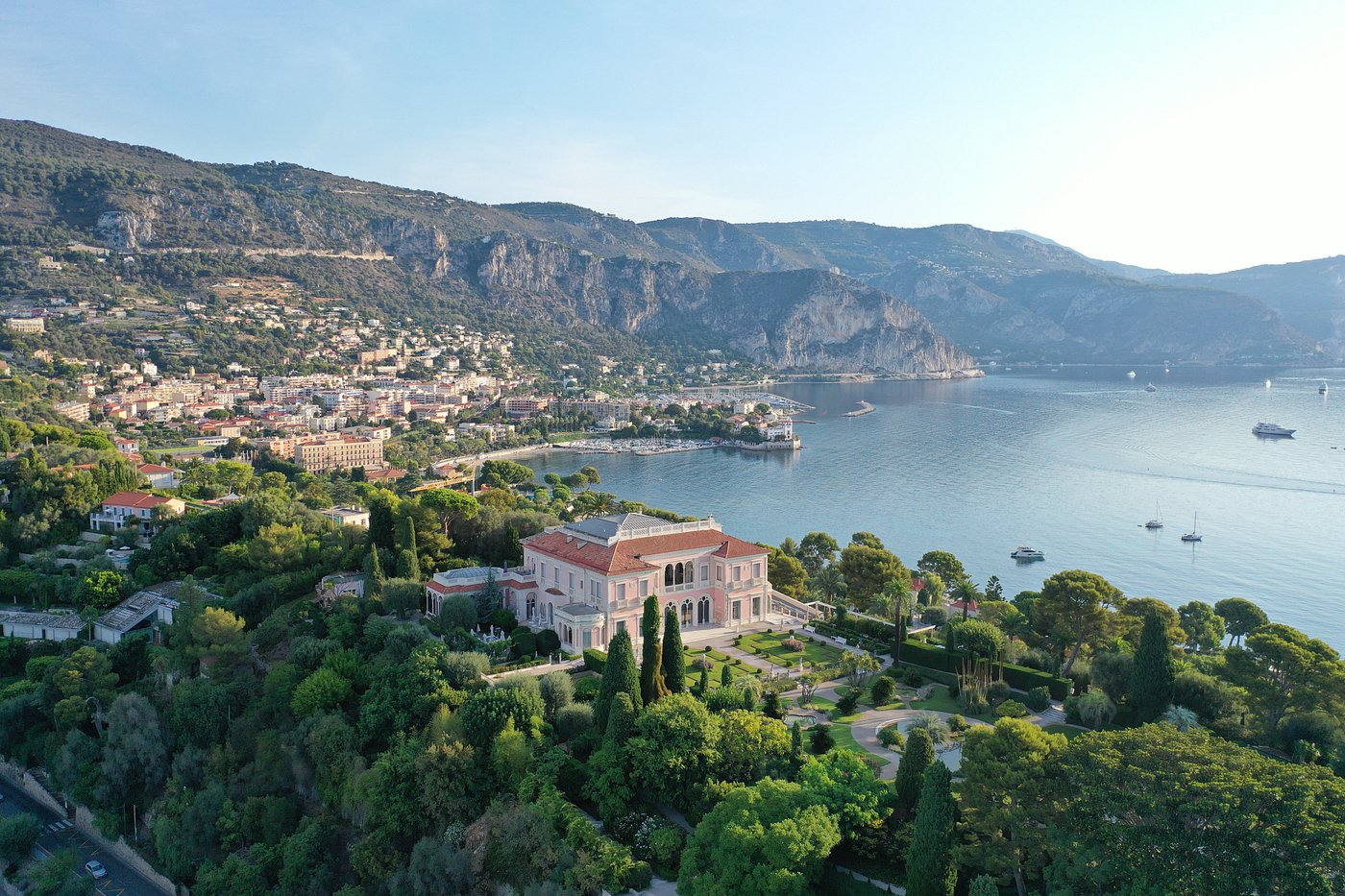
The villa was created during the Belle Époque by Baroness Béatrice Ephrussi de Rothschild, and its gardens were developed between 1911 and 1915. Today, the property is surrounded by nine themed gardens, each with its own character: French, Spanish, Florentine, Japanese, exotic, Provençal, rose, lapidary and Sèvres gardens.
The French garden is particularly impressive from the villa, with its formal layout, flowerbeds and pools creating a classic view towards the Mediterranean. Around it, the themed gardens provide a lovely change of pace. You can move from the geometric French garden into a Japanese garden, a rose garden or a more exotic planting scheme within the same visit.
The location is part of the magic. The villa stands on one of the narrowest parts of the Saint-Jean-Cap-Ferrat peninsula, with views towards Villefranche-sur-Mer on one side and Beaulieu-sur-Mer on the other. The combination of gardens, elegant architecture and sea views makes this one of the most photogenic garden visits on the French Riviera.
The gardens are also officially recognised as a Jardin Remarquable, France’s national label for outstanding gardens. The property is classified as a historic monument and belongs to the Institut de France.
Best for: Mediterranean views, beautiful photography, themed gardens, flowers and combining a garden visit with a French Riviera road trip.
Allow: Around 2 hours for a relaxed visit to the villa and gardens.
Where: Saint-Jean-Cap-Ferrat, between Nice and Monaco.
2026 visitor information: The official site currently lists the villa and gardens as open daily, although exceptional closure dates can apply. Check the official website before visiting for the opening hours on your chosen day.
Want to know more about all the beautiful gardens in France? Explore the gardens of France
There are plenty more magical gardens to visit in France. The grandeur of each garden is so unique and captivating that you will want to go back again and again.
For more photos of the lovely french gardens, see our video on Youtube.
Suggested reads
• Saint-Cirq-Lapopie: A Beautiful Little Village in France — a charming cliff-top village with stone lanes, sweeping views and a pace that makes you want to linger longer.
• Climbing Dune du Pilat: An Insider’s Guide — climb Europe’s tallest sand dune and catch sweeping views of ocean and forest from the top.
• Discover Grindelwald — For One of the Most Beautiful Swiss Holidays — alpine valley scenes, mountain walks and postcard views that make jaw-dropping winter and summer memories.