
Some cookies are needed to make this site work. With your permission, we'd also like to use cookies to see how people use the site and to show relevant ads and travel deals. You can change your mind at any time using the "Cookie settings" button. Read more in our Policy.
Your browser is sending a "do not sell or share" signal, so advertising cookies are off by default.
Give yourself one evening in Jemaa el-Fnaa and one quiet morning in a riad courtyard. In the square, food stalls fire up as the sun goes down. Back at your riad, you can sit over breakfast while the medina wakes up outside. That’s the Marrakech trip I’d plan. A little bustle, a little breathing room, and plenty of time to eat.
Marrakech, also spelled Marrakesh, is an easy city to enjoy without a car. Give yourself three full days for the old city, the gardens, and a hammam or a long lunch. Then add a fourth day if you want to head into the Atlas Mountains or spend a day by the Atlantic in Essaouira.
What you need to know | What I’d plan for |
How long to stay | Three full days in the city, plus a day for each trip out of town. |
Best time to go | March to May or September to November for more comfortable walking weather. Early September can still feel hot. |
Where to stay | A medina riad near a taxi drop-off for a first visit. Try Guéliz if you prefer wider sidewalks and easier car access. |
Airport | Marrakech Menara Airport (RAK). Take an official airport taxi, use the airport shuttle, or ask your stay to arrange a pickup. |
Money | Moroccan dirham (MAD). Keep a few small notes for the souks, snacks, and taxis. |
Language | Arabic and Amazigh are Morocco’s official languages. You’ll hear Moroccan Arabic, or Darija, and French often comes in handy. A simple shukran means thank you. |
If you’re staying in the medina, ask your riad for the exact taxi drop-off point as soon as you book. Many lanes are too narrow for cars, so the last stretch may be on foot. Ask how long that walk takes and if someone can meet you, especially if you’re arriving after dark.
By official airport taxi: Marrakech’s small city taxis, called petits taxis, are sandy beige. At the airport, follow the signs to the official taxi counter after you collect your bags. If someone approaches you in arrivals offering a ride, keep walking to the counter.
Give the counter your hotel or riad’s exact drop-off point. The fare is fixed for that destination, and you pay before you get in. Keep your receipt and match the taxi number on your ticket to the car you board. That way, you know what the ride costs upfront and which driver to go with, without having to haggle after a long flight.
>> If your taxi has to drop you a few lanes away, you’ll be glad you can handle your bag on your own. If you’re shopping for one, here’s what I’d look for when choosing a suitcase.
>> A little lesson from my own travels. I’ve had a luggage saga of my own, and it’s why I pay attention to that last bit between the taxi and the front door. In Marrakech, the question I’d ask is simple. “How far will I have to walk with my suitcase?”
If you’re coming from Casablanca, look up trains to Marrakech station on ONCF. From the station, take a city taxi to your stay or the nearest medina drop-off. If you’re landing at Casablanca’s Mohammed V Airport, search from the airport station and check where your itinerary has you change trains. ONCF train times and tickets
Once you’re in Marrakech, walk between the medina sights and use a small city taxi, known as a petit taxi, for longer hops such as Jardin Majorelle or Guéliz. Ask the driver to use the meter. If they quote a flat fare, agree on it before getting in.
Download an offline map, save your riad’s pin, and keep an eye out for scooters in the narrow lanes. If you’re on your own and would like help getting your bearings, a short walk with a licensed local guide can make the first morning easier. Your riad can help you arrange one.
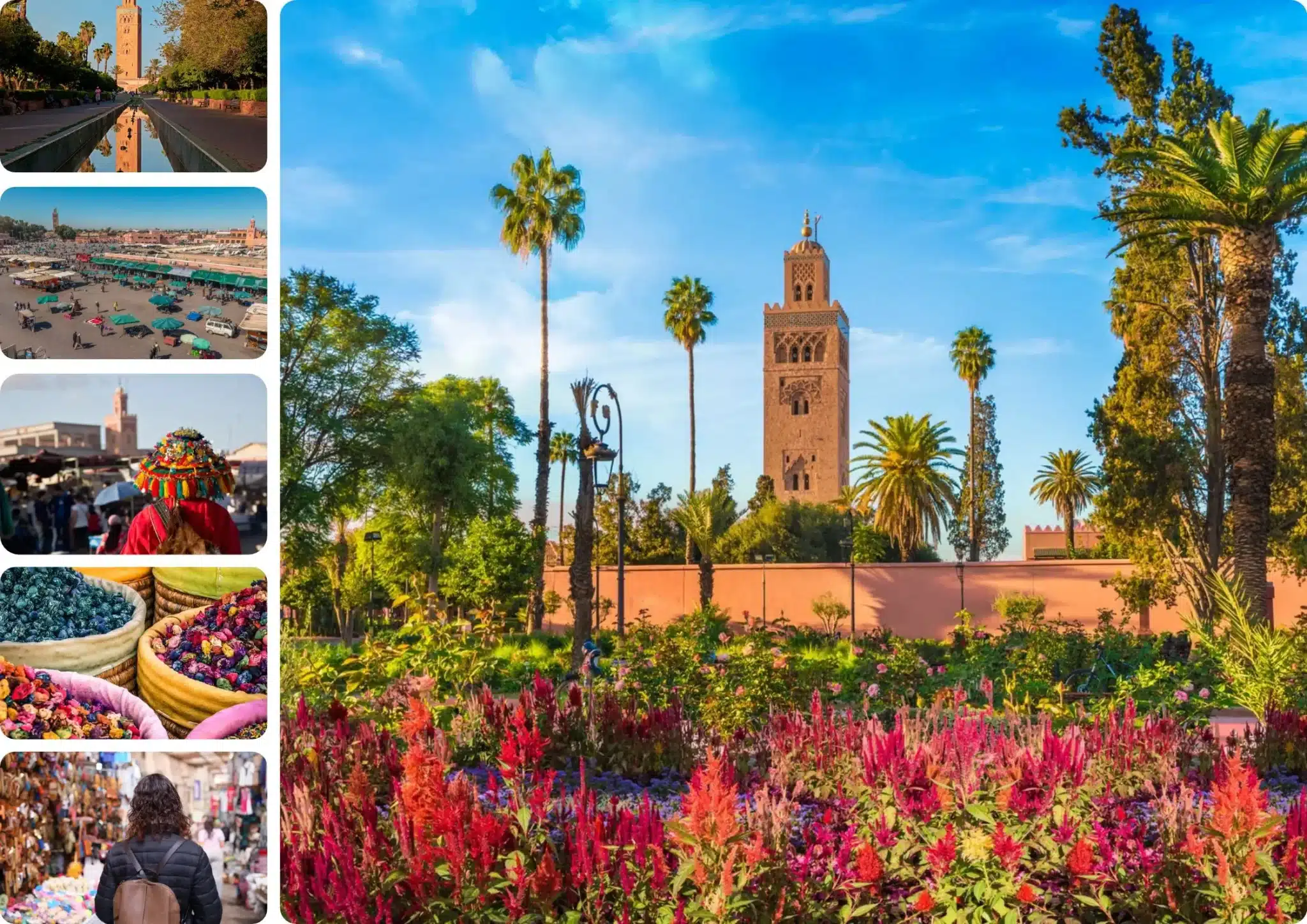
The walled medina is Marrakech’s old city and a UNESCO World Heritage Site. Start around Jemaa el-Fnaa, then head into Souk Semmarine for textiles, leather goods, and lanterns. Give yourself time to browse. If you spot something you like, look at a couple of stalls before you settle on a price. Bargaining is common in the souks, and it’s fine to smile and walk away if the price doesn’t suit you.
Then come back to the square around sunset. The food stalls get going, and the square feels different from the one you walked through that morning. If you want a little space, pick a rooftop café and watch from above. If you eat at a stall, ask for the price before you order, including any sides. And if you want a close-up photo of someone, ask first. UNESCO’s guide to the Medina of Marrakesh
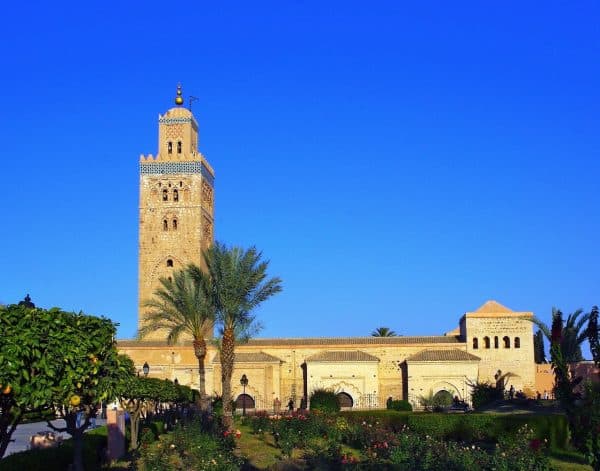
You can spot Koutoubia’s 12th-century minaret from around Jemaa el-Fnaa. Walk over to see it up close, then take a breather in the gardens. Koutoubia is an active mosque, and only Muslims can enter. The gardens give everyone a good view of the tower. It’s an easy stop to pair with the square.
Go to Bahia Palace for the tiled courtyards, carved doors, and painted ceilings. Look up as you go from room to room. It’s easy to get so caught up in the tilework that you miss what’s above you.
Then head toward the Kasbah for the Saadian Tombs, where members of the Saadian dynasty lie buried. A narrow viewing area can slow the line at the main chamber, so go early if the tombs are high on your list. If you still have time nearby, wander through the Mellah, the historic Jewish quarter.
>> If you’d like a guide, this half-day Marrakech tour takes you to Bahia Palace and the Saadian Tombs. Plan to pay separately for entry to both sites.
Book Jardin Majorelle, then decide if you want another garden
Jardin Majorelle is the garden with the cobalt-blue walls, cactus paths, and palms. French painter Jacques Majorelle began creating it, and that blue still steals the show. Buy your ticket online before you go. If you’d like to see the garden and both museums, book the Jardin Majorelle combo ticket. It includes entry to the garden, the Pierre Bergé Museum of Berber Arts, and the Yves Saint Laurent Museum.
For a more open walk, try Menara Gardens. The pavilion sits beside a large reflecting basin and olive groves. On a clear day you can see the Atlas Mountains in the distance. I’d pick Menara when I wanted an unhurried stroll, and Majorelle when I wanted color and a garden full of little details.
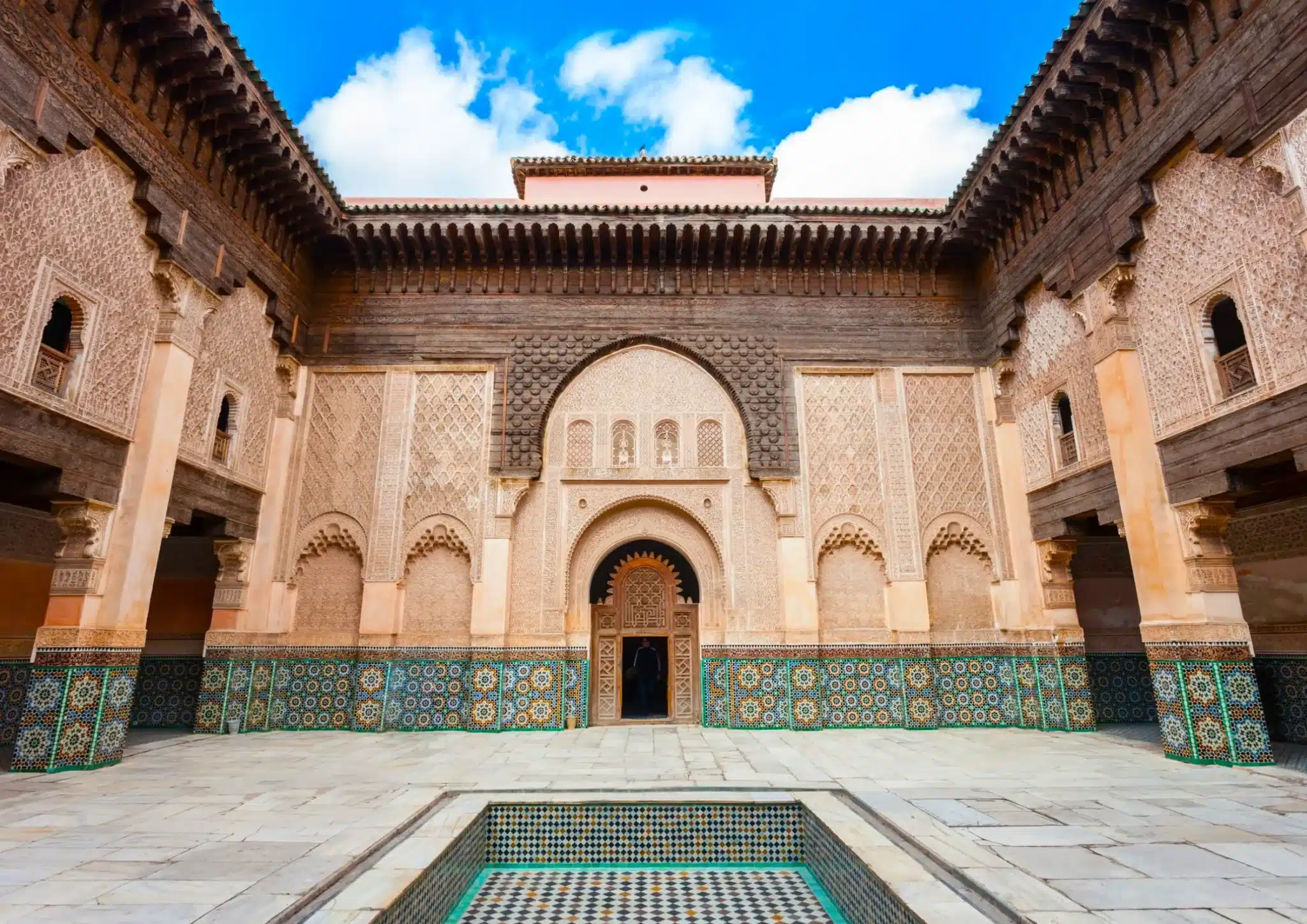
This former Islamic college sits in the northern medina, so it fits nicely into a morning in the souks. Spend a few minutes in the central courtyard, where you can take in the carved plaster, patterned tiles, and cedar woodwork. Then go upstairs to see the small rooms where students once lived. The view back down into the courtyard is worth the stairs. Ben Youssef Madrasa’s official website
A hammam is a Moroccan bathhouse. For a first time, I’d pick a spa hammam and ask what the session includes. Steam, black soap, and an exfoliating scrub are common. Check what to wear, how long it takes, and if a massage costs extra.
If you’re visiting with kids and everyone needs a break from sightseeing, Oasiria Water Park has slides, pools, and a lazy river. It opens seasonally and runs a shuttle from stops near Jemaa el-Fnaa and in Guéliz when the park is open. Check the return times before you go so you know when you’ll get back to town. Oasiria opening dates and shuttle stops.
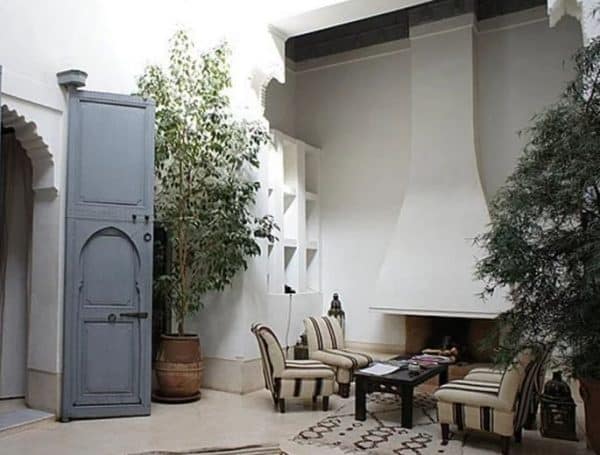
A riad is a traditional Moroccan house built around an inner courtyard or garden. It’s where I’d look first if I wanted to step out into the souks in the morning and sit somewhere quiet over breakfast. Riad Dar Hanane is one to look up in the medina.
>> Before booking any riad, check the walk from the taxi drop-off, the stairs to your room, and how late someone will be there to let you in. If steps are a concern, ask how many there are from the lane to your room and from your room to breakfast. That’s more useful than seeing “ground floor” on a booking page.
Choose Guéliz if you like wider sidewalks, cafés, and a hotel you can pull up to in a taxi. You can then head into the medina for sightseeing. Hivernage suits a stay where the hotel itself is part of the trip and you’d like more choice of pools, spas, and larger properties.
If you’re still weighing your options, have a look at our guide to where to stay in Morocco.
If you order one dish with a strong Marrakech connection, make it tanjia. The name looks a lot like tagine on a menu, but the two dishes come from different pots. Tanjia cooks slowly in a tall clay jar. A tagine cooks under a cone-shaped lid. Once you know that, it’s much easier to order the one you meant!
>> A little food confession. I’m a savory breakfast person. Put something warm and salty next to the jam and I’ll reach for the savory one first. So at a riad breakfast, I’d ask if there’s msemen, a flaky Moroccan flatbread, and see if I can have it with cheese. You can always try a piece with honey afterward.
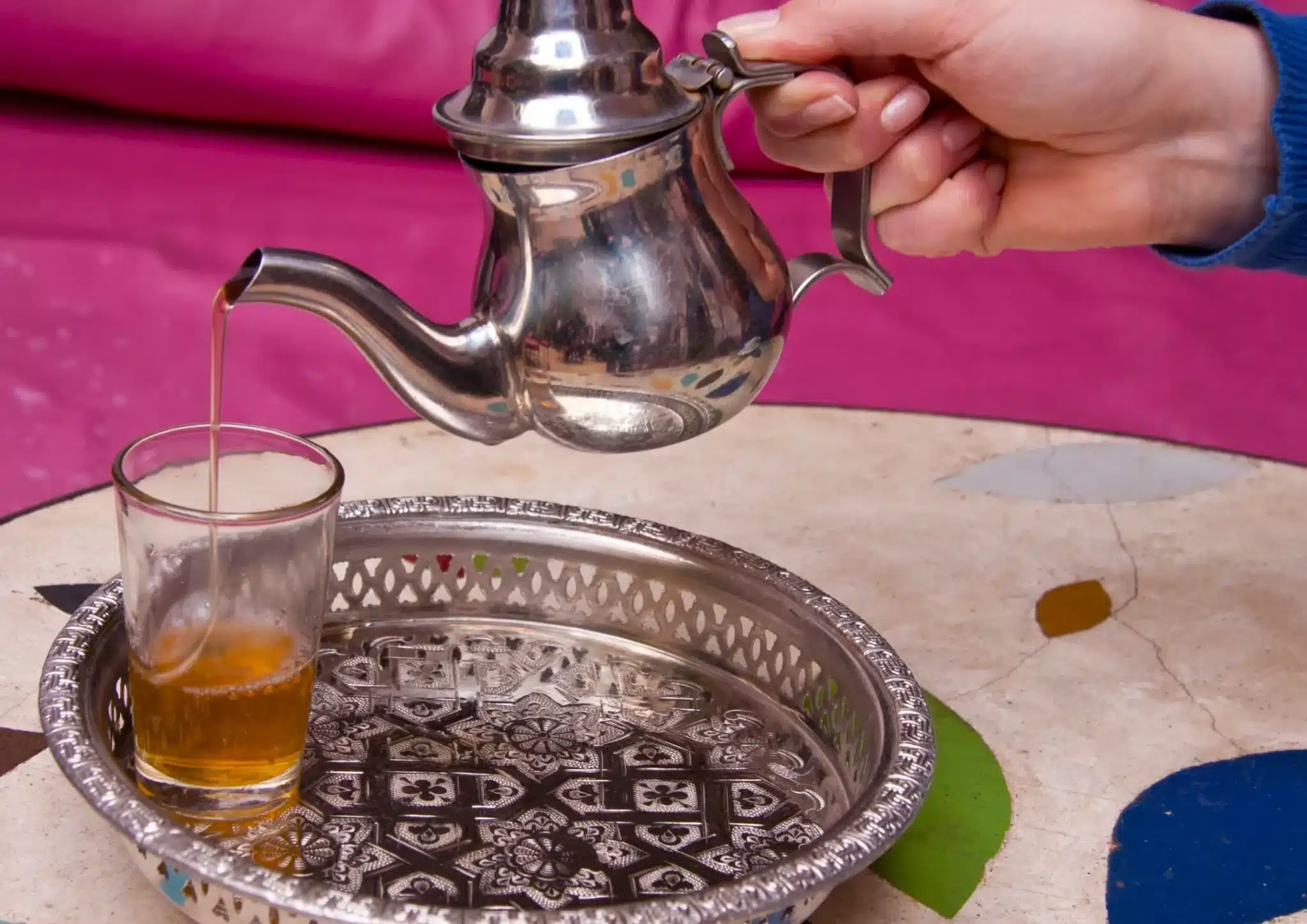
And of course, leave time for mint tea. If you like yours less sweet, ask before they pour.
>> If you want to bring a little of Morocco home, try our tfaya recipe with slow-cooked onions and raisins. Spoon it over couscous and you’ve got a simple way to revisit those sweet and savory flavors. Morocco’s guide to traditional dishes
Day | Morning | Afternoon and evening |
| Day 1 | Start at Koutoubia, then walk through Jemaa el-Fnaa and into the souks. | Visit Ben Youssef Madrasa. Take a break at your riad, then return to Jemaa el-Fnaa around sunset. |
| Day 2 | Visit Bahia Palace and the Saadian Tombs. | Explore the Mellah if you have the energy, then book a hammam or sit down for a long lunch. |
| Day 3 | Book a morning slot at Jardin Majorelle and add a museum if it interests you. | Have lunch in Guéliz, walk through Menara Gardens, or head back to the souks for anything you’ve been thinking about since day one. |
>> My travel tip: If you only have two days, I’d keep the first day as it is. Then pick Bahia Palace or the Saadian Tombs for the second morning and book Jardin Majorelle for the afternoon. That leaves room for a proper lunch and a little wandering.
Essaouira is about three hours each way by coach. Take an early Supratours or CTM departure and book your return before you set off. Supratours drops you closer to Essaouira’s medina, which gives you more time to walk the ramparts, see the fishing harbor, and have lunch. Pack a light layer for the Atlantic breeze.
You can do it in a day, but I’d stay a night if I had the time. Six hours on a coach is a lot when the thing you most want to do is slow down.
>> This full-day trip to Essaouira includes pickup and drop-off in Marrakech. Once you’re there, you’ll have free time to walk the ramparts, visit the fishing harbor, and choose where to have lunch.
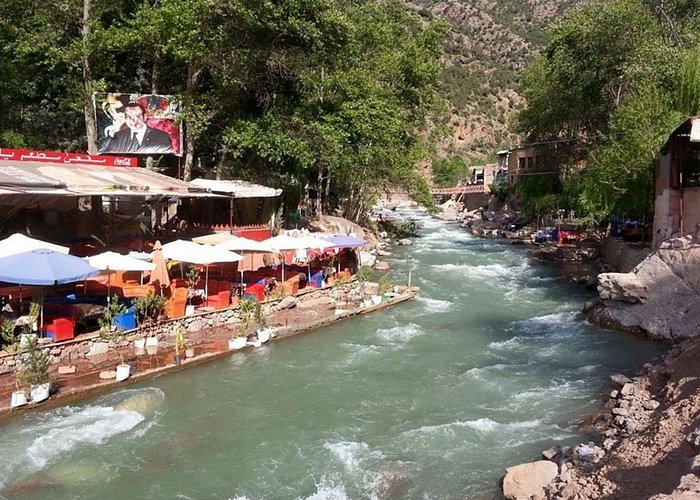
Pick the Ourika Valley for a day of mountain scenery or Imlil if you want more time on foot. Ourika is roughly an hour by road, depending on where you start and how far into the valley you go. If your outing includes the Setti Fatma waterfalls, ask about the walk before booking. Parts can be rocky and uneven. For a day around Imlil, ask how much uphill walking there is and what shoes to bring.
>> If you’d like someone else to handle the drive, this Ourika Valley and Atlas Mountains day trip includes pickup in Marrakech and a waterfall hike near Setti Fatma. Ask about the trail if you’d prefer an easier walk.
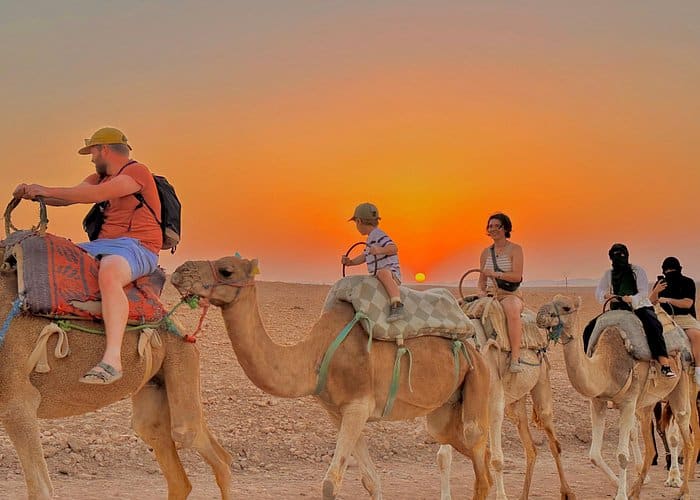
If you want an evening outside Marrakech without spending half the day in a car, look at Agafay, about 45 minutes away by road. It’s a rocky desert landscape, so expect stony hills and wide skies.
>> If you’d rather spend the day in Marrakech, head out later for this Agafay sunset dinner. It includes round-trip transport, a short camel ride, dinner, and a fire show. Check your meeting point before you set off, especially if you’re staying in the medina.
>> Travel tips: Before you zip up your suitcase, check the monthly weather averages for Marrakech. Look at the daytime highs and overnight lows for your month. That’ll help you decide if you’ll want an extra layer for dinner on a rooftop.
Flying with just a carry-on? Check our cabin bag size guide before you pack. The size you can bring depends on your airline and ticket, and an under-seat bag has a different limit from an overhead carry-on.
I’d leave your last evening in Marrakech open. You might want one more glass of mint tea on a rooftop or another wander through the souks before you zip up your suitcase.
Explore the world. Bring its beauty home.
Then, once you’re home, put the kettle on. If it’s the cobalt blue of Jardin Majorelle you keep thinking about, try painting a pot that same blue and filling it with something green. Start with whatever space you have, even if it’s just a sunny doorstep. Here’s how to bring a little of Jardin Majorelle home with a container garden.
What would you bring home from Marrakech? Tell me in the comments.
Explore more of Morocco…