
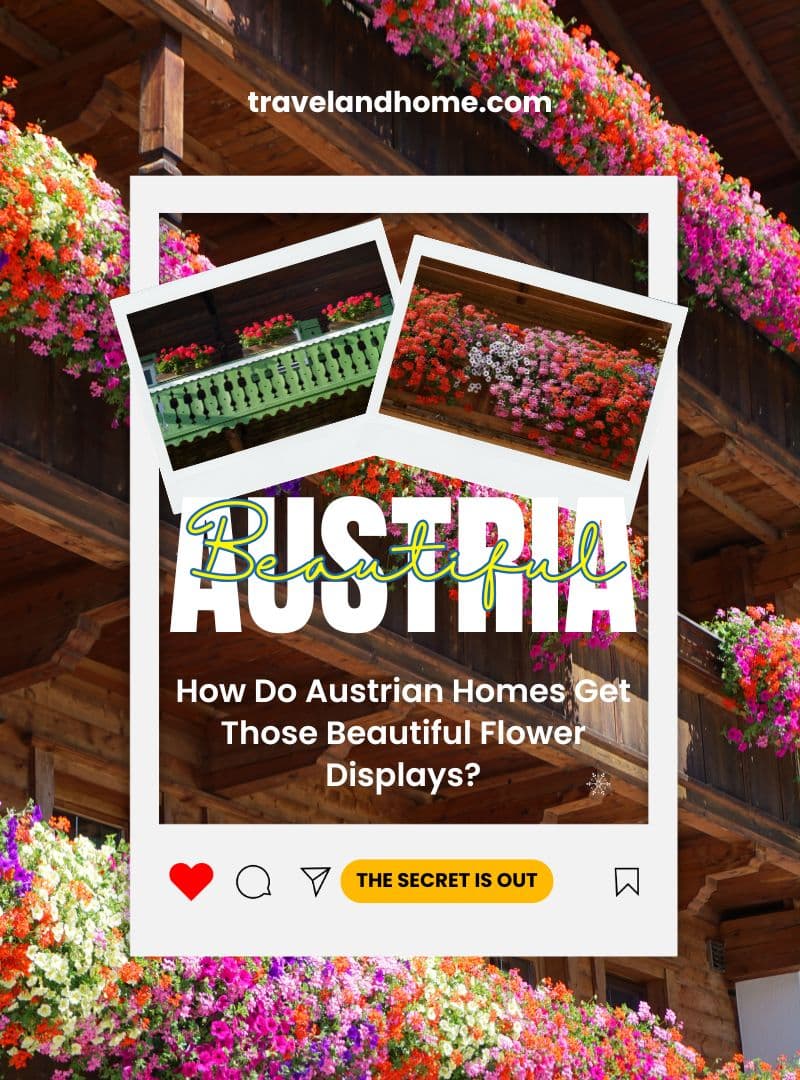
Bring your travel memories of Austria Home:
One of the things that caught my attention during my visit to Austria wasn’t only a famous palace, a grand cathedral or even the mountains.
It was the flowers.
As we drove through the Austrian countryside, I kept noticing the same thing. Beautiful homes with wooden balconies, and those balconies absolutely overflowing with flowers. Geraniums tumbling over the edges, colourful window boxes beneath the windows, and little houses that looked as though someone had spent hours getting every flower just right.
At first I wondered if I was simply seeing Austria at its most photogenic.
Then I started wondering something else:
How do they actually keep those flowers looking so beautiful? Are they all real? What flowers do they use? Do Austrians have some special secret? And is it actually a rule that houses have to look like this?
So, after seeing it for myself, I wanted to find out more.
Yes! They are very much real.
I was told that the flowers I kept seeing everywhere in Austria are real, living plants growing in window boxes, balcony planters and gardens. They aren’t artificial displays put there simply for tourists.
And once you know that, you start looking at them differently.
Because some of those displays are enormous.
The flowers are healthy, full and overflowing, and they clearly haven’t just been planted and forgotten. Good soil, regular watering, nutrients and choosing plants that suit the position all play a part. Austrian gardening advice recommends good-quality growing medium and sufficient nutrients for balcony plants.
So there is a little more work behind those beautiful photographs than you might imagine.
I wondered about this because, after a while, it seemed as though every pretty Austrian house had flowers, and somewhere on social media I saw a video saying it is an official law…
But no – there is no national Austrian rule saying that homes must have flower boxes.
The claim that it is an official law is a social media urban legend, often born from travel content creators oversimplifying local customs or misinterpreting local village competitions.
Many regions, municipalities, and alpine valleys across Austria hold annual flower decoration competitions (such as the famous Entscheidung Blumenschmuckwettbewerb in regions like Styria or Tyrol). Villages compete for titles like “Most Beautiful Flower Village in Europe” (e.g., Alpbach in Tyrol), and entire towns pull together so the community wins national and international accolades. While participation is voluntary, peer encouragement and pride run deep.
While there is no blanket national law commanding flowers, local historic preservation guidelines (Ortsbildschutz laws) exist in many historic towns and villages. These regulations dictate building appearance—such as traditional wooden balconies, roof pitches, and paint colors. In some resort villages, municipal tourism boards strongly encourage lush florals to preserve the postcard aesthetic that fuels local tourism.
Ironically, the actual laws surrounding Austrian balcony flowers focus on safety and neighborly consideration, not forcing people to plant them:
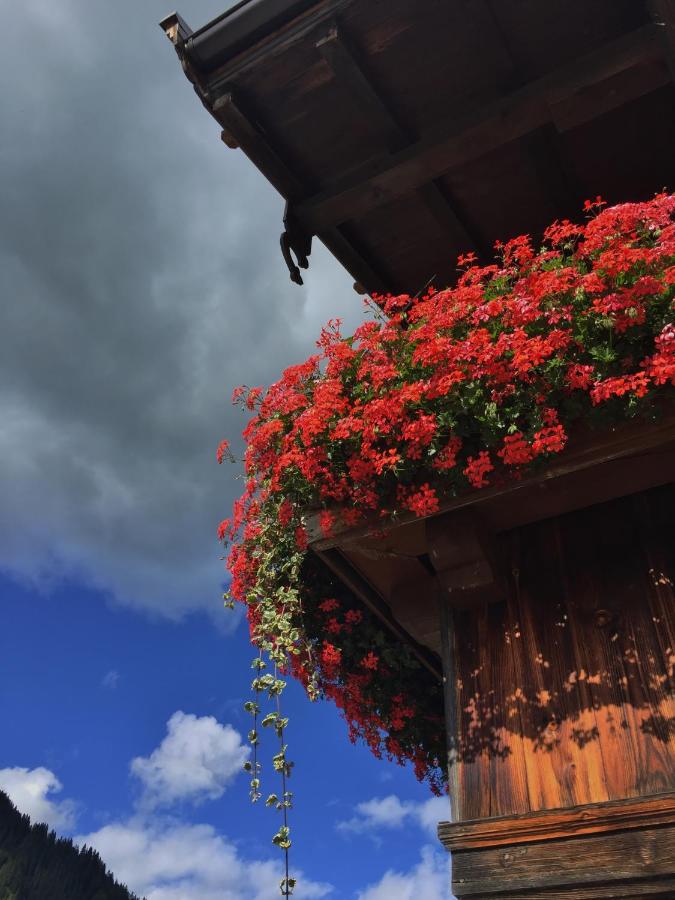
There are definitely more reasons to visit Austria during summertime. Yes, the snow is beautiful in winter, but in summer the lush green mountain slopes and pretty flowers, definitely make for an awesome combination.
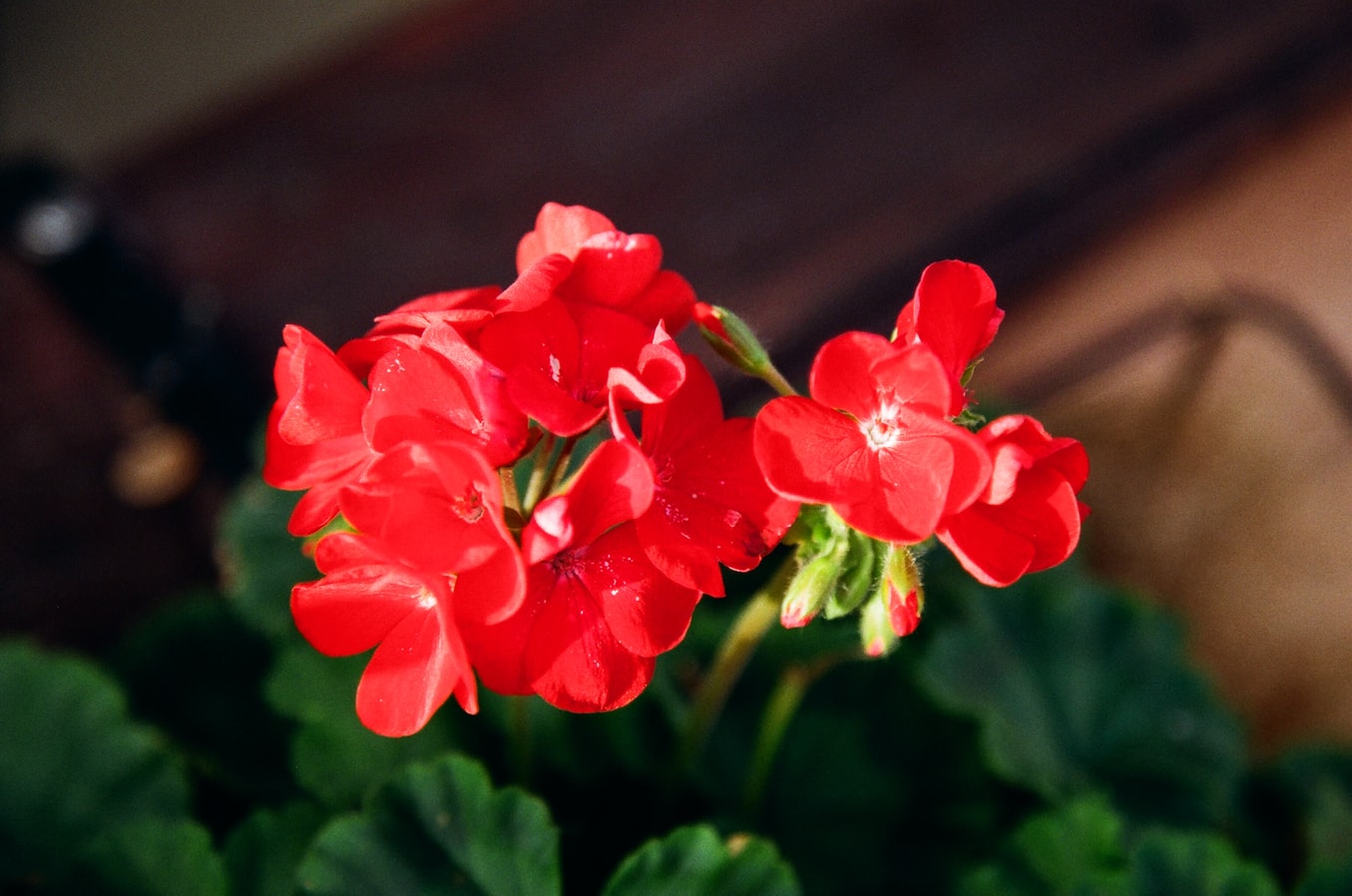
The big favourite is geraniums – or, botanically speaking, Pelargoniums.
These are particularly well suited to balcony growing. Austrian gardening advice recommends them because they cope reasonably well with heat and are relatively tolerant of rain. Both upright and trailing varieties are used.
Then there are petunias, which are especially lovely when they spill over the front of a balcony box.
I also found references to other flowers commonly used in Austrian summer displays, including lantana, scaevola, osteospermum, bidens, lobelia and fuchsias.
So there isn’t actually one official Austrian flower-box recipe. It’s more about choosing flowers that will thrive in the particular conditions. However, Petunias and Geraniums / Pelargoniums are the favorites to create those fabulous displays.
Sharing travel memories:
“One of the lovely sights in Hallstatt was a lakeside restaurant with beautiful flower boxes overflowing with petunias. Against the backdrop of the lake and mountains, the colorful flowers added a special touch to an already beautiful setting. I did not manage to get the best photo, but now I can recreate it at home. Thank you.” – Elmari-
This was probably the question I became most interested in.
Because there is a difference between having a few flowers in a balcony box and having the kind of display I was seeing in Austria.
The answer isn’t one magical Austrian secret. It all comes down to care.
The plants need enough room for their roots, good growing medium, regular nutrients and the right amount of water.
And the watering can be quite a commitment.
A balcony exposed to strong summer sun can dry out surprisingly quickly. Container plants have a limited amount of soil around their roots, so they depend much more on whoever is looking after them.
Austrian gardening advice recommends regular feeding and appropriate watering, particularly for flowering balcony plants.
More recent Austrian advice also stresses choosing plants that can cope with periods of summer heat rather than simply trying to solve the problem by watering more and more.
So when you admired those enormous cascades of flowers from the road, you were probably looking at the result of quite a lot of daily attention and dedication.
Sometimes.
There isn’t one Austrian watering timetable because so much depends on the position of the balcony, the weather and the plants. A sheltered balcony is very different from a south-facing balcony baking in the afternoon sun.
That is one reason the choice of plants matters.
So the beautiful flower boxes aren’t necessarily beautiful because somebody is standing there watering them constantly. They’re beautiful because the right plants have been chosen for the conditions and then properly looked after.
This also makes much more sense when you remember that many of the prettiest flower-filled villages are high in the Alps.
Spring can still bring frost.
In Tirol, the traditional Ice Saints period in May is still used as a useful guide for planting summer flowers because late frosts can damage young plants.
I found a lovely example from Alpbach describing a local family preparing their balcony flowers every year. They wait until the risk of frost has passed, then plant their flowers and spend the summer caring for them.
That made me think differently about those photographs of Austrian villages.
The flowers aren’t just suddenly there.
There is a whole little seasonal ritual behind them.
A wooden Alpine house is already beautiful in a very simple way. Then you add a long balcony filled with pink, red, purple and white flowers. The flowers soften the wood, add color and draw your eye towards the balconies. And behind the houses you often have mountains. It’s a pretty unbeatable combination.
No, not at all.
I certainly came home with the impression that Austria was covered in flowers, but that isn’t literally the case.
The displays are particularly noticeable in Alpine villages and rural parts of Austria, and some villages are much more famous for them than others.
You won’t find every apartment block or city house overflowing with geraniums.
But when you drive through a small Austrian village in summer, you can suddenly come across one beautiful house after another with flowers spilling from the balconies.
And that’s the sight that stays with you.
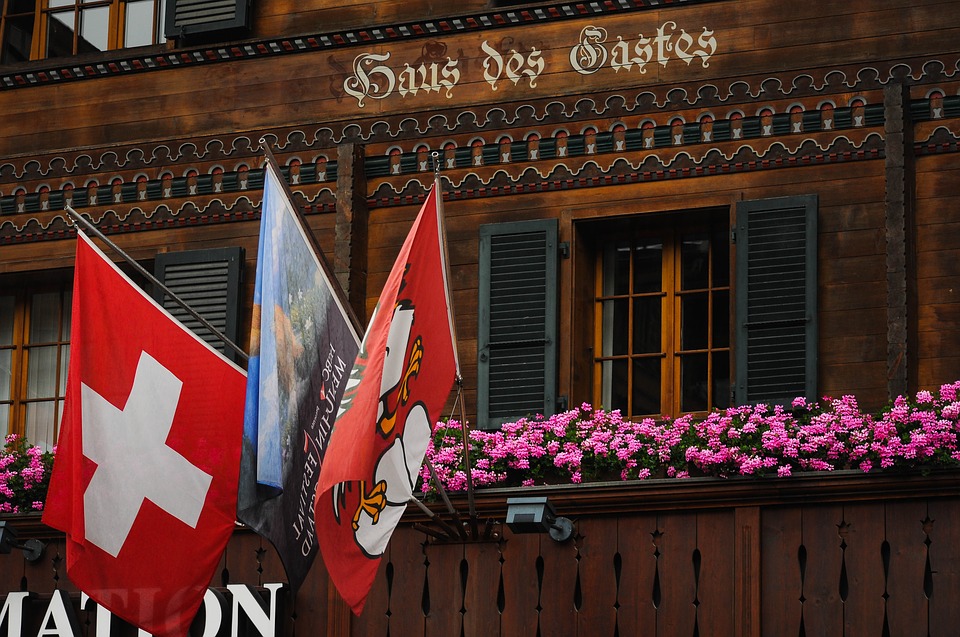
After seeing all those balconies, I naturally started thinking about my own home. No I don’t have the beautiful wooden house, but is it possible to bring Austria home by recreating a few beautiful flower boxes?
And yes, you can recreate the look – You don’t need an Alpine chalet.
A simple window box or balcony planter can give you the same idea. Trailing geraniums and petunias are a good starting point if they suit your own climate and growing conditions.
The important thing is not to copy one particular Austrian balcony exactly. It’s the abundance that creates the effect. Lots of healthy flowers, allowed to spill naturally over the edge of the box.
Give them enough room, good-quality soil, suitable nutrients and the water they need. Remove faded flowers when appropriate, and choose plants according to how much sun your balcony receives.
In other words, there isn’t really an Austrian flower-box secret.
They just take their flowers seriously, because they love creating neat and beautiful homes.
When you buy a wooden box, it is a good idea to get one with a plastic insert, as it will protect the wood against rot.
Other boxes (like plastic containers) usually have draining holes, but do make sure they are open before you get planting.
I sometimes find that the drainage holes are too big, then you can just add some landscape fabric to the bottom. This will prevent the soil from seeping out.
I prefer Proven Winners’ Potting Soil (not sponsored). It is specially formulated to produce vibrant flowers and strong growth. Has excellent air porosity and drainage and is perfect for outdoor gardening.
Go to your local plant shop or nursery and pick all the geraniums/pelargoniums and petunias you love. (I love this part.) Your local nursery will stock the type of plants suitable for your area. In other words, plants that will easily grow in your climate. Play with colors. In my opinion, repeating a color sometimes have a bigger impact, but you can also make a huge splash with ‘crazy colors’. It is all up to you: what you prefer.
The 3 point secret to any great flower box: Use a ‘thriller’, a ‘spiller’, and a ‘filler’. That is the easy recipe.
And this is not only for our ‘bring Austria home’ flower boxes. This formula works on any container planting.
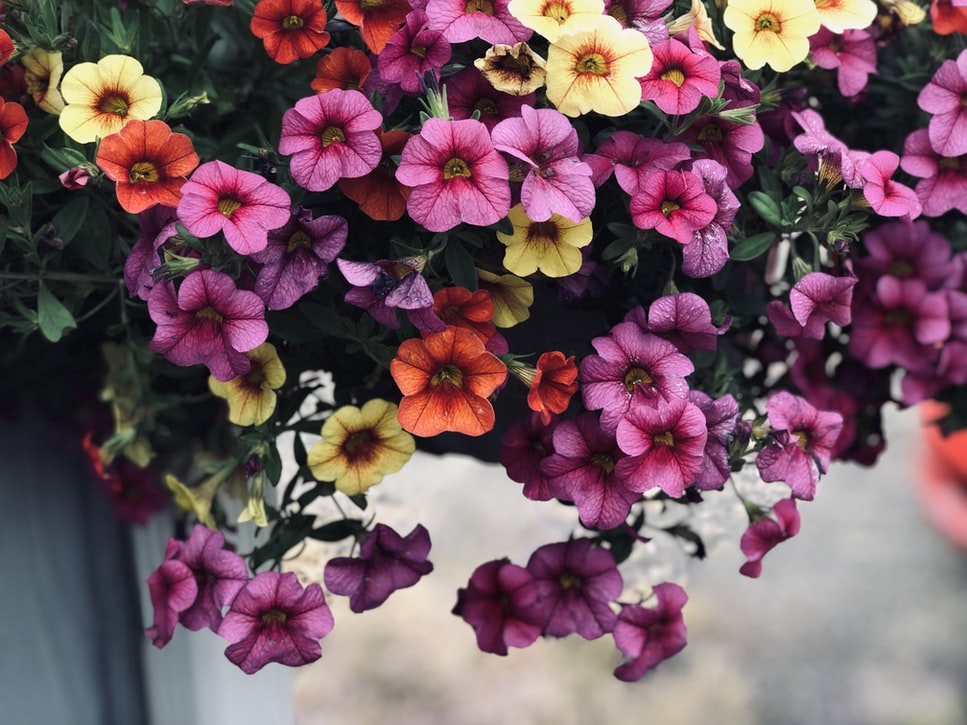
Plant Food, Plant Food, and more Plant Food. Yes, if you don’t feed them, they will not grow to be as beautiful and flower in such abundance. So this is actually (apart from regular watering), almost the most important step.
In my opinion use a liquid fertilizer specifically made for flowering plants, which you can easily spray or just water in. It just makes the job so much easier.
I know I’ll look at the balconies differently.
I’ll notice the flowers before I probably notice the house.
And I suspect I’ll find myself wondering how much work went into the display I’m admiring.
Because that was the little surprise for me.
From the road, those Austrian flower boxes look effortless. They seem to belong there, as naturally as the wooden balconies and the mountains behind them.
But behind all that beauty are real plants, real watering, real gardening and people who take the time to care for them.
And perhaps that’s what I liked about them most.
The beauty I noticed in Austria wasn’t manufactured for visitors. It was simply part of everyday life.
Someone had planted the flowers, someone had watered them, and someone had taken the trouble to make their home beautiful.
And I happened to be lucky enough to drive past and enjoy it.
A special thank you to everyone who helps make Austrian towns so beautiful with their flower-filled balconies and window boxes. You may not realise how much joy those colourful displays bring to visitors, but they certainly made an impression on me.
I’ve tried to bring a little of Austria home with me by creating my own flower displays, and every time I look at them, they bring back happy memories of my visit. It’s lovely to think that something as simple as a box of flowers can bring so much beauty and happiness into everyday life.
Now just add the music and you’ll have your very own little piece of Austria or Switzerland, on your balcony.


