

Tartiflette hails from the picturesque Savoy mountains of the French Alps. I first encountered this hearty dish in a cozy little restaurant just outside Megève, France. It was a snowy evening after a long day of skiing, and the idea of a warm, indulgent winter meal felt like the perfect way to end the day. One bite, and I was hooked. Once back home, I couldn’t wait to share this Alpine gem with friends during a French-themed dinner night. It was a hit!
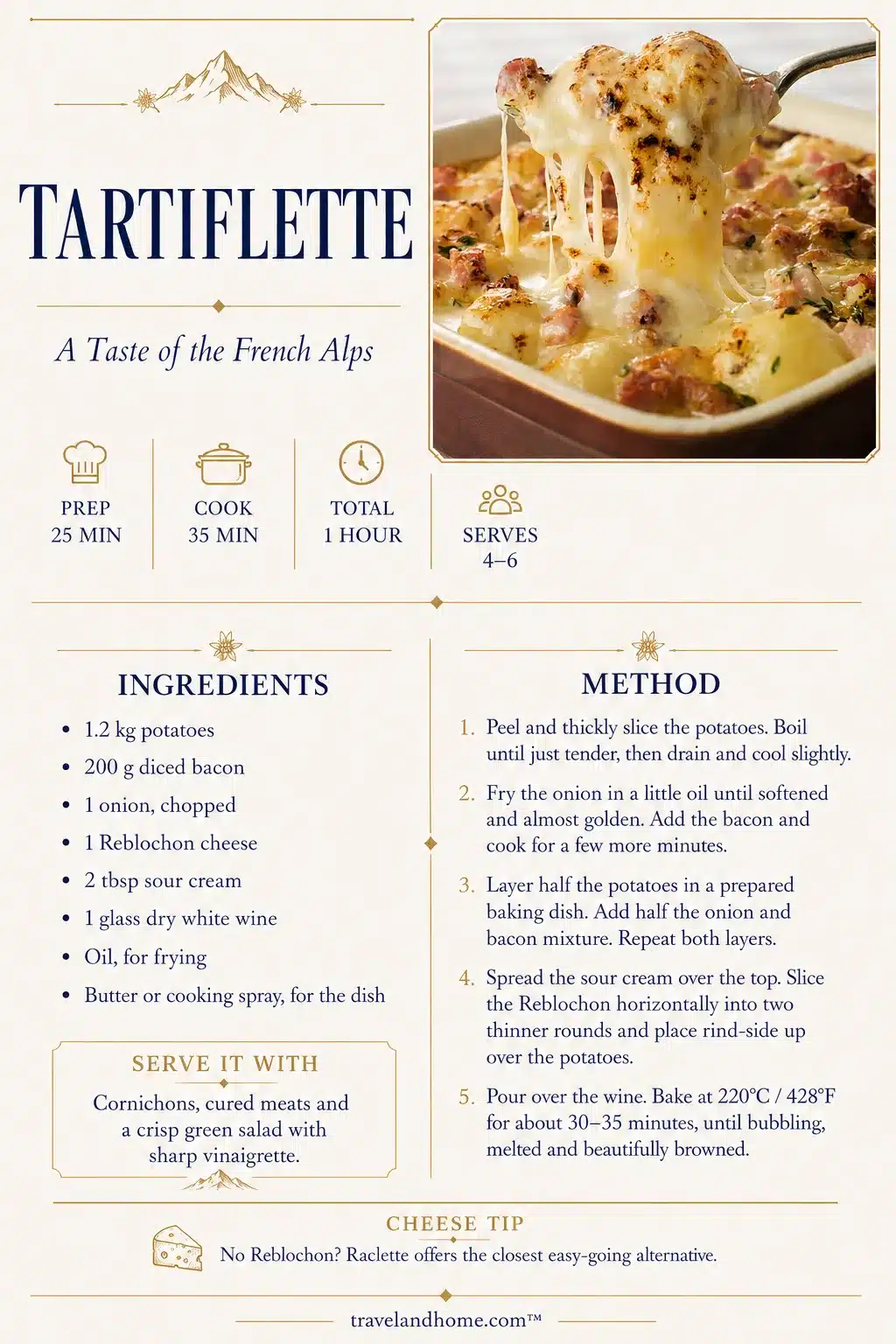
Tartiflette Recipe Card Below….
Reblochon cheese is the star ingredient in traditional Tartiflette. When you first unwrap it, you might notice a hint of an earthy cellar aroma. But don’t let that deter you. Its flavor is mild and creamy with a fruity note, finishing off with a nutty aftertaste that’s simply divine.
Tartiflette has inspired countless adaptations, including chicken, Camembert, macaroni, and even ground beef. The list goes on, offering creative takes on this classic. But as much as I enjoy exploring variations, nothing beats the traditional recipe for me. It’s comforting, rich, and utterly satisfying—a true winter indulgence.
Pair Tartiflette with the right accompaniments to elevate your meal. Serve it with tangy pickles, a variety of cured meats, and a crisp green salad dressed with a sharp vinaigrette. These sides balance the richness of the dish beautifully.
The perfect wine pairing can take your Tartiflette experience to the next level. My personal favorite is a medium-dry Riesling, which complements the dish’s richness without overwhelming it. A good Chardonnay is another excellent choice, and some of my friends even prefer it. If you opt for a variation like Camembert Tartiflette, I’d recommend sticking with a dry Riesling for its crisp balance.

Leftover Tartiflette keeps surprisingly well, making it a wonderful make‑ahead winter comfort dish. Once cooled, transfer it to an airtight container and store it in the fridge for up to 3–4 days. The flavors deepen beautifully, though the potatoes may soften slightly — still delicious and perfectly safe.
If you’d like to save some for later, it also freezes well for 2–3 months. The cheese and cream hold their texture nicely; the only noticeable change is that the potatoes may become a bit softer after thawing.
To reheat, warm it in the oven at 180°C until hot and bubbly. From frozen, it’s best to thaw overnight in the fridge before reheating, but you can also bake it gently from frozen by covering it with foil and heating it a little longer.
If you’d like to know more about the origin of Tartiflette, click here.
If you’re visiting the French Alps, make sure to try this potato magic in its authentic setting—there’s something magical about enjoying it surrounded by snow-capped peaks. And if you’re planning a trip to Megève, don’t miss out on its world-class skiing and charming village vibes.
Suggested Read: Explore the Thrills of Skiing in Megève, France: A Snowy Paradise Awaits!
No matter where you are, Tartiflette brings the spirit of the Alps to your table. Ready to try it?
I’d love to hear how your Tartiflette turned out. Did you stick to the traditional recipe, or try one of the fun variations like Camembert or chicken? Share your thoughts, tweaks, or serving ideas in the comments — your experiences help inspire other readers too.