Home - World Recipes - Summer Trifle – South African Christmas Recipe
If you click on links we provide, we may receive compensation.
Ah, the South African Christmas trifle—layers of sponge, jelly, custard, whipped cream, and sometimes fruit or sherry—is iconic, but it’s definitely a love-it-or-leave-it dessert.
South African Cuisine – Desserts
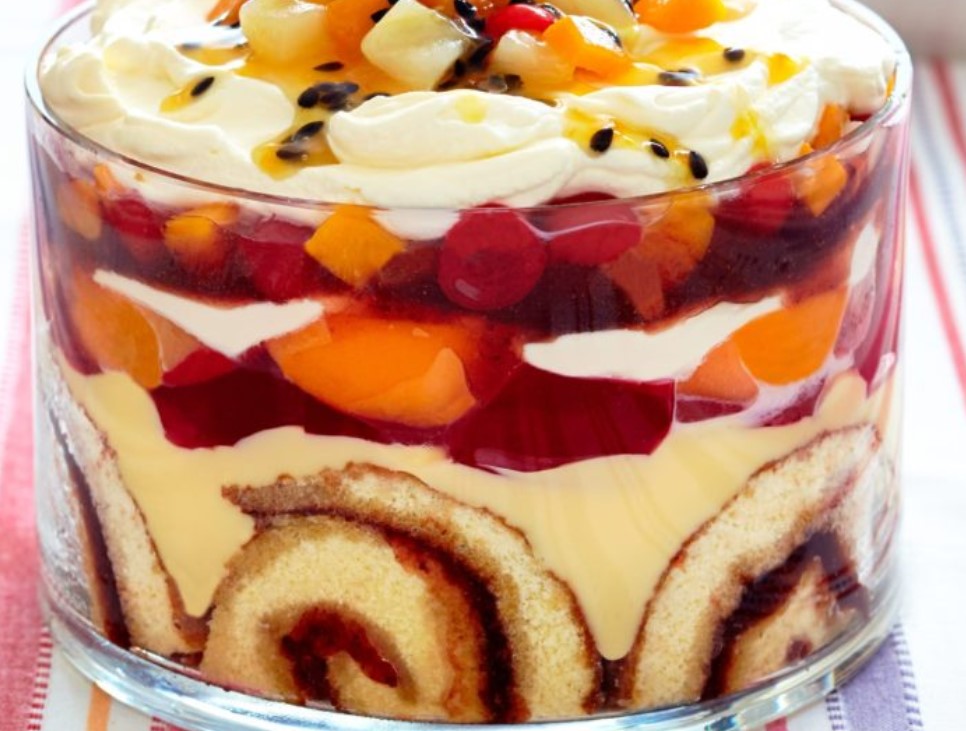
Christmas in South Africa calls for desserts that are as bright and cheerful as the summer sun, and my favorite has to be a classic summer trifle. Bursting with layers of soft sponge, juicy fruit, silky custard, and fluffy whipped cream, it’s a chilled treat that feels indulgent without weighing you down. Every spoonful is a celebration of color, texture, and festive flavor—perfect for sharing with family and friends around a sunny Christmas table. However for me it is all about which flavors to put together. I don’t like them all I must say, but I do love this one:
A Christmas-time favorite in South Africa.

INGREDIENTS
METHOD
Recipe and Photo with the complements of: https://www.rhodesquality.com/recipes/traditional-trifle/
South Africans love Christmas trifle for a mix of practical and sentimental reasons:
Visual appeal – The layers of bright jelly, golden custard, and snowy cream look festive and inviting on the Christmas table. It’s almost like a celebration in a bowl.
Family tradition – Many people grew up with trifle at holiday gatherings, so it carries a sense of nostalgia and comfort. It’s tied to memories of family, laughter, and sharing.
Ease for hosting – Trifle can feed a crowd, is relatively simple to assemble, and can be made ahead of time. For busy hosts, that’s a major bonus.
Variety in one dessert – The combination of textures and flavors—soft sponge, wobbly jelly, creamy custard, sometimes fruit or sherry—offers a little bit of everything, which makes it fun to eat.
Cool treat for summer – Christmas in South Africa is during summer, and a chilled dessert is refreshing compared to the rich, heavy cakes of the cold winters in Europe.
British influence – Trifle was brought to South Africa by British settlers, who had been making layered desserts since the 16th century. Over time, local cooks adapted it with tropical fruits and jelly, making it lighter and more summery.