
Together, Szeged Cathedral, Dóm Square, and the ancient Dömötör Tower form one of Hungary‘s most fascinating historical and cultural landmarks.
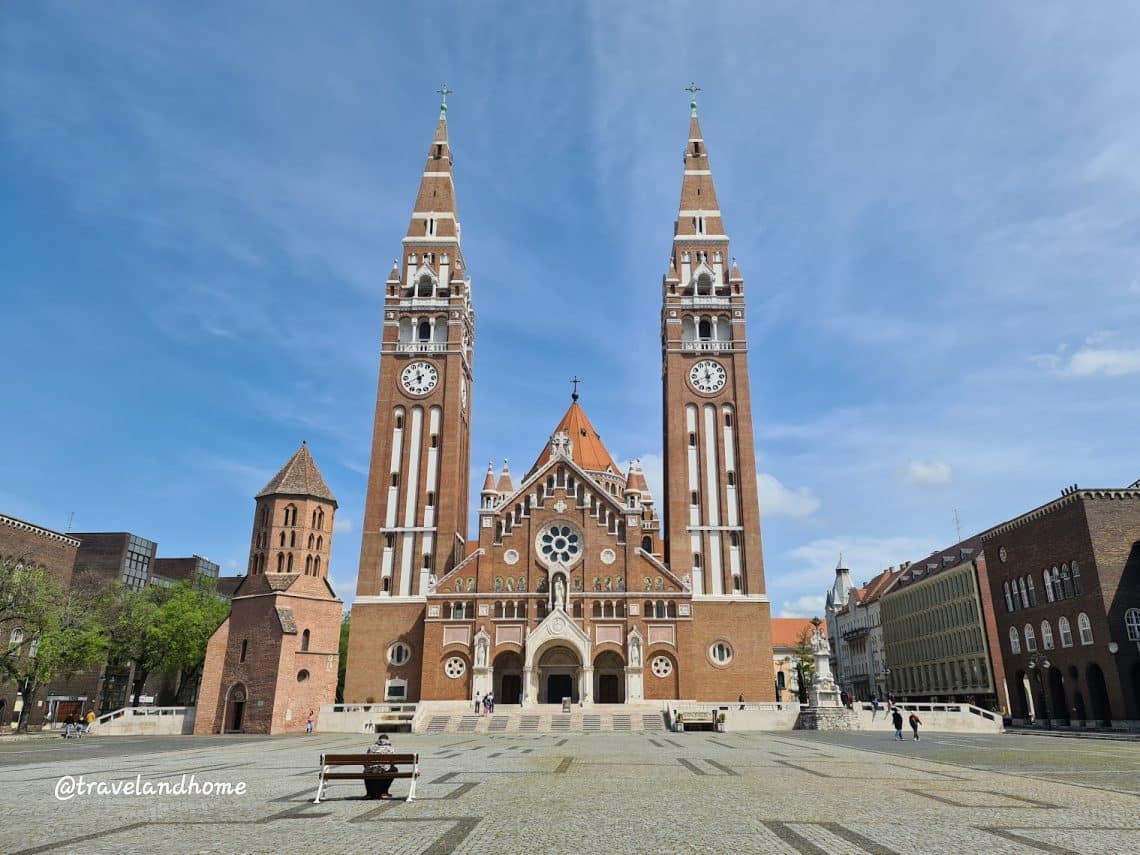
As you step into Dóm Square (Dóm Tér), take a moment to absorb the sheer scale of the space around you. This magnificent square is the beating heart of Szeged and home to the city’s most famous landmark, Szeged Cathedral.
While the elegant arcades, grand buildings, and towering church create a picture-perfect scene today, the story behind Szeged Cathedral begins with one of the greatest disasters in Hungarian history.
On 12 March 1879, the Tisza River burst its banks and unleashed a devastating flood that almost completely destroyed Szeged. Nearly 90% of the city disappeared beneath the water. Thousands lost their homes, and the city faced the enormous task of rebuilding from scratch.
In the aftermath of this catastrophe, the people of Szeged made a solemn promise. They vowed that if their city could be rebuilt, they would construct a magnificent church dedicated to the Virgin Mary, Hungary’s patron saint, in gratitude and as a symbol of protection for future generations.
That promise would eventually become Szeged Cathedral.
Standing proudly before you is Szeged Cathedral, officially known as the Cathedral of Our Lady of Hungary. Its twin towers rise 91 meters into the sky, making it one of Hungary’s most recognizable churches.
Although the vow was made shortly after the flood, the project faced decades of delays. Architect Frigyes Schulek, famous for designing Fisherman’s Bastion in Budapest, created the original plans. Later, architect Ernő Foerk modified the design into the striking red-brick cathedral visitors admire today.
Construction finally began in 1913, only to be interrupted by the outbreak of World War I. Economic hardship and political upheaval caused further delays.
Work resumed in 1923, and after years of determination, Szeged Cathedral was finally consecrated on 24 October 1930. More than 30,000 people attended the ceremony. For many Hungarians, the opening represented far more than the completion of a church. It symbolized hope, recovery, and national renewal.
Before entering Szeged Cathedral, take a closer look at its magnificent red-brick façade, inspired by Lombard Romanesque architecture.
One of the cathedral’s most fascinating treasures is the famous Madonna in a Fur Coat mosaic above the high altar. Created by Hungarian artist Ferenc Márton, it portrays the Virgin Mary wearing traditional Szeged folk clothing, including a richly decorated fur coat and local-style slippers. Rather than presenting Mary in conventional biblical robes, the artwork celebrates the culture and identity of the people of Szeged, making it one of the cathedral’s most distinctive features.
The cathedral’s monumental pipe organ is among the largest in Europe, with more than 9,000 pipes and 127 stops. During concerts and religious celebrations, its powerful sound fills the vast interior, making it one of Hungary’s most remarkable musical instruments and a highlight for visitors interested in music and architecture.
If you visit during the late afternoon, sunlight streams through the stained-glass windows and bathes the interior in colorful light. It is one of the most beautiful times to experience Szeged Cathedral.
After leaving Szeged Cathedral, take a leisurely stroll around Dóm Square itself.
Designed by architect Béla Rerrich between 1928 and 1932, the square covers 12,000 square meters—exactly the same size as Venice’s famous St Mark’s Square.
The elegant arcades surrounding three sides of the square are home to Hungary’s National Pantheon. As you walk beneath the arches, you’ll discover busts and memorials dedicated to many of Hungary’s greatest scientists, writers, artists, and historical figures.
Keep an eye out for the Musical Clock. At noon and again at 6 pm, charming mechanical figures emerge and perform to traditional music, celebrating Szeged’s proud university heritage.
During summer, the square transforms into a spectacular open-air theatre. Since 1931, the Szeged Open-Air Festival has attracted visitors from across the country, with Szeged Cathedral providing a breathtaking backdrop for performances under the stars.
Just beside Szeged Cathedral stands one of the city’s most remarkable hidden gems: the Dömötör Tower.
The foundation was most likely laid in the 11th century, while the lower part was built in the 12th century and the upper part in the 13th century. This medieval tower is the oldest surviving structure in Szeged. For centuries, it was hidden inside the walls of the old St. Demeter Church. When that church was demolished in 1925 to make way for Szeged Cathedral, the ancient tower was rediscovered.
Today, it serves as a baptistery and offers visitors a rare connection to Szeged’s medieval past. While much of the city was rebuilt after the flood, the Dömötör Tower quietly survived the centuries and remains a living witness to more than 900 years of history.
Many visitors photograph Szeged Cathedral from directly in front of the church. For a more unique image, walk to the far end of Dóm Square near the university buildings. You’ll capture the cathedral framed by the elegant arcades, creating one of the most photogenic views in the city.
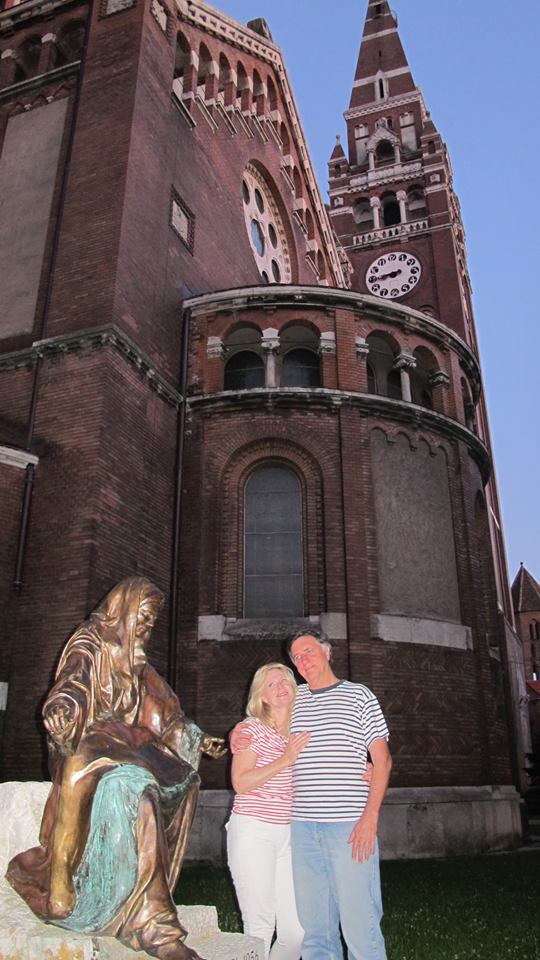
Before you leave Dóm Square, take one final look around. Every brick, statue, archway, and tower tells part of Szeged’s remarkable story.
What began as a promise made in the aftermath of tragedy became one of Hungary’s most beautiful architectural achievements. Today, Szeged Cathedral stands not only as a place of worship but also as a powerful symbol of resilience, determination, and civic pride.
As your visit comes to an end, you’ve not simply explored a church and a square. You’ve experienced the story of a city that rebuilt itself and emerged stronger, more beautiful, and more inspiring than ever before.
Sharing the places I’ve come to love. – Arina ♡
More about Szeged: