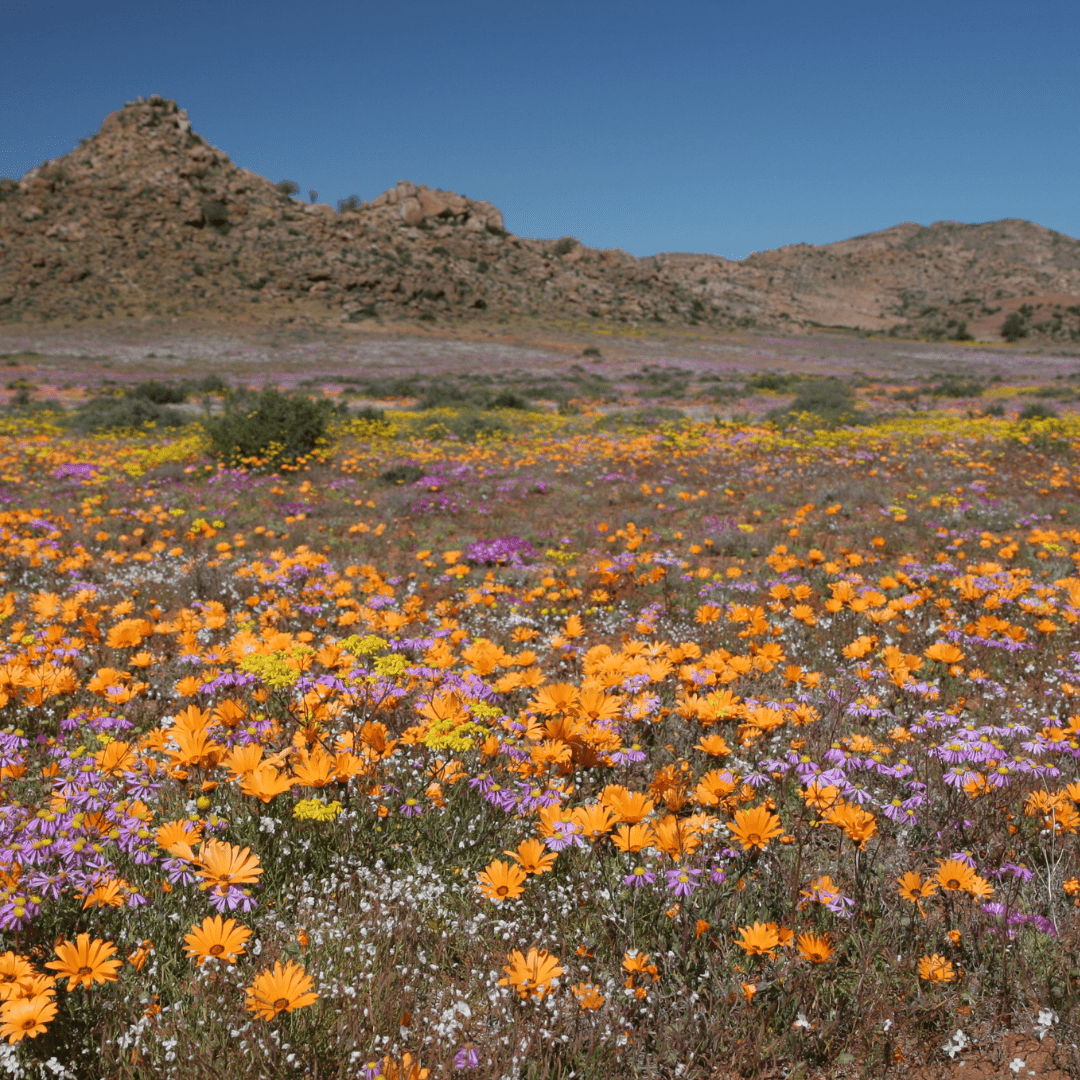
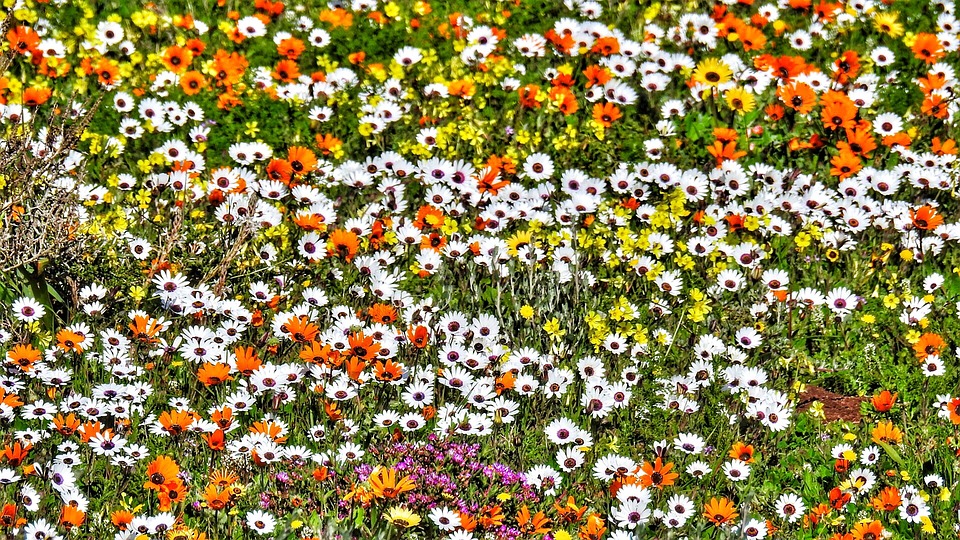
Each spring, vast stretches of South Africa transform into a living canvas of colour. Endless fields of daisies, lilies, and other wildflowers carpet the hills and valleys, forming patterns no human hand could create. From the windswept plains of Namaqualand to the coastal blooms of the West Coast, every step feels like walking through a masterpiece painted by nature itself.
Answering some of your most frequently asked questions:
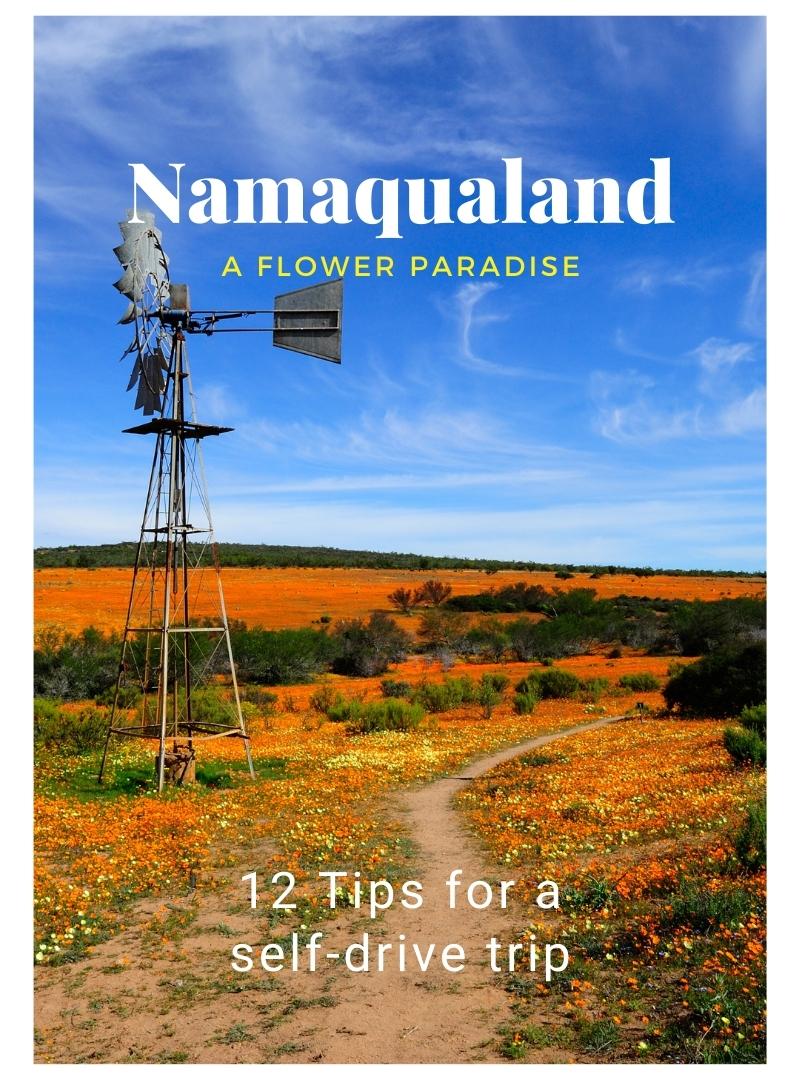
The best time to visit Namaqualand is late August through September, when the famous spring wildflowers are usually at their peak.
The exact timing changes every year because the flower display depends on the amount of winter rainfall. (Some years the flowers are already making a spectacular display in early August.) A wet winter generally produces a more spectacular display, while a dry winter can shorten the season.
Late July: first colours start in northern Namaqualand.
Early–Mid August: peak wildflower carpets around Kamieskroon and Skilpad sections.
Late August: blooms moving south towards Garies and Nieuwoudtville.
Early September: last of the highland blooms, still strong near coast.
Note: Weather changes everything; rain earlier in the year often means bigger displays later.
Flowers face the sun — morning or late afternoon and light shows them off best.
Ideal windows: 10:30–11:00 AM and 3:30–4:00 PM.
Overcast days mean flowers may stay closed — always check local weather before heading out.
Simply call the Flower Hotline on 072 938 8186.
South Africa’s most reliable wildflower displays appear in two main areas. The first is the Northern Cape, especially the Namaqualand district, where spring brings colour to wide open landscapes around Nieuwoudtville, Springbok, Kamieskroon, Garies and the coastal town of Port Nolloth. The second is the West Coast, closer to Cape Town, where rolling fields and coastal reserves burst into flower after good winter rains. Together, these regions offer the country’s most impressive and easy-to-plan wildflower experiences, all within simple driving routes and small, traveler-friendly towns. (Looking for your own self drive tour itinerary? – Read more >>)
So one of your goals is to get from Clanwilliam to the Biedouw Valley .
You don’t need to drive all the way to Wupperthal if your main goal is flower viewing. Once you’ve turned left into the Biedouw Valley, simply take your time. The flowers often line both sides of the road, and you’ll find plenty of places to stop safely for photographs. The best displays usually appear after good winter rains, with peak flowering generally during August and September, although the timing varies from year to year.
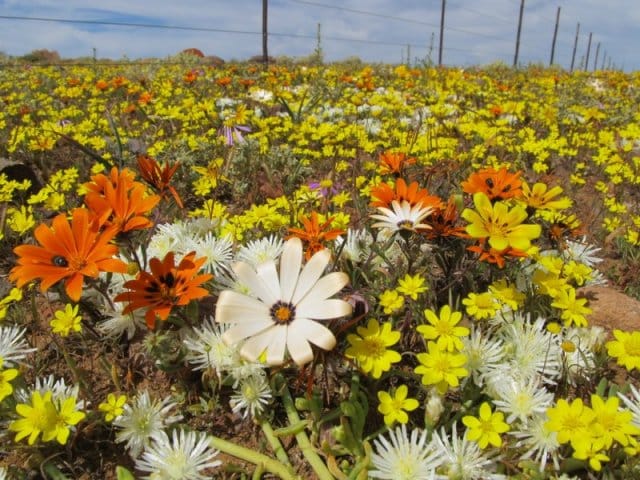
Use wide lenses for carpets and macro lenses for close-ups.
***Want to identify some of the plants you’ll see along the way? Find out more >>>
Discover the serenity of the Namaqualand Richtersveld: Camping with Rey Janse van Rensburg
As they are only open to the public during the flower season, this is a very special experience and you can almost definitely be sure to find the most dazzling display of flowers. The area reaches from Yzerfontein to Langebaan. Due to the fact that this area is very popular amongst flower-hunters, it is best to go early.
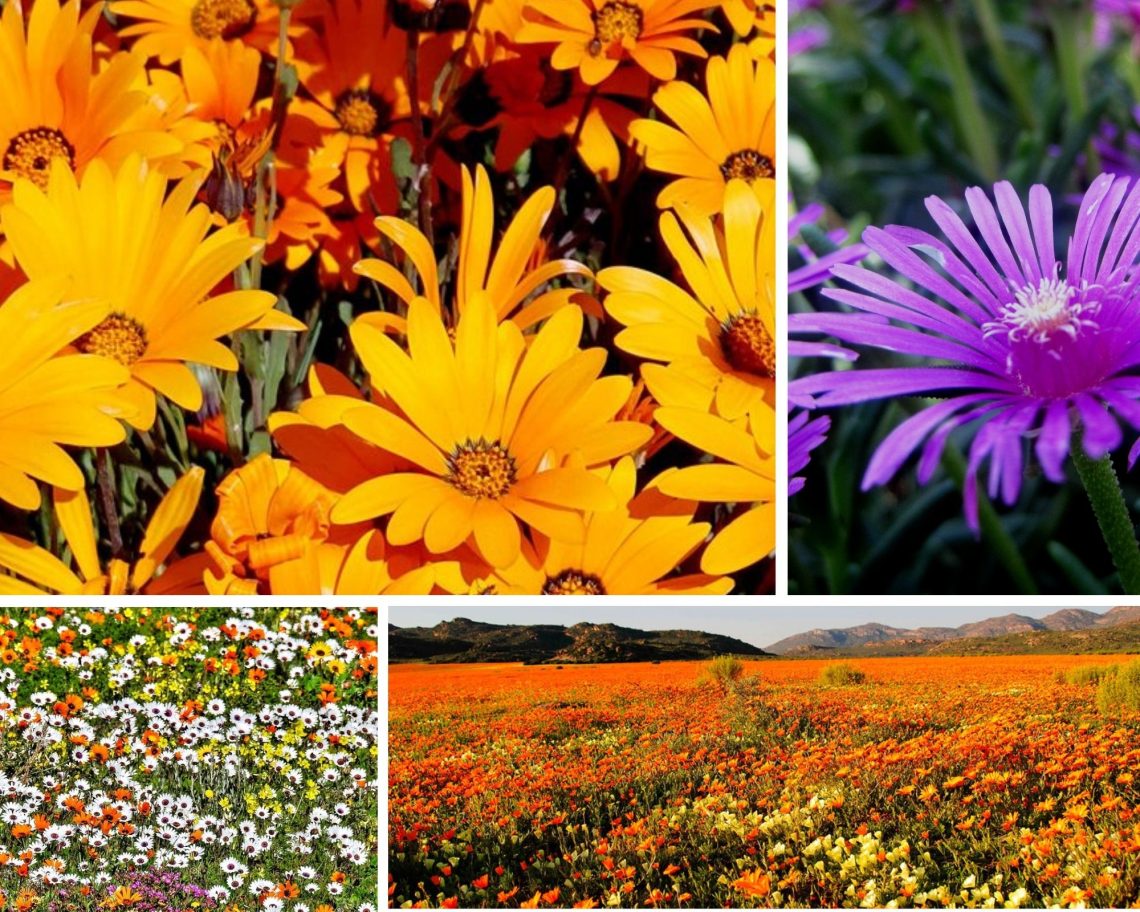
This National park is situated in the Northern Cape near South Africa’s border with Namibia. During the flower season, this almost dessert-like area changes into a flower carpet. They are located approximately 22 km from Kamieskroon and about 6 hours from Cape Town. Fortunately, they open some areas during flower season which is otherwise closed because it is a conservation area for the world’s smallest tortoise – The speckled “padloper”.
The Ramskop Nature Reserve would definitely be one of the closer options to Cape Town for a one-day drive. Approximately two and a half hours from Cape Town and has beautiful flower displays which might include (if you’re lucky) proteas. I suggest you phone before you leave for a self-drive outing. More information can be found below:
Here is a link to a site with updated info and contact numbers: https://www.clanwilliam.info/
Should you arrange to stay in Clanwilliam, you can take an easy one-day tour to Nieuwoudtville, as accommodation in Nieuwoudtville is often all booked out a year in advance already. Obviously, the reason being, that it is the most famous and best place to view the flowers.
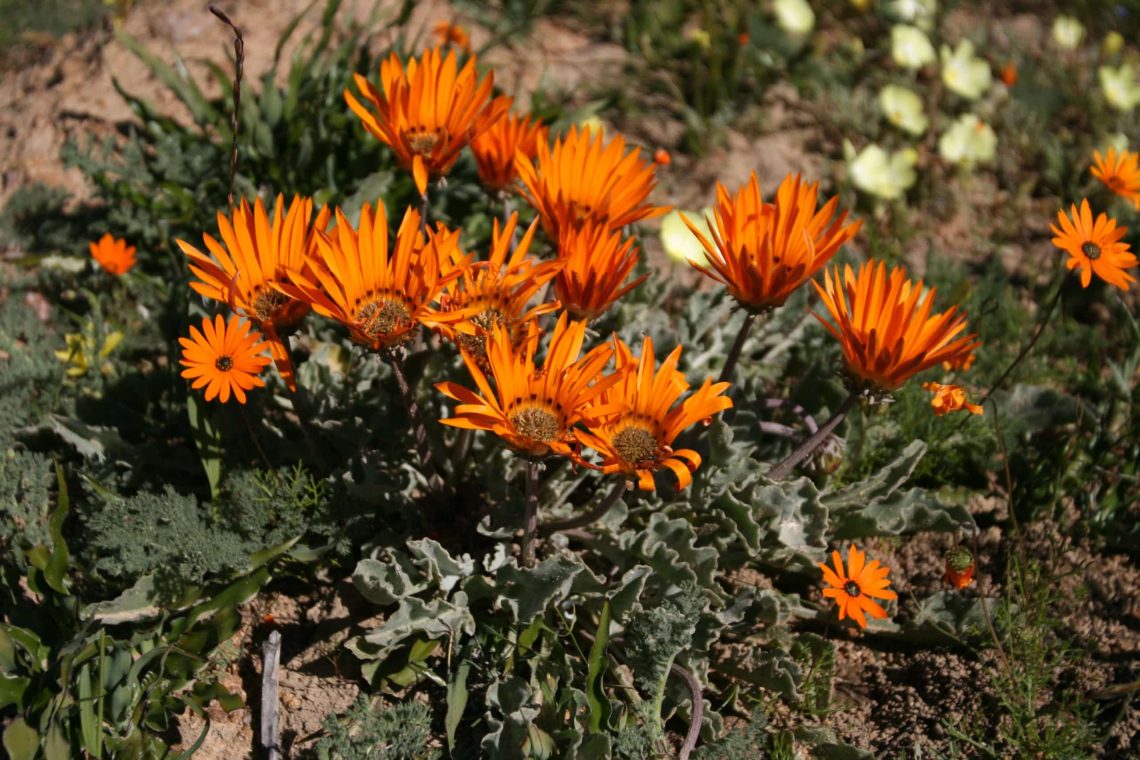
Instead of rushing from Cape Town in one long drive, turn it into a relaxed West Coast road trip.
A lovely itinerary is:
That way you can enjoy the beautiful West Coast, stop for coffee, photograph the coastline, and then continue north to the spectacular flower displays. It feels like several holidays rolled into one.
Yes. Flower season is the busiest time of year for many towns in Namaqualand. Accommodation in places like Springbok, Kamieskroon and Garies can sell out months in advance.
Fill your fuel tank whenever you can: Distances between towns are much greater than many visitors expect. Don’t wait until your tank is nearly empty, especially if you’re planning to explore gravel roads and flower routes.
Don’t rush past the small towns: Some of the most beautiful flower displays are found between the buildings of these small rural towns. Slow down, stop often, and enjoy the quieter roads.
You can start your day slowly if you stay close enough: There’s no need to leave before sunrise. Early mornings are beautiful, but many flowers only begin opening once the day warms up. Enjoy breakfast first, then head out mid-morning.
Don’t rely only on your GPS: Cell phone reception can become patchy in remote areas. Download offline maps before leaving your accommodation. (Or ask the locals where the best stops are.)

Here you will find various route options like:
We recommend that you book a guided tour when visiting this region. These tour operators would definitely know exactly where to take you for the best display of Namaqualand flowers at that specific moment. Be sure to book well in advance. If not, visit the local tourist office and do a self-drive, but phone in advance to ensure you have the best experience.
Here is a link to a site with updated info and contact numbers:
It can be tempting to walk into the middle of a colourful field, but stick to existing paths whenever possible. Trampled flowers don’t recover during the season, and staying on paths helps preserve the display for everyone.
Public toilets are available in most towns along the route, including Springbok, Kamieskroon, Garies and Clanwilliam. Many fuel stations also have clean restroom facilities for customers.
If you’re planning to spend hours exploring the flower routes, use the toilets whenever you stop in a town or at a service station. Facilities are limited once you’re out in the countryside.
Don’t assume there will be a toilet at every flower stop. Many of the most spectacular flower displays are simply beside the road or in nature reserves without nearby facilities. Plan ahead, especially if you’re travelling with children.
Keep a small pack in your car with:
It doesn’t take up much space and can make a long day on the road much more comfortable.
I recommend 3 to 5 days.
This gives you time to:

The Biedouw Valley is a valley situated in the Western Cape and it is located near Pakhuis Pass, between Clanwilliam and Uitspankraal. For many Capetonians, this is their favorite spot to photograph the flower carpets. In the last year, this spot definitely did not disappoint and the internet was flooded with photos from travelers that have stopped here.
Don’t make it just a flower trip. Overnight in Langebaan or Paternoster on your way north, enjoy fresh seafood, walk on the beach, and then continue into Namaqualand. It turns a weekend into an unforgettable road trip.
Many small towns have farm stalls selling homemade jams, rusks, dried fruit, preserves and local treats. Stopping for a chat and supporting these businesses is part of the Namaqualand experience.
If you still have time to spare, on your beautiful Namakwaland flower tour, take the road to Upington and explore along the way places like Keimoes, Kakemas, and Kanoneiland. The Northern Cape is a beautiful part of South Africa. Read more >>>