
The Black Forest in Germany (Schwarzwald) is not a single dramatic landmark, but a vast stretch of mountains and woodland where travel feels very different from the rest of the country. It sits in the southwest, and as you drive in, the landscape changes quickly: highways narrow into smaller roads, then into winding routes that climb through thick stands of spruce and fir trees so dense they darken the hillsides.
The Black Forest is one of those places that feels immediately different the moment you arrive. For a first-time visitor, here’s what it really feels like on the ground — practical, honest, and easy to picture before you go.
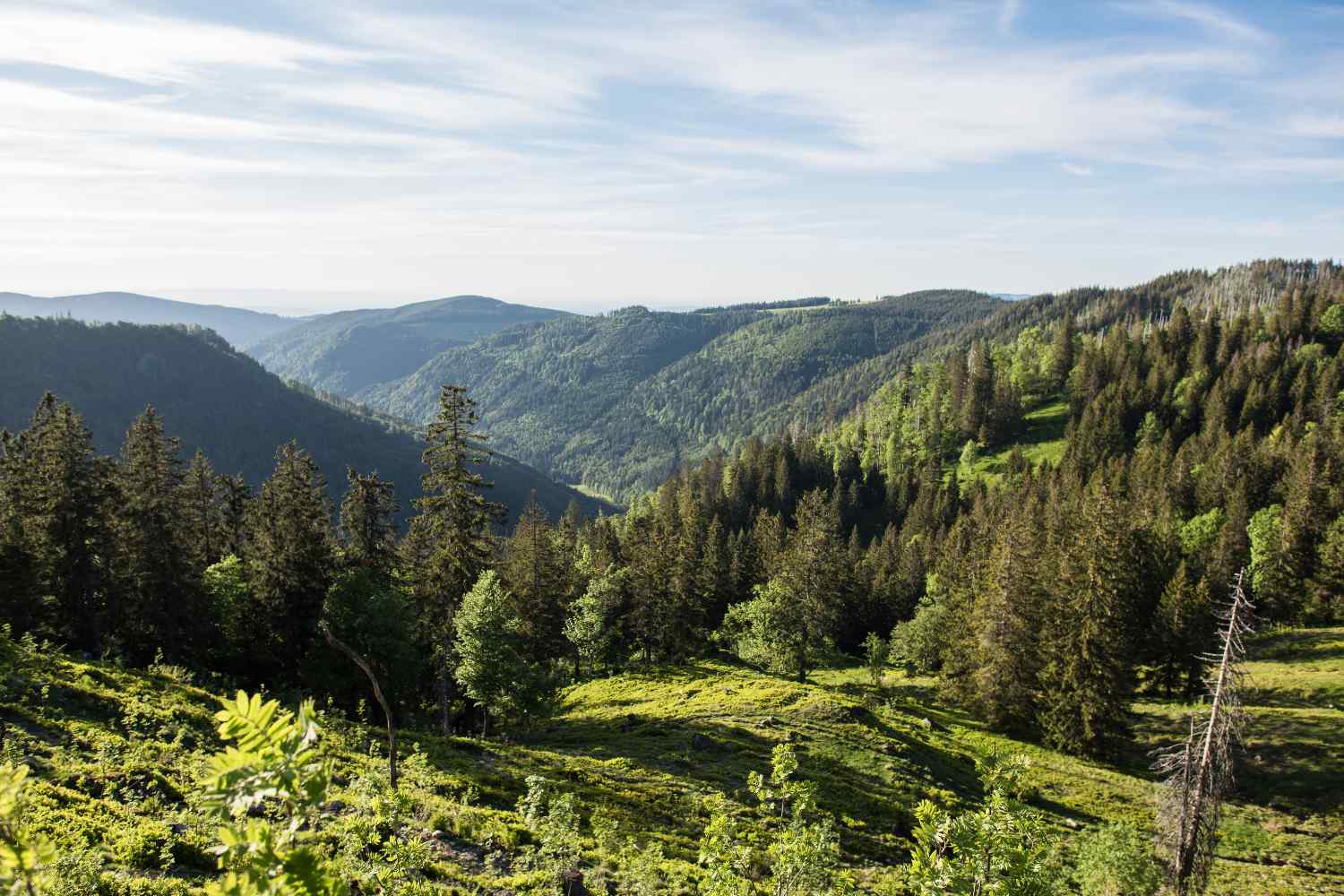
Expect dense pine forests, rolling hills, and long valleys that feel almost endless. Roads don’t cut straight across the landscape here — they follow the land, curving through trees, past farmhouses, and up into viewpoints. It’s a place where scenery is constant, not something you “go see” once a day.
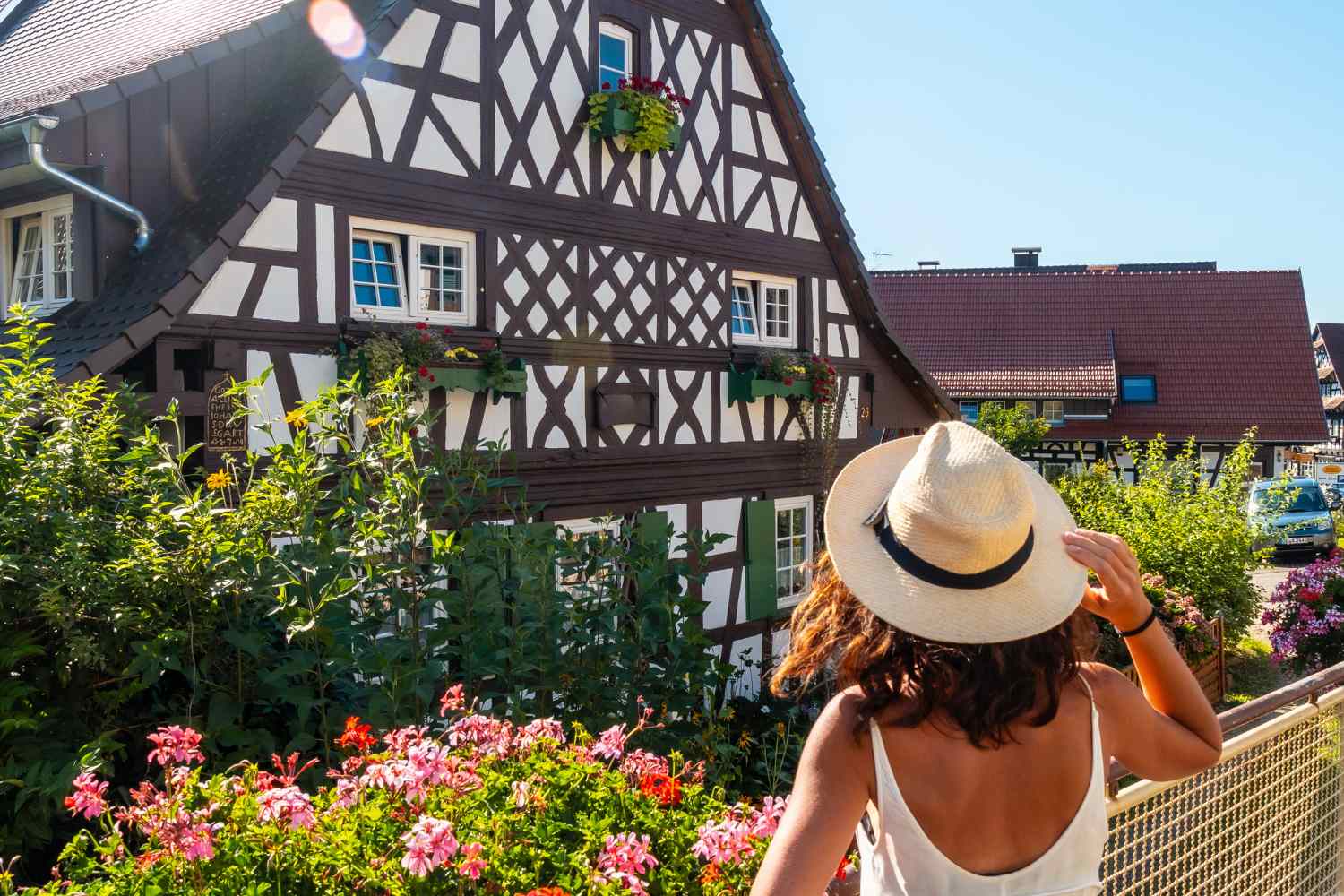
Small towns are a big part of the experience. Places like Triberg, Gengenbach, and Sasbachwalden sit quietly between hills and forests. You’ll find timber-framed houses, flower-filled balconies in warmer months, and bakeries that feel like they’ve been there for generations. Nothing feels rushed.
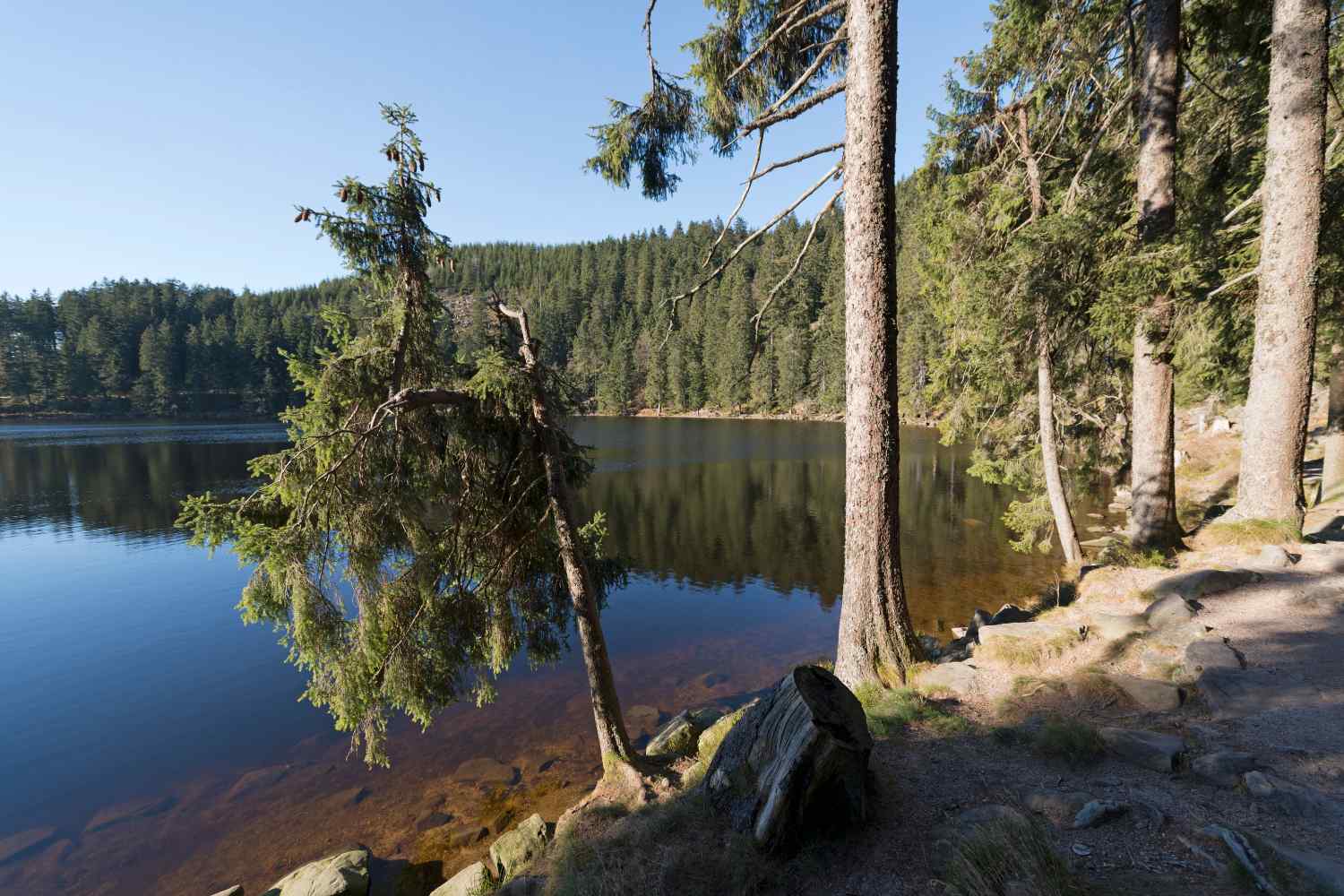
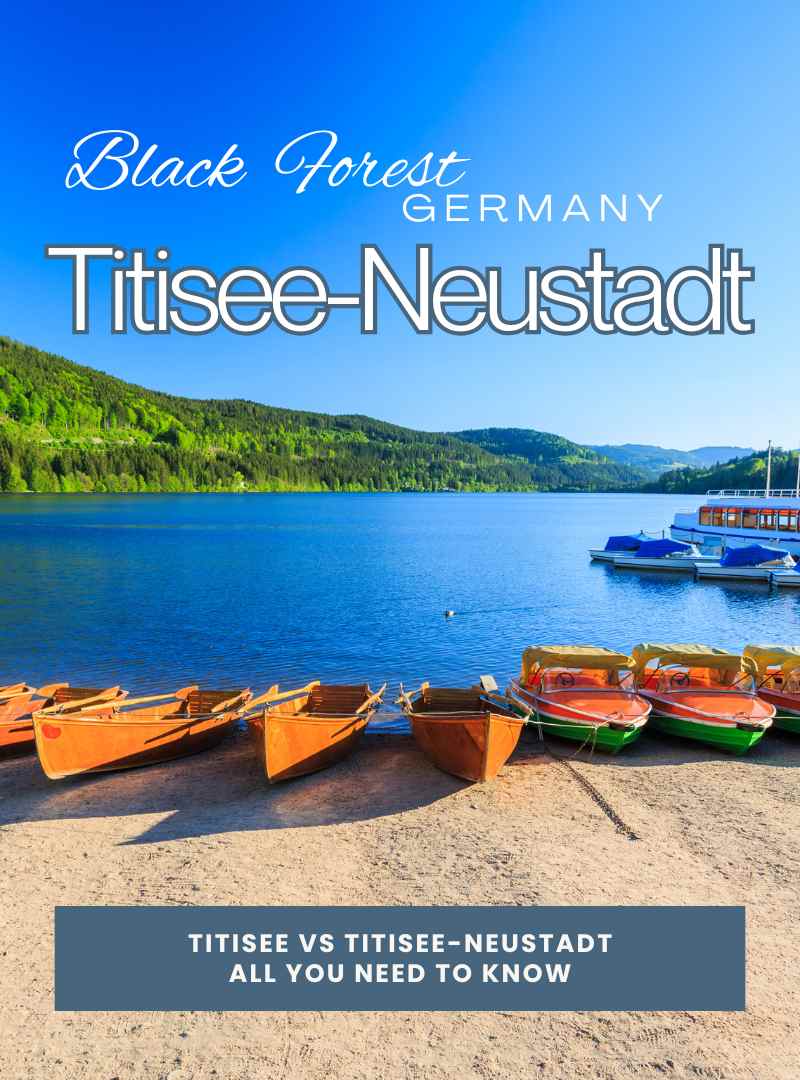
One of the most famous stops is the Triberg Waterfalls — tall, layered cascades running through forest paths that are easy to walk. Lakes like Titisee are calm, reflective, and built for slow strolls, boat rides, or sitting with a coffee by the water.
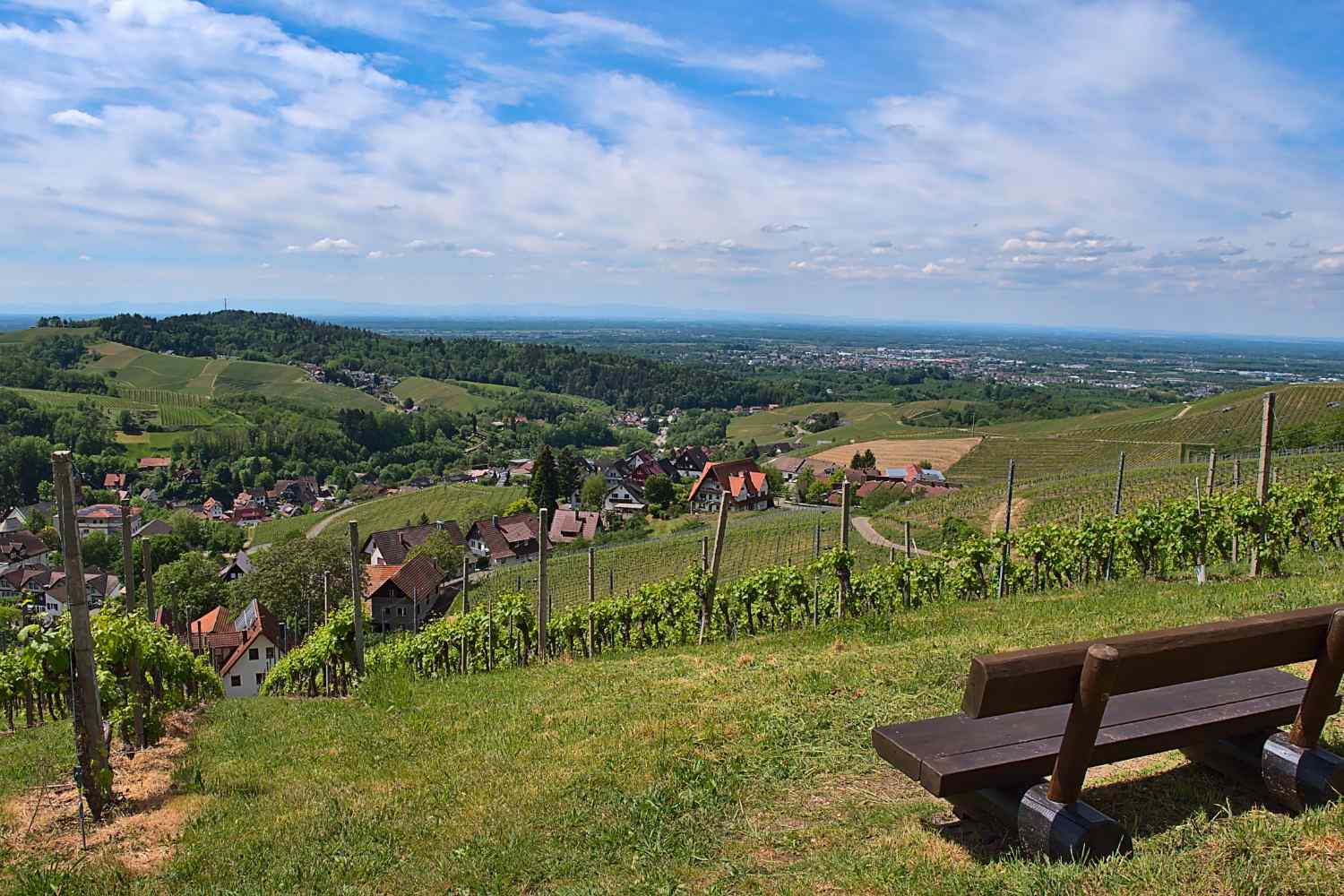
What defines the Black Forest most is the feeling of scale and closeness at the same time. Dense woodland stretches far into the distance, yet every few kilometres you come across a village, a bakery, or a quiet lake reflecting the trees. It’s a landscape that feels lived-in rather than remote—nature and everyday life sharing the same space.
Language is usually not a big barrier for visitors in the Black Forest, especially in places that see tourists.
In towns such as Triberg, Titisee-Neustadt, and Freiburg im Breisgau, many people working in hotels, cafés, and attractions speak good English. Tourism has been important here for decades, so staff are used to international visitors.
Menus in restaurants are often available in English, and hotel reception staff normally speak it comfortably.
In tiny villages deeper in the forest, English is sometimes more limited. A bakery, family guesthouse, or small farm shop may only speak basic English or none at all. Even so, communication rarely becomes difficult. People are generally patient and helpful, and simple gestures go a long way.
Learning a few easy phrases can make interactions smoother and friendlier:
Even trying a greeting in German usually brings a smile.
Road signs, hiking trails, and tourist information boards are very well organised. Many major sites also include English explanations, particularly around waterfalls, scenic viewpoints, and lakes.
Most first-time visitors find the region very easy to navigate. Tourism infrastructure is strong, and locals are used to travellers. Language rarely stops you from enjoying the forests, villages, cafés, and scenic drives that make the Black Forest so memorable.
The Black Forest in Germany sits in the southwest corner of the country in the state of Baden-Württemberg, close to the borders of France and Switzerland. It forms part of the larger Central Uplands of Europe, a long band of low mountains that runs across the region.
Geographically, it stretches about 160 kilometres from north to south and roughly 60 kilometres from east to west. The Rhine Valley lies along its western edge, dropping sharply into warmer lowlands with vineyards and river towns. To the east, the land opens toward the Swabian Jura, a gentler upland area with farmland and plateaus.
If you look at the world map – The Black Forest is somewhere between Stuttgard, Strasbourg, Basel and Zurich, which means it’s perfectly situated for day trips to major cities.
The Black Forest sits in the far southwest of Germany, in the state of Baden-Württemberg. It forms a kind of green, wooded heart between several major cities in four different directions.
That positioning makes the region feel wonderfully central, but still deeply rural once you’re inside it. One moment you’re on a motorway near a major European city, and a short drive later you’re among dense pine forests, waterfall valleys, and small wooden villages.
For day trips, the southern and western edges work especially well. Towns like Freiburg im Breisgau, Triberg, and Titisee sit close enough to major borders that you can easily move in and out for the day. Freiburg, for example, often feels like a gateway — city energy in the morning, forest trails by lunchtime.
This region is also known for its spa towns like Baden-Baden, where mineral springs have drawn visitors for centuries, and for outdoor life that changes with the seasons.
In warmer months, people hike forest trails that climb to open viewpoints like the Feldberg, the highest peak at 1,493 meters. In winter, those same hills turn into ski slopes and snow-covered forest paths.
As for souvenirs – nothing beats the Cuckoo Clock – something you’ll find in almos every town.
There are no large cities inside the Black Forest itself. Instead, life is shaped by smaller places that feel close to nature and fairly independent from each other.
Some of the better-known towns include:
Beyond these, there are dozens of smaller villages—some with only a few hundred residents—linked by winding roads, forest trails, and local bus routes. Many are built around farming, woodworking, or small-scale tourism, and it’s common to find a bakery, a church, a guesthouse, and not much else.
The overall feeling is not of many big towns close together, but of scattered communities living inside a vast, continuous forested landscape.
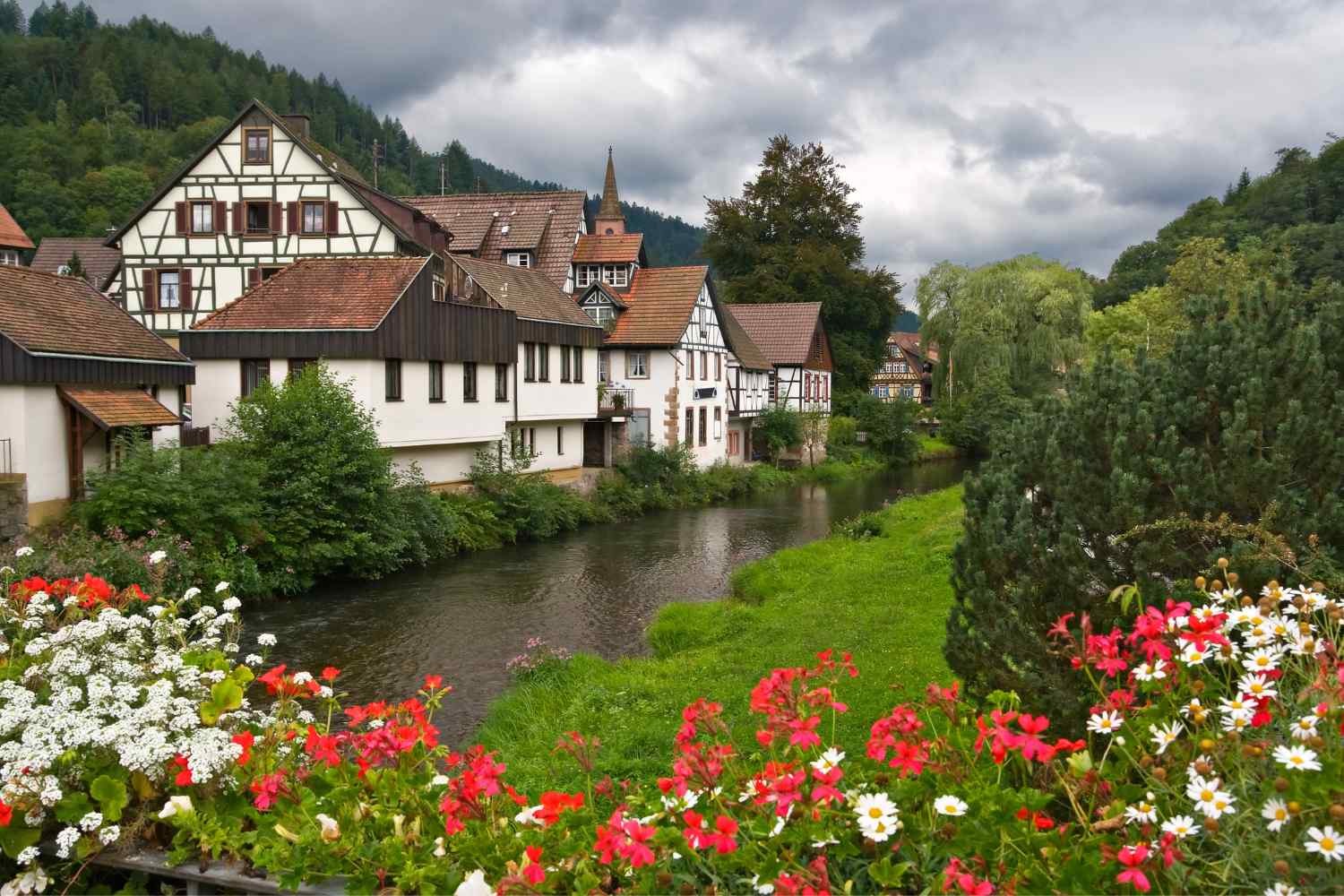
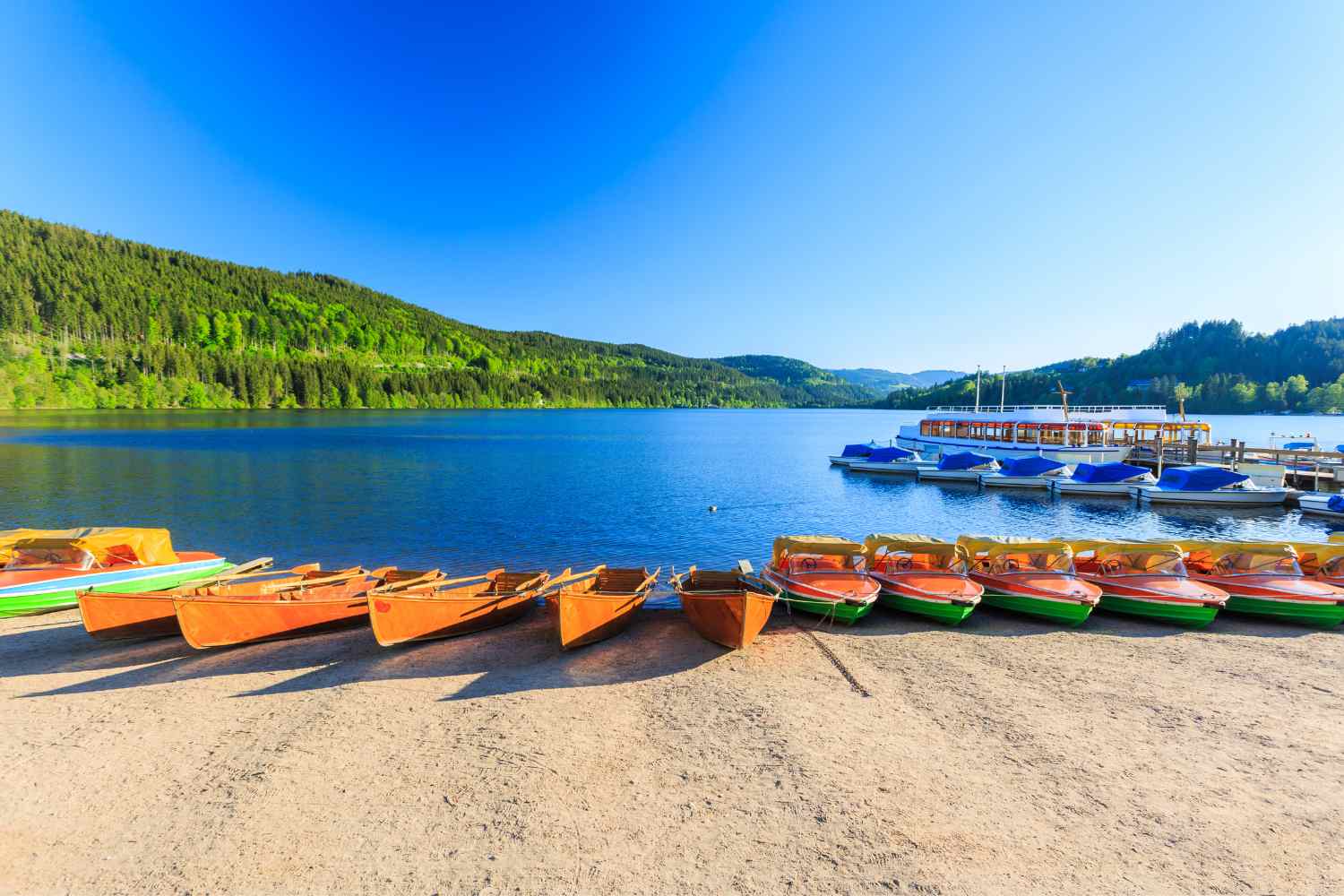
Looking at the Black Forest in Germany from east to west gives you one of the clearest ways to understand how the landscape changes in a very short distance.
The western edge runs along the Rhine Valley, where the land drops away quite suddenly. This side gets more sun, and the climate is noticeably milder. Vineyards are a defining feature here, climbing the lower slopes between villages and forest.
Places like Baden-Baden, Gengenbach, and Sasbachwalden sit in this zone. Towns feel more open and settled into the landscape, with easier road access, elegant spa architecture in some areas, and wine-growing villages in others. Views often stretch outward across the Rhine plain toward France.
As you move east, the land rises into the core of the Black Forest itself. This is where the forest becomes thicker, the valleys narrower, and the sense of elevation more constant.
Places like Triberg im Schwarzwald, Furtwangen im Schwarzwald, and Titisee-Neustadt sit in this interior zone. Here, you’re surrounded more fully by woodland, with waterfalls, deep valleys, and lake landscapes shaping the experience rather than vineyards or open plains.
West side: sun, vineyards, spa towns, wide valley views
East side: forest depth, higher elevation, waterfalls, lakes
The distance between the two is not huge, but the change in atmosphere is immediate. You can drive from vineyard slopes into dense evergreen forest in under an hour, and it feels like entering a different world entirely.

On the western side of the Black Forest in Germany, where the landscape drops more sharply toward the Rhine Valley and vineyards become part of the scenery.. you’ll find:
Baden-Baden is one of the most elegant towns in the Black Forest in Germany, and it feels instantly different from the smaller hillside villages around it.
Sasbachwalden is one of those Black Forest villages that feels smaller than it really is, because everything is tucked neatly into the hills.
Gengenbach is one of the most picture-perfect small towns in the Black Forest in Germany, where everything feels built around a central square and the surrounding hills.
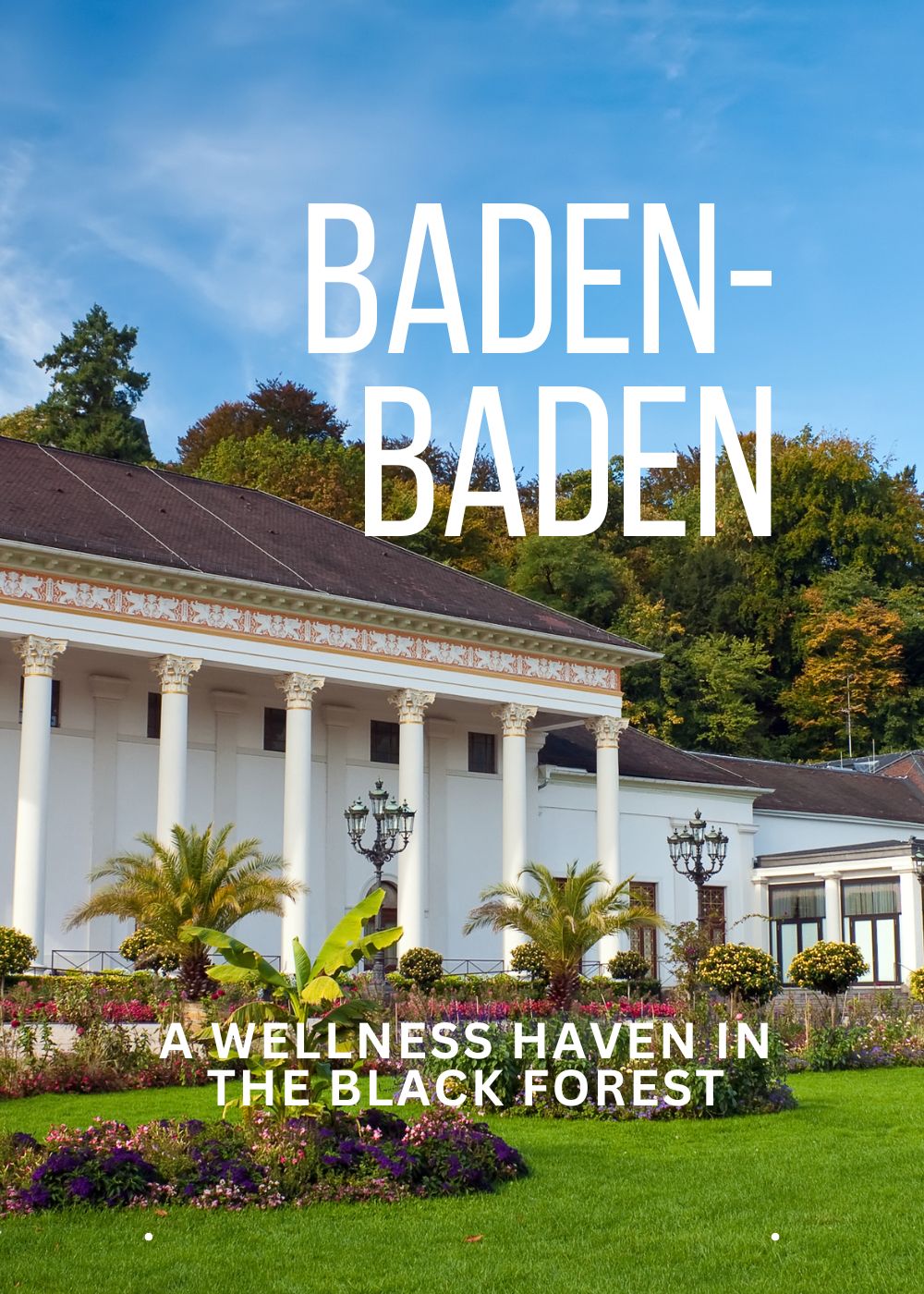
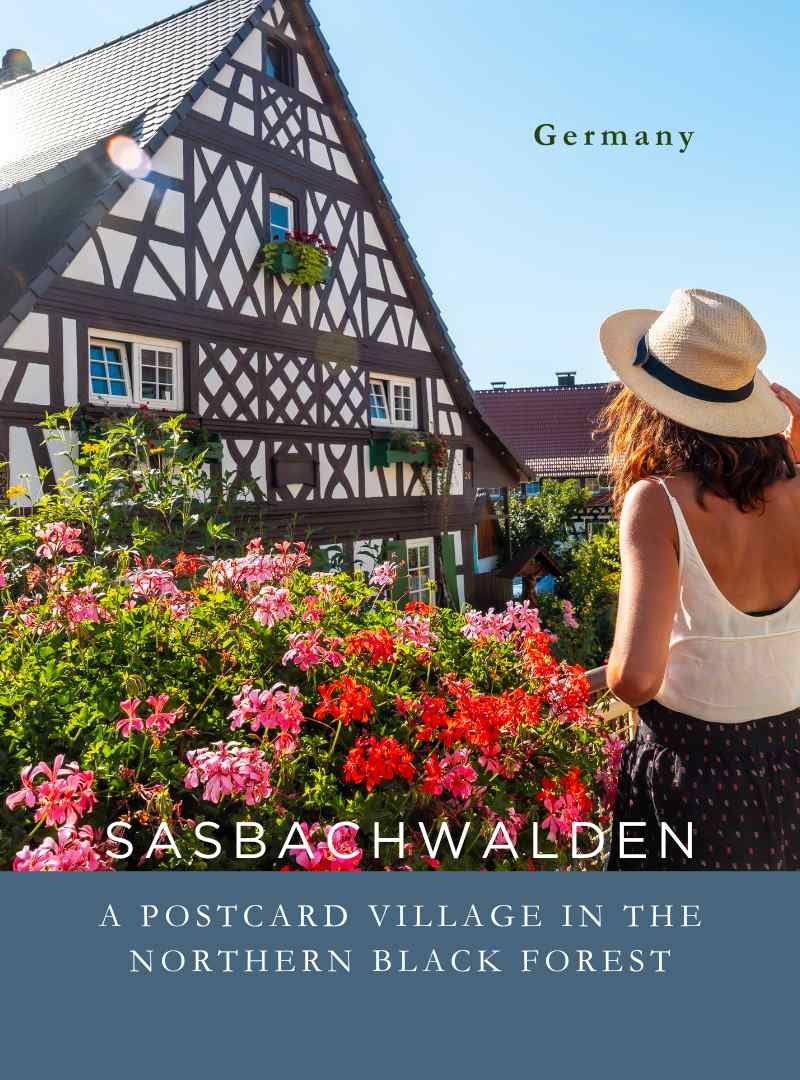
On the eastern side, the feel changes completely. It’s more forest-heavy, a bit quieter, and shaped by higher plateaus and deep wooded valleys. Here are three especially pretty places:
Triberg: One of the most famous Black Forest towns – lies actually in the middle – and is set deep in a narrow valley. It’s known for Germany’s highest waterfalls, where water tumbles through forested cliffs just above the town. The surroundings feel enclosed by steep, green hills, with hiking paths leading straight into dense woodland.
Titisee-Neustadt is a classic eastern Black Forest lake town. Lake Titisee sits like a mirror between forested slopes, with walking paths, boat rides, and small cafés right at the water’s edge. It’s more open than Triberg, but still surrounded by thick forest and mountain air.
Higher up in the central-eastern Black Forest, this town feels more remote and elevated. It’s known for its cuckoo clock tradition and museums, but the real appeal is the landscape—rolling forested hills and quiet roads that feel far from busy travel routes.
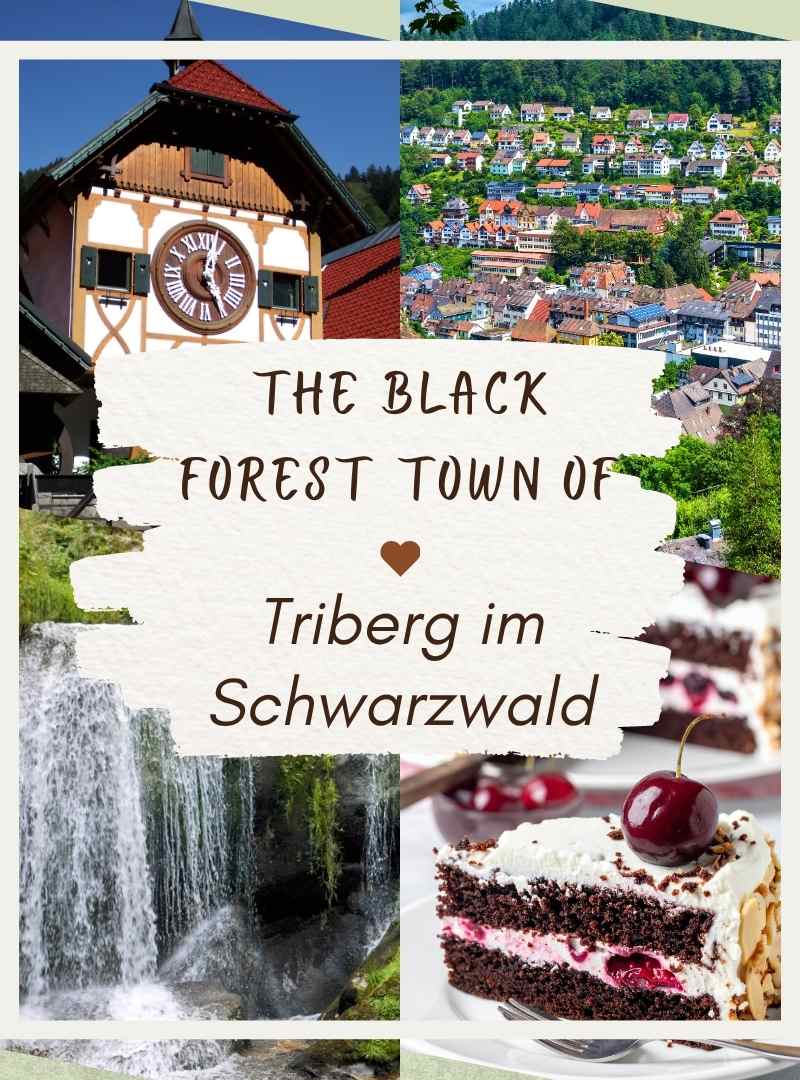
Menus lean toward regional dishes: Black Forest cake (Schwarzwälder Kirschtorte), sausages, schnitzel, potatoes, and fresh bread. Cafés and bakeries are everywhere, especially in small towns, and they often become the highlight of a stop.

Even in summer, the forest can feel cool and shaded. Rain showers move through quickly, and mist often settles between the trees in the mornings. Autumn is especially striking, with warm colours filling the hillsides.
Some spots get busy in peak season, but the overall impression is calm. Walk a few minutes off the main areas and the crowds thin out quickly. Forest trails often feel almost empty.
The Black Forest is less about ticking off attractions and more about slowing down into the landscape itself — forest light, small villages, and winding roads that make you want to take the long way everywhere.
Need a place to stay, car rental, or are you ready to book your flights ?
For more travel inspiration visit our YouTube channel >>