
We couldn’t find anything for that search. But we’d love to know what you’re looking for — feel free to drop a comment on any post and tell us what you’d like to see next.
Home - Travel Destinations - Prague Without Crowds: An Unforgettable Glimpse After Tourists Left
If you click on links we provide, we may receive compensation.
We link to affiliated partners at no extra cost to you.
Prague is rarely quiet, yet during the COVID lockdowns the city transformed. With tourism halted, its squares stood empty, bridges silent, and landmarks unvisited. This post captures that extraordinary moment when Prague revealed a side few will ever see again.
Many people who live in Prague haven’t been to the center in years. Under normal circumstances, locals would go almost anyplace else rather than brave fighting the wall-to-wall crowds of tourists between Old Town Square and Prague Castle.
With tourists unable to come, Praguers were finally able to get an undisturbed gander at the centuries-old streets and squares in the city center for the first time since the 1990s. Compared to 2019, the number of tourists visiting Prague dropped 87% in 2020.
When the tourists left Prague, local tourism changed 360 degrees. Rather than having to search for a narrow passage between tour groups, people could relax and look up at the house signs above the Baroque doorways. Before houses were numbered, they were known by fanciful names such as the House at the Black Sun or House of the Three Violins. Hundreds of these colorful sculpted signs still remain.
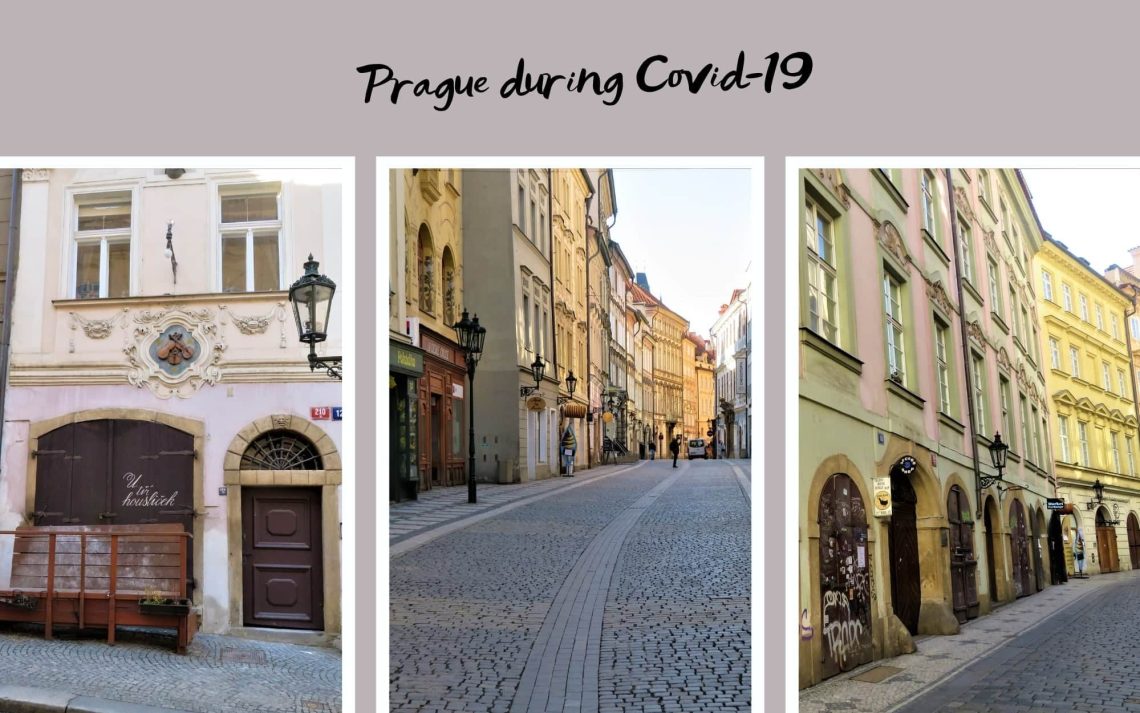
The overall feeling downtown was surreal, though. When the tourists left Prague, souvenir shops were either closed or mainly selling face masks, as locals have no interest in puppets or faux Soviet hats and watches. Whole streets of shops were shuttered save for a stand or two offering two-for-one deals on fresh-baked funnel cakes and takeaway beverages.
Even after the tourists left and difficult times set in, the Praguers still kept their sense of humor. One cafe near Old Town Square rose to the occasion by making chocolate bonbons with red spikes — modeled on the coronavirus. They had to be ordered in advance as demand was so high.
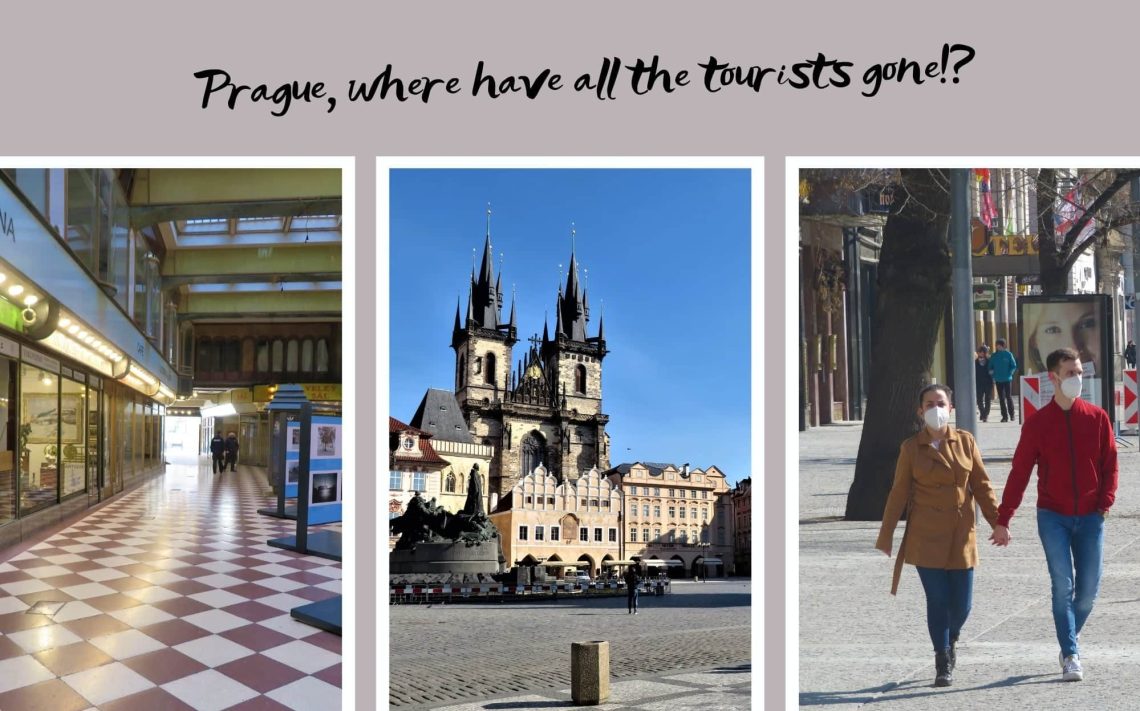
The area around Wenceslas Square, the city’s main shopping and entertainment district, in particular, was eerily quiet.
The Lucerna Passage, an Art Nouveau shopping arcade cutting through the ground floors of several buildings, had only security guards to save it from being fully deserted.
The Astronomical Clock, with its functioning astrolabe and an hourly procession of wooden saints, now played to single digits of viewers rather than hundreds.
The newly erected victory column, capped with St Mary, became home to flowers and candles left by people seeking divine intervention to mitigate the virus. The column is a replica of one from the 17th century that had been torn down in 1918 when Czechoslovakia became independent.
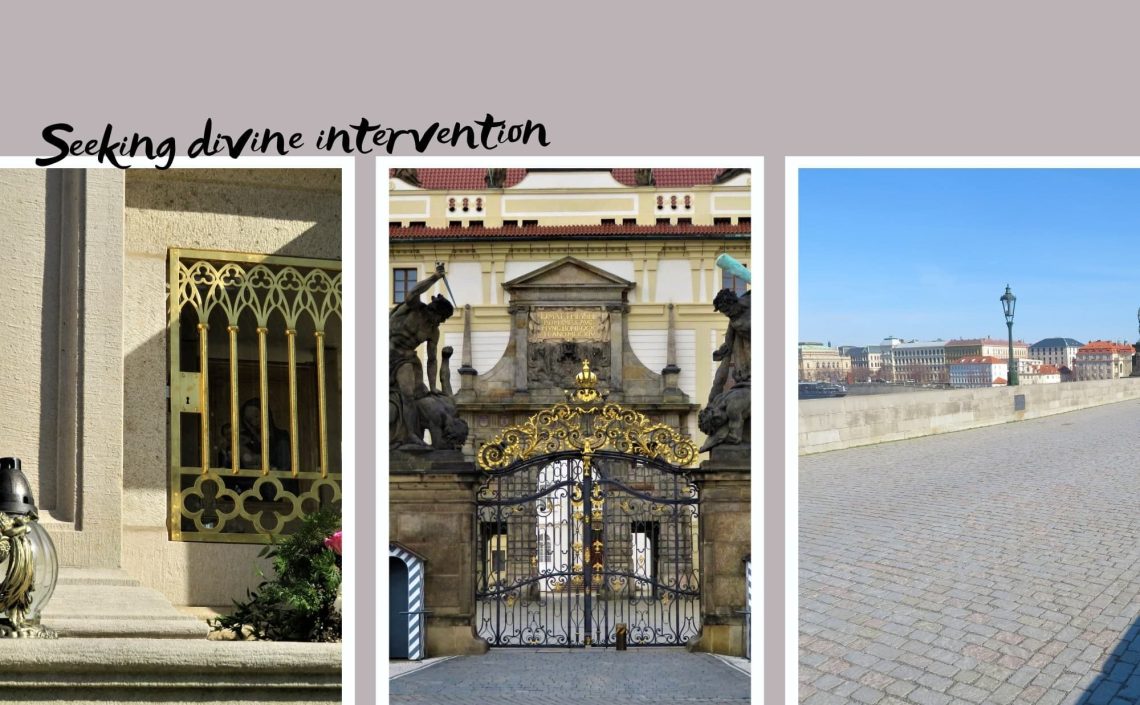
Prague Castle appeared most vacant of all when the tourists left. The grounds stayed closed to all except government workers. While uniformed castle guards could be seen behind the gates marching on a regular schedule, it was a show for virtually nobody.
Even before the first lockdown started, Prague City Hall had been trying to clear Old Town Square and the rest of the center of the worst excesses of tourism — fake historical vehicles, living statues, people in panda costumes, and mediocre buskers.
The lockdown completed what the city started. Finally, those who ventured to Old Town Square could appreciate the former Town Hall and other elaborately decorated buildings without the visual noise. The buildings include ones where writer Franz Kafka lived and another where Albert Einstein entertained his fellow intellectuals by playing the violin.
The main draw for locals returning to the center, though, was Charles Bridge. The 14th century stone structure, dotted with 30 religious statues, was now devoid of both crowds and merchants hawking souvenirs and caricatures. Small groups could finally make a wish by touching the statue of St John Nepomuk without having to wait in line. Posing for masked group photos with Prague Castle in the background became the way to show you experienced the pandemic.
The Czech Republic (Česká republika in Czech) became the first European country to make face mask wearing mandatory, effective March 19, 2020.
On June 30, 2020, some 2,000 people came together for a potluck dinner across 515 meters of tables spanning the entire length of Charles Bridge. At the time, the first wave of the pandemic had abated largely, and rules had been relaxed. Museums and theaters reopened, at least with limited capacity, and restaurants could offer some indoor and outdoor dining.
Throughout the pandemic, parks and urban forests were an exception to many of the rules, as people were encouraged to get out of their homes for exercise. Petřín Hill on May Day 2020, a holiday where lovers kiss under blooming trees, seemed almost normal, except for the face masks.
Stands in some parks selling beer and snacks remained open under rules that allowed takeaway from restaurants. Picnics in the park became one form of entertainment people could engage in.
The relatively relaxed times of the summer were short-lived, as by September 2020, the virus numbers were back up and restrictions returned slowly. By March 2021, a full year after the pandemic started, the city was back into lockdown. Police were checking IDs in the center, as only city residents were allowed on the streets. Tourists, even ones from just beyond the city limits, were supposed to stay away.
On Monday, 12 April 2021, children began returning to schools and nurseries as the state of emergency was lifted.
Czechia (Česko in Czech) gradually relaxed its protective measures. Finally, as of April 9, 2022, the protective measures regarding conditions of entry into the Czech Republic related to the COVID-19 epidemic were suspended. Entry into the Czech Republic was no longer subject to any special epidemiological conditions to prevent the spread of the disease. The entry ban for foreigners from third countries and the obligation to prove infection-free status were lifted. The tourists were once again free to explore beautiful Prague, the City of a Hundred Spires.
The absence of tourism was temporary, but the memory of Prague’s stillness remains unforgettable. It reminds us how deeply travel shapes a city’s rhythm—and how precious those bustling days truly are.
💬 We’d love to hear from you. Were you in Prague during the COVID lockdowns, or another city that felt transformed after the tourists left? Share your reflections in the comments—we’d love to hear your story.