We couldn’t find anything for that search. But we’d love to know what you’re looking for — feel free to drop a comment on any post and tell us what you’d like to see next.
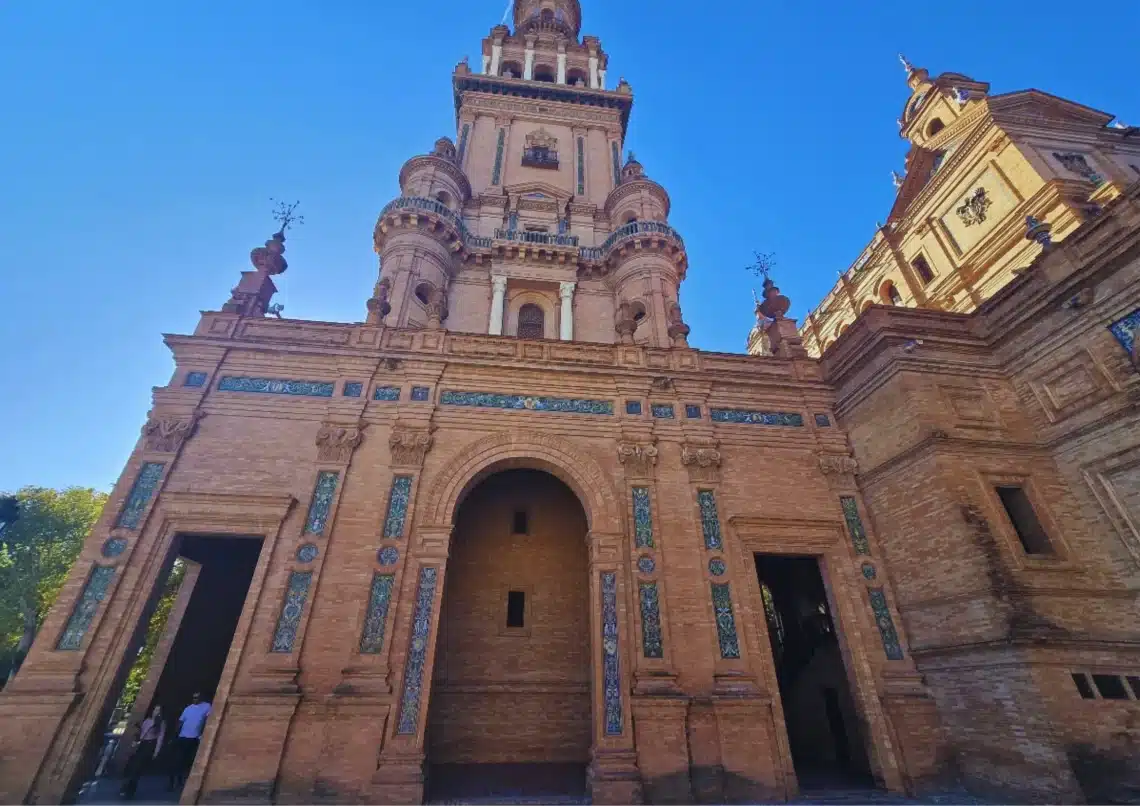
Step into Seville’s Plaza de España and you’ll feel like you’ve walked straight into a painting. The sweeping semicircle of towers, bridges, fountains, and endless ceramic tiles is so breathtaking that you’ll probably stop mid-step just to take it all in. Nestled inside the green oasis of Parque de María Luisa, this plaza is one of those places that makes you whisper “wow” without even realizing it.
This architectural marvel wasn’t built just to look pretty — it had a purpose. Plaza de España was completed in 1928, right on time for the Ibero-American Exposition of 1929, a world’s fair hosted in Seville. Spain wanted to showcase its culture, industry, and artistry to visiting nations, and this plaza was designed to be the crown jewel.
The mastermind behind it was Aníbal González, one of Seville’s most celebrated architects. He poured years of creativity into the design, blending tradition with modernity to create something that felt uniquely Spanish. Construction began in the early 1920s and took about seven years to complete — a true labor of love.

What makes Plaza de España so special is the mix of styles. González combined Renaissance Revival, Baroque Revival, and Neo-Mudéjar (Moorish-inspired) elements, creating a design that feels both historic and fresh.
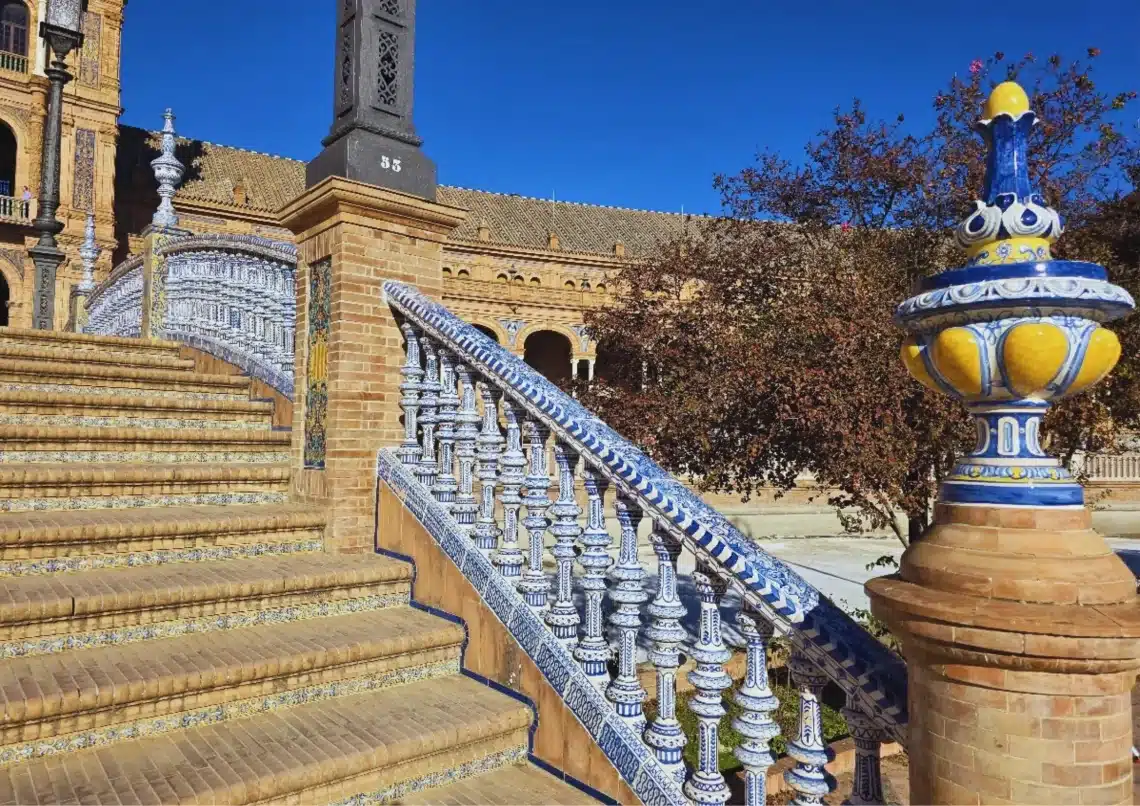
The plaza’s semicircular layout wasn’t random — it symbolized Spain “embracing” its former colonies, a gesture of friendship during the exposition. The four bridges crossing the moat represent Spain’s ancient kingdoms, tying the whole design back to national unity.
It’s the little touches that make Plaza de España unforgettable:
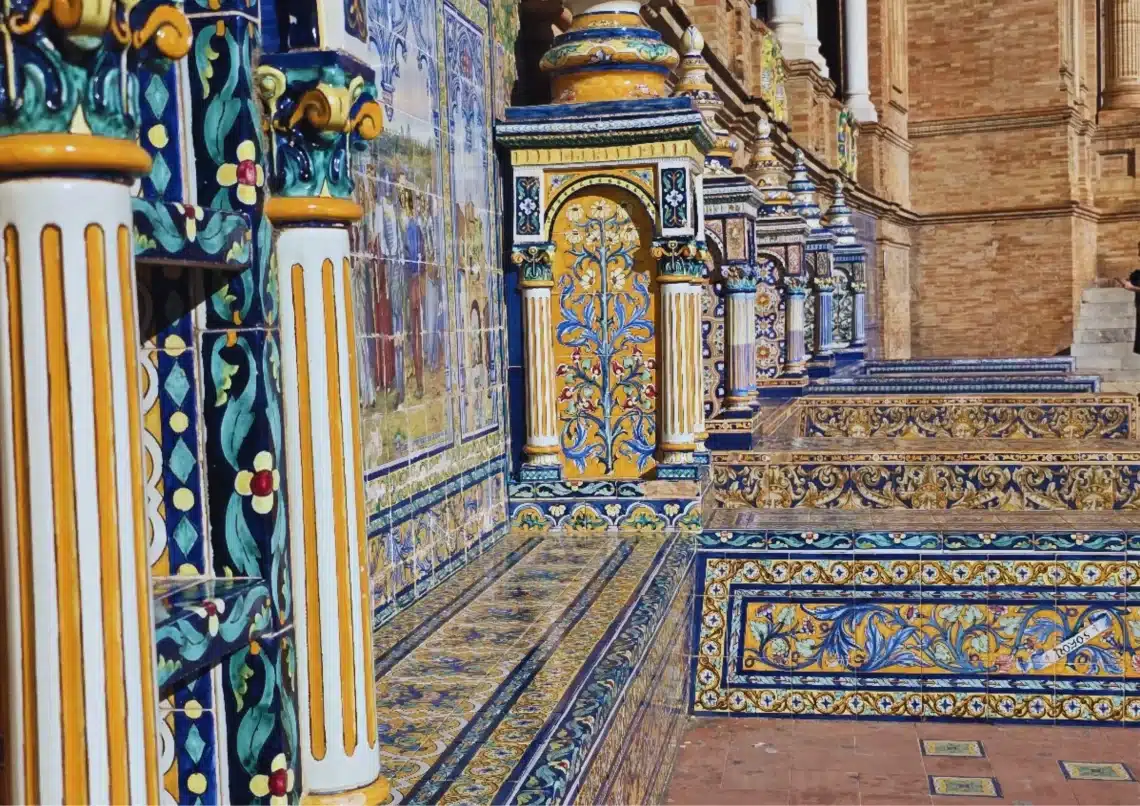
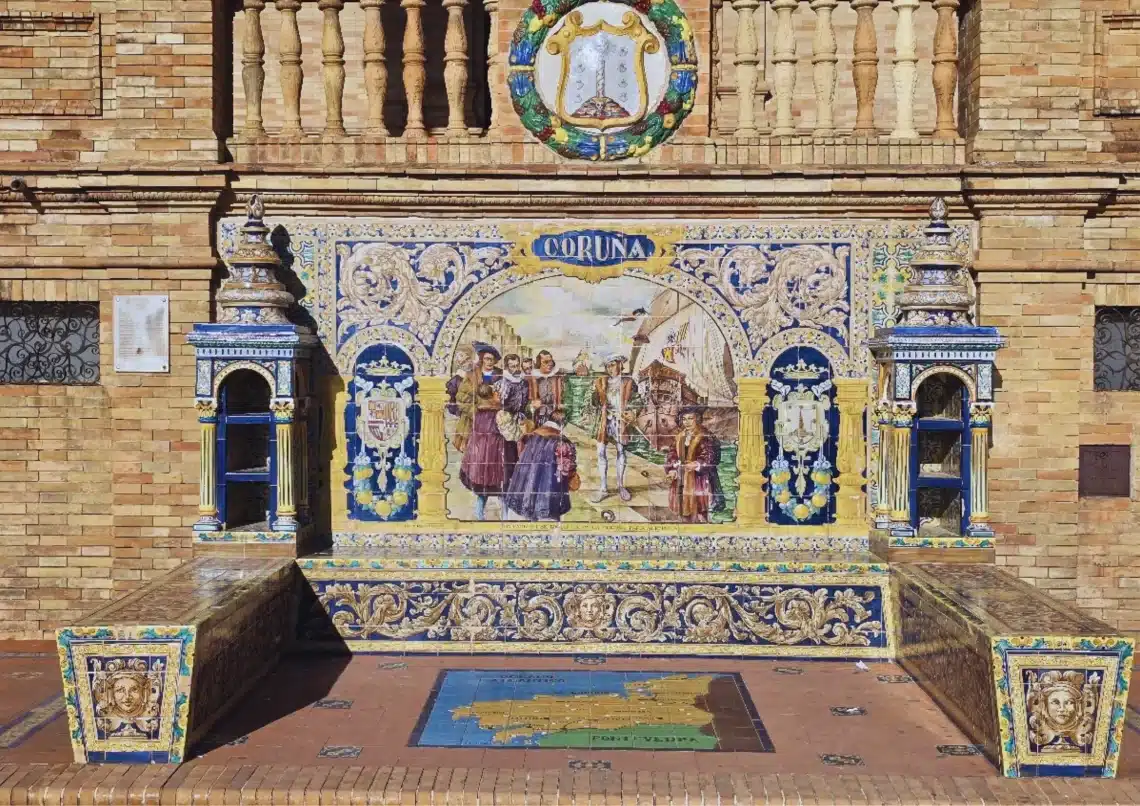
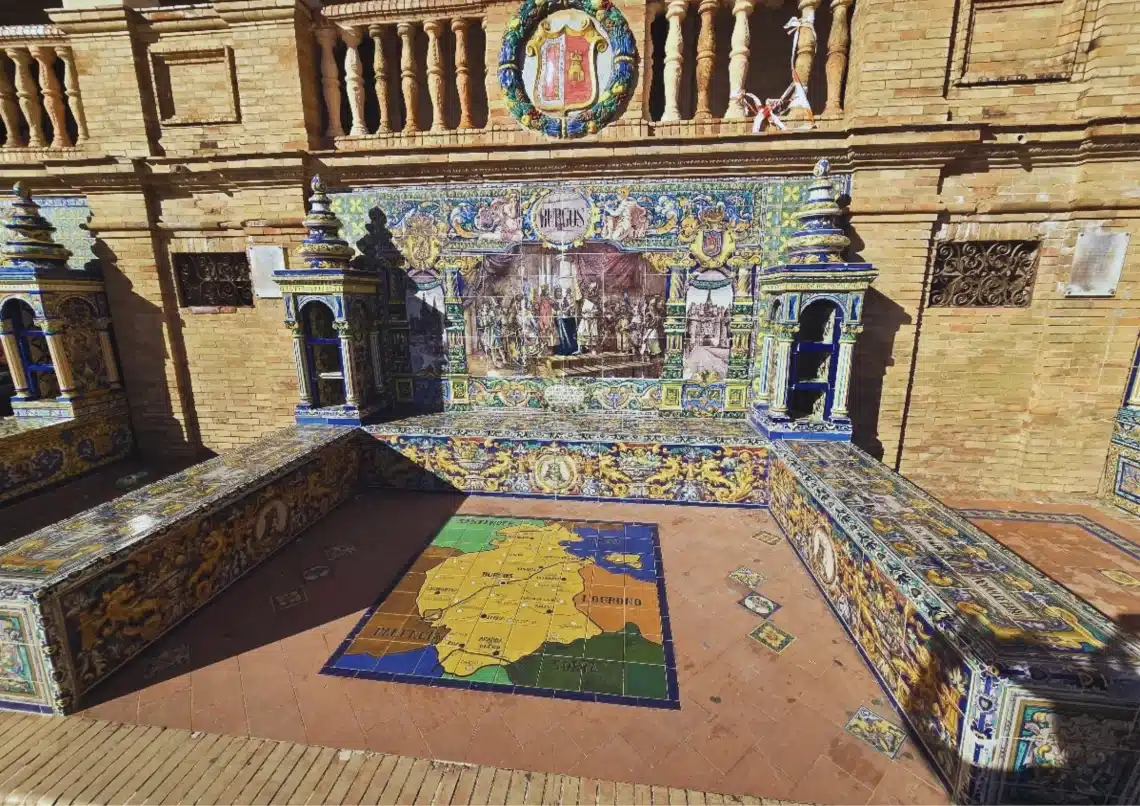
Ceramic alcoves line the plaza, each representing one of Spain’s provinces with maps and historical scenes.
At the center, the Vicente Traver fountain sparkles under the Andalusian sun.
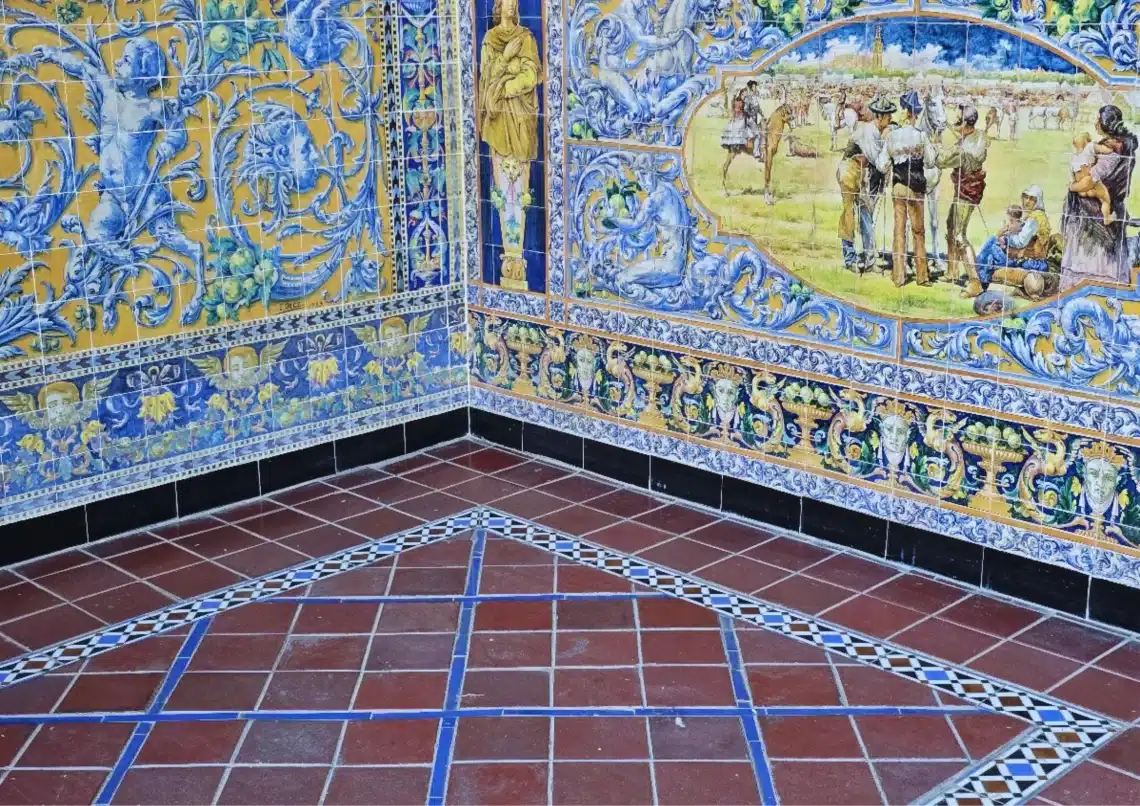
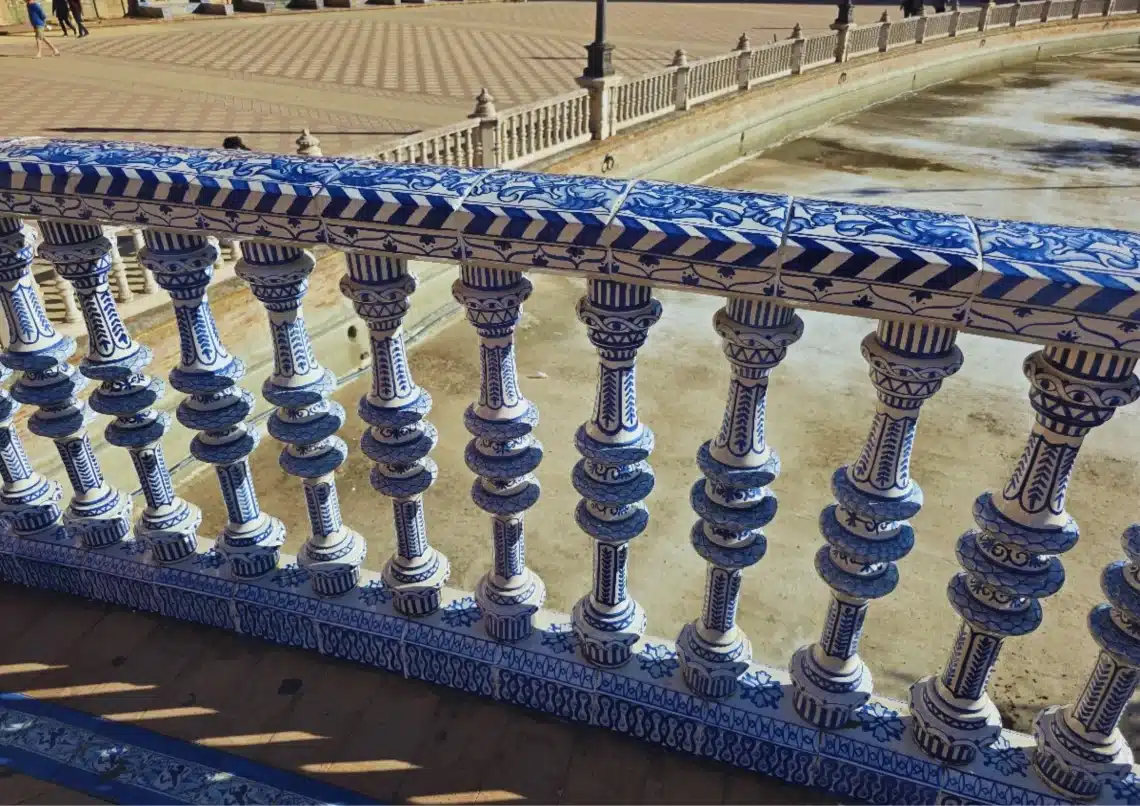
The endless azulejos (painted tiles) tell stories of Spain’s regions, turning the plaza into a giant scrapbook of national pride.
Every corner has something to discover, whether it’s a hidden tile detail or the perfect photo spot on one of the bridges.
Despite its grandeur, Plaza de España feels welcoming. Families stroll, musicians play, couples pose on the bridges — it’s not just a monument, it’s a living, breathing plaza. That’s what makes it so magical: it’s both a masterpiece of architecture and a place where everyday life unfolds.
Best time to go: Early morning for soft light and fewer crowds, or late afternoon when the plaza glows golden.
Entry: Free! It’s located inside Parque de María Luisa, so you can combine your visit with a walk through the gardens.
What to bring: Comfortable shoes — the plaza is huge, and you’ll want to explore every corner.
Don’t miss: The tiled alcoves for each province. They’re perfect for photos and a fun way to learn about Spain’s regions.
Plaza de España isn’t just another stop on a Seville itinerary — it’s a landmark that deserves a spot on everyone’s travel bucketlist. Between its sweeping architecture, dazzling tiles, and rich symbolism, it’s a place that leaves you both impressed and inspired.
If you’re planning a trip to Spain, make sure Plaza de España is at the very top of your list. It’s not just about seeing the plaza — it’s about feeling the heartbeat of Seville in one unforgettable space.
Get your copy of DK Eyewitness Travel Guide so you don’t miss a gem in Seville and Andalucia. You’ll discover:
Have you visited Plaza de España in Seville, or is it on your bucketlist? I’d love to hear your thoughts, stories, or travel dreams in the comments below — let’s swap tips and inspiration!
Author: Arina JVR – 30+ countries, countless stories.
Comments