
We couldn’t find anything for that search. But we’d love to know what you’re looking for — feel free to drop a comment on any post and tell us what you’d like to see next.
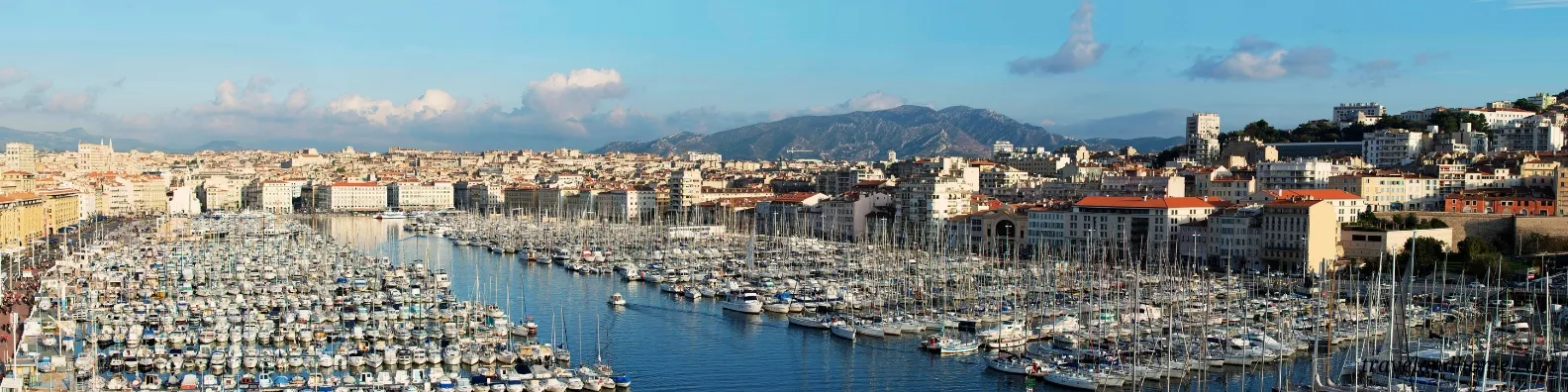
Marseille is one of those cities people think they know — and then you get there and realise it’s nothing like the clichés. It’s not the lavender‑scented, slow‑motion Provence you see on postcards. It’s louder, older, saltier, more Mediterranean, and honestly… kind of addictive.
If Provence is all about vineyards and quiet villages, Marseille is the moment you step out of the countryside and suddenly the sea hits you in the face — in the best possible way. It’s messy and beautiful and full of life. And once you get into its rhythm, it’s hard not to fall for it.
Think of Provence as a spectrum:
| Provence Element | What You Get | Where Marseille Fits |
|---|---|---|
| Lavender, vineyards, Roman ruins | Classic inland Provence | Aix, Avignon, Luberon |
| Pastel seaside villages | Gentle Mediterranean charm | Cassis, Bandol |
| Urban, historic, multicultural port city | Sea, grit, energy, authenticity | Marseille |
Marseille is the region’s beating heart — louder, older, more Mediterranean, and far more complex than its postcard neighbors.
Here’s the truth: Marseille isn’t trying to charm you. It’s not polished or curated. But that’s exactly why people who love it… really love it.
If you’re into:
sea views that make you stop mid‑sentence
food with character
cities with grit and soul
multicultural energy
places that feel alive, not staged
…then Marseille will get under your skin in the best way.
If you prefer:
quiet villages
gentle scenery
everything tidy and postcard‑perfect
…then you might want to pair Marseille with Aix or Cassis so you get both sides of Provence.
But honestly? Marseille adds a flavour to the region that nothing else does. It’s the part of Provence that feels real, lived‑in, and full of stories.
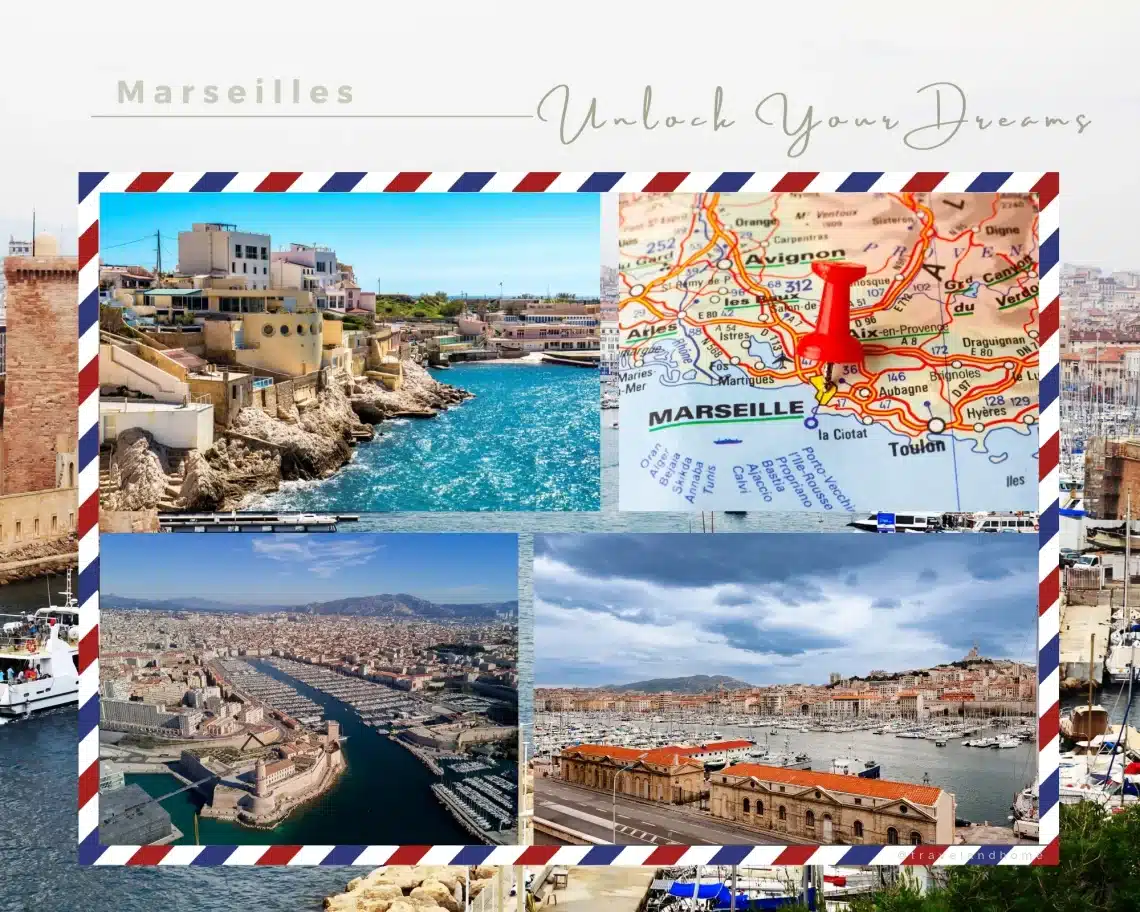
Nearest airport: Marseille Provence Airport (MRS), about 25 km from the city.
How to reach Marseille:
Airport shuttle → Gare Saint‑Charles Fast, frequent, and straightforward.
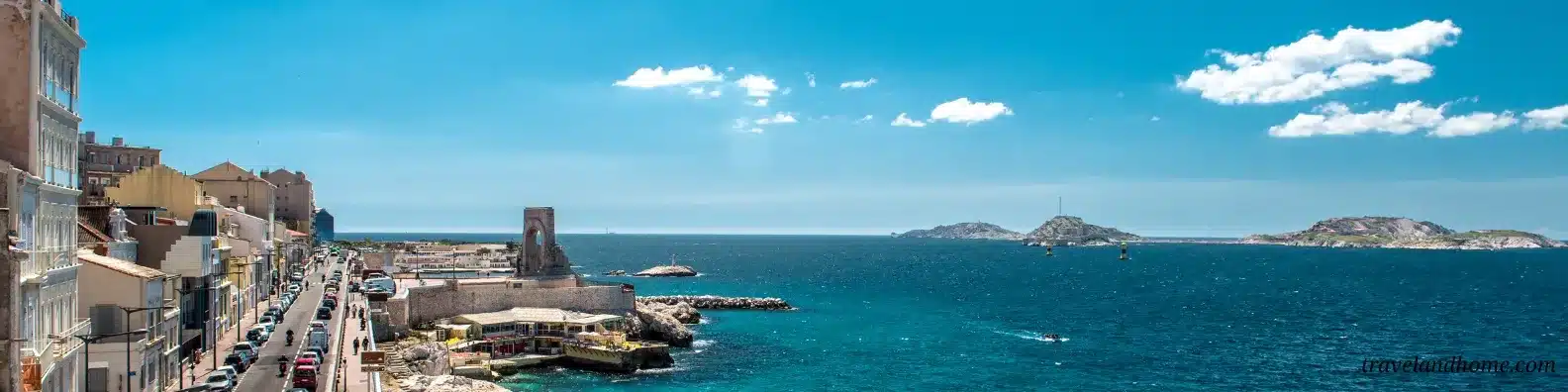
Taxi or Uber Ideal if you’re staying near the Vieux‑Port or the Corniche. Local tip: If you arrive near sunset, ask your driver to take the Corniche Kennedy route — the sea views are unforgettable.

Summer (June to August) can reach up to the upper 20s Celsius. The best months for sightseeing are April, May, and September. During these months, the temperatures are more pleasant, the sea water is still warm enough to swim, and there are fewer crowds. October is usually the wettest month, while July and August are the driest months.
Marseille is a patchwork of little neighbourhoods, each with its own vibe. Here’s the low‑down without the travel‑brochure fluff:
💡Travel Tip: Vrbo has over 2 million vacation homes for less than the cost of traditional hotel accommodation.
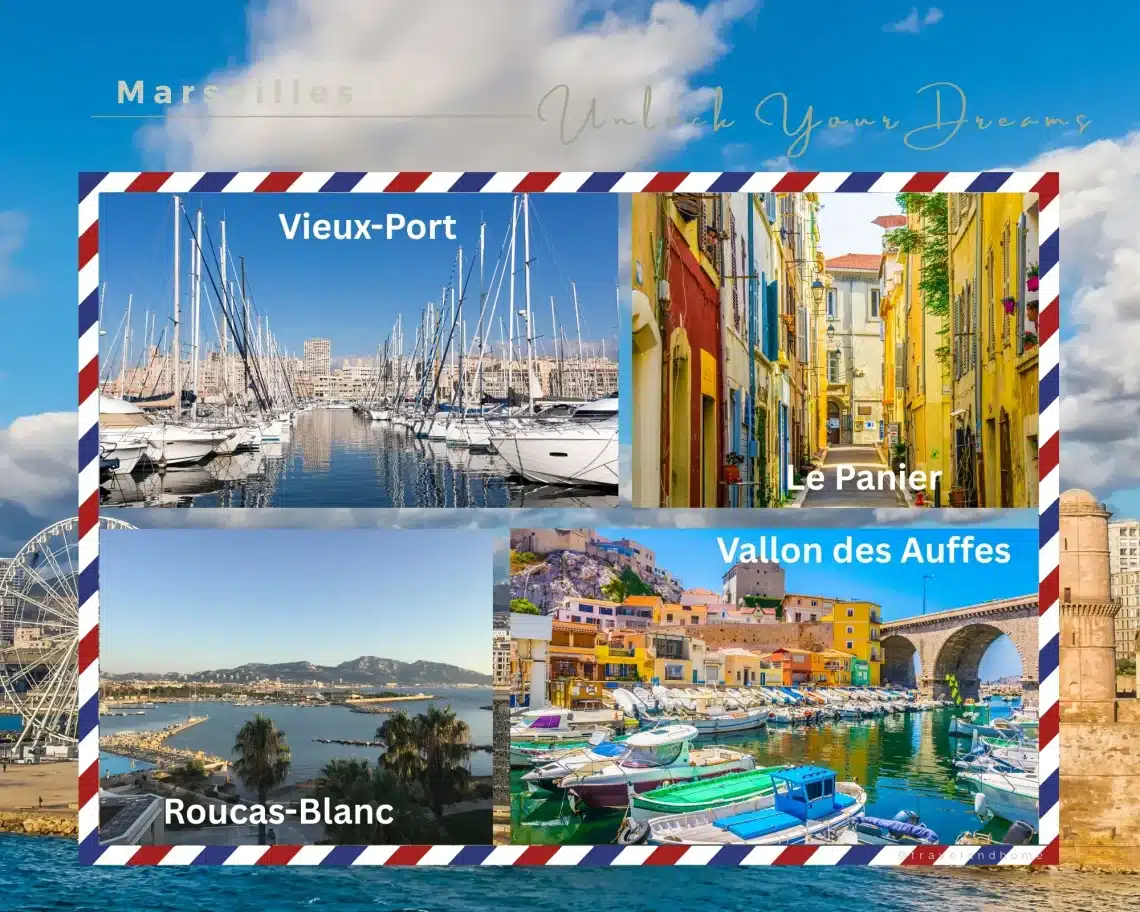
Morning: Start your day the Marseille way: grab a coffee at La Caravelle and just sit there for a moment, looking out over the Vieux‑Port. It’s one of those views that makes you instantly slow down.
When you’re ready, wander up into Le Panier — it’s the oldest part of the city and feels like a little maze of pastel houses, tiny squares, and unexpected street art. Pop into La Vieille Charité (the courtyard alone is worth it), and then just let yourself drift between the artisan shops. It’s the perfect place to get a feel for Marseille’s creative side.
Lunch: Head to Chez Étienne. It’s one of those old‑school Marseille spots where the menu is tiny, the tables are full of locals, and the pizza and grilled fish are exactly what you want after a morning of wandering.
Afternoon: Walk it off by heading toward the water again. The Cathédrale de la Major is huge and dramatic — you can’t miss it. Then stroll around the Mucem area, which is all modern architecture and sea breeze.
Make sure you walk the ramparts of Fort Saint‑Jean. It’s free, it’s beautiful, and the views over the port and the sea are the kind that make you stop mid‑sentence.
Sunset: Make your way to Vallon des Auffes, this tiny fishing port tucked under a bridge. When the light hits the water in the evening, it’s pure magic. Bring your camera… or don’t, and just enjoy it.
Dinner: If you’re in the mood for something chic and seaside, book Tuba Club — it feels like a little escape. If you want to go all‑in on a splurge, Le Petit Nice Passedat is the Michelin‑starred, once‑in‑a‑lifetime option.
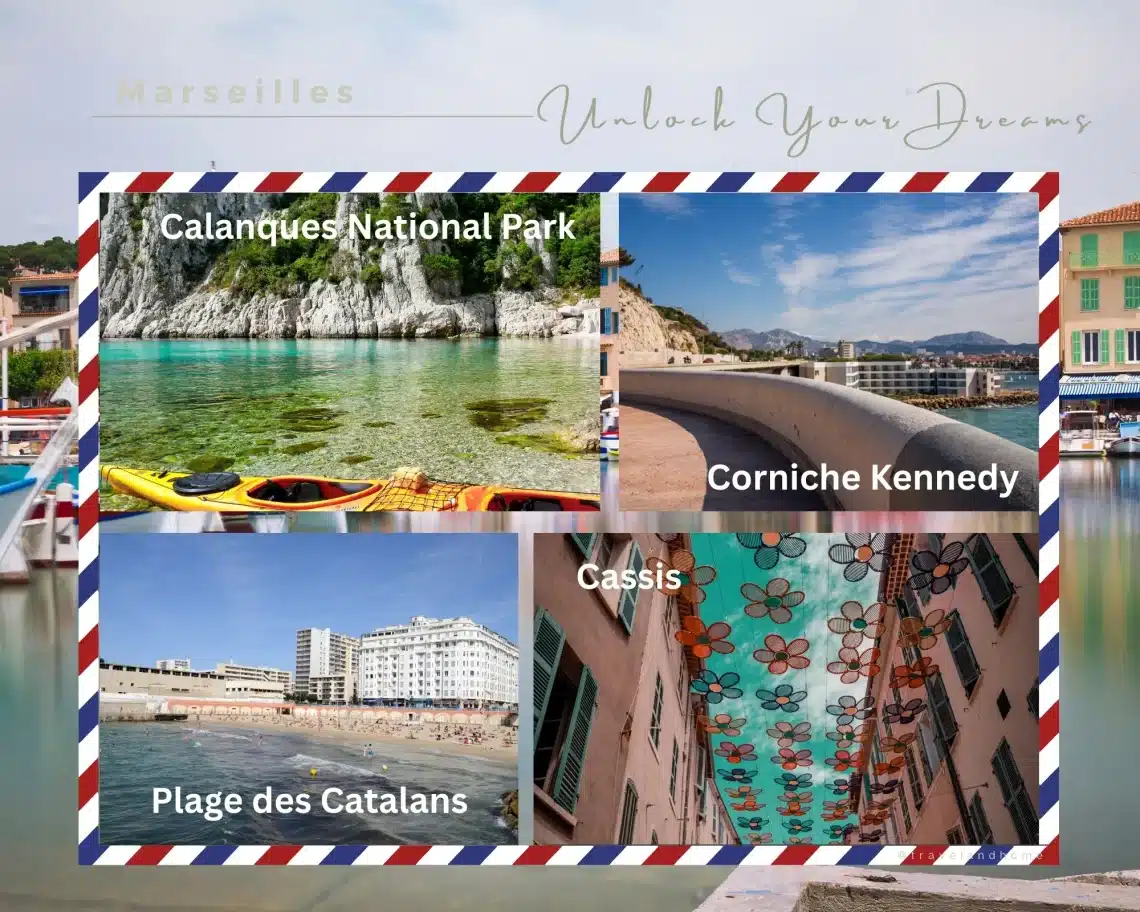
Morning: Today is all about the sea. If you’re up for it, head into the Calanques National Park — either by boat or on foot. Go early because the mistral winds love to show off in the afternoon, and trust me, you want those calm morning waters.
Whether you choose Sormiou or Morgiou, both feel like you’ve stumbled into a secret Mediterranean world. Bring water, sunscreen, and something snacky — you’ll thank yourself later.
Lunch: If you didn’t picnic in the calanques, wander over to Le Lunch in Endoume. It’s relaxed, seaside, and exactly the kind of place where you linger longer than planned.
Afternoon: Ease back into the city with some beach time.
Plage des Catalans, if you want energy and people‑watching
Plage du Prophète, if you want something softer and more local
Then take a slow walk along the Corniche Kennedy. It’s one of those coastal roads where every few steps you want to stop and take another photo. The sea is right there, glittering away like it knows it’s the star of the show.
Sunset: Head up to Palais du Pharo. The view over the Vieux‑Port at golden hour is unreal — it’s one of those “oh wow, I get why people love this city” moments.
Dinner: If you’re craving something cosy and delicious, La Cantinetta is always a win. Or grab a table at Le Café de l’Abbaye — perfect for an apéro that casually turns into dinner.
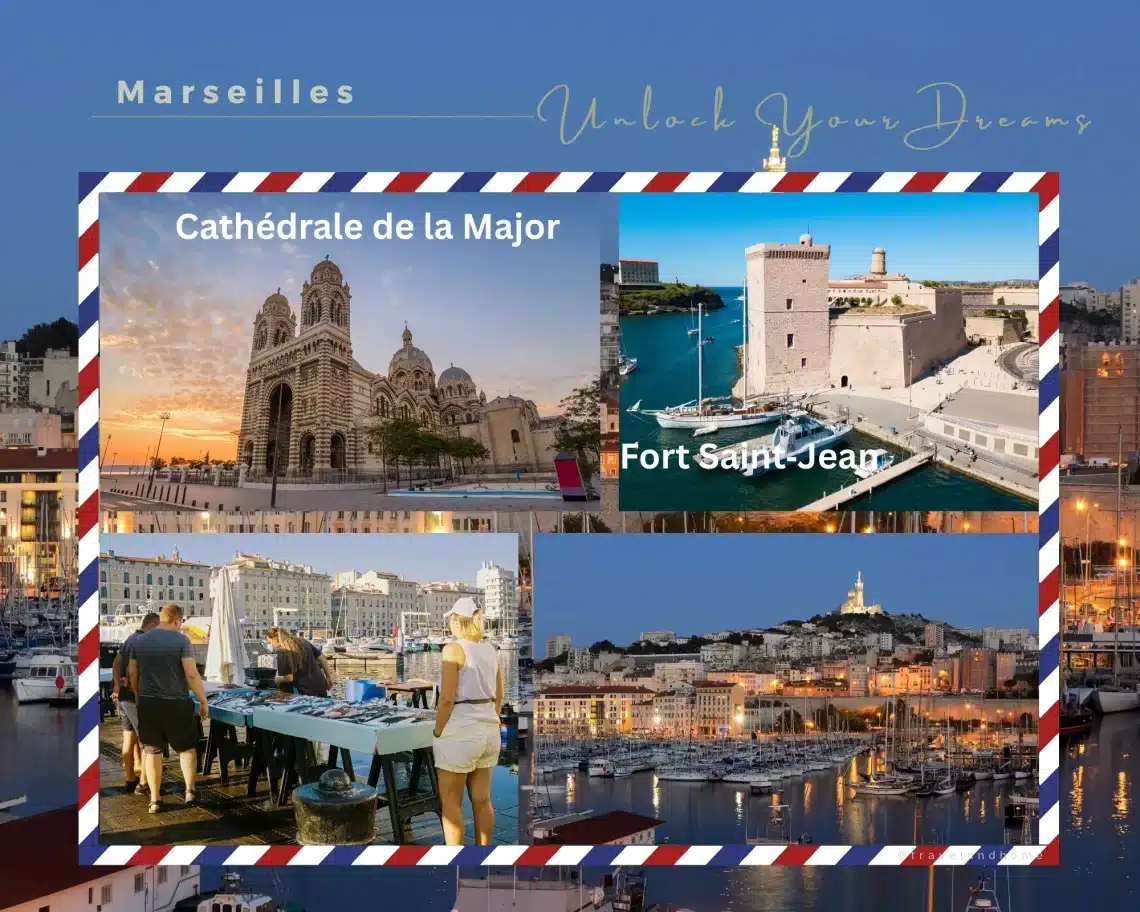
Morning: Start with a wander through Marché Noailles or Marché du Prado. They’re lively, colourful, and full of the kind of everyday Marseille energy you don’t get in the touristy spots. Pick up some navettes (those orange‑blossom biscuits) from a proper bakery — they make the best little travel snack.
Midday: Make your way up to Notre‑Dame de la Garde. Yes, it’s a climb, but the view is the reward. You can see the whole city, the islands, the sea — everything. It’s the kind of panorama that makes you feel like you’ve really arrived.
Afternoon — choose your vibe: You’ve got options here, depending on your mood:
Cassis: Hop on a quick train and spend a few hours in this pastel‑coloured seaside dream. It’s tiny, charming, and perfect for a slow wander.
Cours Julien: If you’re feeling artsy, head to this neighbourhood for street art, indie shops, and cafés. It’s Marseille’s creative heart.
Château d’If: Take a boat out to the island prison from The Count of Monte Cristo. It’s atmospheric and fun, especially if you love a bit of literary drama.
Dinner — Bouillabaisse Night: If you’re going to try bouillabaisse, tonight’s the night. Go somewhere that does it properly — the real deal is unforgettable. Top picks:
Chez Fonfon
Le Rhul
L’Epuisette
They all follow the Bouillabaisse Charter, which basically means you’re getting the authentic, lovingly made version.
Travel Inspiration at Home: How to make Bouillabaisse
And that’s Marseille — a little wild, a little chaotic, and completely unforgettable once you let it work its magic. Whether you’re dreaming of the Calanques, wandering the Vieux‑Port, or tasting your way through Marseille’s food scene, this city has a way of surprising you in the best possible way.
Comment╰┈➤ If you’ve been to Marseille before, or if you’re planning your first Marseille itinerary, we’d genuinely love to hear your thoughts. Drop a comment below and share your favourite Marseille travel tips, hidden gems, or questions — it helps other travellers, and it’s always fun to swap stories with someone else who’s fallen for this Mediterranean city.
🕮 Suggested Read: Want to cut down on travel expenses and spend your hard‑earned money on experiences instead? Check out our 40+ travel tips — including the simple tricks that can save you serious money on car hire.