
There are cities that reveal themselves immediately, and others that reward curiosity. Zacatecas belongs firmly in the second group.
Built along the steep sides of a narrow valley, this former silver-mining city rises in layers of pink-stone façades, domes, towers and twisting streets. At street level, its historic center feels intimate and walkable. Look up—or ride above it on the teleférico—and the scale of the landscape becomes clear.
Zacatecas is beautiful, certainly, but its appeal goes well beyond architecture. Underground mine tunnels, remarkable art collections, regional food, silverwork and exuberant street traditions give the city a strong sense of place. It is not a polished backdrop preserved only for visitors. It still feels lived in.
Zacatecas was founded in 1546 following the discovery of a rich silver deposit. Its mines helped make it one of the most important mining centres in New Spain, and the wealth generated by silver shaped the churches, mansions and public buildings that visitors see today.
The Historic Centre of Zacatecas was inscribed on the UNESCO World Heritage List in 1993. UNESCO highlights both the city’s mining history and the way its urban design adapted to the difficult topography of a steep valley. Unlike the rigid grid associated with many colonial cities, Zacatecas grew around its terrain, mines and routes of movement.
That geography is a large part of its beauty. Streets bend, climb and narrow unexpectedly; church towers appear between buildings; and viewpoints open across a cityscape of warm stone and surrounding hills.
Just for fun: The first thing I loved about Zacatecas was the name. It fell so beautifully on the tongue. It’s like Tlaquepaque (Spanish pronunciation: tlakeˈpake) and Guadalajara, two lovely cities in Jalisco, Mexico.
Click on the two hyperlinks above for the correct pronunciations and try them yourselves!
Choose the experiences that suit your interests and leave enough unscheduled time to wander. Zacatecas is at its best when you are not rushing between attractions.
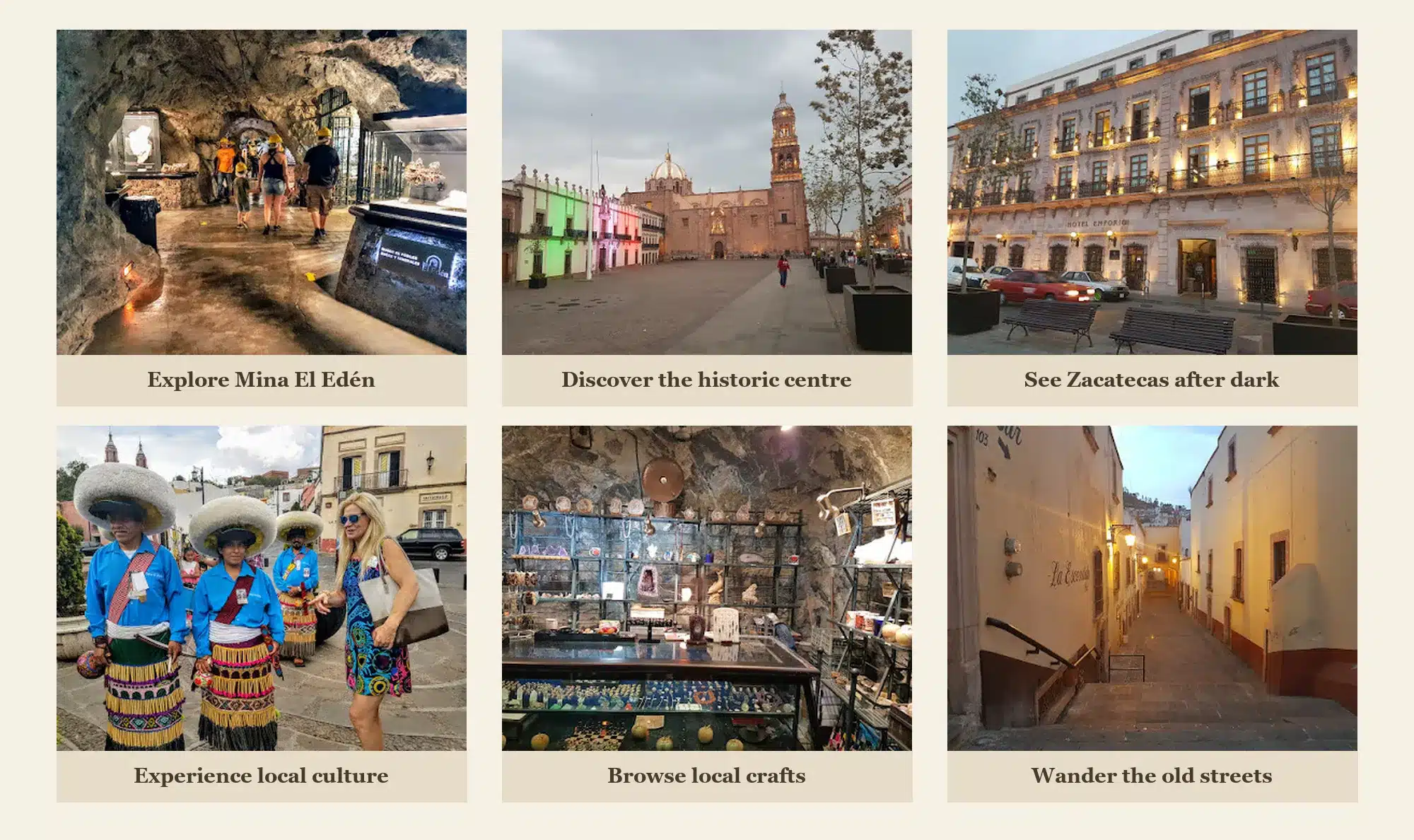
Begin with the city itself. Avenida Hidalgo and the surrounding streets bring together many of Zacatecas’ most important buildings, but the smaller lanes and plazas provide just as much character.
Look out for the Mercado González Ortega, Teatro Fernando Calderón, Plaza de Armas, Santo Domingo and the old aqueduct. The centre is compact enough to explore on foot, although its slopes and uneven paving make distances feel longer than they appear on a map.
The pleasure is in the details: carved pink-stone doorways, iron balconies, quiet courtyards and the way contemporary city life continues inside historic buildings.
The cathedral dominates the heart of the old city. Constructed between 1730 and 1760, it is celebrated for the extraordinary sculptural detail of its Baroque façades. European and Indigenous decorative ideas appear side by side in the stonework—one of the features singled out in Zacatecas’ UNESCO inscription.
Visit once in daylight to appreciate the carving and again after dark, when the stone takes on a warmer tone beneath the lights. As this is an active place of worship, enter quietly, dress respectfully and avoid interrupting services.
El Edén is one of the city’s essential experiences. A train carries visitors into the former silver mine beneath Cerro del Grillo, after which a guided route continues through tunnels and galleries.
The visit combines mining history with dramatic underground spaces and a substantial collection of rocks, minerals and fossils. Surfaces can be damp and uneven, so closed shoes with reliable grip are more useful than sandals.
The official tourism listing publishes indicative admission prices but warns that operator information can change. Check the latest details directly on the Mina El Edén tourism page before visiting.
>> Practical tip: If enclosed underground spaces make you uncomfortable, ask about the route before buying your ticket. Temperatures below ground may also feel cooler than outside.
Zacatecas’ cable car crosses above the city between Cerro del Grillo and Cerro de la Bufa, giving passengers a completely different view of the valley and historic centre. The journey is short, but the rooftop panorama is memorable.
At Cerro de la Bufa, take time to enjoy the viewpoints and learn about the Battle of Zacatecas, a decisive event of the Mexican Revolution. The teleférico and El Edén mine are natural companions because one cable-car station is close to the mine.
The official teleférico page currently advertises daily daytime service, with additional evening operation during high season. Hours may be affected by weather, maintenance or demand, so check on the day rather than building an inflexible plan around it.
>> Photography tip: Late-afternoon light is particularly flattering on the pink-stone city, but visibility matters more than the clock. Choose the clearest part of your stay.
Zacatecas has an unusually rich museum scene for a city of its size. Do not try to rush through all of them; choose according to your interests.
>> Plan around closing days: Museum schedules differ, and several close on a Monday or another weekday. Check each museum before deciding which day to visit.
A Callejoneada is not simply a walking tour. It is a moving celebration through the streets and alleys of Zacatecas, accompanied by the brass and percussion of a tamborazo band.
The group follows a decorated donkey carrying regional mezcal, which is traditionally served in small clay cups called jarritos. Music, dancing, laughter and the illuminated historic center turn the walk into a distinctly Zacatecan night out.
The public Callejoneada is normally advertised for Saturday evenings at 8:30 pm. The traditional visitor route passes through the historic center between Plaza de Armas and the Alameda, although routes may change for special events.
There is no central online ticket office, and we could not find individual tickets on Viator or GetYourGuide at the time of updating this guide. Contact one of the local operators on the official Zacatecas Callejoneada page to confirm that it will operate during your stay and to ask how to reserve a place.
Do not assume that an advertised weekly departure is guaranteed. Confirm the date, time, meeting point, current price and inclusions directly with the operator.
Here is an option many overseas visitors will not know about: a group can hire an entire Callejoneada for its own celebration.
Private Callejoneadas are arranged for weddings, quinceañeras, birthdays, anniversaries, family reunions, bachelor and bachelorette parties, conferences and organized tour groups. Depending on the package, arrangements may include the tamborazo band, decorated donkey, mezcal, jarritos, municipal permissions, event coordination and security. Some organizers can add mojigangas—giant dancing figures—or finish with a verbena and food.
Rather than keeping a celebration inside a conventional function room, the Callejoneada makes the historic streets part of the occasion. It is festive, social and unmistakably connected to Zacatecas.
Private bookings are generally designed for groups of 25 or more. Packages can be explored on the Callejoneadas Zacatecas booking site, which states that its private service is sold to groups rather than as individual tickets.
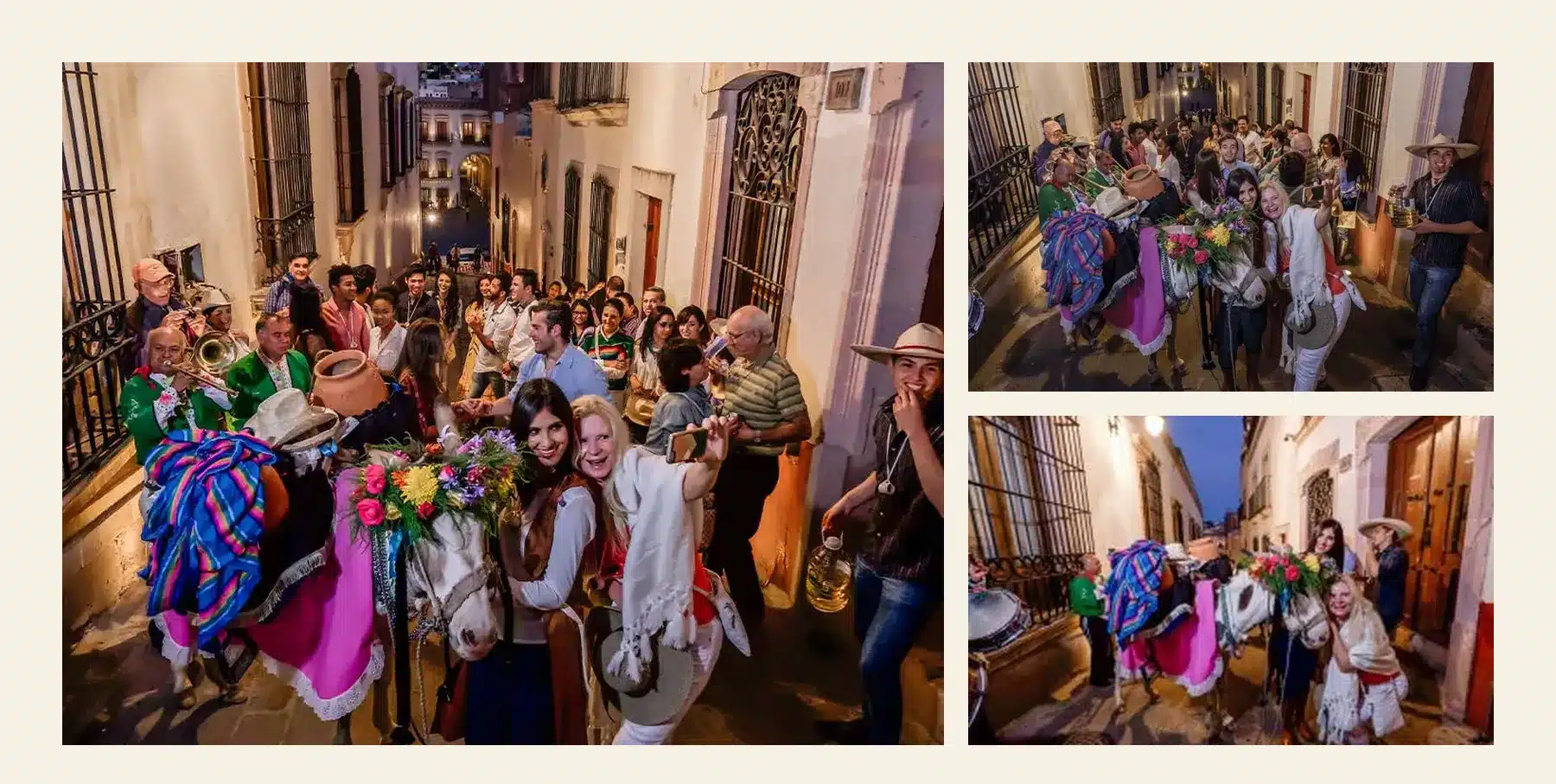
We were walking through Zacatecas when we encountered a tourism photo shoot promoting the Callejoneada. We did not take part in the procession, but I was unexpectedly invited into the scene, handed a phone and shown where and how to pose beside the flower-covered donkey.
Only later did friends in Mexico tell me that one of the photographs had appeared in a national tourism publication as part of the Zacatecas ¡Deslumbrante! campaign. Years afterwards, we began finding more photographs from that same shoot still being used online to promote the Callejoneada.
What began as a chance encounter during an evening walk became an unexpectedly enduring connection to one of Zacatecas’ most distinctive traditions.
Silver shaped Zacatecas, and it remains part of the city’s identity. Jewellery shops range from everyday retailers to workshops selling more distinctive pieces. Compare craftsmanship, ask about metal purity and request a receipt for valuable purchases.
Also look for locally made ceramics, woven goods and small decorative objects. A colourful clay jarrito makes a particularly meaningful keepsake after learning about the Callejoneada tradition.
The aim is not to collect generic souvenirs, but to choose one or two pieces that carry a recognisable material, colour or craft tradition from the place.
Zacatecan cooking is hearty and closely tied to the region. Look for asado de boda, a slow-cooked pork dish in a rich red-chilli sauce traditionally served at celebrations, as well as enchiladas zacatecanas, gorditas, regional cheeses and the wonderfully named taco envenenado.
Mezcal is part of the Callejoneada experience, but it is worth tasting slowly and with food rather than treating it as a challenge. If you do not drink alcohol, you can still enjoy the music and atmosphere of the procession.
Ask hotel staff and local residents where they currently eat. Restaurant quality and ownership change more quickly than monuments, so an up-to-date local recommendation is often more useful than an old “best restaurants” list.
Approximately 56 kilometres south of Zacatecas, La Quemada is a pre-Hispanic archaeological site occupying a dramatic hillside above the Malpaso Valley. Its terraces, pyramid, columned hall and elevated setting offer a striking contrast to the colonial city.
The purpose and history of the settlement have inspired several theories, but current archaeological interpretation identifies it as an important urban centre connected to regional exchange networks.
The official INAH page for La Quemada provides current opening hours, admission details and directions. There is exposed walking and little shade, so take water, sun protection and sturdy footwear.
This is one of the occasions when a hire car, organised excursion or pre-arranged driver is more useful than relying on city transport.
Zacatecas can be visited throughout the year, but its altitude means the climate is milder—and evenings colder—than many travelers expect from Mexico.
Festival dates can add music, exhibitions and atmosphere, but they also increase demand for central accommodation. Book earlier if traveling during Holy Week and the Festival Cultural, September festivities, the Day of the Dead period or Christmas and New Year.
Allow at least three nights for the city. Four nights provides more breathing room for museums, unhurried meals and a possible trip to La Quemada.
If a Saturday Callejoneada matters to you, plan your dates around it—but confirm the event before finalizing non-refundable arrangements. This is still a guide, not a rigid itinerary: the best length depends on how much time you enjoy spending in museums and whether you add day trips.
Zacatecas International Airport (ZCL), officially Aeropuerto Internacional General Leobardo C. Ruiz, serves the city.
>> Book & Save: To book the best flight to Zacatecas International Airport (ZCL), aim to reserve your tickets about 7 weeks in advance to save around 20% compared to last-minute prices.
At the time of this update, the airport’s published flight information included connections with Mexico City and Guadalajara as well as selected US routes. Travelers arriving from farther afield will usually connect through a larger hub. Always compare the complete journey: a convenient connection into Zacatecas may be better than flying to another city and adding several hours by road.
Authorized taxis and vans operate between the airport and city. The airport taxi information says tickets can be purchased at the taxi kiosk and notes that the listed services accept cash. Carry enough Mexican pesos for your arrival rather than assuming every driver accepts a card.
For the historic center: no. Staying centrally makes walking the simplest and most enjoyable way to explore. Parking, narrow streets, one-way systems and slopes make a car more burden than benefit for ordinary sightseeing.
For regional day trips: possibly. A car becomes useful for La Quemada or a wider road trip through Zacatecas state. Book your car hire well ahead of time because it’s cheaper than doing the deal at the airport.
If you hire a car, reserve accommodation with confirmed parking and avoid leaving luggage or valuables visible. For one isolated excursion, compare the total rental cost with a guided tour or private driver.
Choose a hotel in or immediately beside the historic center unless parking or a specific resort-style facility matters more to you. A central base allows you to return for a rest, change layers before the evening and enjoy dinner without organizing another journey.
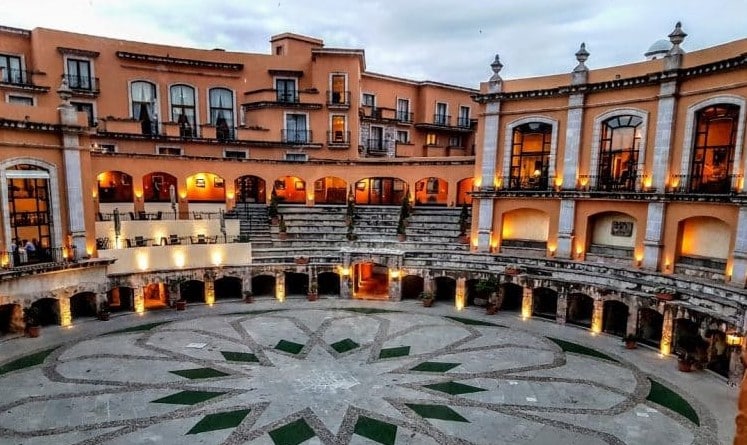
Quinta Real Zacatecas: The memorable splurge. This atmospheric hotel incorporates a preserved 19th-century bullring and suits travelers who want their accommodation to be part of the experience.
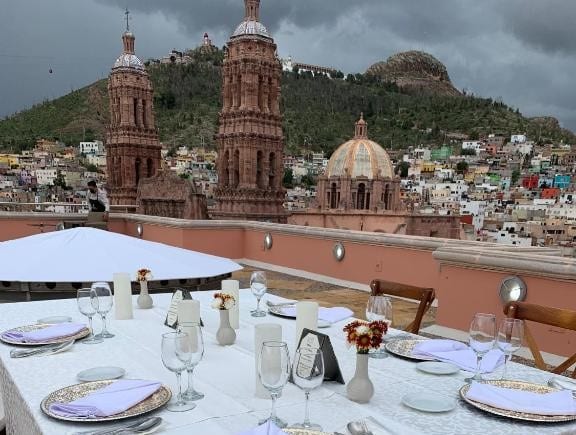
Hotel Santa Rita: A centrally located art hotel with contemporary comfort, local artworks and views towards the cathedral.
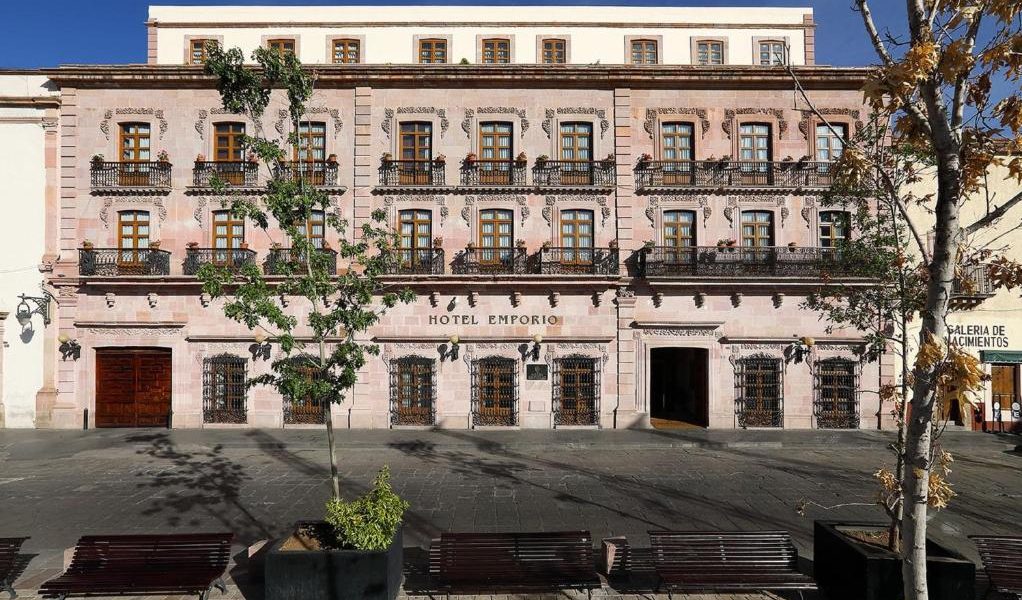
Emporio Zacatecas: A practical full-service option only steps from the cathedral, particularly convenient for first-time visitors who prioritize location.
You don’t need a visa if you have a valid visa for the USA, the UK, Japan, Canada, or any other countries that fall within the Schengen Area. That said, always check on your visa requirements for Mexico before departure because regulations may change.
Yes—especially for travelers drawn to historic architecture, art, regional traditions and places that still feel individual.
Zacatecas offers the visual drama of a UNESCO city without reducing the experience to a checklist of monuments. You can travel beneath it in a former silver mine, float above it by cable car, spend hours with world-class art and follow music through its streets after dark.
Most of all, the city rewards attention. Look closely at the stonework, listen when the tamborazo begins and allow yourself to turn down a street simply because the light looks beautiful there.
Explore the world. Bring its beauty home.
Zacatecas offers a rich palette for the home: dusty rose cantera stone, terracotta, bougainvillea, aged wood, wrought iron, mineral sparkle, and the saturated colors of woven textiles.
Bring that feeling home thoughtfully rather than recreating a themed room. Start with one authentic object—a hand-thrown jarrito, a piece of Zacatecan silver, a small woven textile or a responsibly purchased mineral specimen—and let it become the story-bearing detail in an otherwise calm space.
Pair warm plaster or soft cream walls with muted terracotta and cantera pink. Add dark metal through a lamp, mirror or slender table, echoing the ironwork of the historic balconies. A photograph of a Zacatecas alley at dusk can introduce the city’s light and depth without overwhelming the room.
Buy directly from makers when possible, ask where and how an item was produced, and never remove stone, archaeological material or natural specimens from protected places. The most beautiful travel-inspired homes are not collections of trophies. They are spaces shaped by memory, respect and a genuine connection to place.
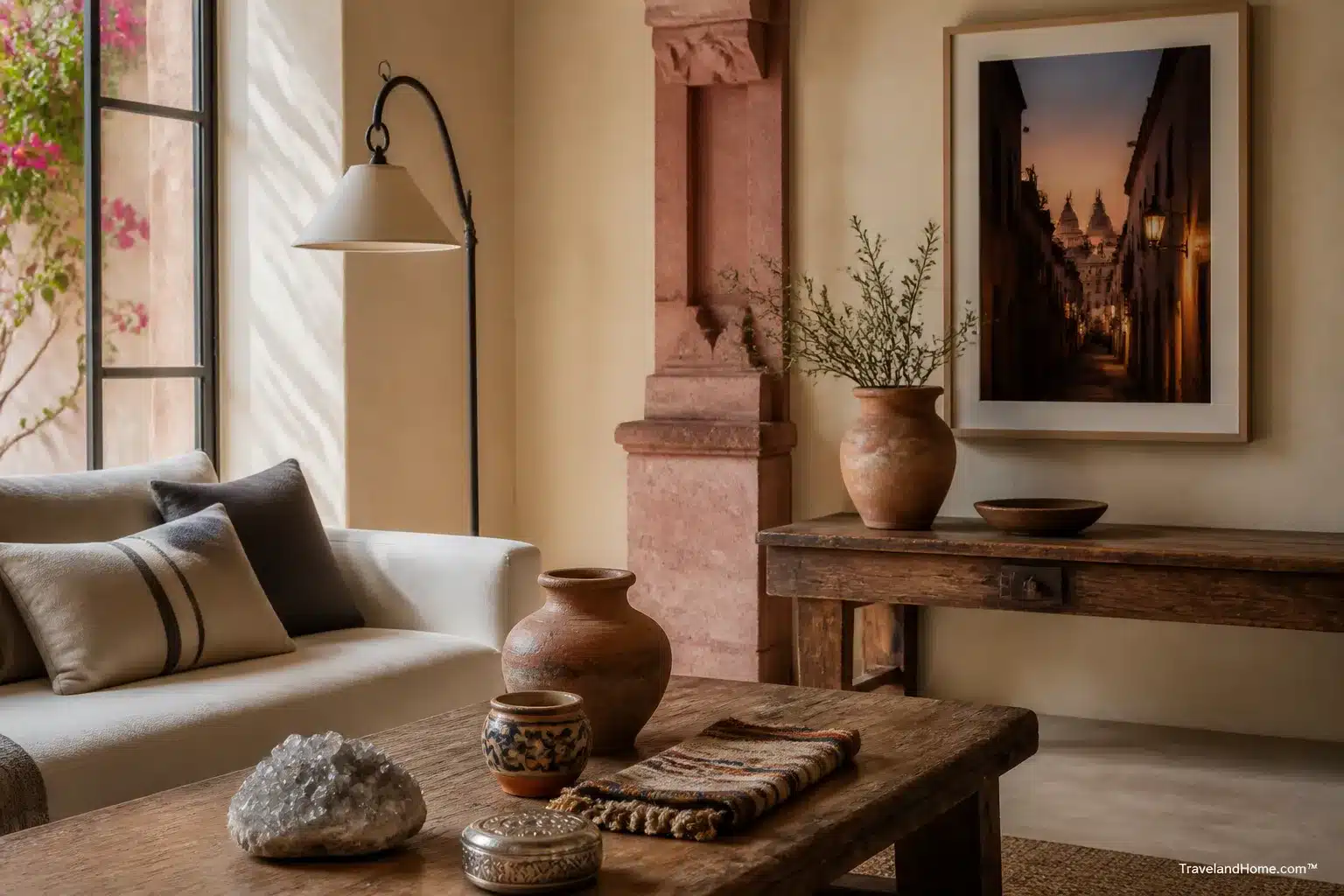
The idea to take home: Zacatecas is a lesson in contrast—rough stone and refined carving, earthy neutrals and sudden color, deep history and exuberant celebration. That balance is its beauty.