
Some cookies are needed to make this site work. With your permission, we'd also like to use cookies to see how people use the site and to show relevant ads and travel deals. You can change your mind at any time using the "Cookie settings" button. Read more in our Policy.
Your browser is sending a "do not sell or share" signal, so advertising cookies are off by default.
E x p l o r e t h e w o r l d. B r i n g i t s b e a u t y h o m e.
Tokyo is famous for its neon-lit streets, lively neighborhoods, and incredible food. But did you know you can also explore some of Japan’s most fascinating UNESCO World Heritage Sites without traveling to Kyoto?
From centuries-old shrines surrounded by forests to the sacred slopes of Mount Fuji, there’s plenty to discover within a few hours of the capital.
And here’s something surprising: Tokyo even has its own UNESCO-listed museum building and a remote island paradise that takes 24 hours to reach by ferry!
If you’re planning a trip to Japan, these five UNESCO World Heritage destinations are well worth adding to your itinerary. We’ll also show you how to get there, how much time you’ll need, and a few things worth knowing before you leave.
A note from TravelandHome:Some links are affiliate links. We may earn a small commission at no extra cost to you, helping us keep our guides free. Thank you for your support!
Planning a few days in Tokyo? It’s a wonderful base for exploring Japan’s UNESCO treasures. You can visit several of these destinations on day trips, so there’s no need to change hotels every night.
Start by checking flights to Tokyo and comparing hotels in Tokyo for your preferred dates.
>> TravelandHome tip: Ueno and Asakusa are particularly convenient areas to stay if you’re planning to visit the National Museum of Western Art and take a day trip to Nikko.
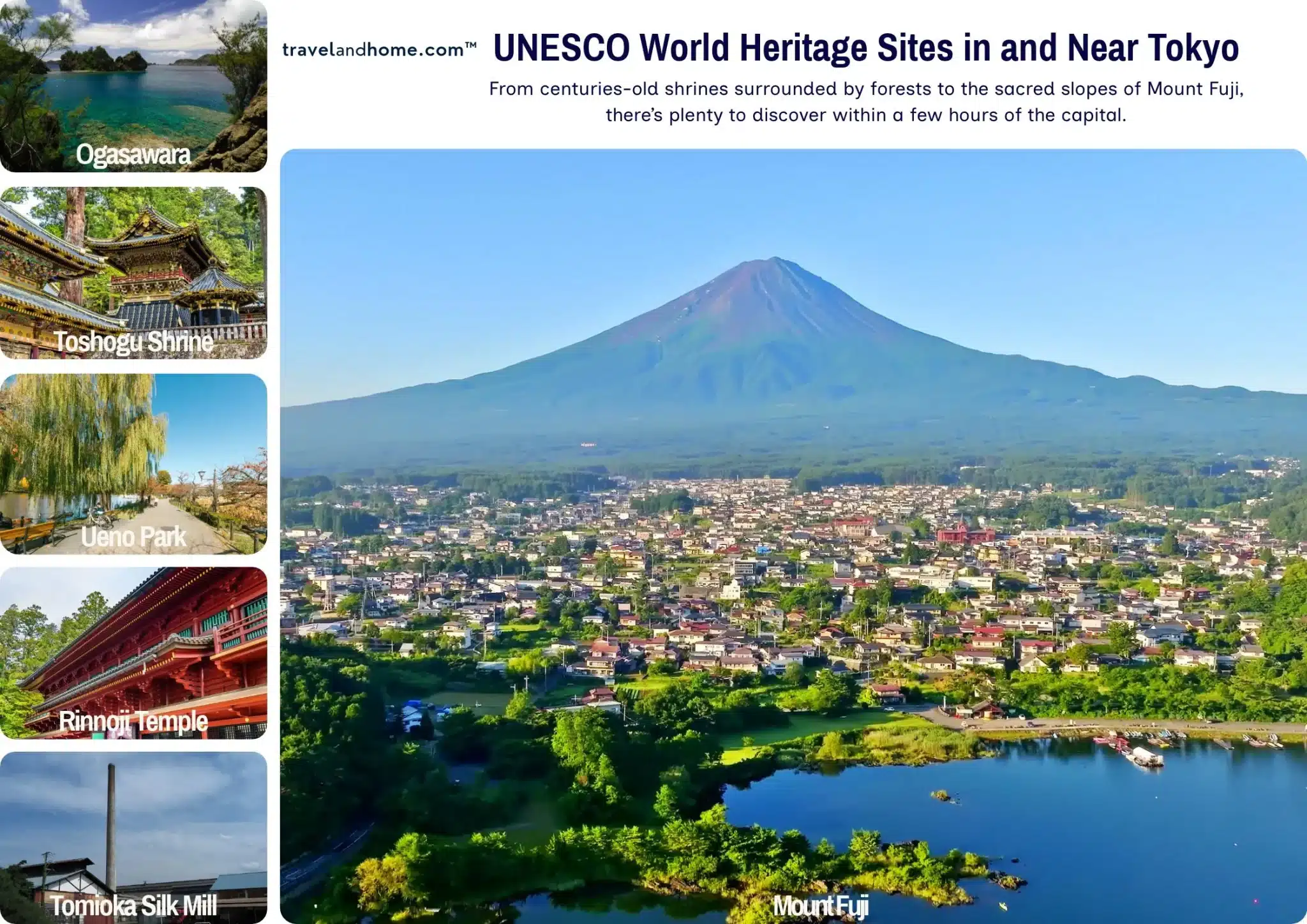
You don’t need to leave Tokyo to discover a UNESCO World Heritage Site. Tucked inside Ueno Park, the National Museum of Western Art is an architectural treasure. The renowned Swiss-French architect Le Corbusier designed its main building, which opened in 1959. In 2016, UNESCO recognized the building as part of a collection of 17 architectural works by Le Corbusier across seven countries.
What makes it special? The building represents a new approach to museum design, with a thoughtful layout that connects the architecture and the artworks inside. And the art collection is worth exploring, too. You’ll find European paintings, sculptures, and works by celebrated artists, including Auguste Rodin.
>> TravelandHome tip: Combine your visit with the nearby Tokyo National Museum. The latter isn’t a UNESCO World Heritage Site, but it’s an excellent place to discover Japanese art, samurai armor, Buddhist sculptures, and traditional crafts. Together, these museums offer a lovely introduction to Japan’s cultural heritage and international artistic influences.
>> Good to know: The museum generally closes on Mondays, with exceptions for certain public holidays. Check the official website for opening hours and exhibition details before visiting.
If you love beautiful temples, traditional Japanese architecture, and peaceful forest surroundings, Nikko is one of the best day trips from Tokyo.
The UNESCO World Heritage designation covers an extraordinary collection of religious buildings belonging to three historic sites: Toshogu Shrine, Futarasan Shrine, and Rinnoji Temple. The buildings stand among towering cedar trees, giving the entire area a wonderfully peaceful atmosphere.
Together, these shrines and temples offer an unforgettable look at Japanese history, religion, and craftsmanship.
>> Love Japan’s sacred places? Discover the ancient Kumano Kodo pilgrimage routes, another remarkable UNESCO World Heritage experience surrounded by beautiful mountain scenery.
One of the easiest options is the Tobu Railway limited express service from Asakusa Station to Tobu-Nikko Station.
The fastest direct services take approximately 1 hour and 50 minutes.
Once you arrive, take a local bus toward the World Heritage area. Alternatively, you can walk uphill to the shrine complex in around 30–40 minutes.
>> TravelandHome tip: Start early and explore Toshogu Shrine before the busiest part of the day. Also, wear comfortable shoes. You’ll walk quite a bit, and some paths have steps or uneven surfaces.
Want to see Nikko’s beautiful shrines without organizing train connections and local buses? A guided day trip from Tokyo makes everything easier. Some excursions also include the spectacular Kegon Falls and Lake Chuzenji.
If you have extra time, consider staying overnight. Nikko also has beautiful waterfalls, lakes, mountain scenery, and hot springs.
If you’d like more time to explore Nikko‘s beautiful shrines, waterfalls, and mountain scenery, consider spending the night. Compare hotels and traditional Japanese inns in Nikko before choosing where to stay.
Few sights capture the beauty of Japan quite like Mount Fuji. At 3,776 meters, it’s Japan’s highest mountain. Its almost perfectly symmetrical volcanic cone has inspired artists, poets, and pilgrims for centuries.
UNESCO recognizes Mount Fuji not simply for its natural beauty, but for its deep cultural and spiritual significance. The World Heritage listing includes 25 component sites associated with the mountain, such as historic pilgrimage routes, shrines, lakes, and sacred natural features.

>> For more inspiration, explore Fujikawaguchiko’s beautiful lakes, viewpoints, and local attractions in our guide to some of the world’s most welcoming destinations.
>> If you’re visiting Japan during cherry blossom season, you might also love Mount Yoshino, one of Japan’s most spectacular places to see cherry blossoms.

Yes, but climbing Mount Fuji is very different from sightseeing around the lakes.
The official climbing season generally runs from July to early September, with specific dates depending on the trail. For example, for the 2026 season, the Yoshida Trail operated from July 1 to September 10, with a ¥4,000 climbing fee, daily limits, and access restrictions. Always check the latest official rules before planning a climb. Conditions and regulations can change from one season to the next.
>> TravelandHome tip: Don’t plan your Mount Fuji day trip around just one photograph. Clouds can hide the summit, even when the weather looks pleasant in Tokyo. Check the forecast and, if your itinerary is flexible, choose the clearest day.
For many people, the Fuji Five Lakes area offers a more relaxing and enjoyable experience than attempting the summit.
Want to wake up to beautiful Mount Fuji views? Consider staying overnight around Lake Kawaguchiko. You’ll have more time to explore the lakes, and an early start may improve your chances of seeing the mountain before clouds roll in.
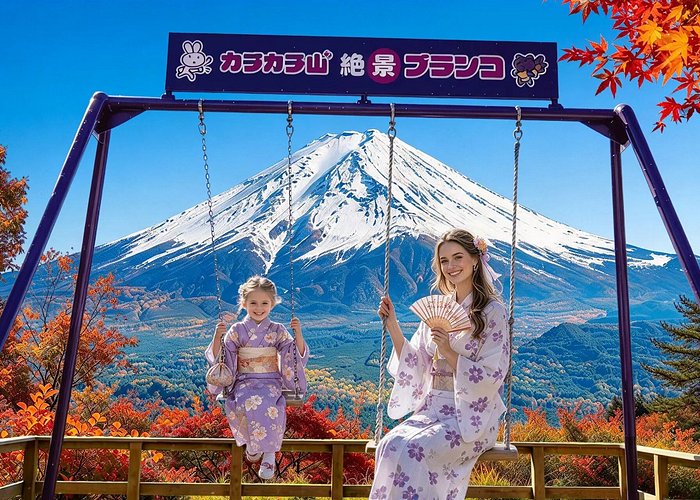
If you’d prefer to leave the planning to someone else, consider a guided Mount Fuji excursion from Tokyo. Some tours combine Lake Kawaguchiko, panoramic viewpoints, and the famous Chureito Pagoda.
Explore Tokyo National Museum and Ueno Park with a Private Guide
Japan’s UNESCO heritage isn’t limited to temples, shrines, and spectacular landscapes.
The Tomioka Silk Mill tells a very different story. Established in 1872, this historic silk-reeling factory played an important role in Japan’s transformation into a modern industrial nation. The Japanese government built the factory with help from French expertise, introducing advanced silk-processing technology. Today, you can explore the preserved industrial buildings and learn about the people who worked here.
The UNESCO listing also includes other locations connected to the development of Japan’s silk industry.
Take a Joetsu or Hokuriku Shinkansen service from Tokyo Station to Takasaki Station. At Takasaki, transfer to the Joshin Dentetsu Railway and travel to Joshu-Tomioka Station. From there, it’s approximately a 10–15 minute walk to the silk mill.
>> TravelandHome tip: Before heading to the mill, visit the SEKAITO World Heritage Visitor Center near Joshu-Tomioka Station. It helps explain why silk production became so important to Japan’s development.
This is an excellent day trip if you enjoy history, architecture, and attractions that don’t feature on every first-time Japan itinerary.
Here’s one of Japan’s most surprising UNESCO destinations. The Ogasawara Islands belong administratively to Tokyo, even though they lie far out in the Pacific Ocean. Instead of skyscrapers and busy streets, you’ll discover subtropical forests, dramatic coastlines, clear blue water, and wildlife found nowhere else on Earth.
UNESCO recognizes the islands for their remarkable biodiversity and unique evolutionary history. Their isolation allowed numerous endemic plants, insects, and other species to develop over time.
>> If Japan’s island scenery appeals to you, take a look at our Okinawa travel guide for another beautiful side of the country, with turquoise waters, island traditions, and fascinating cultural heritage.
Chichijima is the main arrival point and a popular base for exploring the islands.
This is where the adventure really begins. There are no commercial airports serving the islands. Instead, you must take the Ogasawara Maru ferry from Takeshiba Passenger Ship Terminal in Tokyo to Chichijima. The journey takes approximately 24 hours each way.
Sailings don’t operate daily, and the usual schedule requires several nights on the islands before the return ferry departs. Check the ferry timetable carefully before booking accommodation.
>> TravelandHome tip: Don’t treat the Ogasawara Islands as an ordinary day trip. They’re a destination in their own right. If you love nature and have extra time in Japan, they could become one of the highlights of your vacation.
For a shorter stay in Tokyo, choose one of the mainland UNESCO sites instead.
Although the Tokyo National Museum doesn’t have UNESCO World Heritage status, it’s one of the most rewarding cultural attractions in the city. Founded in 1872, it’s Japan’s oldest national museum. Its extensive collections include Buddhist sculptures, traditional ceramics, historic textiles, samurai armor, paintings, and other fascinating objects.
The museum makes a wonderful addition to your visit to the National Museum of Western Art because both are located in Ueno Park. If you have a full day in Tokyo, you can enjoy both museums, explore the park, and stop for coffee or lunch nearby.
Not every destination requires the same amount of time. Here’s a quick comparison to help you choose.
Destination | Approximate travel time from Tokyo (one way) | Best for |
National Museum of Western Art | Within central Tokyo | Art and architecture |
Nikko | 2 hours | Temples, shrines, and history |
Mount Fuji / Kawaguchiko | 2 hours | Scenery, photography, and nature |
Tomioka Silk Mill | 2 hours | Industrial history and architecture |
Ogasawara Islands | 24 hours by ferry | Wildlife, islands, and extended vacations |
Travel times are approximate and depend on your departure point, transport service, and connections.

Are there any UNESCO World Heritage Sites in Tokyo itself?
Yes. The National Museum of Western Art in Ueno Park is part of the UNESCO-listed Architectural Work of Le Corbusier. The Ogasawara Islands also belong to Tokyo administratively, although they’re approximately 1,000 km south of the city.
Can you visit Mount Fuji from Tokyo in one day?
Absolutely. The Fuji Five Lakes area is a popular day-trip destination. Direct buses and trains connect Tokyo with Kawaguchiko. However, a sightseeing day trip isn’t the same as climbing Mount Fuji. Reaching the summit requires additional planning, suitable equipment, and careful attention to the official climbing season.
Is Nikko worth visiting from Tokyo?
Yes! Nikko is one of the most rewarding UNESCO day trips from Tokyo. Its ornate shrines, beautiful temples, and forest surroundings make it particularly appealing if you’re interested in Japanese history and architecture.
Is the Tokyo National Museum a UNESCO World Heritage Site?
No. The Tokyo National Museum isn’t a UNESCO World Heritage Site. However, the nearby National Museum of Western Art has UNESCO recognition through its Le Corbusier-designed building.
Is Kyoto a day trip from Tokyo?
You can reach Kyoto from Tokyo by Shinkansen in roughly 2 hours and 15 minutes on the fastest services. However, once you include transfers, sightseeing, and the return journey, it becomes a long day. If you want to explore Kyoto’s many UNESCO sites properly, it’s much better to spend at least one or two nights there.
Tokyo makes a wonderful starting point for exploring Japan’s UNESCO World Heritage Sites.
You can admire internationally celebrated architecture in Ueno Park, explore sacred shrines in Nikko, stand beneath Mount Fuji, or discover the country’s industrial history at Tomioka.
And if you have more time, the Ogasawara Islands offer an entirely different side of Tokyo.
The best part? You don’t need to rent a car to enjoy the four mainland destinations featured here. With Japan’s excellent public transport network, you can discover remarkable places and return to your Tokyo accommodation at the end of the day.
So, which UNESCO treasure will you explore first?

Explore the world. Bring its beauty home.
>> If you’d love to bring a little Japanese tradition home, try our homemade mochi recipe, inspired by one of Japan’s best-loved sweet treats.
Explore the world. Bring its beauty home. – Aria Lane ♡