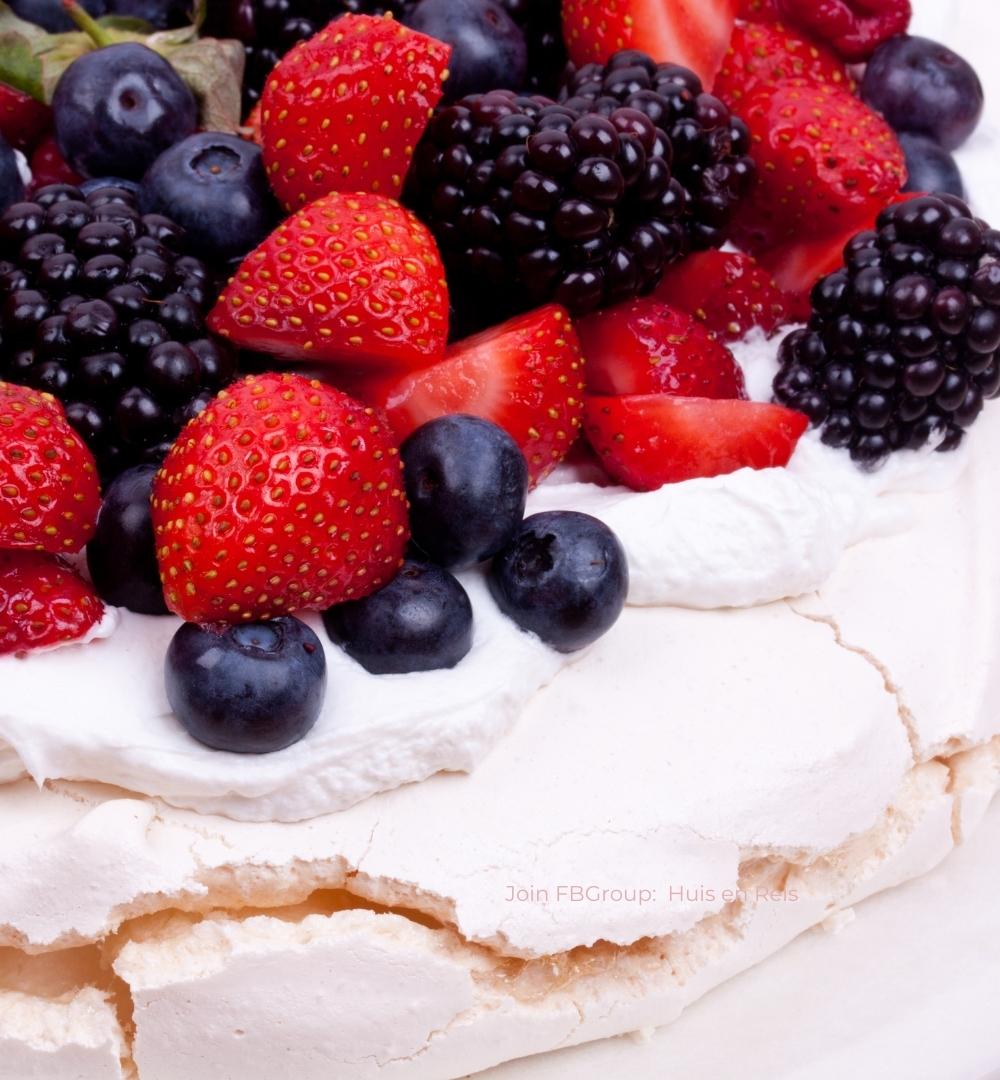
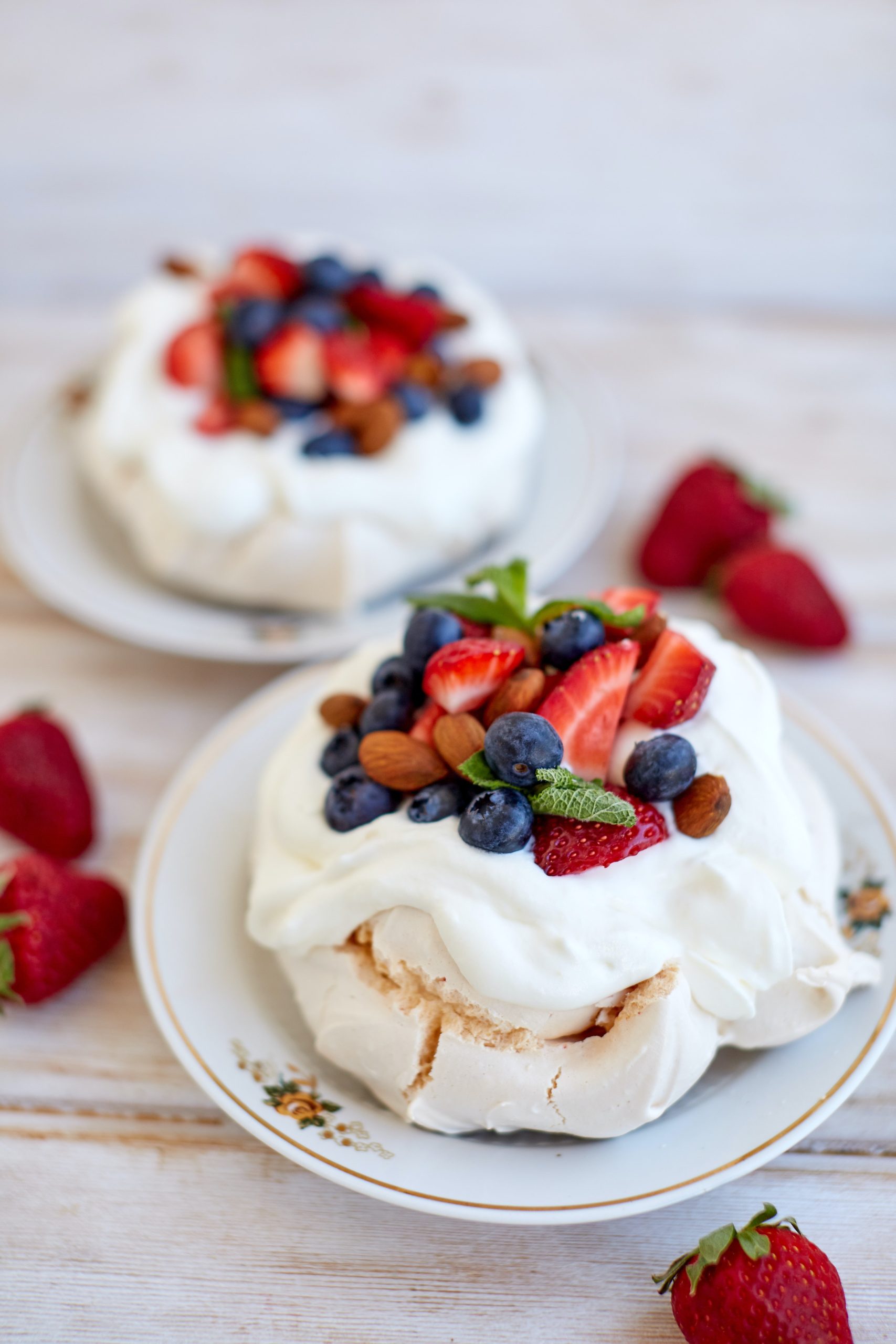
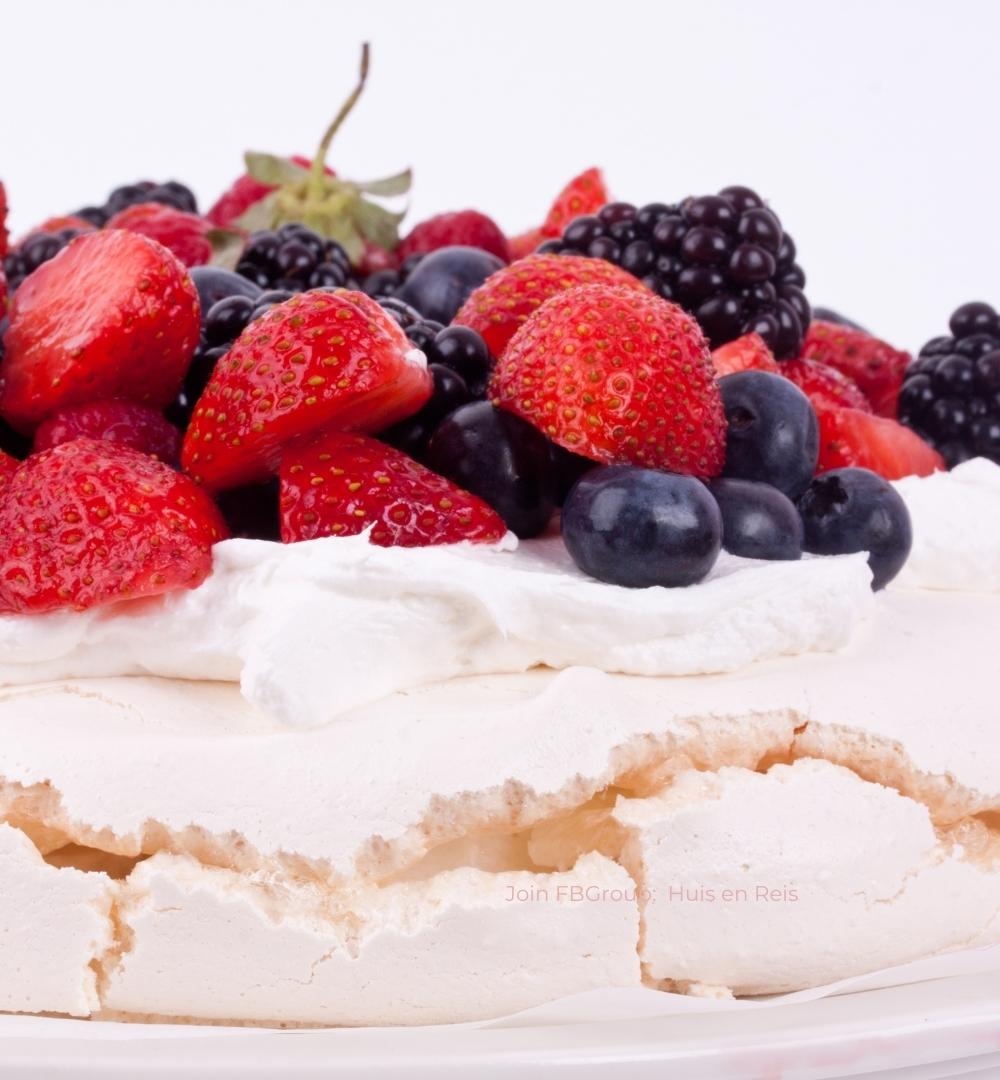
In love with Pavlova ... The love story begins with an easy recipe.
The fact that you might not like meringue doesn’t mean you wouldn’t love pavlova. As a matter of fact, I totally dislike meringue, but I am madly in love with pavlovas of any kind. The bonus is that you can decorate it to look like the most amazing dessert ever. You can impress everyone with a pavlova.
Easier than you think
At first, I thought I would never be able to make such an incredible dessert until I tried it for the first time as a novice cook. Sucess !!!… and the love story began… 🙂
2 Basic Ingredients
It is made with only egg whites whipped into a foam, with sugar mixed in, and baked at a very low temperature until dry. (The basics of both meringue and pavlova.)
What is the difference between Pavlova and Meringue?
A meringue is crispy and dry throughout and very sweet, while a pavlova is crispy on the outside but light, soft and marshmallowy on the inside.
Place of origin:
Australia, New Zealand
“Pavlova is a meringue-based dessert. Originating in either Australia or New Zealand in the early 20th century, it was named after the Russian ballerina Anna Pavlova.” – Wikipedia
The origin of this dessert is New Zealand (according to google search results): Pavlova’s origin has been debated for decades by Australia and New Zealand. The strongest evidence leans toward New Zealand, where the earliest printed recipes for the meringue dessert named after Russian ballerina Anna Pavlova appear. Many food historians place its creation in Wellington around 1926, even though meringue-style cakes were already known in Europe.
Both countries still claim it as a national favourite. Australia often points to a 1935 Perth version credited to chef Bert Sachse, while New Zealand researchers highlight Wellington chefs of the late 1920s. Kiwi historians back this up with recipes published in a 1929 magazine and early 1930s cookbooks, which remain the earliest known records of the dessert as we know it today.
Basic Pavlova Recipe
INGREDIENTS
4 egg whites
1 cup castor sugar
1 teaspoon lemon juice or vinegar
2 teaspoons cornflour
INSTRUCTIONS
In a small mixing bowl, beat egg whites until soft peaks form.
Add sugar, lemon juice and sifted cornflour and beat until stiff and glossy ( about 10 min. )
Cover a baking tray with baking paper.
Pile the mixture onto paper and shape it into a large circle, leaving the center slightly hollowed.
Bake at 130 C for 1 1/2 hours or until crisp on the outside.
Turn the oven off but leave the pavlova to cool n the oven with the door ajar.
The Best Ever Pavlova Recipe
INGREDIENTS
4 egg whites (jumbo)
1 cup sugar
3/4 teaspoon Cream of Tartar
1 tablespoon Cornstarch
1 teaspoon Vanilla Essence (you can use extract according to taste)
INSTRUCTIONS
Mix the egg whites and sugar until soft peaks form.
Add the rest of the ingredients and beat until stiff and glossy.
Pile the mixture onto paper in a circular shape, making it a slight bit more hollowed in the center.
Bake at 120 C for 1 hour.
How long can you keep a pavlova?
If kept in an airtight container, it can last up to two days
One of our favorites for all chocolate lovers: Nigella’s chocolate and raspberry pavlova (YouTube Link)
Ways to decorate | Decorating Ideas:
Whipped Cream
Fresh Strawberries, sliced
Fresh mangos, sliced
Blueberries, Raspberries (any berries really)
Flaked chocolate
Kiwi Fruit
Passionfruit pulp
A combination of Mango, pineapple, passionfruit, and mint.
A combination of berries and kiwifruit.
A combination of cherries and chocolate.
…and for the decadent: A combination of Turkish delight, pistachios, and pomegranate seeds and decorate with a few sugarcoated rose petals.
Chef Tips:
We are always looking for easy recipes to entertain with. If you really want to impress and get a “WOW!” from your guests, serve this beautifully decorated dessert on top of a mirror. The effect is just extra special, especially if you have candlelight with it on the table.