At first, I was not sure what to expect. Crossing the border, I was thinking, “What did I think — booking a holiday here?” And then, on the way home, I was thinking, “I want to go back.”
Namibia gets under your skin and stays in your heart. Once you leave your footprints in the sand, you will always want to go back. Namibia is a land of beauty beyond the desert.
It truly is a beautiful country. At times it is very dry, and you might think all you will see is a dried-out bush or empty rivers, but that is far from the truth. Let’s discover the hidden gems of Namibia and discover wonderful things to do:
A starry night – something you must experience
Firstly, when visiting Namibia, do make time to look up at the stars at night. Especially when you are staying or camping far from the towns, the night sky can be absolutely spectacular. There are many ways to experience it, from guided desert tours to camping trips with 4×4 trails included. These are truly special experiences, and the stars are something you will remember long after you leave Namibia.
And while travelling through Namibia, always be on the lookout for wild horses. The Namib Desert Horse is a rare feral horse that lives in the harsh landscape of the Namib Desert. Seeing one wandering freely across the desert is a magical sight — another of those unexpected moments that make a journey through Namibia so memorable.
A visit to the sand dunes of Kolmanskop
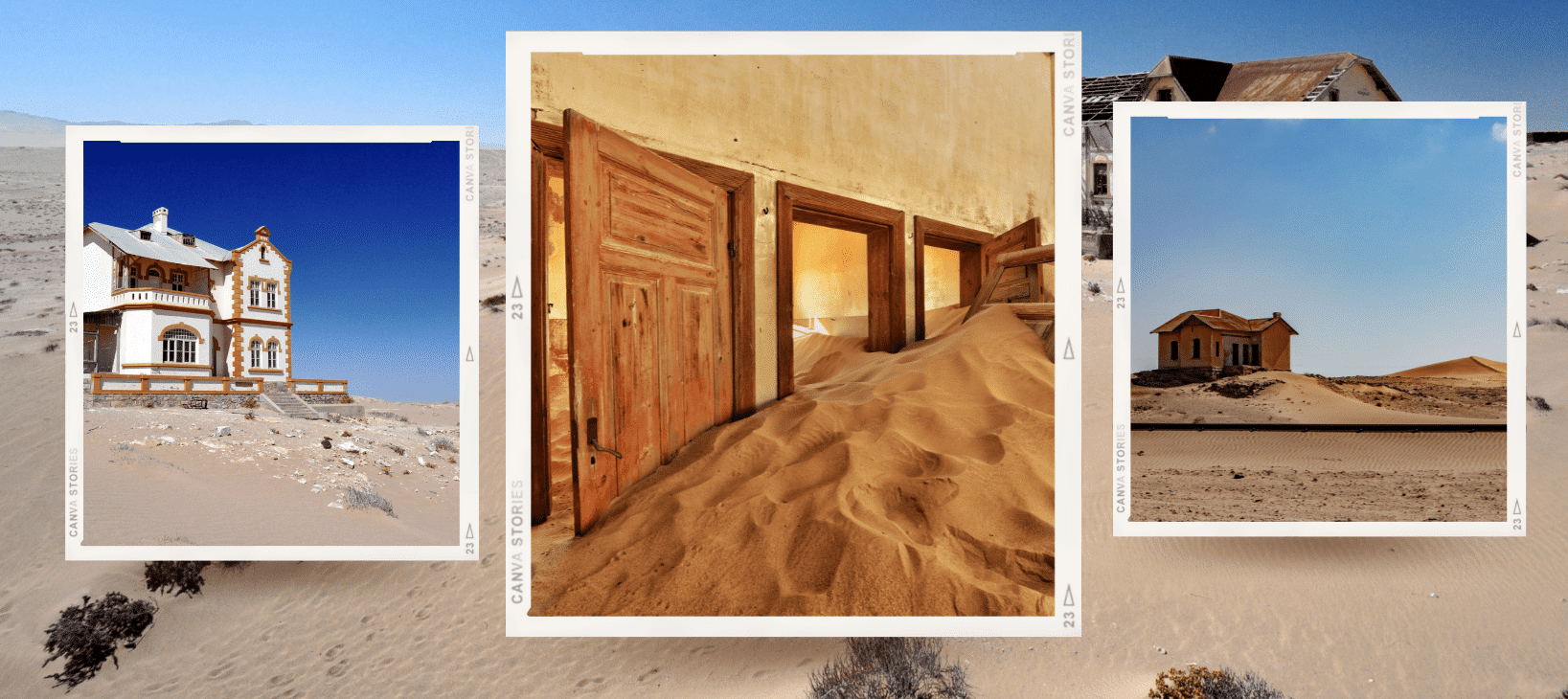
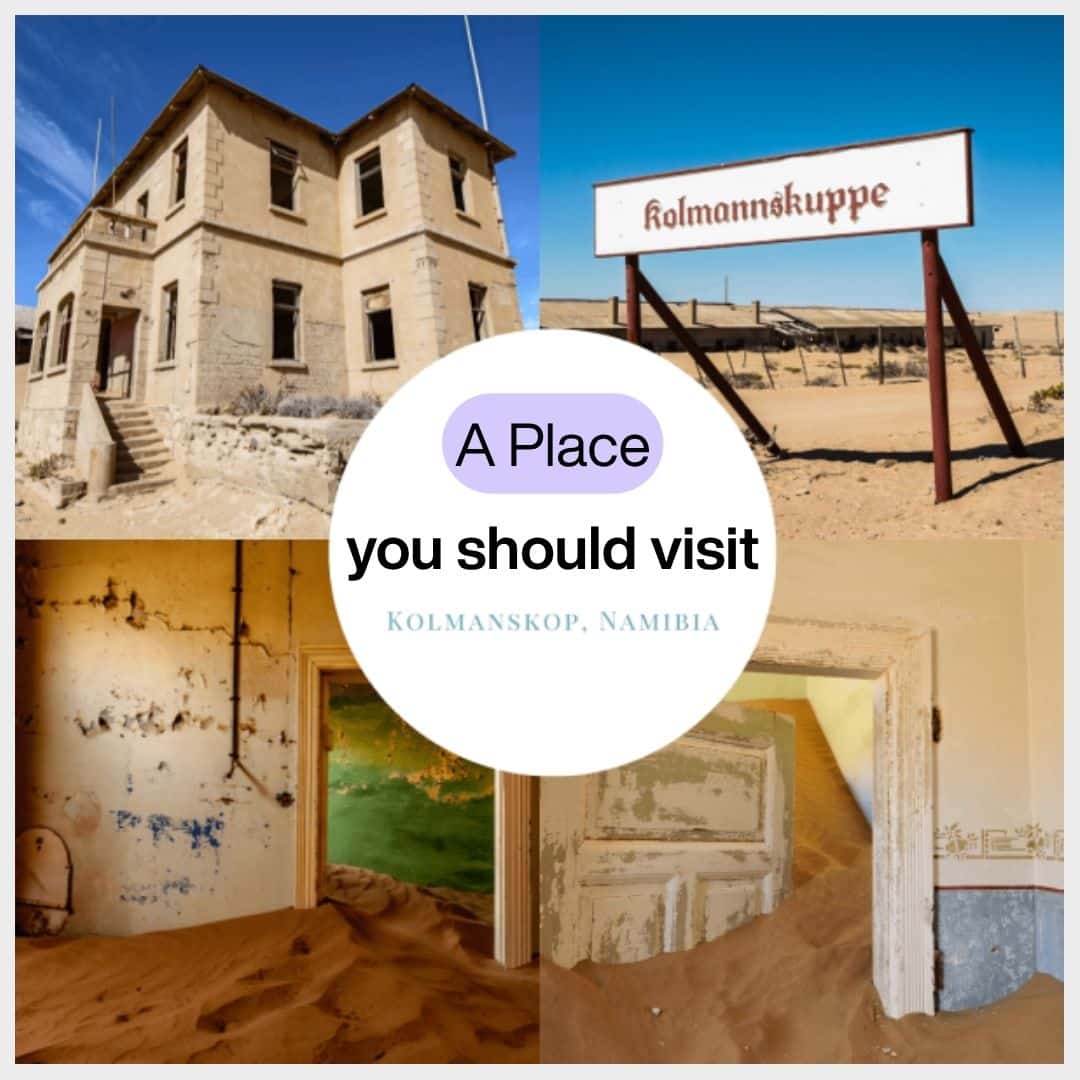
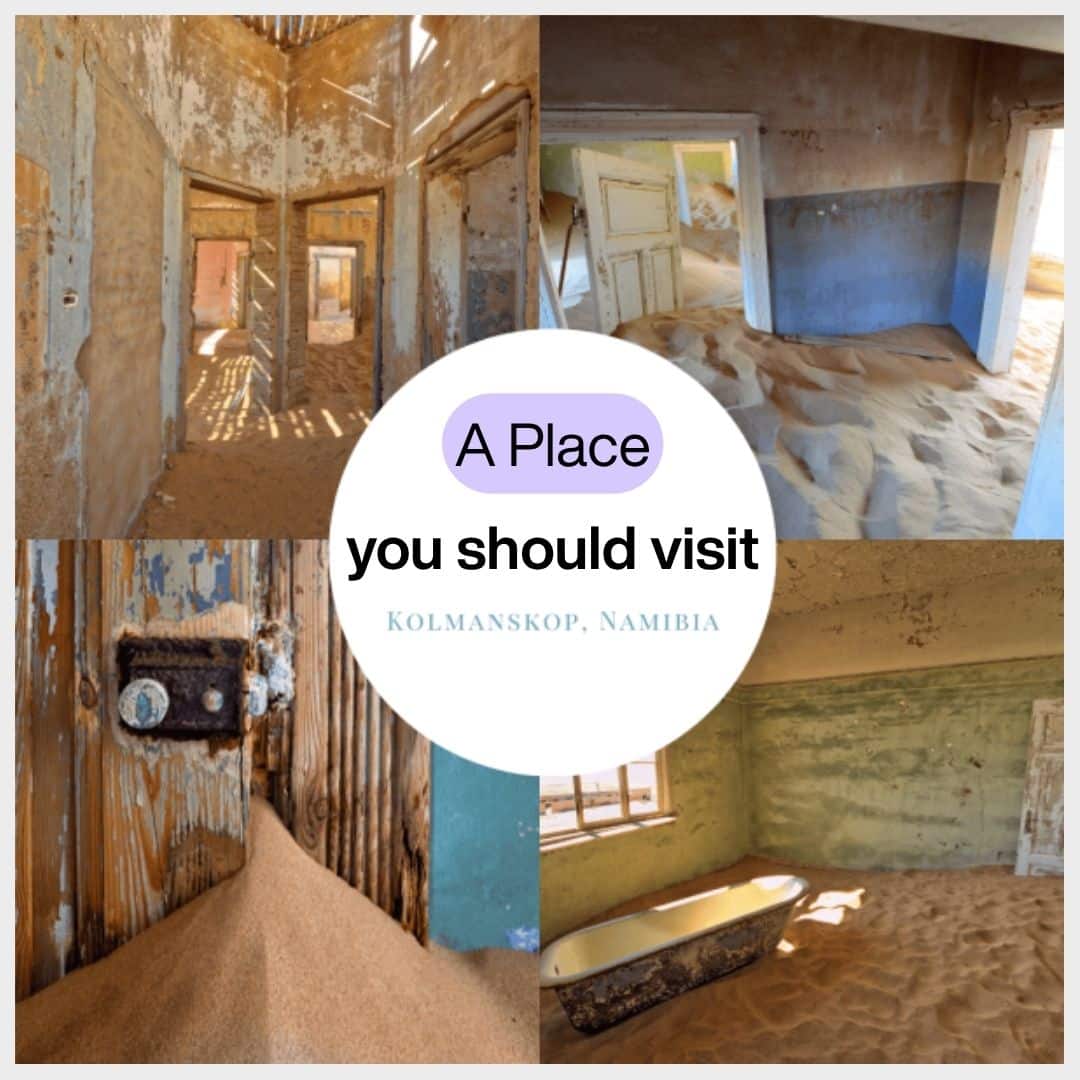
Kolmanskop is an almost sad and haunting destination in Namibia, but for photographers, it is a dream. The old houses, still standing in the desert heat, remind us of what once was. Sand slowly filling the corridors and rooms reminds us that nature will eventually reclaim what we humans leave behind.
It is a spectacular sight to see, strangely beautiful in its decay, and definitely worth putting on your Namibia travel bucket list.
If you are ever looking for Twitter, Facebook, Pinterest, or Instagram photo opportunities, this is fantastic.
This fascinating ghost town lies in the south of Namibia, about 10 kilometres from Lüderitz.
Kolmanskop was once a thriving little town during Namibia’s diamond-mining boom. At its height, it had everything a small town needed, including shops, a hospital and other facilities. But as diamond mining moved to other areas, Kolmanskop slowly declined. The residents gradually left their homes in search of new opportunities, and by 1956 the town was completely abandoned after the hospital closed.
Kolmanskop(also known as Kolmanskuppe or Kolmanskoppe) is best visited with a tour guide. It makes the experience so much more interesting, as you learn about the people who once lived here, the diamond rush, and how this little town eventually became one of Namibia’s most fascinating ghost towns.
Today, the desert is slowly reclaiming the buildings, with sand pouring through windows and filling rooms that were once homes, shops and busy streets. It is a remarkable sight — and one you won’t soon forget.
Have a look at this video for a bit of extra info: YouTube video
Twyfelfontein
Twyfelfontein, a UNESCO World Heritage Site in Namibia, is one of the best places to see ancient rock art in the country. The name means “doubtful fountain”, referring to the unreliable spring that once attracted people and animals to this otherwise dry landscape.
The area contains more than 2,000 rock engravings, including images of animals, footprints and hunting scenes. Some of the engravings are thousands of years old, giving you a fascinating glimpse into the lives of the people who lived here long ago.
For anyone interested in ancient rock art, Twyfelfontein is a fascinating stop — and the rugged desert landscape makes the experience even more spectacular.
Spitzkoppe
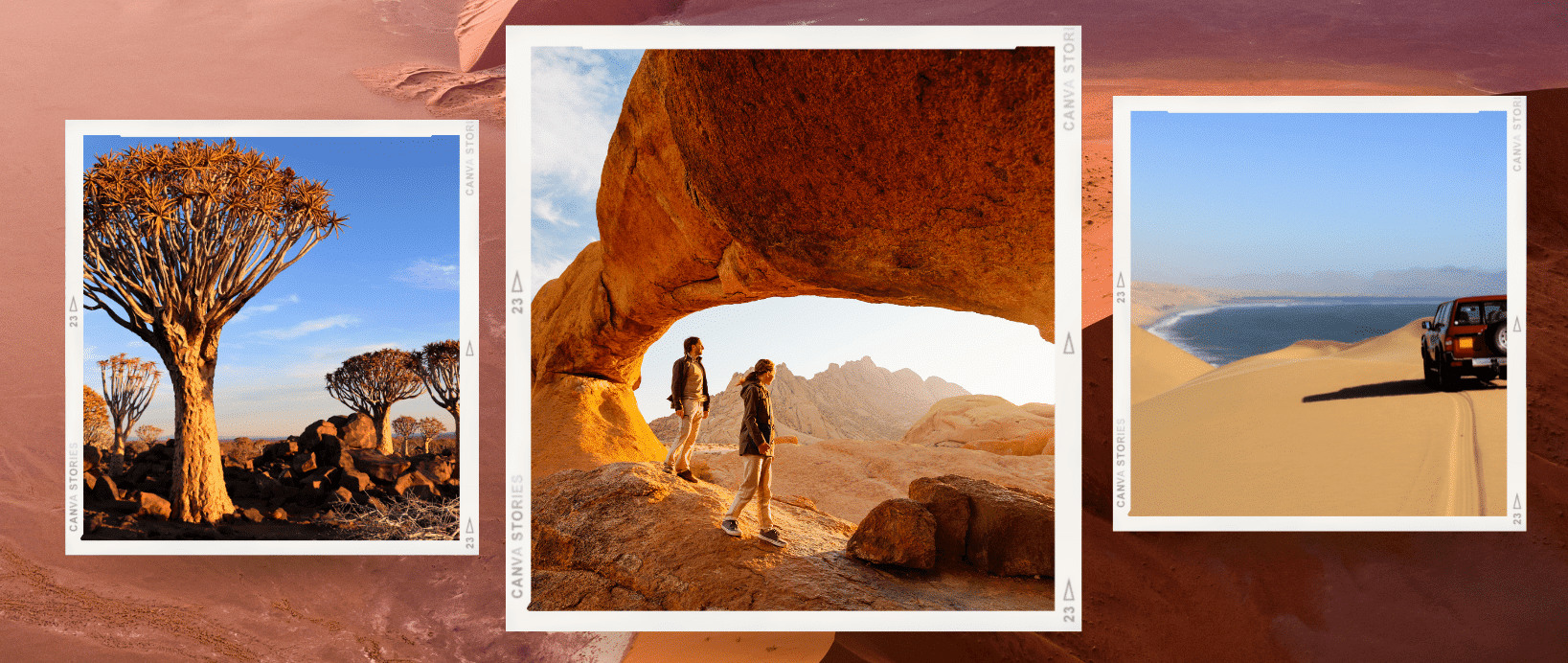
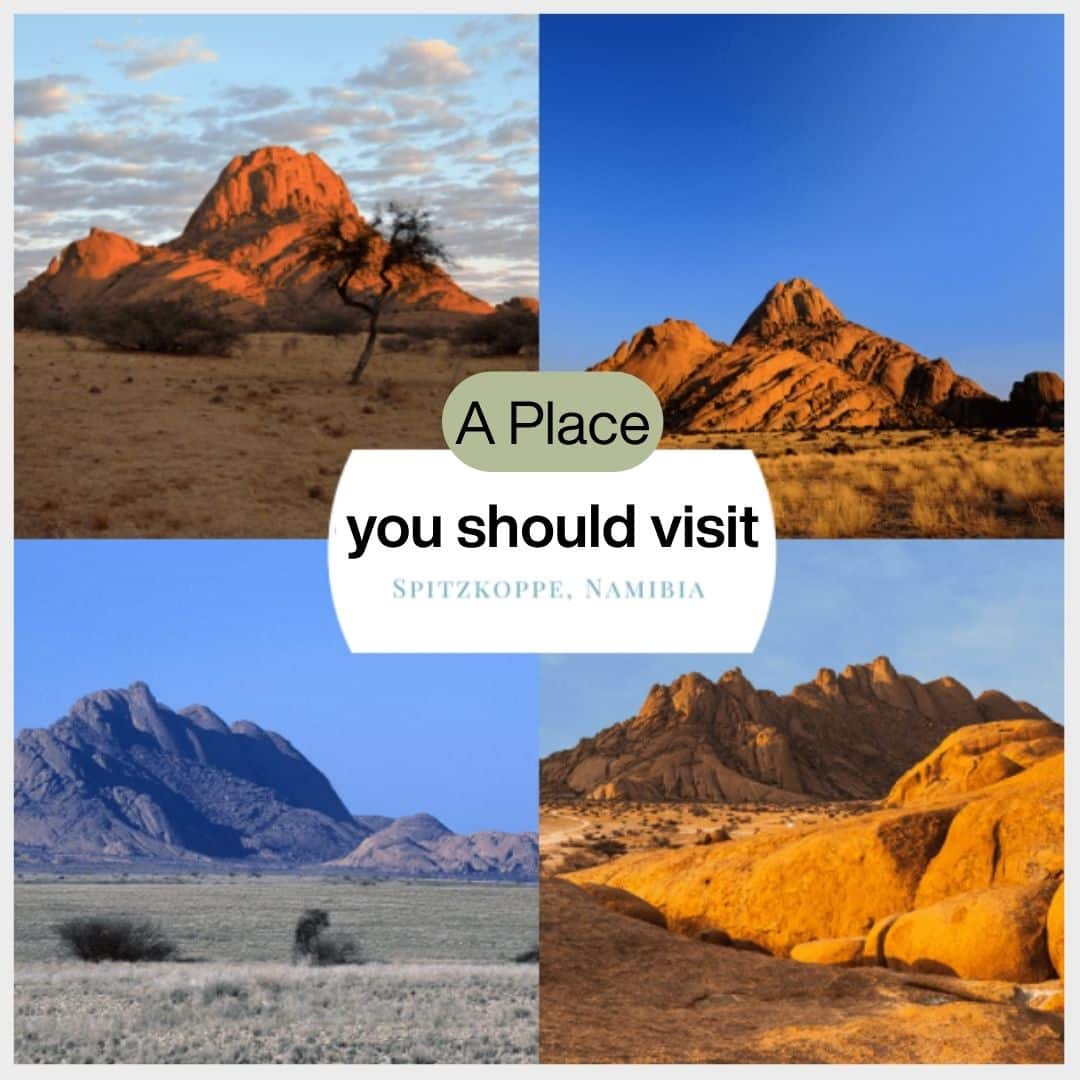
Spitzkoppe is a spectacular group of bald granite peaks rising from the Namib Desert between Usakos and Swakopmund. The mountains are made from granite that is more than 120 million years old, and their dramatic shapes make them one of Namibia’s most recognisable landscapes.
Look closely and you will also find examples of San rock art painted and engraved on the rocks around the Spitzkoppe area. These ancient artworks add another fascinating layer to a visit here.
Movie fans may recognise the landscape too. Spitzkoppe was used as a filming location for Stanley Kubrick’s 2001: A Space Odyssey, including the famous “Dawn of Man” sequences.
For me, Spitzkoppe is one of those places where the landscape itself is the attraction — huge granite rocks, open desert and an incredible sense of space.
The Fish River Canyon
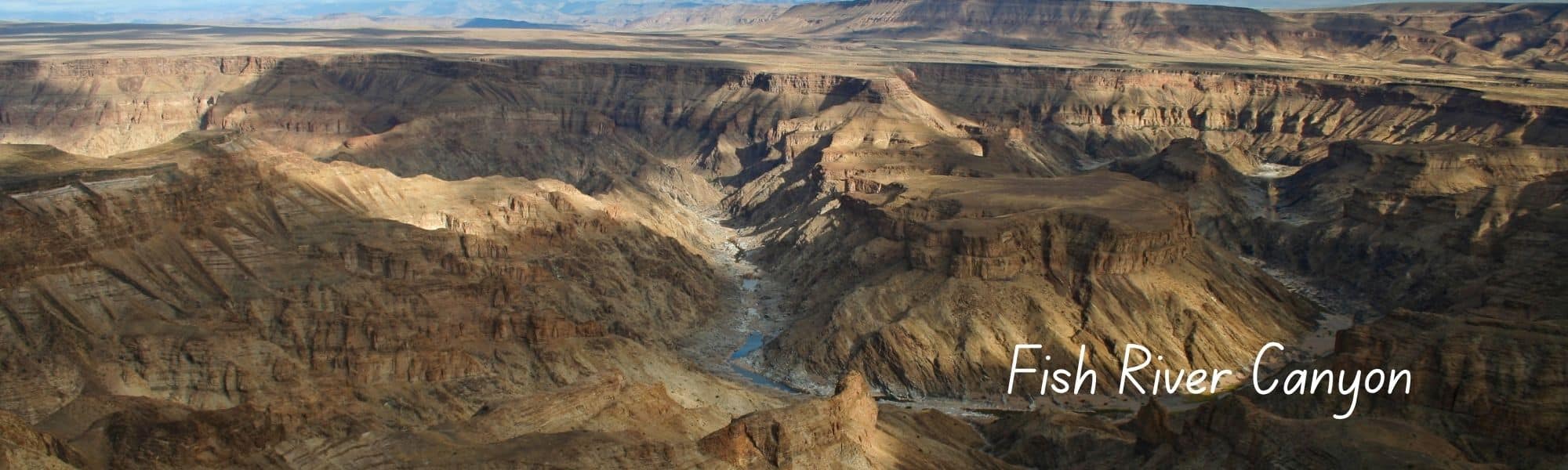
If you’ve seen the Grand Canyon in the USA, the next one on your list should be the Fish River Canyon in Namibia, the second largest canyon in the world.
It consists of a northern upper and a southern lower canyon and is 56 km long.
The lower canyon is between 460 and 550 m deep and 5 km wide.
The upper canyon is 160 to 190 m deep and but 8 km wide.
The best time to do the Hiking Trail is during the months of April to September and can be completed within 4 to 5 days, depending on your fitness levels.
The Quiver Tree Forest
The Quiver Tree Forest is a spectacular sight, especially early in the morning or around sunset, when the light creates beautiful shapes and shadows around the trees. It is also a photographer’s paradise.
Located about 14 kilometres north of Keetmanshoop, this unusual forest is made up of hundreds of quiver trees growing among large dolerite rocks. The trees can look almost otherworldly against the dry Namibian landscape.
The Quiver Tree Forest was declared a national monument and is situated on Gariganus Farm. It is an easy stop to add to a road trip through southern Namibia, and one of those places that is far more impressive in person than you might expect.
The Etosha National Park
(Often referred to as the Etosha Panne in Afrikaans)
This beautiful and famous national park of 22 270 km² has a vast variety of wild animals and is one of the best places to go on game drives. You might see lions, elephants, leopards, giraffes, hyenas, zebras, and many more.
Accommodation is widely available inside the park, and you can refer to their website for the latest information updates.
Best time to visit Etosha National Park
The best game-viewing time is during the “dry months” of May to September but keep in mind that it gets cold at night as this is winter in Namibia.
The summer months of October to April (also their rainy season) are normally also the months recorded with some extremely hot days, so come prepared.
Bird watching is at its peak in the rainy season from November to March, which is also the hottest and wettest month normally.
Sossusvlei
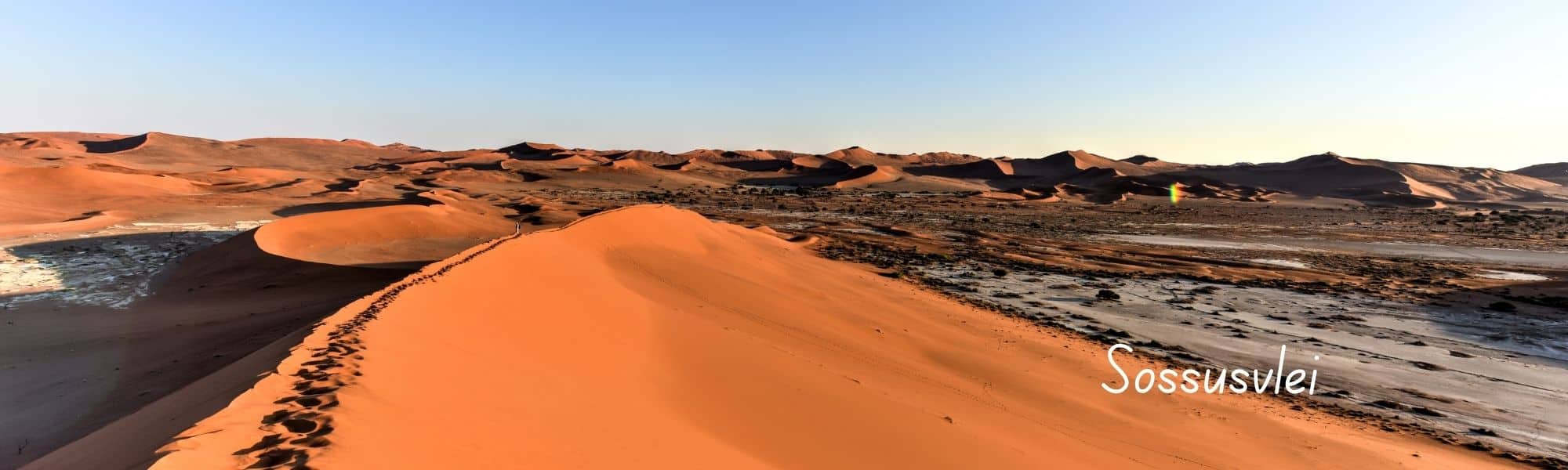
Sossusvlei is a spectacular salt and clay pan surrounded by some of the highest and most beautiful red sand dunes in the Namib Desert. It lies in the southern part of the Namib-Naukluft National Park in Namibia.
If you love the desert and its ever-changing dunes, you will love Sossusvlei. The landscape changes with the light throughout the day, creating captivating shadows, rich colours and unforgettable sunsets. It is a photographer’s dream, but you don’t need to be a photographer to appreciate the sheer beauty of this place.
Dune 45 is one of the most famous dunes in the area and a popular stop for visitors. Climbing the sand is hard work, but standing at the top and looking across the endless sea of red dunes makes it a true Namibia travel bucket-list experience.
Travel Tips
It doesn’t matter what time of year to visit Namibia, always pack both summer and winter clothes (or at least include a very warm jacket and socks).
Visit a famous Bollywood filming location
The video for the song “Guzarish” from the movie “Ghajini” was filmed in this beautiful destination:
Guzaarish (Ghajini) Filming Locations Based on a Tamil film by the same name, Ghajini was remade in Hindi with Aamir Khan and Asin.
The popular romantic song from the film ‘Guzaarish’ was shot at the Skeleton Coast, Namibia desert with the leading pair.
This was the first Bollywood film to be shot here and has a glimpse of a desert by the coast.
What is the Best Time of Year to Go to Namibia?
The most commonly recommended time to visit Namibia is from July to October, especially for wildlife viewing in Etosha National Park. However, the best time really depends on what you would like to see and do.
April and May can also be lovely months to visit, and we had fantastic weather during our trip. The mornings were sometimes cold, but they soon turned into beautiful, sunny days — perfect for exploring.
One thing that surprised us was the fog. It can be very thick in some areas and may come as an unexpected surprise to visitors. Take extra care when driving, as visibility can change quickly.
And always keep an eye out for animals on the roads, especially at night and in foggy conditions. Namibia’s wildlife doesn’t always stay inside the parks!
Is Namibia expensive?
Namibia’s currency is the Namibian Dollar (NAD). However, the South African Rand is accepted everywhere, which makes it an affordable destination for South African travelers.
Namibia can be an expensive destination, especially if you choose luxury lodges, private safari experiences and guided tours. But you can also travel Namibia on a much more reasonable budget by self-driving, camping, staying at guesthouses and choosing simple accommodation.
The distances are long, so remember to include fuel and vehicle costs in your budget. Entrance fees to parks and attractions can also add up.
For us, the beauty of Namibia was that you don’t need to spend a fortune to experience its incredible landscapes. Some of the most memorable moments — driving through the desert, watching the sunset over the dunes, looking up at a sky full of stars and spotting wildlife along the road — cost very little once you are there.
Namibia is a destination where your travel style makes a big difference to the price. Plan carefully, and it can be a surprisingly achievable trip.
Namibia International Airport
Hosea Kutako International Airport (WDH) is the main international airport of Namibia, serving the capital city of Windhoek. It is located well east of the city, 45 km, and is Namibia’s largest airport with international connections.
Keetmanshoop Airport is perfectly situated to be near most of the tourist attractions, like: The Hot Water Springs at Ai-Ais, the Quiver Tree Forest, the Fish River Canyon, and the Brukaros Mountain (a former volcano), therefore saving you drive time.
Featuring 360-degree views of Walvis Bay Lagoon, the Atlantic Ocean, and the beach, Pelican Point Lodge is situated at the foot of the historic Walvis Bay Pelican Point Lighthouse. The dining room serves a variety of dishes and offers local and South African wine.
Where: Pelican Point Peninsula, Walvis Bay, Namibia
“Located in the famous Skeleton Coast concession between the Hoarusib and Hoanib rivers in the Skeleton Coast National Park (map link), Shipwreck Lodge is only 45 km from Möwe Bay (map link). The shipwreck-shaped chalets are nestled between the dunes with a view of the Atlantic Ocean where the cold Benguela current provides guests with a refreshing breeze.
Our exclusive clients can look forward to appreciating the harshness of the desert and the beauty of these solitary landscapes filled with geological history. Learn about the fauna and flora adapted to survive in these harsh conditions – all from the comfort of the restaurant deck. There are eight twin/double chalets and two lovely family chalets.”
Things to do in Namibia a land of beauty beyond the desert.