
Most travelers arrive in winter, drawn by the famous ski slopes and snowy landscapes.
Yet when summer arrives, the country transforms completely. Meadows, hillsides, and even village streets fill with colour, and the variety of wildflowers and alpine blooms becomes one of Switzerland’s most beautiful and often overlooked highlights.
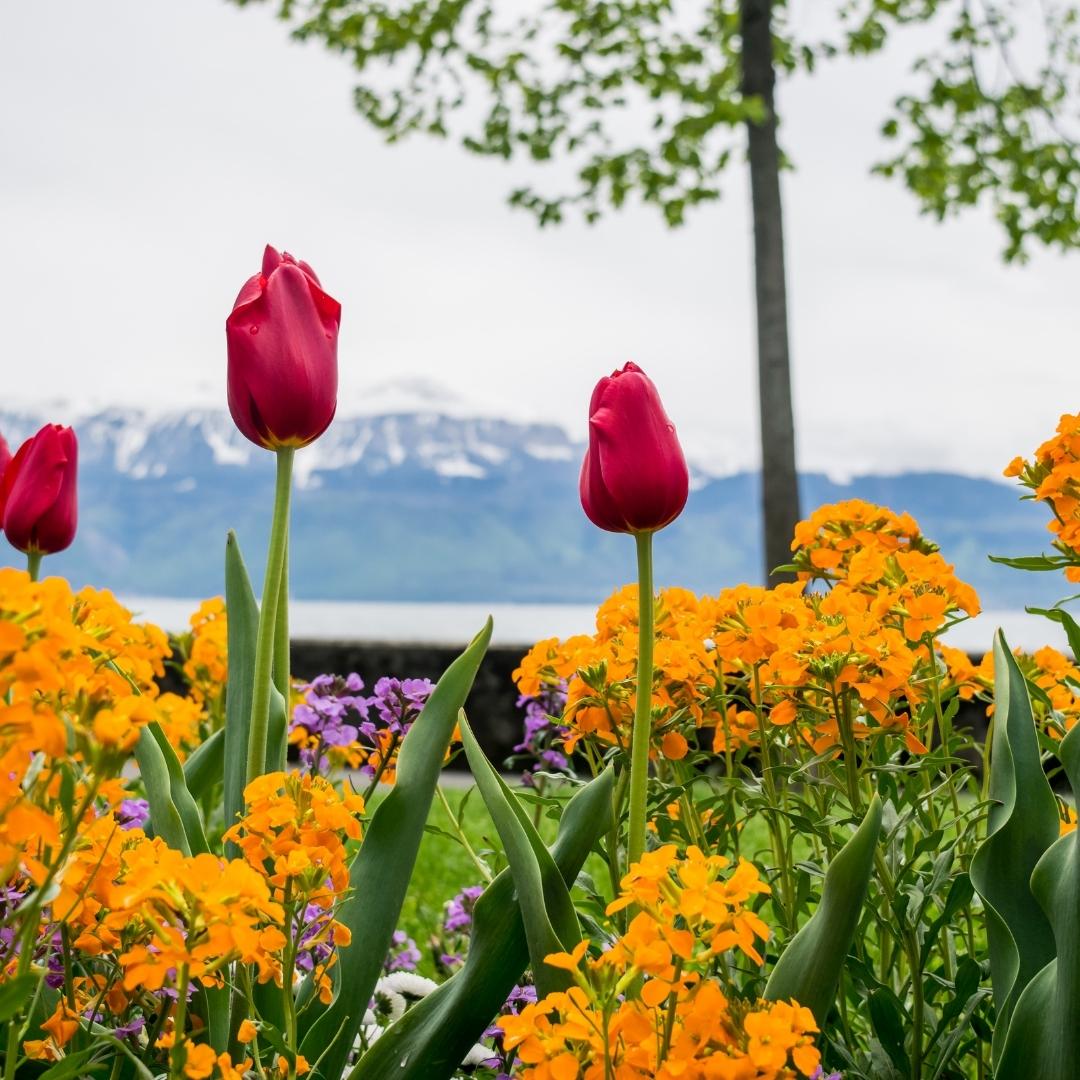
More than 600 flowering plant species are found exclusively in the Alps or have their main range there. Many have adapted to harsh mountain conditions with thick leaves, fine hairs, and compact growth that protect them from cold temperatures, strong winds, and intense UV radiation.
Spring in Switzerland is a wonderful time to visit, especially for walking trails and relaxed family days outdoors. However, the best time depends on where you are.
Between April and June, the landscape slowly wakes up after winter, with fresh green meadows and colorful wildflowers appearing almost everywhere you go. It’s the season that gently signals the arrival of summer, and the scenery feels alive again.
Flowers in Switzerland move like a wave across the country. Lower areas bloom first—places around Geneva and Lucerne come alive as early as April. Head into the mountains too soon and you’ll still find snow. By June and July, alpine meadows higher up—like around Lauterbrunnen Valley—are at their best, filled with wildflowers and deep green grass.
Altitude matters more than most people expect. If flowers have faded in one place, you can often “chase spring” by going higher. That’s why areas in the Bernese Oberland are so rewarding—you can move between valleys and mountain slopes and keep finding fresh blooms.
If you’re planning a flower-filled journey, make sure to include a stop at the Flower Clock. It’s a simple but striking display, set in a lakeside park, and a lovely place to begin your tour.
While summer is my favourite time for flower hunting in Switzerland because the alpine meadows are bursting with colour, don’t overlook spring. I love spring for its fresh green landscapes, blossoming trees and the first wildflowers appearing in the valleys while snow still caps the mountains. Summer may steal the show high in the Alps, but spring has its own quiet beauty and is every bit worth experiencing.
No two summers in Switzerland are exactly the same. Snowfall, rainfall, sunshine and temperature all influence when flowers bloom and how long they last. That’s one of the joys of returning—you’ll rarely see exactly the same display twice.
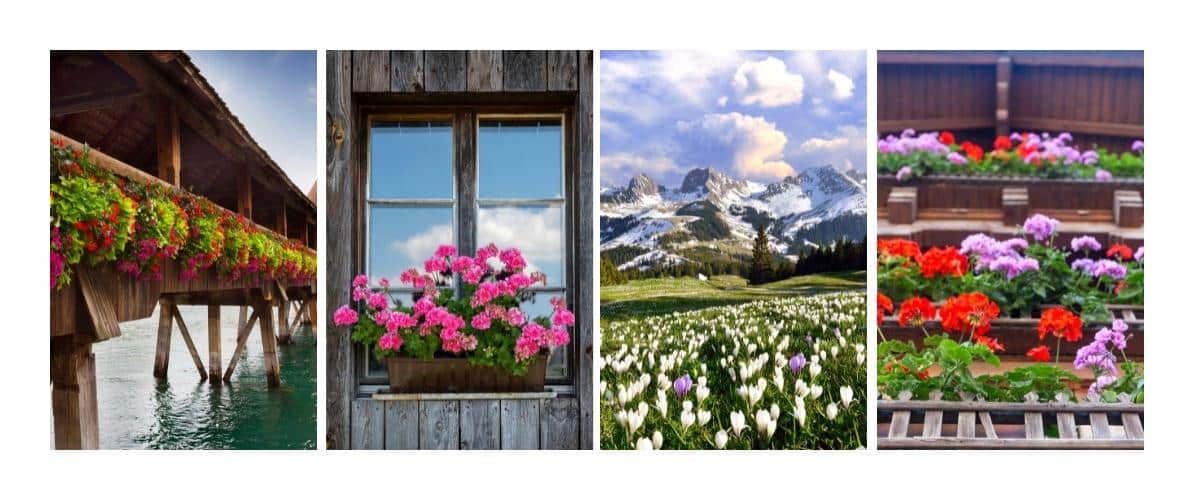
Many of Switzerland’s famous flower meadows are not wild by chance. For generations, farmers have managed these alpine pastures by mowing them only once or twice a year and allowing native flowers to reseed naturally. This traditional way of farming has helped preserve some of Europe’s richest and most colourful meadows.
Many visitors look straight towards the towering mountains, yet some of Switzerland’s greatest beauty is under your feet. Tiny gentians, delicate orchids and colourful alpine blooms are easy to miss unless you slow your pace. I often find that the flowers become just as memorable as the famous mountain views.
Geneva has long been at the heart of fine watchmaking, often referred to as the “mother of high-end watchmaking.” It feels only natural that the city would celebrate this legacy in such a creative way.
Right along the lakeside, you’ll find the famous Flower Clock — a working clock made entirely of flowers. First created in 1955, it has become one of the city’s most photographed sights. What keeps it interesting is that it never quite looks the same. The floral design is replanted throughout the year, so each visit brings a slightly different display, shaped by the season.
It’s simple, colorful, and surprisingly striking in person. And yes, it’s one of those spots where people naturally stop, take a photo, and linger a little longer than planned.
Where to find the flower clock of Switzerland: Address – Quai du Général-Guisan 28, 1204 Genève, Switzerland
Located on the western side of Jardin Anglais Park in Geneva, Switzerland.
Around 6,500 flowering plants and shrubs are used for the clock face. Well worth a visit.
The vivid colours of alpine flowers are not just beautiful. Bright pigments help protect the plants from strong ultraviolet sunlight at high altitude while also attracting bees and other pollinating insects during the short mountain growing season.
Some of the best places include the Jungfrau Region, Zermatt, the Engadin Valley, Oeschinensee, the Aletsch Arena, Stoos Ridge, and many mountain hiking trails throughout the Swiss Alps.
Switzerland has a reputation for being expensive, but enjoying its flowers doesn’t have to cost much. Many spectacular displays can be seen along public walking paths, lakeside promenades and mountain trails. Sometimes the most unforgettable moments come from a leisurely walk rather than an expensive attraction.
Just as Japan is renowned for its mesmerizing cherry blossoms, Switzerland too dazzles visitors with its own spectacular cherry blossom season. Weather permitting any time from late March to early May. With April probably being the best time to go.
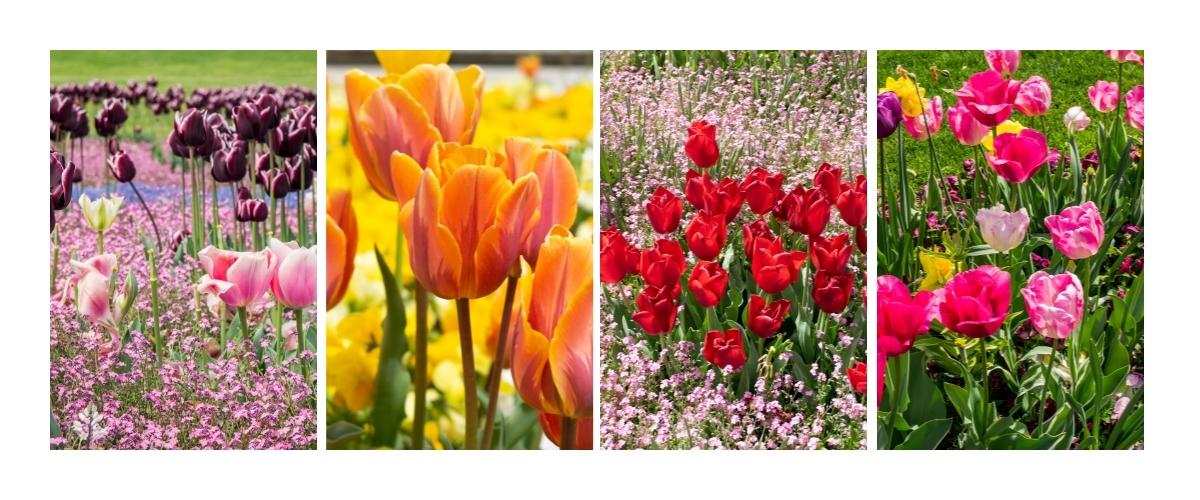
Yes. Many flower-rich areas are accessible by cable car or scenic railway and have easy walking paths suitable for families with children.
If you love tulips and you’ve probably already visited the beautiful flower markets of Holland and the gardens of Keukenhof … then definitely do a trip to the Tulip Festival in Switzerland. Experience a unique festival of flowers:
The Tulip Festival which takes place each year in Morges, Switzerland (known as the “Fête de la Tulipe”) was founded in 1971. Every year it takes place in the Parc de l’Indépendance at Lake Geneva in Morges and it is definitely worth a visit. The festival usually lasts for about 7 weeks from mid-March / April to early May (always check with the local Tourist Information Centre for updated info) and admission is free. Beautiful parks filled with tulips in all colors: A wonderful experience of approx. 145,000 tulips and around 275 different varieties.
Travel Tips:
The white, star-shaped Edelweiss has become a symbol of Switzerland. It grows naturally at elevations between about 2,000 and 3,000 metres and is specially adapted to survive strong sunshine, wind and cold mountain weather.
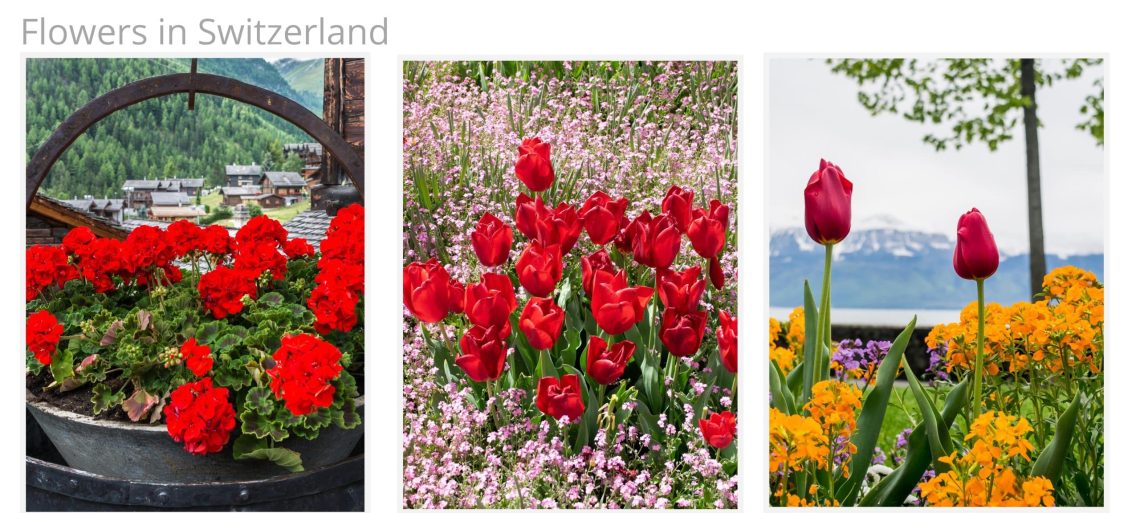
No two parts of Switzerland look exactly alike in spring. Around Lake Geneva you’ll find tulips, daffodils and dahlias, while higher mountain regions are known for gentians, alpine roses, buttercups and Edelweiss.
For the more adventurous, a hike up to the Engstligenalp waterfall (in the canton of Bern) in Adelboden, during June will reward you with beautiful flowers and a stunning waterfall.
Visit the rolling hills of apple blossoms in April and May.
‘The start point for the Altnauer Apple Trail is at the foot of the village, just 500 meters from the station. The regional Thurbo train arrives once every half an hour from Schaffhausen, Kreuzlingen, Romanshorn, and St. Gallen. Visitors from Kreuzlingen can reach Altnau in half an hour with the Postauto, line 923. Regular ferry services from Romanshorn, Kreuzlingen, Immenstaad and Hagnau moor at Lake Constance’s longest jetty. From here, signposts direct you to the start of the Apple Trail. For those who prefer to come by car, there are (paid) parking spots by the train station or the harbor.’ Thurgau-bodensee
Above Montreux and Vevey, thousands of white wild daffodils bloom across the hillsides every spring. Locals call this breathtaking display “May Snow” because the white flowers resemble snow covering the mountainsides.
In many places, picking wildflowers is discouraged or prohibited, especially in protected areas and national parks. It’s always best to leave the flowers where they grow so everyone can enjoy them.
Weather changes quickly in the Alps: Even during summer, mountain weather can change within minutes. Carry a light waterproof jacket and comfortable walking shoes if you’re planning to explore alpine flower trails. Sunny valleys can quickly turn into cool mountain conditions.
Yes. Several regions celebrate spring blossoms and alpine flowers with local festivals and events. The exact dates vary from year to year, so it’s worth checking local tourism websites before your visit.
Edelweiss grows naturally in high alpine areas, generally above 2,000 meters. Some botanical gardens and alpine gardens also cultivate Edelweiss, making it easier to see without a strenuous hike.
Not always. Many beautiful flowers can be seen from scenic train routes, cable cars, mountain restaurants, lakeside walks and easy hiking trails. More remote alpine flowers do require longer walks.
It might be strange to mention this, but it is truly so beautiful, that I cannot end this tour without just mentioning this to you. The Lauterbrunnen Cemetery is so beautiful and locals take pride in keeping it this way:
The Cemeteries in Switzerland in general are kept neat and tidy with flowers everywhere. You might want to plan your trip to Lauterbrunnen and other beautiful Swiss destinations.

And finally, don’t just chase famous spots. Some of the best flower moments happen in small villages, along quiet walking paths, or even beside a roadside stop with a mountain view. Switzerland rewards anyone who slows down and looks around.