
Bonaire is a small Caribbean island known for its beautiful coastline, clear turquoise water and some of the Caribbean’s most accessible coral reefs. Located just off the coast of Venezuela, this Dutch Caribbean island is especially appealing if you love snorkeling, diving, colorful marine life and relaxed island days.

Bonaire is a small Caribbean island just off the northern coast of Venezuela.
It is one of the three ABC Islands — Aruba, Bonaire and Curaçao — and is part of the Caribbean Netherlands. The island’s capital, Kralendijk, sits on the western coast, facing the calm Caribbean Sea.
What makes Bonaire special is the way the island invites you to enjoy the Caribbean at your own pace. Life here revolves around the sea, with colorful reefs, warm clear water, small beaches, salt flats and quiet coastal roads adding to the experience.
You can spend the morning in the water, stop for lunch in Kralendijk and still have plenty of time to watch the sunset over the Caribbean.
For divers and snorkelers, the real magic begins beneath the surface. Bonaire is surrounded by clear Caribbean water and colorful coral reefs where you can see brain corals, elkhorn corals, fire corals and gorgonians, along with sea turtles, eagle rays and a great variety of tropical fish.
Many of the island’s dive sites are accessible directly from shore, making it particularly easy to explore the underwater world at your own pace.
If I were choosing a place to stay in Bonaire, I’d look for a good-value hotel or apartment with a beautiful sea view rather than automatically choosing a luxury resort.
Waking up close to the water adds so much to an island stay, and you don’t necessarily need a five-star property to enjoy it. Kralendijk and the surrounding coastline offer a range of places to stay, so it is worth comparing the location, beach access, views and price before booking.
You’ll want to stay somewhere, where you can start your day like this:
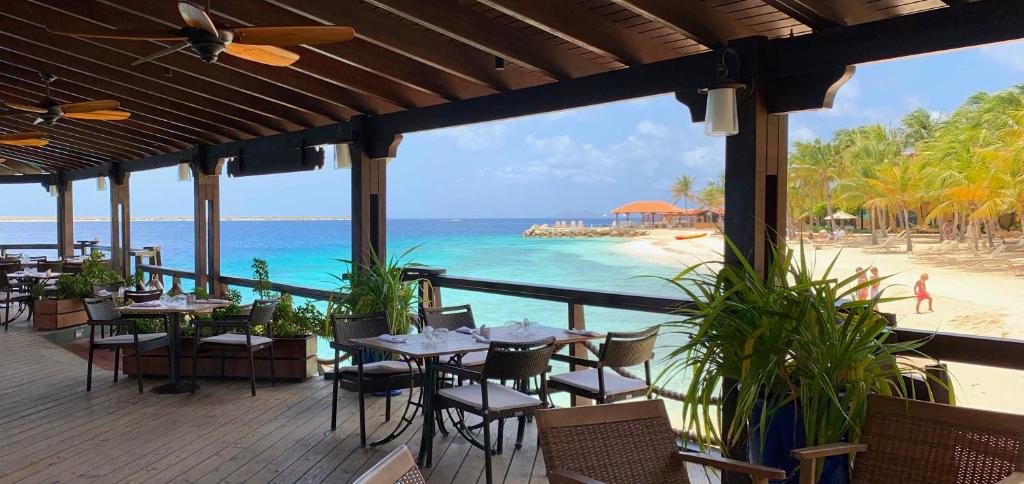
Offering a private beach area and beachfront access. this hotel also has spa facilities and a very good restaurant. So it is the ideal place to book your dinner. Then why not stay here >>>
The main areas are Kralendijk, Hato, Belnem and Punt Vierkant. This side has calmer water, many shore-diving sites and the greatest choice of restaurants and accommodation. Most of the island’s hotels are concentrated along this western/southwestern coast.
The main accommodation area is Lac Bay and Sorobon. This is a completely different experience: quieter, more natural and centred around the shallow turquoise lagoon and windsurfing. Accommodation is much more limited here, and a car is useful because you are farther from Kralendijk and the west-coast dive sites.
Bonaire is a year-round destination, with warm temperatures and sunshine throughout the year. The island lies south of the main hurricane belt, which is one reason it is such a dependable Caribbean escape. December to March is the wetter period, although rain usually arrives in short showers before the sunshine returns.
For the best combination of sunny weather and comfortable conditions for enjoying the water, I would look at the months from February to June. July to November can also be a good time to visit, particularly if you find better accommodation or flight prices, but September and October are generally among the wetter months.
Location: Southern Caribbean, just off the coast of Venezuela
Part of: Caribbean Netherlands
ABC Islands: Aruba, Bonaire and Curaçao
Capital: Kralendijk
Languages: Dutch and Papiamentu; English is widely spoken
Currency: US Dollar (USD)
Time zone: Atlantic Standard Time (UTC−4)
Known for: Shore diving, snorkeling, coral reefs, marine life and salt flats
Getting around: Rental car, scooter, bicycle or taxi
Airport: Flamingo International Airport (BON)
You can easily explore Kralendijk on foot, especially around the waterfront, shops and restaurants, but you’ll need transport to see much more of Bonaire. The island’s beaches, dive and snorkeling sites, salt flats and other attractions are spread out, so renting a car is one of the easiest ways to explore at your own pace. Scooters and bicycles are also options for getting around, while taxis are useful for shorter journeys.

One of Bonaire’s most unusual sights is found at the southern end of the island, where enormous white salt flats stretch towards the sea. Some of the shallow ponds can take on a beautiful pink color, created by tiny brine shrimp living in the water. You can also see huge mounds of white salt produced on the island, while flamingos gather in the protected wetlands nearby. The salt flats make a wonderful stop when driving around the southern part of Bonaire, and they are quite different from the turquoise-water scenery the island is best known for.

The easiest way to see Bonaire’s salt pans is by rental car. From Kralendijk, drive south along EEG Boulevard, the coastal road that runs past the salt works. You don’t need a 4×4 — the main road is paved and the salt pans can be viewed from the roadside.
Along the way you’ll see the colorful salt ponds, enormous white piles of harvested salt, the historic salt huts and, in the protected areas, flamingos.
The drive can easily be combined with Pink Beach and the Willemstoren Lighthouse, making a lovely half-day outing around the southern part of the island.
1. Snorkel or dive straight from the shore
Bonaire has more than 85 dive sites, with 54 accessible from shore, and the reefs support more than 350 fish species and 57 coral species.
2. See the pink salt pans and flamingos
This is your big land-based Bonaire experience. The Pekelmeer Flamingo Sanctuary and southern salt pans give you scenery that feels completely different from the turquoise-water Caribbean image.
3. Take a drive around the island
Bonaire’s landscape changes dramatically as you drive — coastline, cactus-covered terrain, salt pans, viewpoints, lagoons and small settlements. It is one of those places where the journey itself becomes part of the holiday.
4. Spend time at Lac Bay and Sorobon
Lac Bay is a huge shallow lagoon and an important natural area, while Sorobon is known for windsurfing.
5. Take the boat to Klein Bonaire
Klein Bonaire is the small, uninhabited island just off Bonaire. Its beaches and surrounding reefs make it a natural addition to a Bonaire stay.
6. Explore Washington Slagbaai National Park
This is the island’s wild side — cactus landscapes, beaches, wildlife, viewpoints and trails. The park covers almost 14,000 acres in the north of Bonaire.
7. Visit Rincon
Rincon is one of Bonaire’s oldest settlements and feels very different from the waterfront around Kralendijk.
8. Find a beautiful beach for a slow afternoon and “do nothing”…
Bonaire and Klein Bonaire have more than 22 beaches, and not every beach needs to become an activity. Go for a swim, sit under the shade, have a picnic and enjoy the water.
9. Watch the flamingos
Gotomeer in the north is a known flamingo area, and during the months of January to June it is a particularly good period for seeing them with young birds.
10. Have dinner overlooking the Caribbean
Bonaire has a good selection of restaurants and Caribbean-influenced cuisine…

You’ll have plenty of fresh fish, local stews and tropical flavors to sample while you’re there. Like:
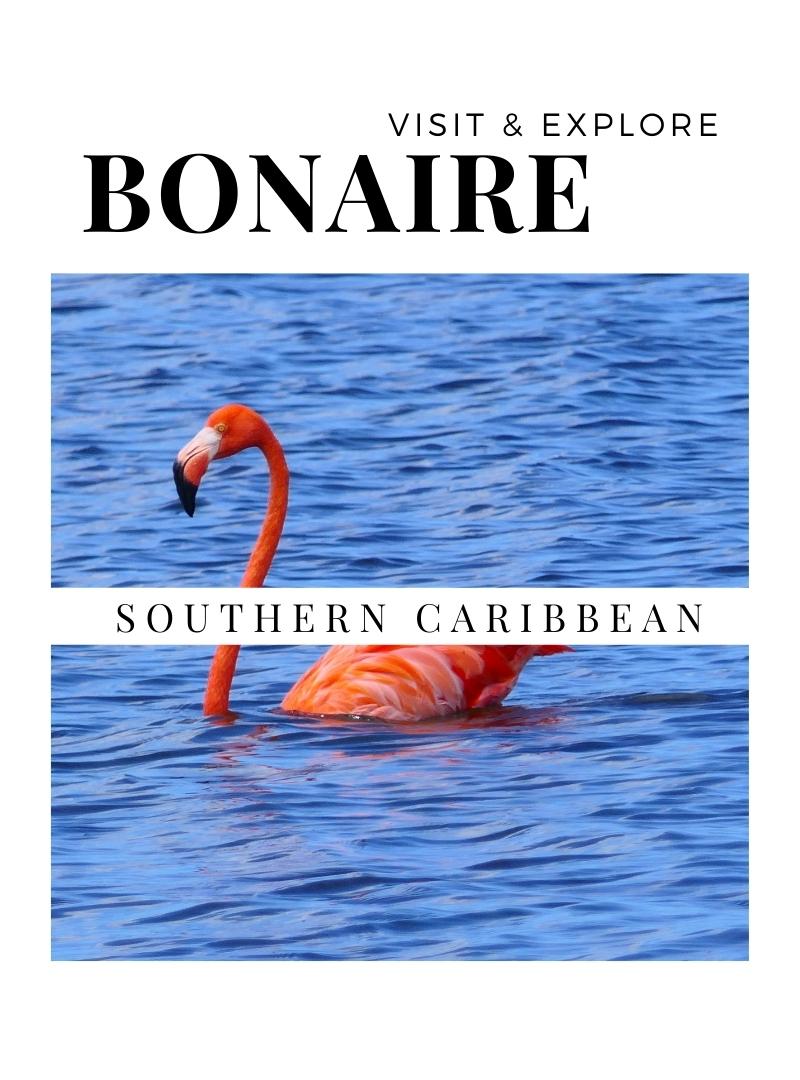
Seeing flamingos in the wild is one of the memorable experiences to add to your Bonaire stay.
The island is an important feeding and breeding area for Caribbean flamingos, and you may spot them around the salt pans and Pekelmeer Flamingo Sanctuary in the south, as well as at Gotomeer in the north.
Keep your distance and bring binoculars or a camera with a good zoom rather than trying to get close — these are wild birds in protected areas.

Just offshore from Kralendijk lies Klein Bonaire, a small, uninhabited island surrounded by clear turquoise water and coral reefs. There are no hotels, shops or restaurants here, so you come for the beach, swimming, snorkeling and the feeling of being somewhere wonderfully undeveloped. The island is particularly known for its excellent snorkeling, with several reef sites close to shore.
You can reach Klein Bonaire by water taxi from Kralendijk, with the crossing taking only a short time. Bring everything you need for your visit, including water, food, sun protection and snorkeling equipment, as there are no facilities on the island.
If you have several days on Bonaire, I would definitely make the trip — it gives you a completely different experience from staying on the main island.
