Quito is one of South America’s most rewarding capital cities — a place where centuries‑old churches, lively markets, and sweeping Andean views come together in a single, walkable historic center. Its UNESCO‑listed Old Town, rich Indigenous and colonial heritage, and deeply rooted food culture make it far more than a gateway to the Galápagos. If you love architecture, storytelling, and atmospheric city wandering, you will find Quito an authentic, energizing introduction to Ecuador
Quito is one of those cities that quietly sweeps you off your feet. High in the Andes and wrapped in layers of history, it blends old‑world charm with a lively, modern rhythm. You can wander from ornate churches to colourful markets in minutes, all while soaking up views that seem to stretch forever. And because Quito was the very first city ever declared a UNESCO World Heritage Site, it carries a sense of significance you can actually feel as you explore.
It’s a place for travellers who love culture, architecture, food, and those little moments of discovery — the kind that stay with you long after you’ve flown home. Add in its mild climate, friendly locals, and easy access to the rest of Ecuador, and Quito becomes more than a stopover. It becomes a destination in its own right.
Fun fact: Quito doesn’t just feel cultural — it’s officially recognized for it. The city was named South America’s Leading Cultural City Destination 2025 by the World Travel Awards, a lovely nod to its living history, vibrant traditions, and beautifully preserved historic centre.
Malaria: Did you know that at 1,500 meters above sea level, the threat of malaria transmission ends? Well, Quito (the highest constitutional capital in the world) sits at 2,850 m above sea level. That makes it a safe destination in terms of malaria transmission.
Quito is surprisingly easy to reach, even though it sits high in the Andes. Most travellers arrive by air, but there are a few other routes worth knowing about.
Quito is a long, narrow city stretched along the mountains, so getting around is a mix of walking, taxis, and public transport. Each has its own little quirks.
Quito makes travel wonderfully simple when it comes to money — the entire country uses the US Dollar, so there’s no currency conversion to wrap your head around. Prices are listed in USD, ATMs dispense USD, and you’ll see a mix of familiar American coins alongside Ecuador’s own locally minted versions (same value, just a different design).
Cards vs. Cash: You can absolutely use your card in most hotels, restaurants, and bigger shops, but Quito still has a soft spot for cash. Street food stalls, small cafés, markets, and taxis often prefer — or only accept — cash. It’s worth keeping a little stash of $1, $5, and $10 bills, because getting change for larger notes can be surprisingly tricky.
ATMs: ATMs are easy to find in malls and tourist areas, and they’re generally reliable. If the machine offers a “conversion” or “dynamic currency” option, skip it — your bank’s rate is almost always better.
Tipping: Many restaurants add a service charge automatically, but if they don’t, locals usually tip around 10–15%. For taxis, rounding up is perfectly normal.
A tiny local tip: Ecuadorians take good care of their cash — crumpled or torn bills are often refused. It’s worth checking your notes when you get change so you don’t end up stuck with a bill nobody wants
Climate: Think about a typical spring day in New York City. Well, this is the average climate in Quito. Have a look at the climate and weather averages per month to help you plan your trip to Quito.
Spanish is the official language of Quito and all of Ecuador. You’ll hear it everywhere — in shops, taxis, restaurants, and markets. English is spoken in tourist areas, but not consistently once you step outside the main attractions.
Quito has a way of pulling you in before you even realise it. Perched high in the Andes and wrapped in centuries of history, the city feels like a living museum — but one that’s wonderfully walkable, vibrant, and full of everyday life. Founded by the Spanish in 1534, and shaped long before that by the Incas, Quito carries its past in the most effortless way.
Ecuador is home to five UNESCO World Heritage Sites, and Quito proudly holds the title of being the very first city in the world to receive the designation back in 1978. It’s a place where ornate churches, cobbled streets, and sweeping plazas sit comfortably alongside modern cafés and local markets.
If you’re a UNESCO lover (like me), you’ll appreciate how beautifully Ecuador preserves its heritage. Alongside Quito, you’ll find:
Cuenca’s historic centre, often praised as one of Latin America’s best-preserved colonial cities.
Qhapaq Ñan, the ancient Andean road system that once connected entire civilizations.
And then there are the natural wonders — the Galápagos Islands and Sangay National Park — reminders that Ecuador’s magic isn’t only cultural, but deeply wild and alive.
Quito is the perfect starting point for exploring all of this. It’s a city that rewards slow wandering, curious eyes, and a willingness to let history guide your steps.
I love exploring UNESCO sites, and Ecuador is no exception. Ecuador has five UNESCO World Heritage sites of which three are cultural sites, namely:
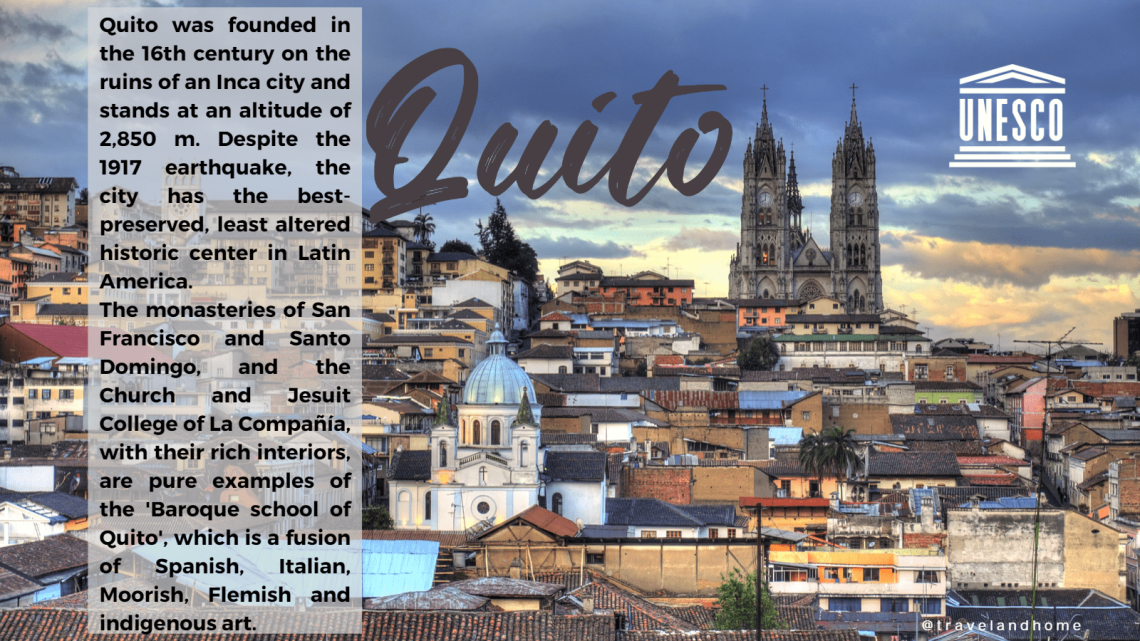
The city is also known as the ‘Florence of the Americas”. The European influence is splashed throughout the city. Such as the Spanish red-tile roofs, central patios, and balconies.
I love visiting cathedrals and old churches. The Church of the Society of Jesus, also called ‘la Compañía’ colloquially, is worth seeing. The stunning wood sculptures in this church, which are covered in gold leaf and gilded plaster, are undoubtedly one of the best memories I will treasure.
Most Ecuadorians are Roman Catholic and as such celebrates Christmas and Easter. On Christmas Eve, locals enjoy traditions such as the Posadas. The family eats ham and turkey dinner, and Quito is filled with happiness.
Because the city is so near the equator (the line dividing the northern and southern hemispheres), you get to enjoy about twelve hours of daylight throughout the year. The equator is a fabulous excursion from Quito, about 200 km further north.
Choosing the right neighbourhood in Quito can completely shape your experience. The city stretches along the Andes, so each area has its own personality — from historic charm to leafy calm to modern convenience. Here’s a friendly breakdown to help you find your perfect base.
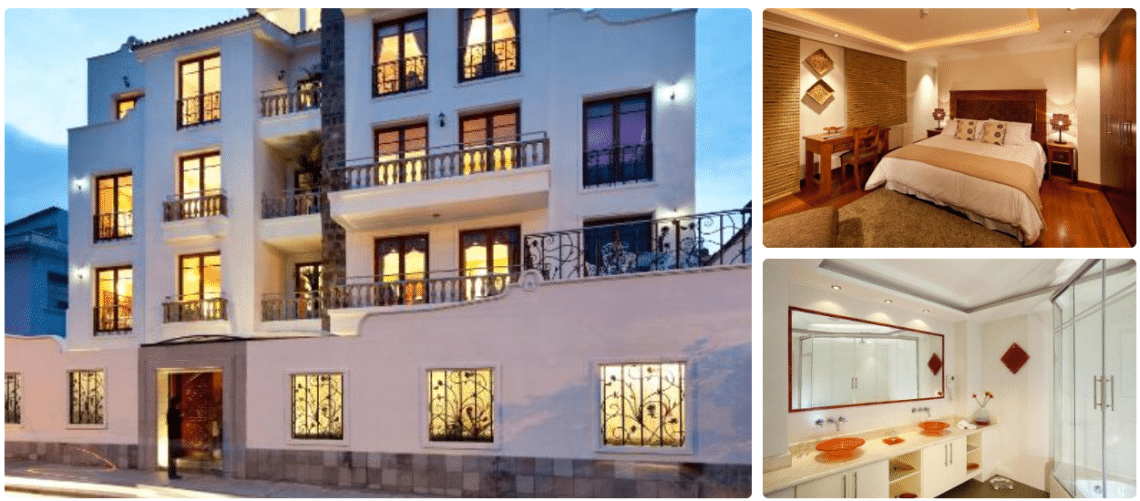
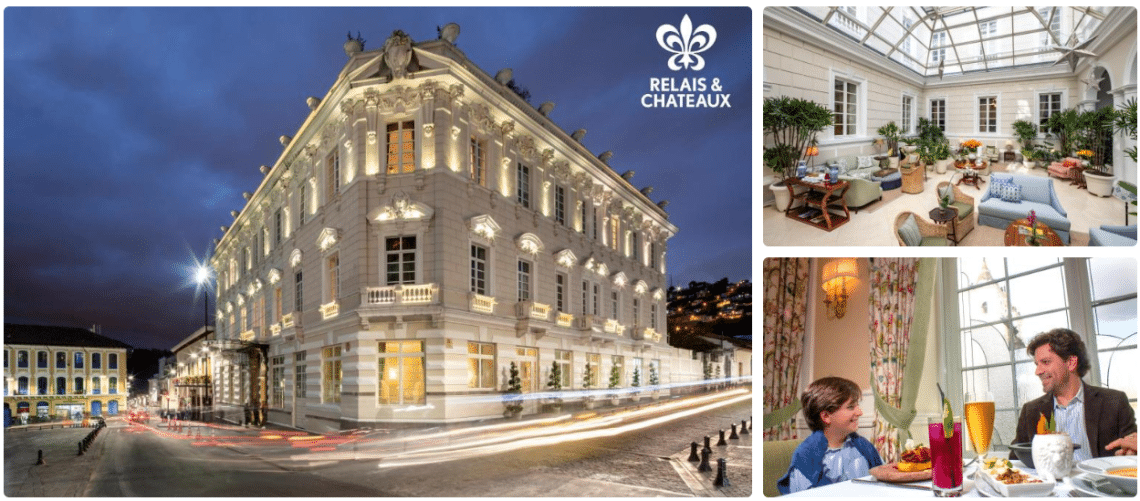
Perfect for travellers who love atmosphere, architecture, and being able to walk to major sights. Think cobbled streets, grand plazas, and churches that glow at night. It’s lively during the day and quieter after dark, ideal for slow wanderers and culture lovers.
Best for: first‑timers, history fans, photographers, slow travellers.
Stay here:
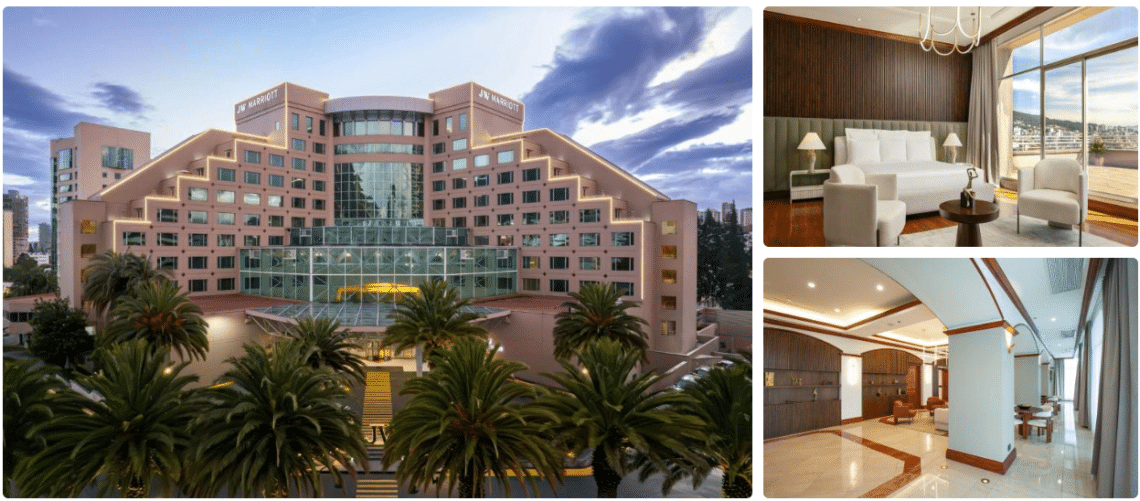
A buzzy, youthful neighbourhood with cafés, bars, restaurants, and a more modern feel. It’s central without being hectic, and it’s easy to grab a taxi or ride‑share from here. Great if you like a bit of energy around you.
Best for: solo travellers, digital nomads, nightlife, convenience.
Stay here:
Creative, artsy, and full of indie cafés, murals, and small galleries. It’s one of Quito’s most walkable and welcoming neighbourhoods, with a relaxed vibe that feels instantly local.
Best for: foodies, creatives, travellers who love neighbourhood charm.
Stay here:
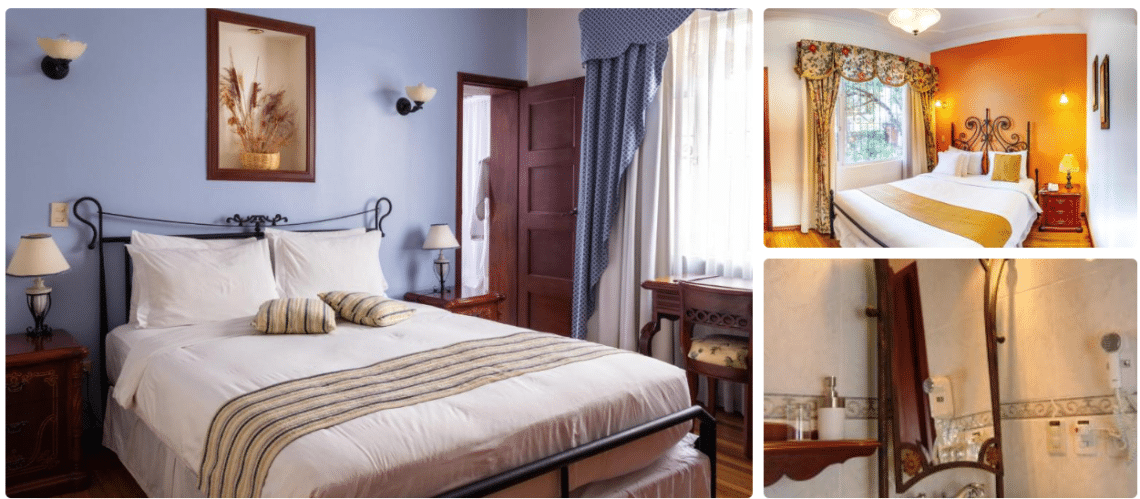
Leafy, quiet, and a little more upscale. These areas sit slightly higher, offering beautiful views and a calmer base while still being close to the action.
Best for: couples, families, travellers who prefer peaceful evenings.
Stay here:
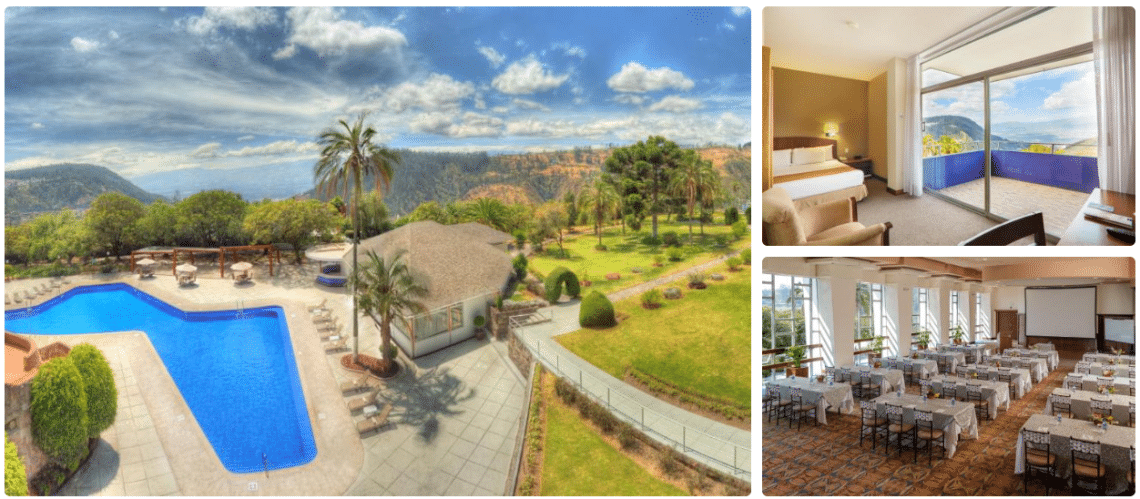
If you’re arriving late, leaving early, or want a warmer micro‑climate, these valleys are a lovely surprise. They’re modern, sunny, and full of great restaurants — but farther from the historic centre.
Best for: airport convenience, longer stays, travellers who prefer suburban comfort.
Stay here:
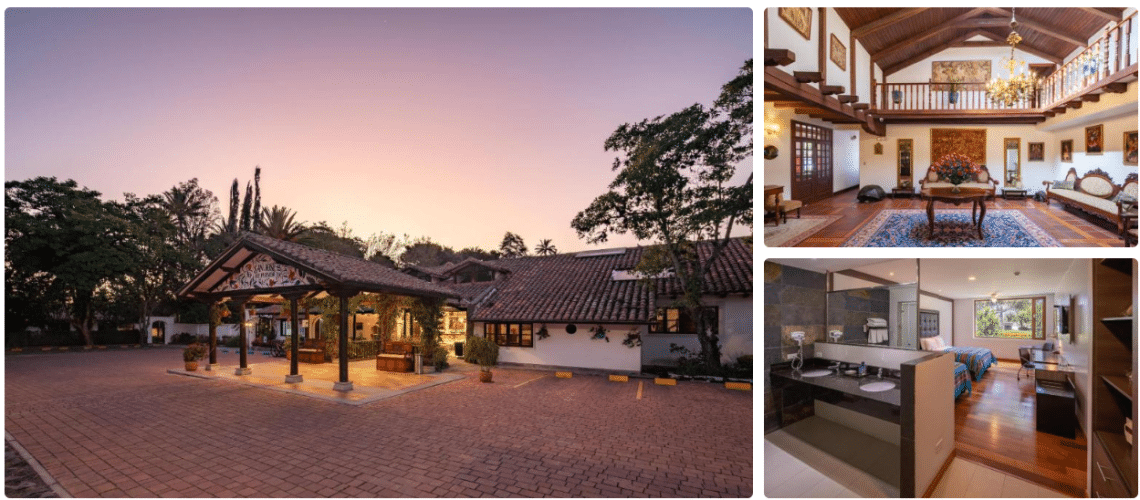
Affiliated Links
Easy Ways To Plan Your Trip With Confidence ♡゙
A few trusted resources to help you organise the practical side of your journey.
Quito has a way of lingering with you — the golden glow of its churches, the hum of its plazas, the crisp Andean air that somehow makes every colour feel brighter. Some travellers come for the history, others for the food or the architecture, and many simply for the joy of wandering a city that wears its heritage so beautifully. However you explore it, I hope this guide helps your trip feel effortless and full of those small, memorable moments that stay with you long after you’ve left.
And because Quito holds the honour of being the very first UNESCO World Heritage Site, you might enjoy diving deeper into the world’s earliest UNESCO treasures. We’ve rounded up the first dozen UNESCO wonders here — a lovely little rabbit hole if you enjoy heritage-rich travel.
If you’ve been to Quito before, I’d love to hear what stayed with you. And if you’re planning your first visit, tell me — what are you most excited to experience?
Your stories and tips help other travellers feel at home before they even arrive. Scroll down and share your thoughts in the comments — I always enjoy reading them.
Traveling with purpose, writing with heart. – Maggy Mandle