
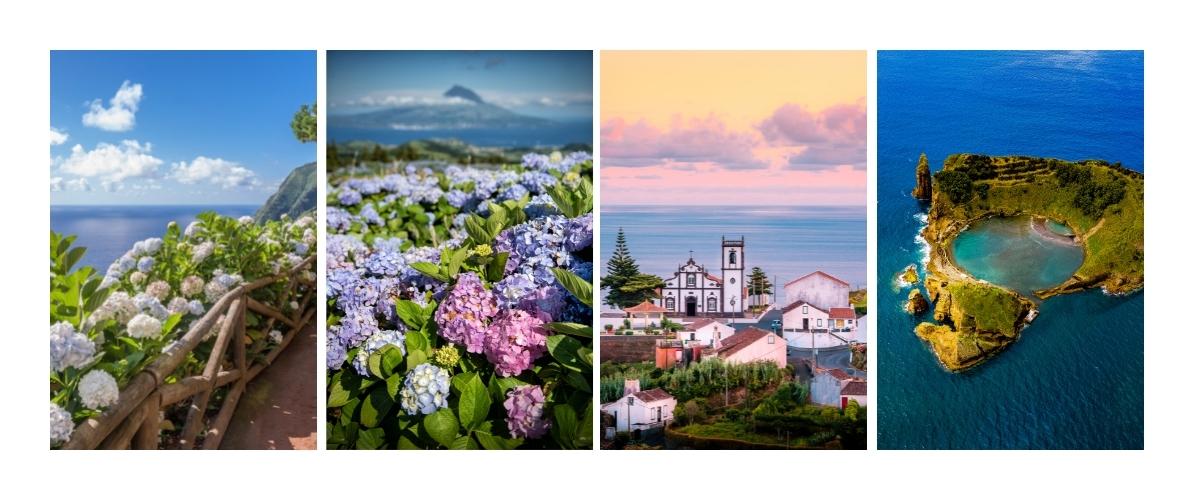
The Azores are a group of nine volcanic islands in the middle of the Atlantic Ocean, belonging to Portugal. They sit about a 2-hour flight from Lisbon and are often described as Europe’s tropical-looking hidden paradise.
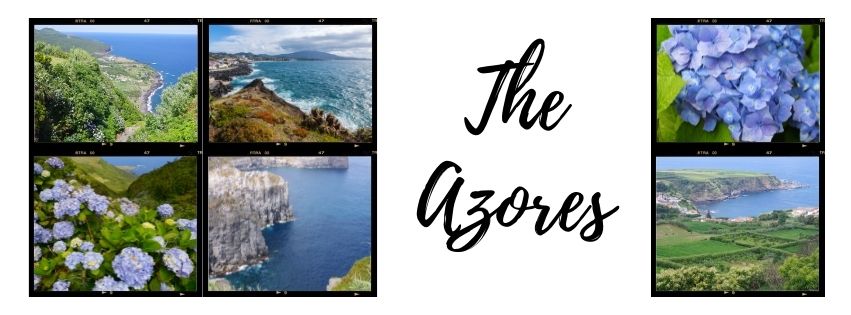
The islands are famous for dramatic coastlines, crater lakes, waterfalls, hot springs, hydrangea-lined roads, and deep green landscapes that almost look unreal after rain.
The main islands visitors explore are:
The Azores became popular because they offer something many European destinations no longer have: raw natural beauty without huge crowds.
People go there for:
It feels untouched compared to busy Mediterranean destinations. Many travelers compare parts of the islands to a mix of Hawaii, Iceland, Switzerland, and New Zealand.
One of the biggest surprises is how green everything is. Rain and volcanic soil create landscapes filled with forests, cliffs, flowers, tea plantations, and grazing cows overlooking the Atlantic.
The Azores have a mild climate year-round, but weather changes quickly. Locals often joke that you can experience four seasons in one day.

Travel tip: What you need to pack.
Pack a light rain jacket even in summer. Sunshine can suddenly turn into misty mountain rain, especially around the crater lakes.
Most people start with São Miguel because it has the largest airport and a little bit of everything.
A good first trip could look like:
5–7 days on São Miguel
3–4 days on Pico or Terceira
The islands are not the kind of place you rush through. The magic is in slow drives, stopping at viewpoints, relaxing in thermal pools, and enjoying long lunches with ocean views.
Horta is one of the most beautiful harbor towns in the Azores, sitting on the island of Faial with views across the Atlantic toward towering Mount Pico. The town is famous for its lively marina filled with colorful paintings left by sailors from around the world. Spend time walking along the waterfront, relax at Praia do Porto Pim, and visit the spectacular Caldeira do Faial volcanic crater. Horta is also one of the best places in the Azores for whale watching and unforgettable sunsets.
DID YOU KNOW: The name Faial means “beech wood.” The island was named after the wax myrtle plants growing abundantly there, which early Portuguese discoverers mistakenly believed were beech trees.

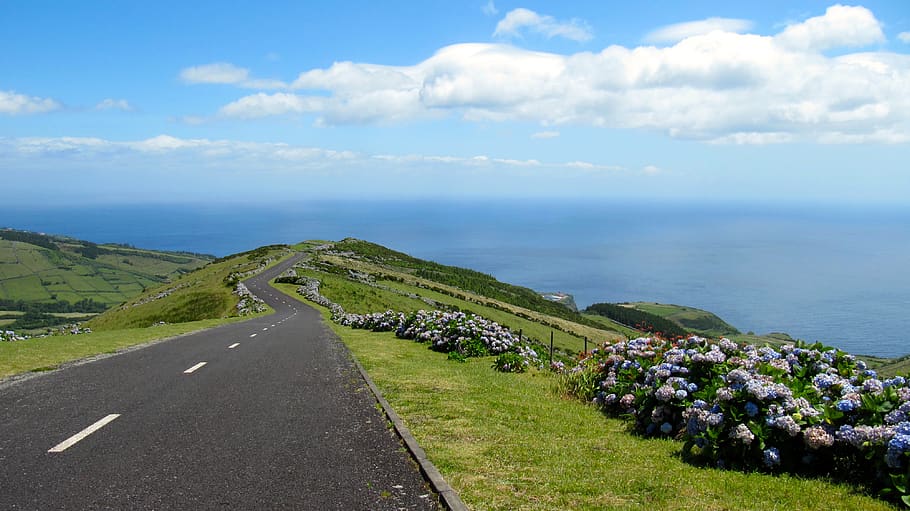
Flores is often described as the wildest and greenest island in the Azores. Waterfalls tumble down steep cliffs, hydrangeas line the roads, and volcanic crater lakes sit quietly among rolling hills. The island feels remote and wonderfully peaceful, perfect for travelers who enjoy nature and slow scenic drives. Highlights include the dramatic Poço da Ribeira do Ferreiro waterfall valley, the black volcanic rocks at Rocha dos Bordões, and beautiful coastal viewpoints overlooking the Atlantic Ocean.
Also known as Ilha das Flores, part of a UNESCO Biosphere Reserve, it sits in the Western group of the Azores.
The island is known for its abundance of flowers. Like, during the summertime when the island is covered with thousands of Hydrangeas, hence its Portuguese name of Flores.
Flores is not a huge island at all. It is one of the smaller islands in the Azores, and that is exactly what gives it its quiet, untouched feeling.
However, it does have shops, but they are simple and limited:
The main town, Santa Cruz das Flores, is where you’ll find most services. You can easily buy food for self-catering, but don’t expect large supermarkets or shopping variety.
Pico Island is dominated by the towering Mount Pico, the highest mountain in Portugal rising dramatically above the Atlantic Ocean.
The island is famous for its volcanic landscapes, black lava stone vineyards, and peaceful coastal villages. Pico feels rugged and authentic, with incredible scenery around almost every corner.
Wine lovers should visit the UNESCO-listed vineyard fields built from lava rock walls, while adventurous travelers can hike Mount Pico for unforgettable sunrise views above the clouds. Whale watching and fresh seafood are also highlights of life on the island.
TRAVEL TIP: Renting a car is highly recommended
The best viewpoints, waterfalls, crater lakes, and thermal pools are spread across the islands. Public transport is limited outside the main towns, especially on islands like Flores and Pico Island. Driving is generally relaxed, scenic, and easy.
São Miguel is the largest and most visited island in the Azores, famous for its lush green landscapes, volcanic lakes, waterfalls, and thermal springs. The island is home to the breathtaking Sete Cidades crater lakes and the geothermal village of Furnas, where visitors can soak in warm thermal pools and taste food cooked underground using volcanic heat.
Scenic coastal drives, tea plantations, whale watching, and dramatic viewpoints make São Miguel one of Europe’s most unforgettable island destinations.

The Island has the nickname “Ilha Verde” – ‘Green Island’, because of its lush vegetation. Here you will find huge craters, beautiful lakes and gardens and much more.

Flights and ferries connect many islands, but schedules can change because of Atlantic weather. Leave flexibility between islands instead of planning tight connections.
The iron-rich geothermal water at places like Terra Nostra Park may discolor light-colored swimsuits. Dark swimwear is a smart choice.
Expect excellent seafood, local cheeses, passion fruit desserts, and volcanic wines. Portions are often large and prices are usually more affordable than many mainland European destinations.

One of the most surprising things about the Azores is that they are home to Europe’s oldest large-scale tea plantations.
The most famous is Gorreana Tea Factory on São Miguel. Established in 1883, it is considered the oldest tea plantation in Europe still in operation.
Photos of the Azores are beautiful, but the feeling of standing beside volcanic lakes, hearing waterfalls in the distance, and watching mist drift across green mountains is what truly makes these islands unforgettable.
The tea fields stretch across rolling green hills overlooking the Atlantic Ocean, creating one of the most peaceful landscapes on the island. Visitors can walk through the plantations, tour the small factory, and taste locally produced green and black tea.
Another beautiful plantation worth visiting is: Chá Porto Formoso
TRAVEL TIP:
Visit on a misty morning or late afternoon when the soft light and ocean views make the tea fields look especially beautiful for photos and videos.


Roads often climb quickly into mountains, pass through misty forests, and open to crater viewpoints. Distances are short, but travel time can feel longer because you’ll stop often for views.
Outside of Ponta Delgada, many shops and cafés close in the early evening. Stock up during the day if you are self-catering.
Away from towns, you often get long stretches of quiet landscapes, wind, and ocean sounds. It is one of the most memorable parts of the islands.
Best base for first-time visitors. Stay near Ponta Delgada for easy access to crater lakes, hot springs, tea fields, and whale watching. Wide choice of hotels and restaurants. Everything feels close and easy to reach.
Centered around the charming harbor town of Horta. Perfect for ocean views, marina walks, and ferry access to Pico. Calm atmosphere, strong sailing culture, and easy access to the dramatic Caldeira do Faial.
Best for dramatic scenery and quiet stays. Views of Mount Pico dominate the island, with lava vineyards, coastal villages, and whale watching. Ideal for travelers who want nature, space, and unforgettable sunsets over the Atlantic.
Discover fantastic deals and secure accommodations in Azores, Portugal! Uncover guest reviews and reserve the ideal place for your upcoming trip:
You might also like to read about Madeira.


